
Now Reading: The Modern Brain: A Complete Guide to Focus, Attention, Memory, and Cognitive Performance
-
01
The Modern Brain: A Complete Guide to Focus, Attention, Memory, and Cognitive Performance
The Modern Brain: A Complete Guide to Focus, Attention, Memory, and Cognitive Performance
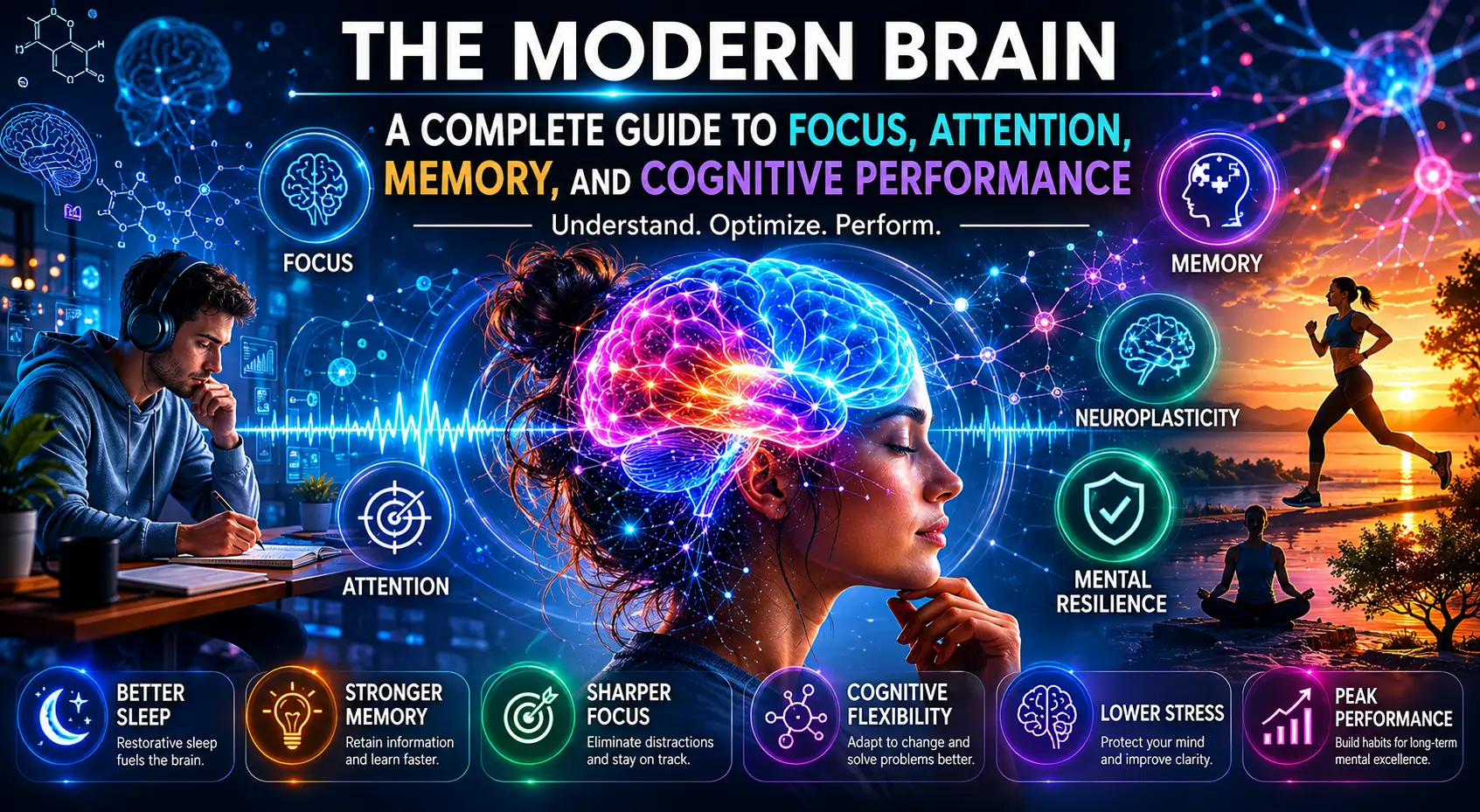
Modern life places unprecedented demands on the human brain.
Notifications compete for attention. Information arrives faster than we can process it. Stress levels remain elevated while opportunities for deep focus become increasingly rare.
As a result, many people find themselves searching for ways to improve concentration, strengthen memory, increase mental clarity, and maintain peak cognitive performance.
Understanding how the brain actually works is the first step toward improving it.
This guide brings together the latest understanding of attention, memory, neuroplasticity, mental energy, cognitive flexibility, and brain health into one comprehensive resource.
🔬 What Is Cognitive Performance?
Cognitive performance refers to the brain’s ability to process information efficiently and effectively.
It includes several interconnected functions:
- Attention
- Focus
- Working memory
- Long-term memory
- Decision-making
- Problem-solving
- Mental flexibility
- Learning speed
- Emotional regulation
Rather than existing as separate systems, these abilities constantly interact with one another.
A person with poor sleep may struggle with attention. Reduced attention affects memory formation. Weak memory then impacts learning and performance.
The brain operates as an integrated network rather than a collection of isolated skills.
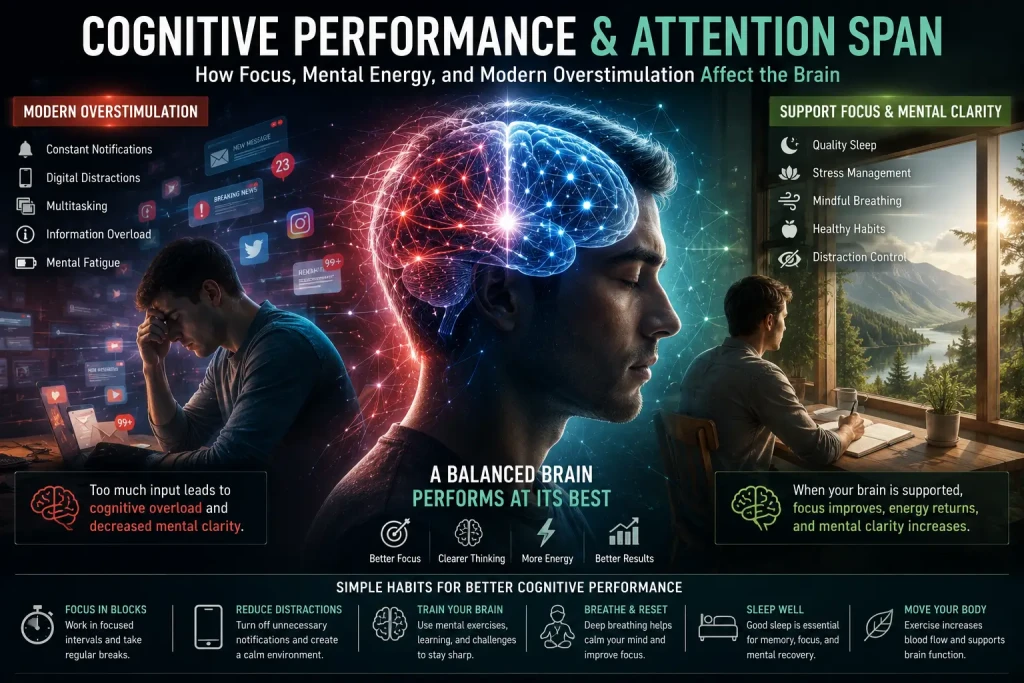
🎯 The Attention Economy and the Modern Brain
Attention has become one of the most valuable resources in the digital age.
Social media platforms, streaming services, advertisements, and endless notifications all compete for the same limited cognitive resource.
Research suggests that frequent interruptions reduce productivity and increase mental fatigue.
Even brief distractions can disrupt focus and require significant time to regain concentration.
For a deeper exploration of attention systems, see:
Cognitive Performance and Attention Span
⚡ Executive Function: The Brain’s Control Center
Executive function refers to a collection of mental skills that help regulate behavior, planning, decision-making, and self-control.
These abilities are largely associated with networks involving the prefrontal cortex.
Executive function allows people to:
- Prioritize tasks
- Resist distractions
- Manage impulses
- Plan effectively
- Maintain goal-directed behavior
When executive function becomes overwhelmed, productivity often declines regardless of intelligence or motivation.
Related reading:
Executive Function and Attention Regulation
🧠 Memory: How Information Becomes Knowledge
Memory is not a single process.
The brain uses multiple memory systems for different purposes.
Working Memory
Temporary storage used during active thinking.
Short-Term Memory
Holds information for brief periods.
Long-Term Memory
Stores information for days, months, or even decades.
Memory formation depends heavily on attention.
Information that never receives focused attention is unlikely to become a lasting memory.
Related resources:
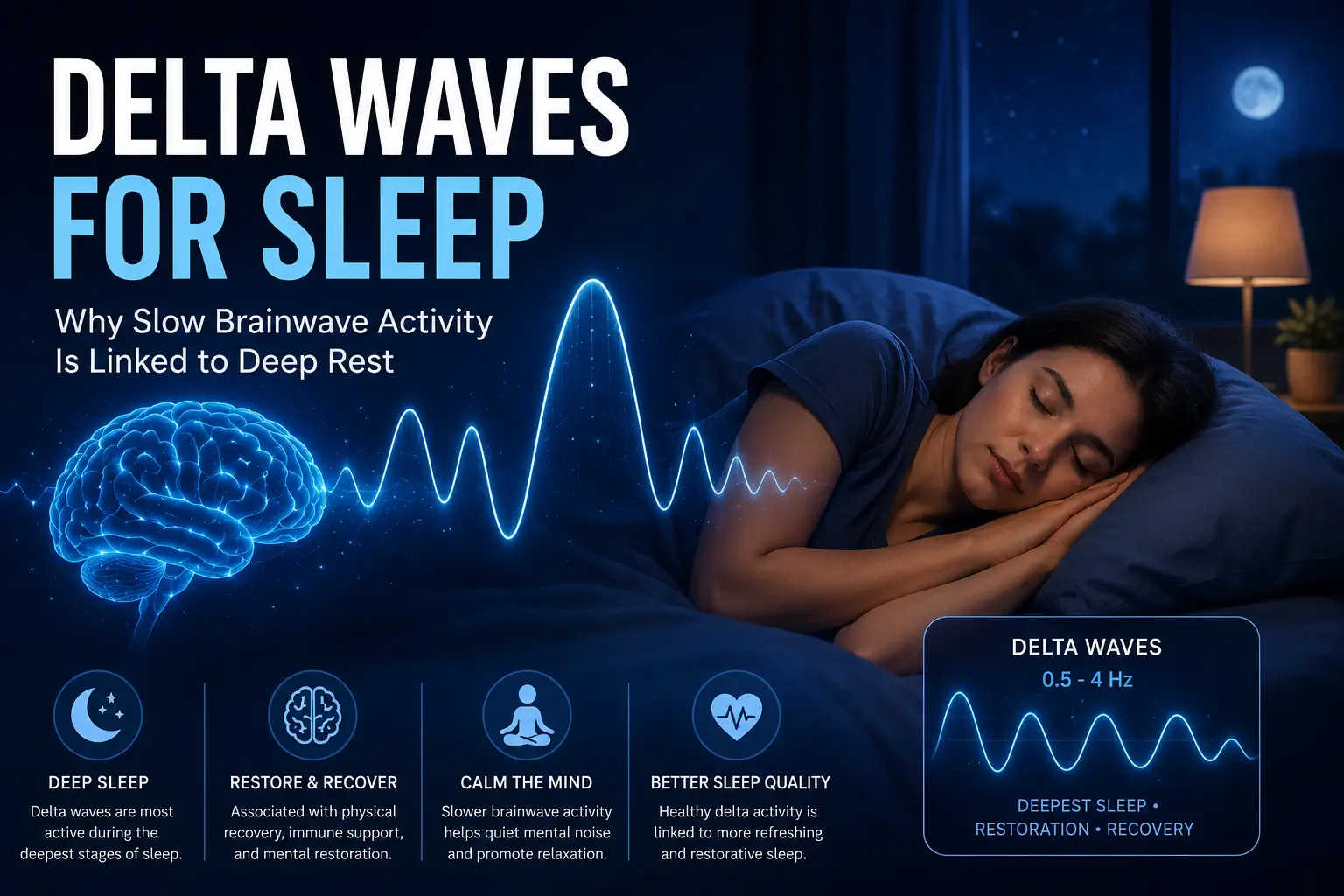
🌙 Why Sleep Is Essential for Brain Performance
Many people attempt to improve productivity by sacrificing sleep.
Unfortunately, this approach often produces the opposite result.
Sleep plays a critical role in:
- Memory consolidation
- Emotional regulation
- Attention recovery
- Learning efficiency
- Decision-making accuracy
During sleep, the brain strengthens important neural connections while removing unnecessary information.
Chronic sleep deprivation is strongly associated with impaired cognitive performance.
Explore:
🔄 Neuroplasticity: The Brain’s Ability to Adapt
One of the most important discoveries in neuroscience is neuroplasticity.
The brain continuously changes throughout life.
Neural pathways strengthen through repeated use and weaken when neglected.
This ability allows humans to:
- Learn new skills
- Recover from mistakes
- Develop expertise
- Adapt to changing environments
- Build better habits
Neuroplasticity explains why consistent practice often produces dramatic improvements over time.
Related reading:
Neuroplasticity and Brain Rewiring
📱 Digital Overload and Cognitive Fatigue
The modern brain faces challenges that previous generations rarely encountered.
Constant digital stimulation can contribute to:
- Mental fatigue
- Information overload
- Reduced attention spans
- Decision fatigue
- Difficulty maintaining focus
While technology offers tremendous advantages, effective cognitive performance often requires intentional periods of recovery and reduced stimulation.
Further reading:
🧩 Cognitive Flexibility and Adaptability
Cognitive flexibility refers to the ability to adjust thinking when situations change.
Individuals with strong cognitive flexibility tend to adapt more effectively to new information, challenges, and environments.
This skill supports creativity, problem-solving, and resilience.
Read more:
How to Improve Cognitive Flexibility
💪 Mental Resilience and Stress Management
Stress is not always harmful.
Short-term stress can improve performance under certain conditions.
However, chronic stress may impair memory, attention, and emotional regulation.
Building resilience helps protect cognitive performance during challenging periods.
Related articles:
🎧 Can Audio Influence Cognitive Performance?
Many people use audio tools to support focus, relaxation, learning, or productivity.
These include:
- Binaural beats
- Isochronic tones
- White noise
- Pink noise
- Brown noise
- Meditation audio
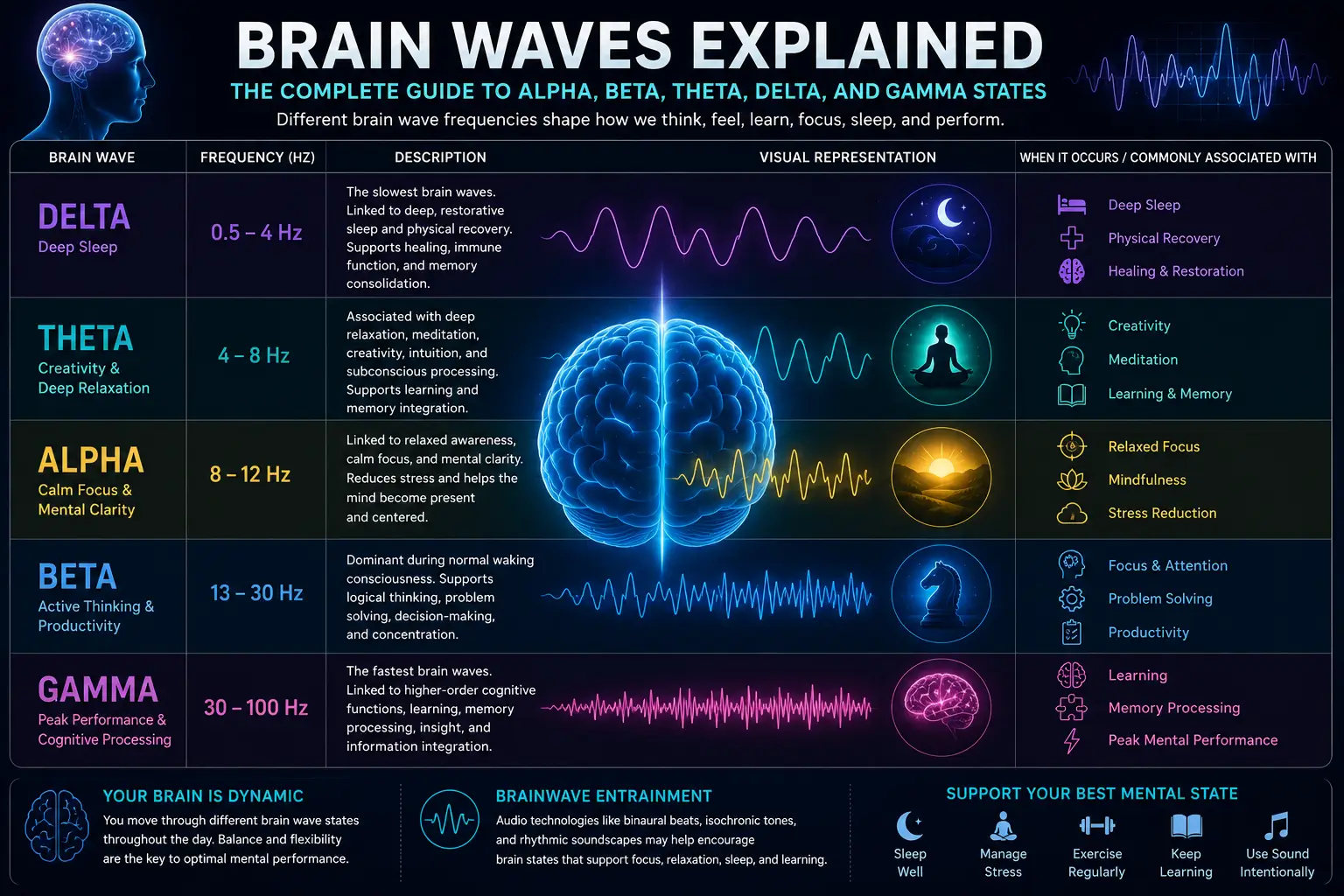
While results vary between individuals, structured listening environments may help some people reduce distractions and maintain concentration.
Useful resources:
Some individuals also explore neuroacoustic audio programs designed to support focus, mental clarity, and cognitive performance as part of broader productivity and learning routines.
🚀 Building a High-Performance Brain
There is no single shortcut to peak cognitive performance.
However, research consistently highlights several powerful habits:
- Prioritize quality sleep
- Protect attention from unnecessary distractions
- Exercise regularly
- Continue learning new skills
- Manage stress effectively
- Practice focused work
- Support long-term brain health
Small improvements in these areas often compound over time.
🎧 Exploring Audio Tools for Focus and Mental Performance
While sleep, attention management, exercise, and learning remain the foundation of cognitive performance, some individuals also use structured audio environments to support focus and productivity.
These may include binaural beats, isochronic tones, ambient soundscapes, and modern neuroacoustic listening programs.
For readers interested in exploring this area further, The Genius Wave combines neuroacoustic audio principles with focus and mental performance routines and is often used alongside broader cognitive optimization habits.
🧠 Final Thoughts
The modern brain is remarkably adaptable, but it is also vulnerable to overload, distraction, and chronic stress.
Understanding how attention, memory, neuroplasticity, sleep, and cognitive performance interact provides a foundation for lifelong mental improvement.
Whether your goal is sharper focus, stronger memory, greater productivity, or improved learning, the most effective approach is rarely a single technique.
Instead, long-term cognitive performance emerges from consistent habits, healthy recovery, effective attention management, and a willingness to continuously learn and adapt.
Scientific References
- https://www.ncbi.nlm.nih.gov/books/NBK559239/
- https://www.ncbi.nlm.nih.gov/books/NBK557811/
- https://pmc.ncbi.nlm.nih.gov/articles/PMC7709590/
- https://pmc.ncbi.nlm.nih.gov/articles/PMC6425990/
- https://www.frontiersin.org/articles/10.3389/fnhum.2017.00356/full
Related Posts
Stay Informed With the Latest & Most Important News
Previous Post
Next Post