
Now Reading: Neuroplasticity: How the Brain Adapts, Learns, and Rewires Over Time
-
01
Neuroplasticity: How the Brain Adapts, Learns, and Rewires Over Time
Neuroplasticity: How the Brain Adapts, Learns, and Rewires Over Time
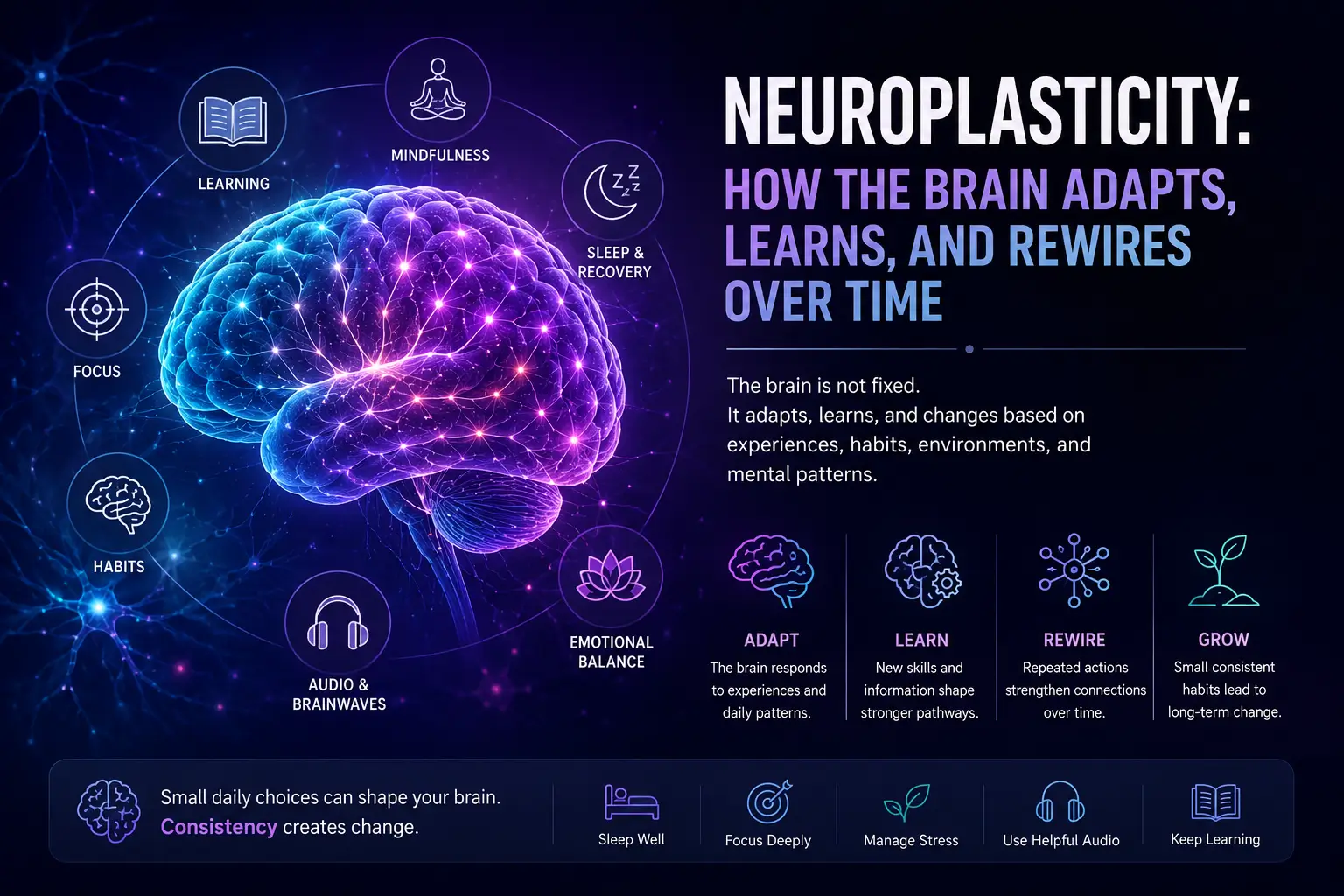
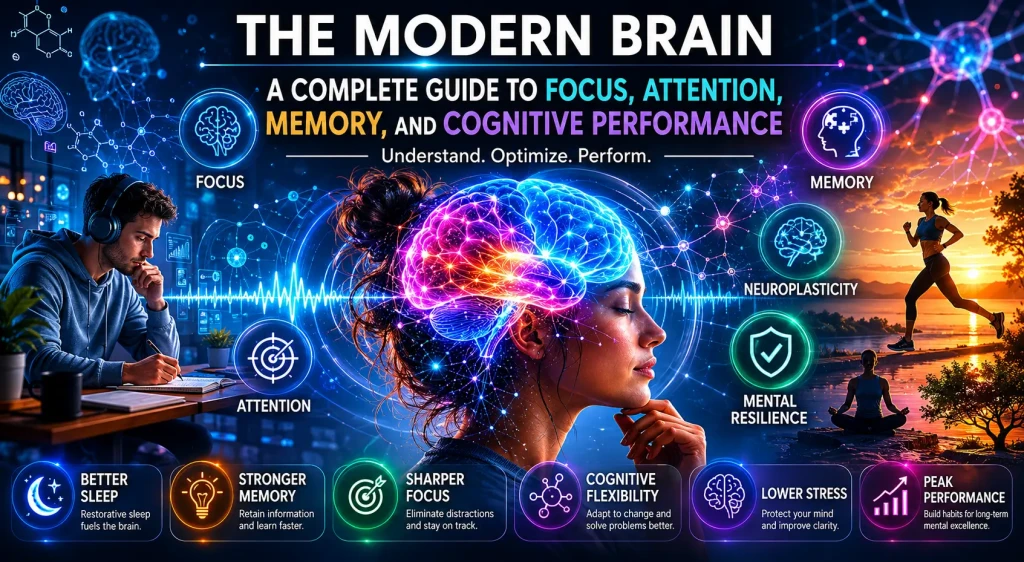
The human brain is not completely fixed.
Throughout life, the brain continuously responds to experiences, habits, emotions, environments, and learning patterns.
This ability to adapt and reorganize is commonly discussed through the concept of neuroplasticity.
In recent years, neuroplasticity has attracted growing attention because many people are searching for ways to improve:
- focus,
- learning,
- mental flexibility,
- emotional balance,
- and cognitive recovery.
While internet discussions sometimes exaggerate the concept, neuroplasticity remains one of the most important ideas in modern neuroscience.
🧠 What Is Neuroplasticity?
Neuroplasticity generally refers to the brain’s ability to adapt over time.
The brain constantly responds to:
- repetition,
- experiences,
- learning,
- stress,
- and environmental input.
This does not mean people can instantly transform their minds overnight.
However, the brain is far more adaptable than older scientific theories once believed.
📚 Learning Changes the Brain
Every time people practice a skill, repeat a habit, or learn something new, the brain responds in some way.
Examples may include:
- learning a language,
- developing routines,
- practicing music,
- improving attention skills,
- or strengthening memory patterns.
Over time, repeated experiences can influence how efficiently certain mental patterns operate.
Related article: Memory Palace Technique Guide.
🧠 Habits and Mental Patterns
The brain often becomes more efficient at patterns that are repeated frequently.
This applies not only to productive habits, but also to:
- stress patterns,
- attention habits,
- emotional reactions,
- and digital overstimulation routines.
Modern environments constantly shape attention and cognitive behavior.
Related article: Modern Brain Overstimulation.
📱 Why Modern Life Matters
Today’s digital environments expose the brain to nonstop stimulation.
Notifications, multitasking, endless scrolling, and information overload can strongly influence attention patterns over time.
Many people no longer struggle with too little stimulation.
Instead, they struggle with too much of it.
This is one reason conversations about mental recovery and cognitive balance have become increasingly common.
🎯 Neuroplasticity and Focus
Attention itself may be influenced by repetition and mental habits.
For example:
- constant distraction may weaken sustained attention,
- while calmer routines may support healthier focus patterns.
This does not happen instantly.
However, small repeated behaviors can gradually influence mental habits over time.
Related article: Brain Waves for Focus.
😴 Sleep and Recovery Support Adaptation
The brain also depends heavily on recovery.
Sleep quality influences:
- memory processing,
- learning,
- emotional regulation,
- and cognitive restoration.
Without recovery, learning efficiency and mental flexibility may decline.
Related article: Delta Waves for Sleep.
🧘 Emotional Balance and Brain Flexibility
Stress levels can strongly affect mental patterns.
When people remain under constant emotional pressure, the brain may spend more time in reactive states.
This is one reason many individuals explore:
- mindfulness,
- meditation,
- breathing routines,
- and calming environments.
The goal is often not perfection.
Instead, people want healthier and more balanced mental environments.
🎧 Audio, Focus, and Neuroacoustic Discussions
Some individuals explore audio environments designed around focus and relaxation.
These discussions may involve:
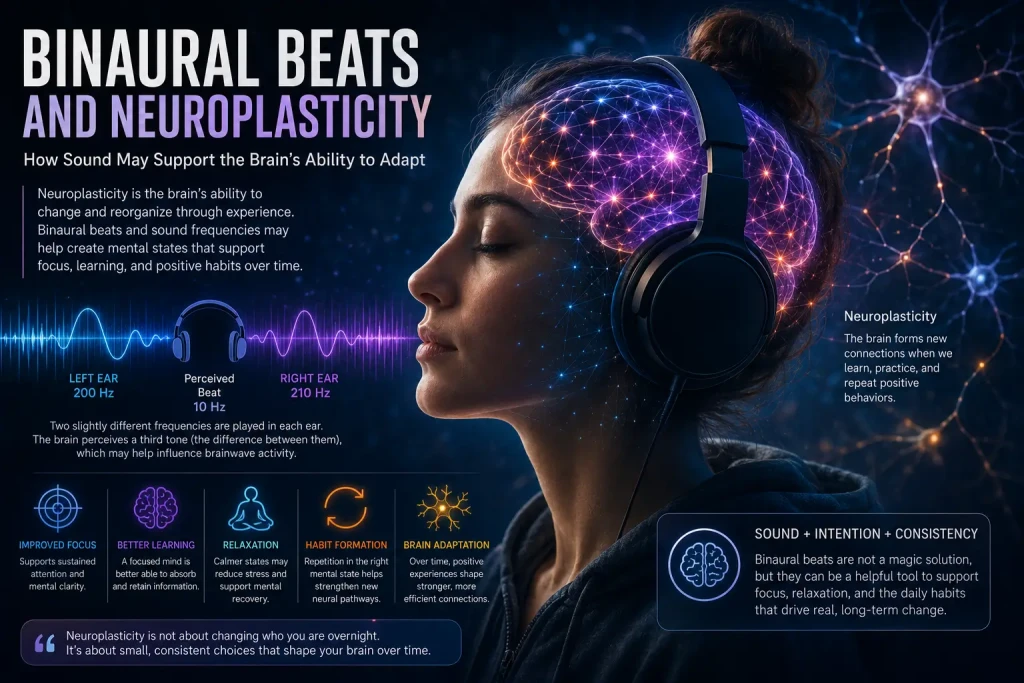
- binaural beats,
- brainwave entrainment,
- ambient focus soundscapes,
- or neuroacoustic listening environments.
Related article: Brainwave Entrainment.
Others explore neuroacoustic audio experiences designed around focus, mental clarity, and cognitive recovery routines.
Still, different individuals respond differently to different routines and environments.
⚠️ Common Misunderstandings About Neuroplasticity
❌ “You Can Completely Rewire Your Brain Overnight”
Meaningful adaptation usually involves repetition, consistency, and time.
❌ “Positive Thinking Alone Changes Everything”
Real cognitive change often depends on habits, environment, sleep, stress levels, and lifestyle patterns.
❌ “The Brain Stops Adapting After Childhood”
Modern neuroscience shows the brain continues adapting throughout life.
🌿 Small Habits Often Matter More Than Extreme Changes
People often search for dramatic transformations.
But long-term mental patterns are frequently shaped by small repeated behaviors.
Examples include:
- sleep routines,
- focus habits,
- learning environments,
- stress management,
- and digital behavior.
Over time, these small patterns may influence how the brain responds to everyday life.
🧠 Final Thoughts
Neuroplasticity continues attracting attention because it reflects one of the brain’s most important abilities: adaptation.
While internet discussions sometimes exaggerate the idea of “rewiring the brain,” neuroscience continues showing that habits, experiences, and environments can influence mental patterns over time.
In many cases, healthier focus and emotional balance do not come from chasing perfection — but from gradually creating environments that support the brain more effectively.
Related Articles
Related Posts
Stay Informed With the Latest & Most Important News
Previous Post
Next Post