
Now Reading: Brainwave Entrainment: How Sound and Rhythm May Influence Mental States
-
01
Brainwave Entrainment: How Sound and Rhythm May Influence Mental States
Brainwave Entrainment: How Sound and Rhythm May Influence Mental States
Modern life constantly stimulates the brain.
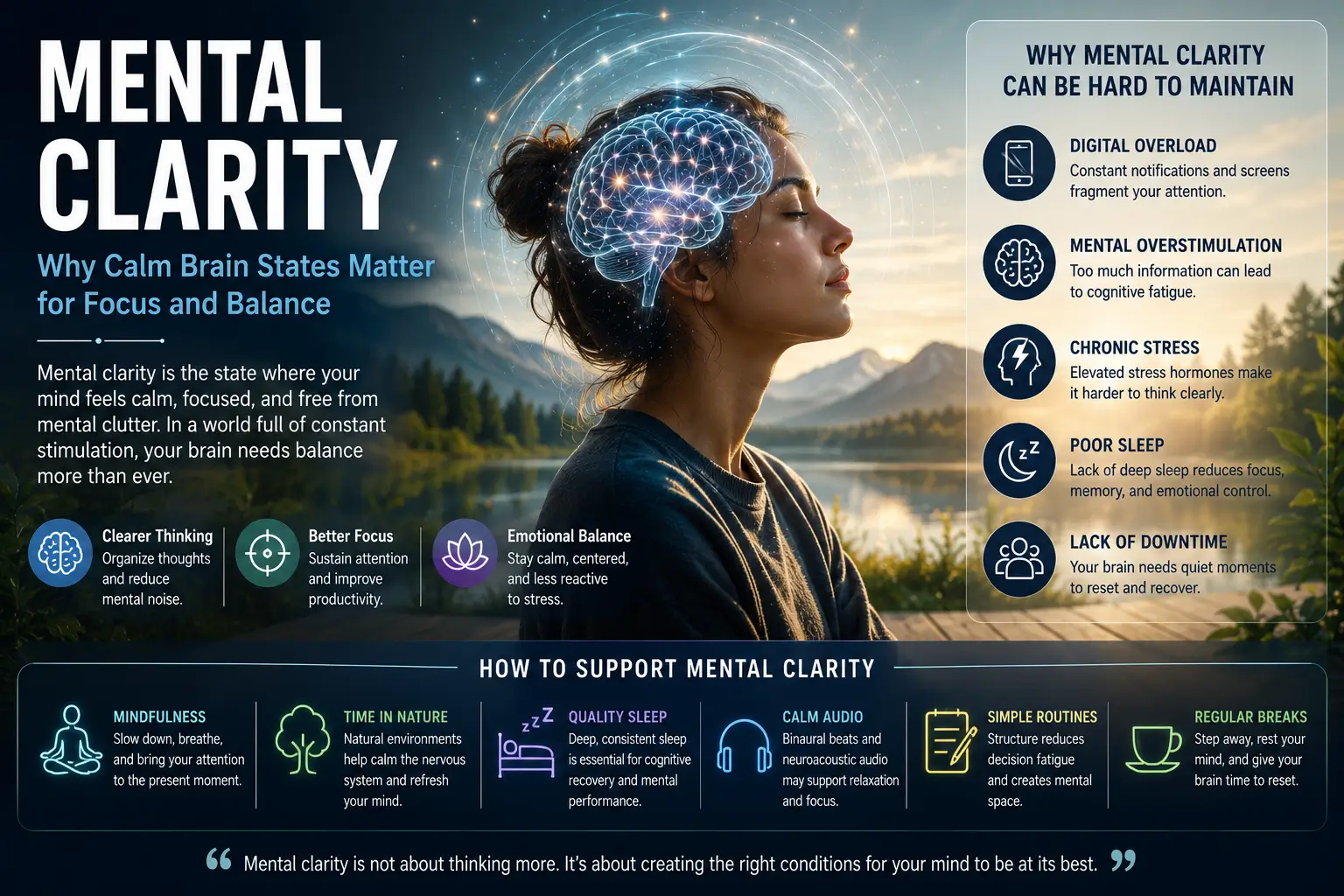
Notifications, multitasking, background noise, stress, and endless digital input can make it difficult to fully relax or maintain stable focus.
Because of this, many people search for tools that may help create calmer or more focused mental environments.
One topic that continues attracting attention is brainwave entrainment.
Brainwave entrainment discussions are often connected to:
- focus,
- sleep,
- meditation,
- relaxation,
- and cognitive recovery.
While online discussions sometimes exaggerate the concept, the growing interest largely reflects how many people are trying to manage overstimulation and mental fatigue in modern environments.
🧠 What Is Brainwave Entrainment?
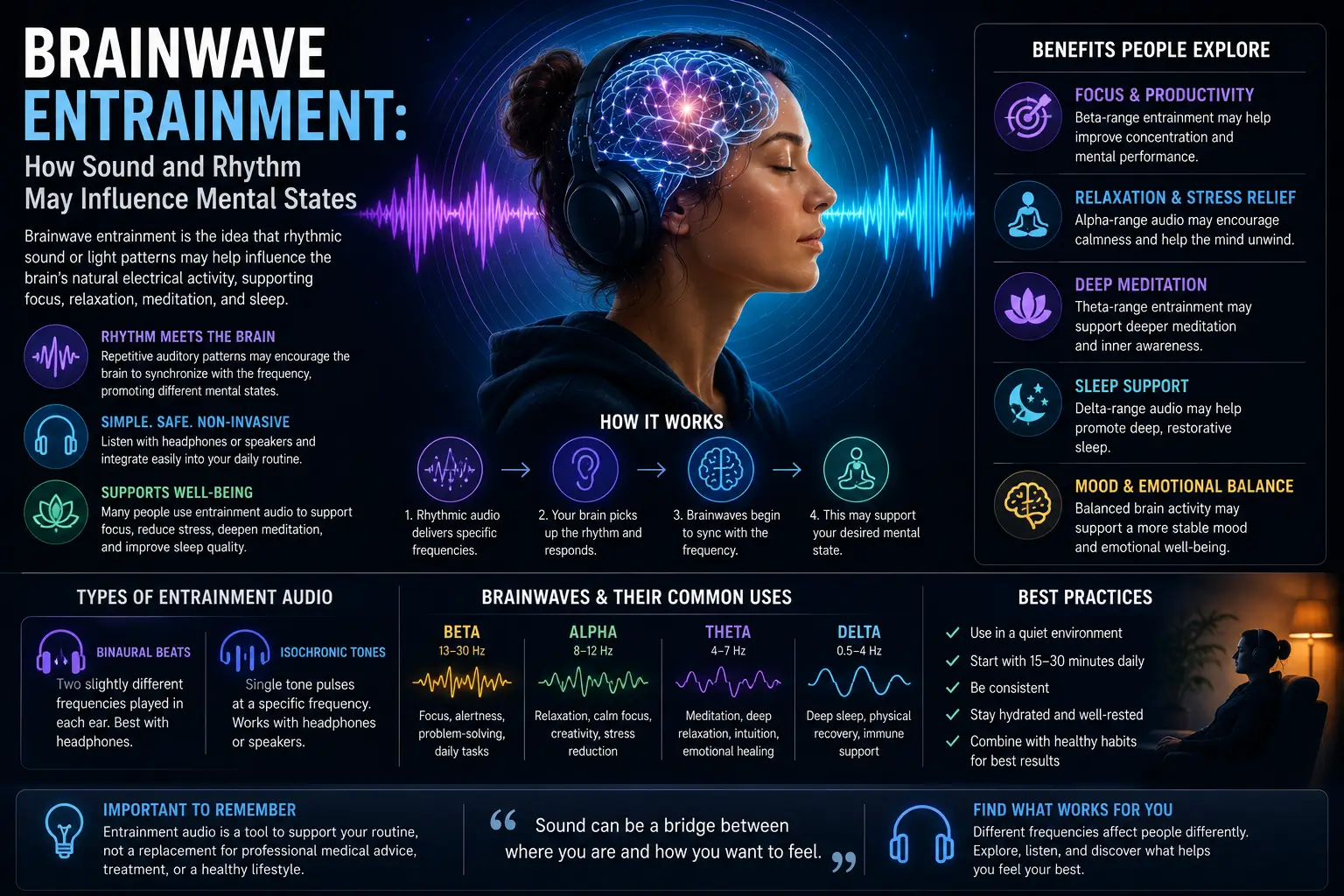
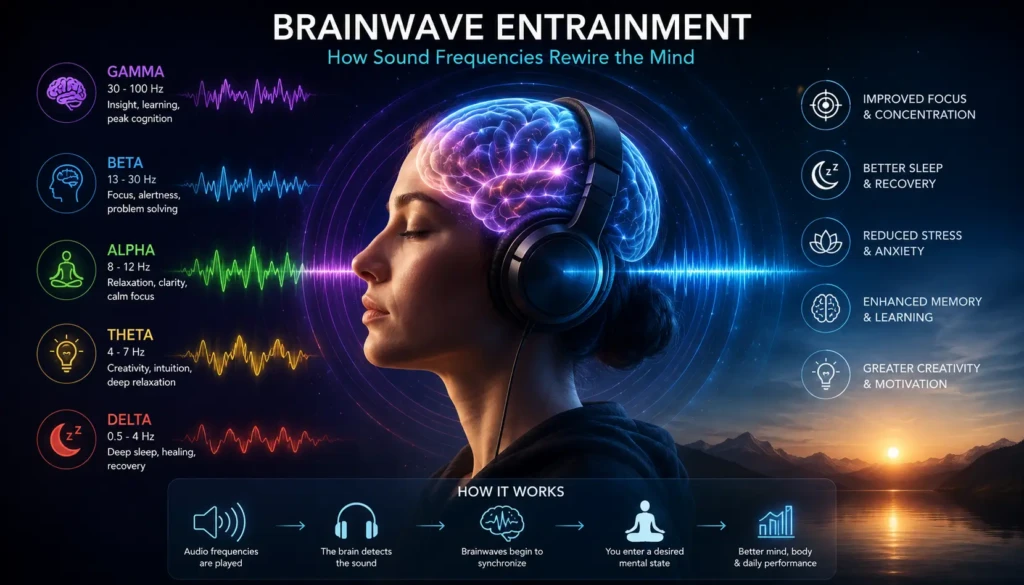
Brainwave entrainment generally refers to the idea that rhythmic sensory stimulation may influence mental states.
These discussions often involve repetitive patterns such as:
- sound pulses,
- rhythmic audio,
- light patterns,
- or auditory frequencies.
The concept is commonly discussed alongside topics involving:
- binaural beats,
- isochronic tones,
- meditation audio,
- and focus-oriented sound environments.
Related article: The Science of Binaural Beats.
🎧 Why Audio Is Commonly Used
Sound is one of the most accessible ways people explore brainwave entrainment discussions.
Audio environments are often used because they can:
- create rhythm,
- reduce environmental distraction,
- support relaxation routines,
- or help people maintain attention.
Some individuals listen while:
- working,
- studying,
- meditating,
- or preparing for sleep.
⚡ Different Brainwave Discussions
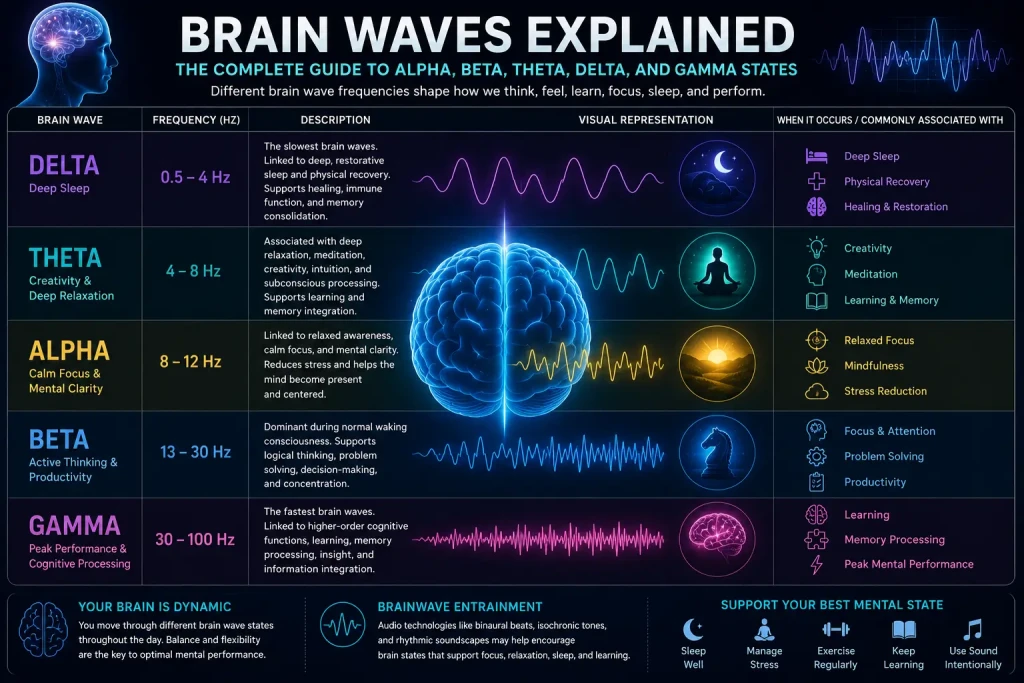
Brainwave entrainment conversations often involve different mental states associated with various brainwave ranges.
🧘 Alpha Discussions
Alpha-related topics are frequently associated with calm focus and relaxed awareness.
Related article: Alpha Brain Waves.
🎯 Beta Discussions
Beta-related conversations are commonly linked to active concentration and mental alertness.
Related article: Beta Brain Waves.
🌙 Theta Discussions
Theta discussions often appear alongside meditation, deep relaxation, and emotional decompression.
Related article: Theta Waves for Sleep.
😴 Delta Discussions
Delta-related conversations are frequently connected to deep rest and sleep recovery.
Related article: Delta Waves for Sleep.
📱 Why Modern Overstimulation Matters
One reason brainwave entrainment discussions continue growing is the increasing level of cognitive overload in modern life.
Many people spend entire days surrounded by:
- screens,
- notifications,
- background noise,
- and nonstop information streams.
Related article: Modern Brain Overstimulation.
This environment can make mental recovery more difficult.
As a result, many individuals search for calmer sensory environments that feel less mentally exhausting.
🧘 Brainwave Entrainment and Meditation
Brainwave entrainment discussions often overlap with mindfulness and meditation practices.
Many people combine calming audio with:
- breathing exercises,
- meditation routines,
- journaling,
- or nighttime relaxation rituals.
The goal is usually not instant transformation.
Instead, people often want environments that feel mentally calmer and easier to manage.
🎼 Binaural Beats vs Isochronic Tones
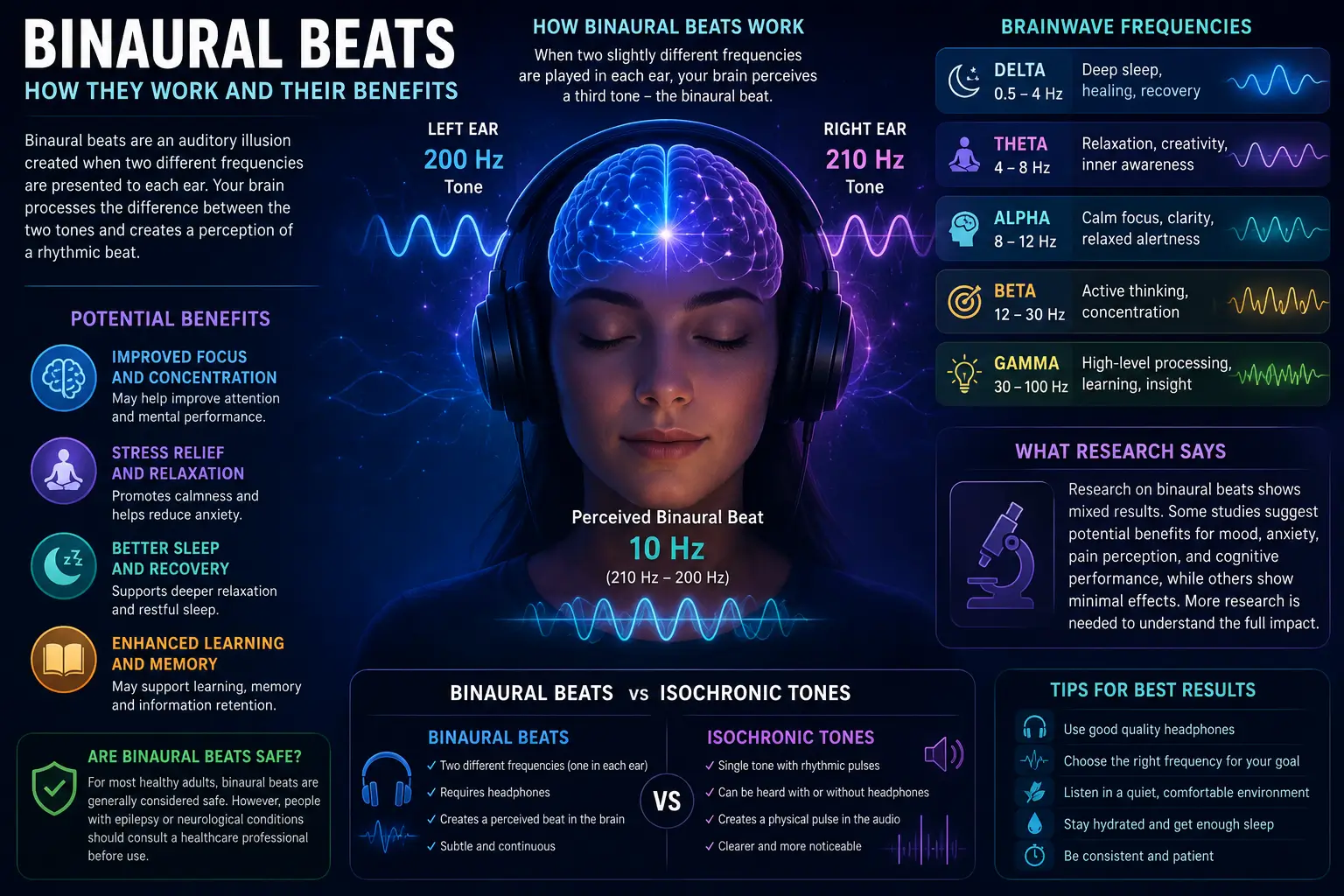
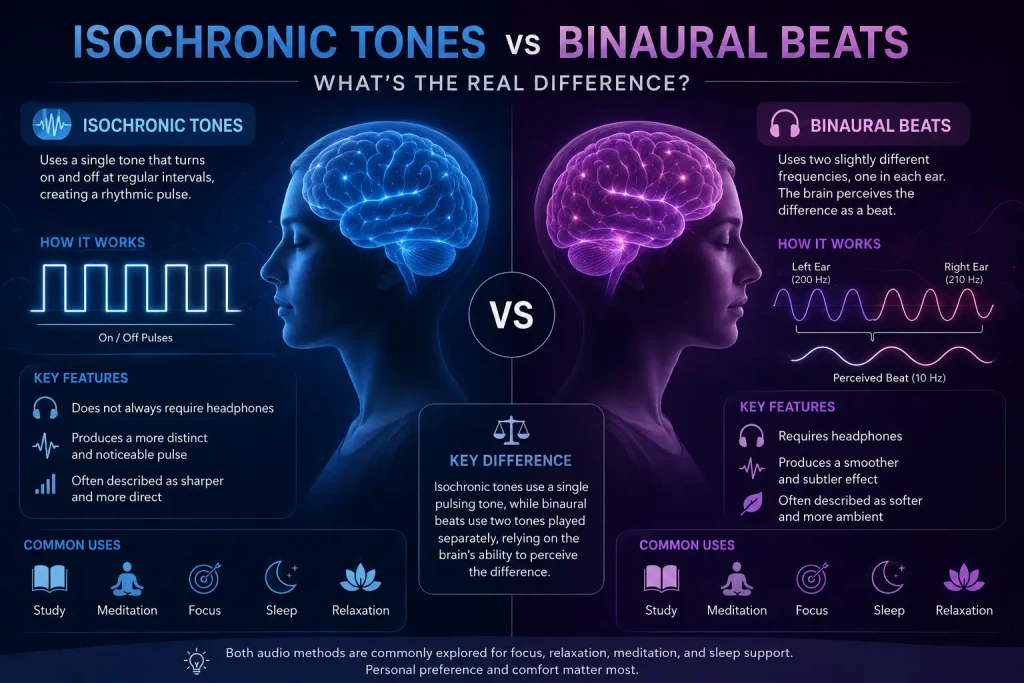
Two of the most commonly discussed audio approaches are binaural beats and isochronic tones.
🎧 Binaural Beats
Binaural beats typically involve slightly different frequencies presented separately to each ear.
🔊 Isochronic Tones
Isochronic tones generally use distinct rhythmic pulses without requiring headphones.
Related article: What Are Isochronic Tones?.
Different individuals often prefer different listening styles depending on comfort and environment.
⚠️ Common Misunderstandings About Brainwave Entrainment
❌ “One Frequency Changes Your Entire Brain”
Mental states are influenced by many factors, including stress, sleep quality, lifestyle, and emotional health.
❌ “Brainwave Audio Creates Superhuman Abilities”
Online discussions sometimes exaggerate what audio alone can realistically accomplish.
❌ “More Stimulation Always Improves Focus”
Excessive stimulation may sometimes increase mental fatigue instead of improving concentration.
🌙 Recovery and Balance Still Matter Most
Healthy mental performance depends on more than optimization alone.
Focus, emotional balance, and cognitive clarity are strongly connected to:
- sleep quality,
- stress management,
- mental recovery,
- and healthy routines.
Without recovery, even highly stimulating environments can eventually feel mentally exhausting.
🎧 Why People Explore Neuroacoustic Audio
Some individuals explore neuroacoustic audio experiences designed around focus, relaxation, and mental recovery routines.
These listening environments are often used alongside mindfulness practices, study sessions, or nighttime relaxation habits.
Still, different people respond differently to different sound environments and routines.
🧠 Final Thoughts
Brainwave entrainment continues attracting attention because many people are searching for healthier ways to manage overstimulation and mental fatigue.
While internet discussions can sometimes become exaggerated, calmer sensory environments may still play an important role in supporting relaxation, focus, and emotional balance.
In many cases, the goal is not becoming “superhuman.”
It is simply creating enough mental space for the brain to recover from the constant noise of modern life.
Related Articles
Related Posts
Stay Informed With the Latest & Most Important News
Previous Post
Next Post