
Now Reading: Beta Brain Waves: Why They Are Linked to Focus and Mental Alertness
-
01
Beta Brain Waves: Why They Are Linked to Focus and Mental Alertness
Beta Brain Waves: Why They Are Linked to Focus and Mental Alertness
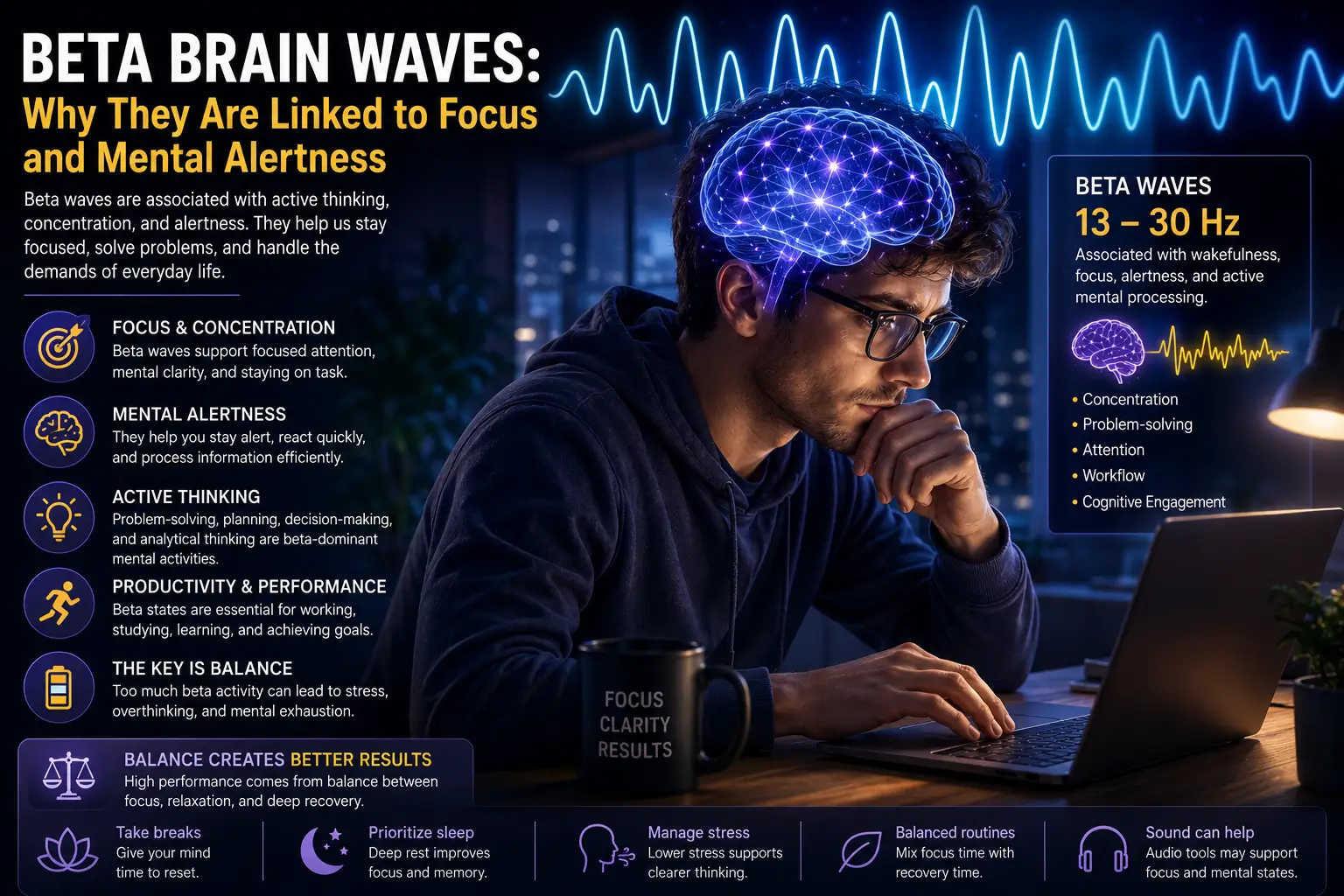
Modern life constantly demands attention.
People move between notifications, multitasking, deadlines, conversations, screens, and information overload almost nonstop.
In this environment, the brain often remains highly active for long periods of time.
This is one reason discussions about beta brain waves have become increasingly common.
Beta-related conversations are often associated with:
- focus,
- alertness,
- active thinking,
- problem-solving,
- and cognitive engagement.
At the same time, excessive mental stimulation can sometimes leave people feeling mentally exhausted rather than productive.
⚡ What Are Beta Brain Waves?
Beta brain waves are commonly discussed as part of the brain’s natural electrical activity.
They are often associated with mentally active states involving:
- concentration,
- decision-making,
- focused attention,
- and analytical thinking.
Unlike slower brainwave discussions linked to relaxation or sleep, beta-related conversations are usually connected to wakefulness and mental engagement.
Related article: Types of Brain Waves.
🧠 Why Beta Waves Matter in Daily Life
Many everyday activities involve active mental processing.
Examples include:
- working,
- studying,
- solving problems,
- communicating,
- and maintaining attention in busy environments.
This is one reason beta brain wave discussions are often connected to productivity and concentration.
Modern routines require sustained attention more than ever before.
📱 The Problem With Constant Mental Stimulation
However, there is an important difference between healthy alertness and constant overstimulation.
Modern environments rarely allow the brain to fully rest.
Notifications, endless scrolling, multitasking, and information overload can create nonstop mental pressure.
Related article: Modern Brain Overstimulation.
Many people today do not struggle with lack of stimulation.
They struggle with too much of it.
🎯 Focus vs Mental Exhaustion
Healthy concentration usually feels controlled and sustainable.
But overstimulation can feel very different.
Instead of calm focus, people may experience:
- mental fatigue,
- restlessness,
- difficulty relaxing,
- and attention fragmentation.
This is why discussions about mental performance should always include recovery and balance — not only productivity.
🧘 Why Balance Between Brain States Matters
The brain naturally moves through different states throughout the day.
No single state is “perfect” all the time.
For example:
- beta-related discussions often involve active attention,
- alpha discussions are commonly linked to calmer focus,
- and theta or delta discussions often involve relaxation and recovery.
Related article: Alpha Brain Waves.
Healthy mental performance depends on flexibility and balance rather than permanently staying in one highly stimulated state.
🎧 Beta Audio and Focus Discussions
Some individuals explore sound environments associated with concentration and alertness.
These discussions may involve:
- binaural beats,
- focus-oriented audio,
- ambient productivity soundscapes,
- or neuroacoustic listening environments.
Related article: The Science of Binaural Beats.
Others explore neuroacoustic audio experiences designed around focus, concentration, and mental clarity routines.
Still, different people respond differently to different sound environments and work styles.
⚠️ Common Misunderstandings About Beta Waves
❌ “More Mental Activity Is Always Better”
Constant stimulation can eventually reduce clarity and emotional balance.
❌ “Focus Means Never Resting”
Sustained concentration depends heavily on recovery, sleep, and stress management.
❌ “One Brainwave State Solves Everything”
The brain naturally shifts between multiple states depending on environment, energy, and activity.
🌙 Recovery Still Supports Performance
People often chase productivity while ignoring nervous system recovery.
But concentration quality is strongly influenced by:
- sleep quality,
- stress levels,
- emotional balance,
- and mental recovery.
Without recovery, even simple tasks can begin feeling mentally exhausting.
🧠 Final Thoughts
Beta brain waves continue attracting attention because they are often associated with active thinking, alertness, and concentration.
However, healthy mental performance is not only about increasing stimulation.
In a world filled with nonstop distraction and pressure, sustainable focus often depends just as much on recovery and balance as it does on productivity itself.
Related Articles
Related Posts

Stay Informed With the Latest & Most Important News
Previous Post
Next Post