
Now Reading: Gamma Brain Waves Explained: What They Really Do in the Brain
-
01
Gamma Brain Waves Explained: What They Really Do in the Brain
Gamma Brain Waves Explained: What They Really Do in the Brain
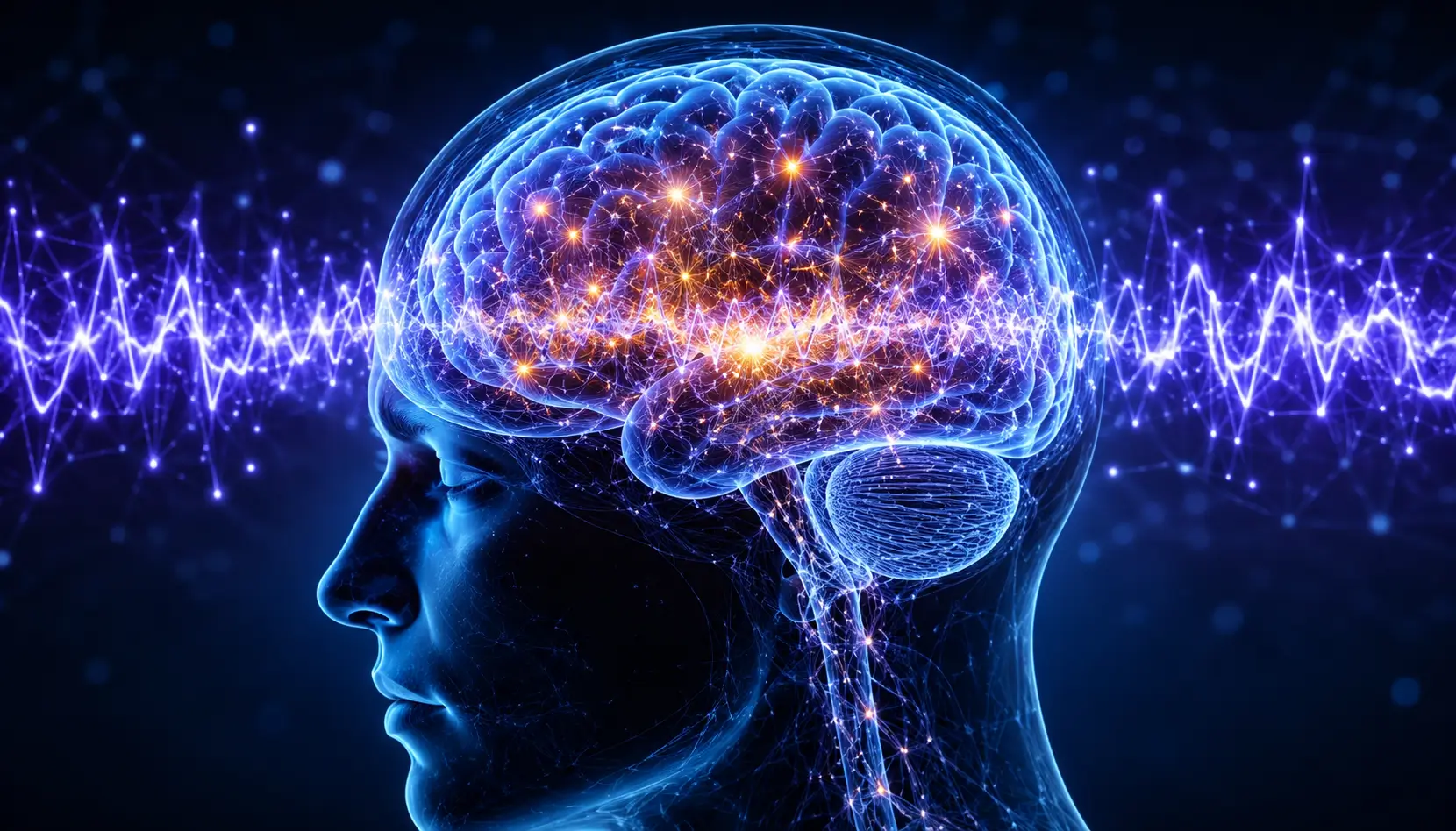
The human brain constantly produces electrical activity.
These patterns, often called brainwaves, change depending on:
- attention,
- stress,
- sleep,
- emotional state,
- and cognitive activity.
Among all brainwave types, gamma waves are often described as the fastest and most mentally intense.
They are frequently associated online with:
- focus,
- insight,
- memory processing,
- meditation,
- and cognitive performance.
But what are gamma brain waves actually — and how much of the internet hype is scientifically accurate?
The answer is more nuanced than many “unlock genius mode” claims suggest.
⚡ What Are Gamma Brain Waves?
Gamma brain waves are high-frequency neural oscillations generally measured above 30 Hz.
Many researchers focus specifically on the:
- 30–100 Hz range,
with - 40 Hz gamma activity
often receiving the most attention in neuroscience discussions.
Gamma activity is commonly linked to:
- attention processing,
- sensory integration,
- memory binding,
- and high-level cognitive coordination.
Unlike slower brainwave states associated with deep relaxation or sleep, gamma activity is usually connected to mentally active states.
🧠 Why Gamma Waves Matter
One of the most interesting aspects of gamma activity is how it may help different brain regions communicate efficiently.
Researchers believe gamma synchronization may play a role in:
- integrating information,
- maintaining attention,
- processing sensory input,
- and coordinating cognitive tasks.
This is one reason gamma activity often appears during:
- intense concentration,
- problem-solving,
- learning,
- and certain meditation practices.
Further reading:
https://www.frontiersin.org/articles/10.3389/fnhum.2019.00425/full
https://www.ncbi.nlm.nih.gov/pmc/articles/PMC10198548/
🌊 Gamma Waves and Focus
Gamma activity is often discussed in relation to:
- mental sharpness,
- focused awareness,
- and complex thinking.
For example, some studies suggest increased gamma synchronization may occur during tasks involving:
- sustained attention,
- memory processing,
- or cognitive integration.
This does not mean gamma waves instantly create “superhuman intelligence.”
Human cognition is far more complex than a single frequency state.
However, gamma activity may reflect periods of heightened neural coordination during mentally demanding tasks.
🧘 Gamma Waves and Meditation Research
Gamma brain waves became especially popular after studies involving experienced meditators showed unusually strong gamma synchronization during deep mindfulness practices.
This led to widespread internet discussions connecting gamma activity with:
- awareness,
- compassion,
- mindfulness,
- and advanced meditation states.
However, it is important to understand:
gamma activity itself is not mystical.
It is simply a measurable pattern of neural activity observed under certain conditions.
🎧 Can Audio Influence Gamma Activity?
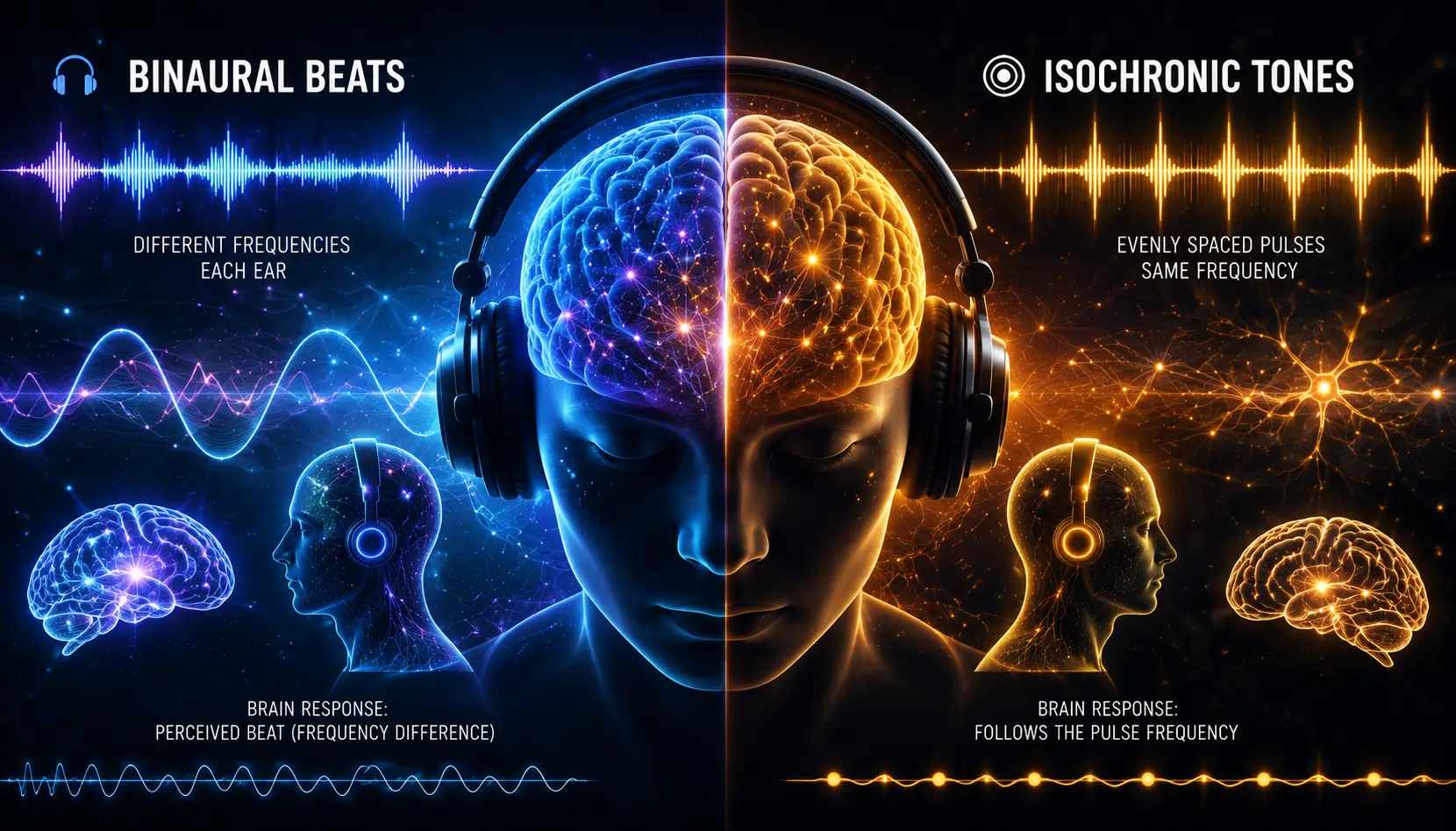
Some sound-based systems use rhythmic stimulation intended to encourage relaxation or focused attention states.
This may include:
- binaural beats,
- ambient audio environments,
- rhythmic pulses,
- or meditation soundscapes.
Some listeners explore gamma-oriented neuroacoustic audio programs designed to support focus and immersive concentration routines.
At the same time, research on direct long-term gamma entrainment effects remains limited and should be approached realistically.
⚠️ Common Myths About Gamma Waves
Myth:
“Gamma waves instantly unlock genius-level intelligence.”
Reality:
No strong scientific evidence supports dramatic intelligence-transformation claims.
Myth:
“40 Hz audio automatically rewires the brain.”
Reality:
The brain is highly complex, and responses to sensory stimulation vary widely.
Myth:
“Gamma waves are always beneficial.”
Reality:
Balanced brain activity matters more than maximizing a single frequency range.
☁️ Why Gamma Discussions Became So Popular
Modern culture strongly values:
- productivity,
- focus,
- optimization,
- and mental performance.
This has made gamma-wave content especially attractive online.
People are naturally curious about ways to:
- improve concentration,
- reduce distraction,
- and support cognitive performance.
The challenge is separating:
- realistic neuroscience
from - exaggerated marketing claims.
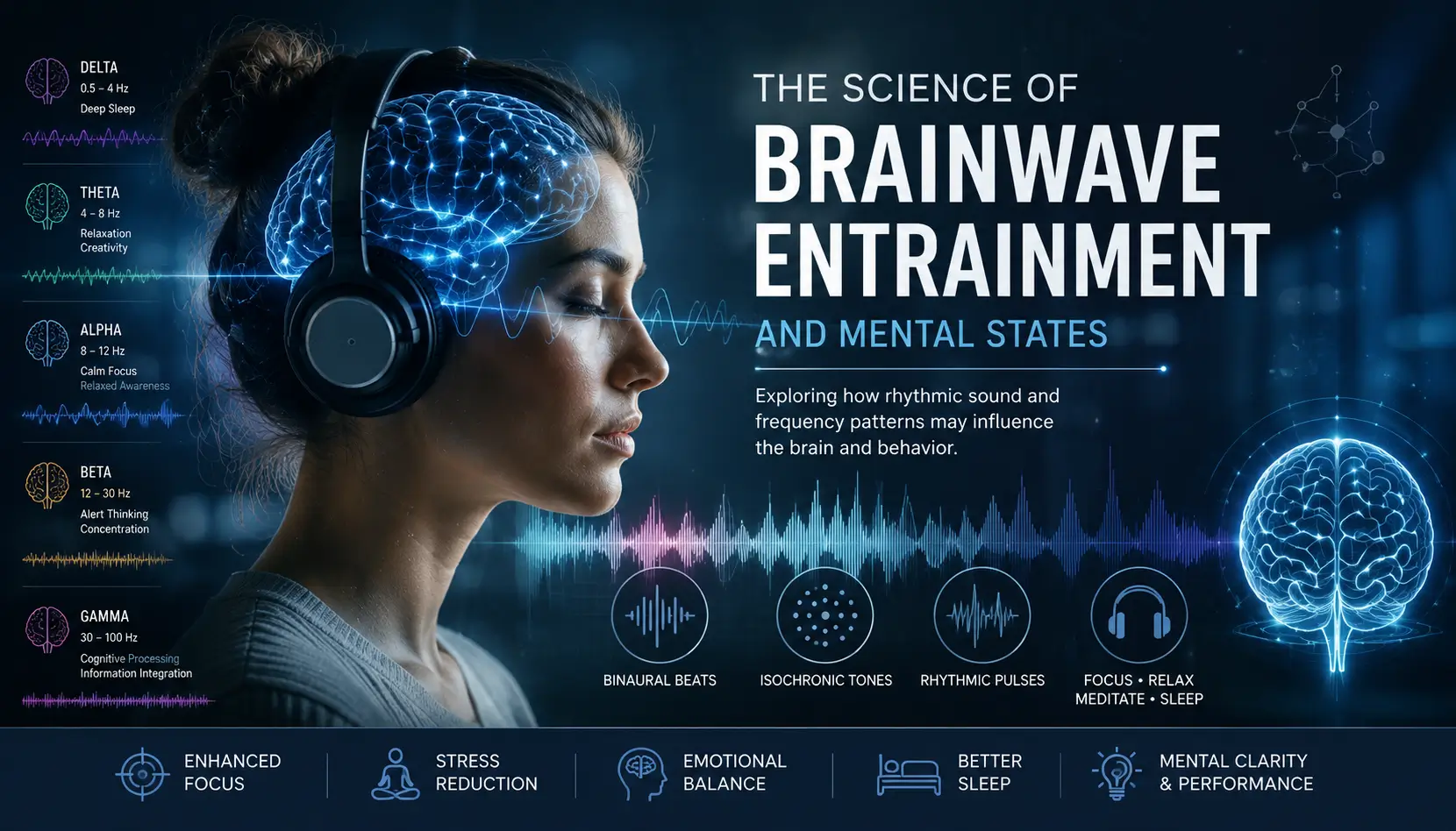
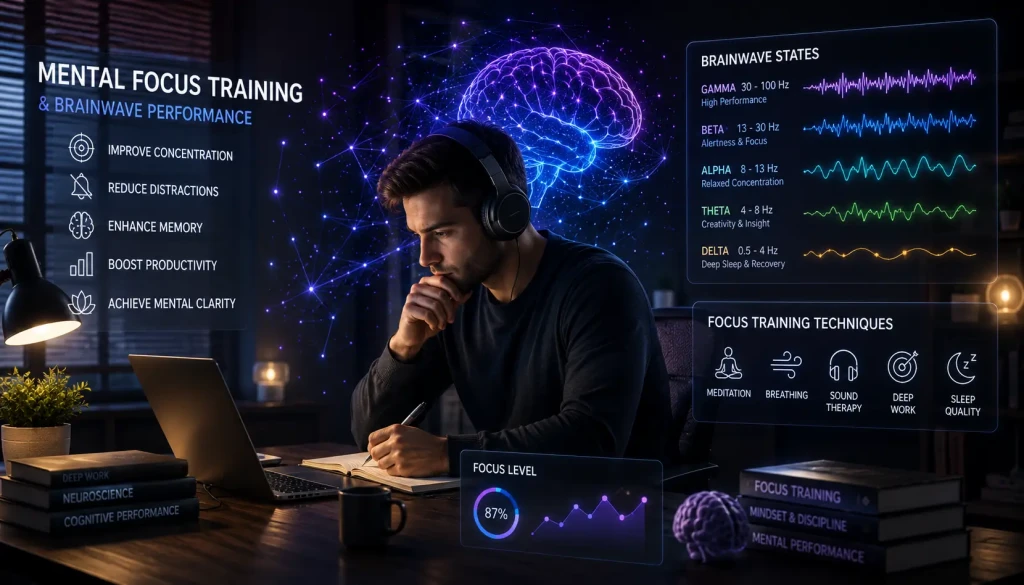
🧩 Gamma Waves vs Other Brainwave States
Gamma activity is only one part of overall brain function.
Other brainwave ranges are also important:
- Delta → deep sleep
- Theta → relaxation and imagination
- Alpha → calm focus
- Beta → alert thinking
- Gamma → high-level processing and integration
Healthy cognitive performance depends on flexible transitions between these states rather than remaining locked in one frequency pattern.
You can also explore our article on binaural beat frequencies for focus to better understand how different brainwave ranges are commonly discussed in audio-based concentration routines.
🔗 Related Brainwave Research Topics
Gamma-wave discussions are often connected to:
- attention,
- mindfulness,
- neuroplasticity,
- cognitive performance,
- and sensory processing.
You may also find our guides on neuroplasticity and mental performance and meditation vs binaural beats helpful for understanding how different mental-training approaches interact with focus and awareness.
Final Thoughts
Gamma brain waves remain one of the most fascinating areas of neuroscience discussion.
Research suggests they may play a role in:
- attention,
- cognitive coordination,
- meditation,
- and sensory integration.
At the same time, many internet claims surrounding gamma frequencies become exaggerated.
The healthiest perspective is understanding gamma activity as one component of a much larger and more complex brain system — not a magical shortcut to intelligence or instant transformation.
Related Articles
Related Posts
Stay Informed With the Latest & Most Important News
Previous Post
Next Post