
Now Reading: Meditation vs. Binaural Beats: Which Is Better for Stress and Focus?
-
01
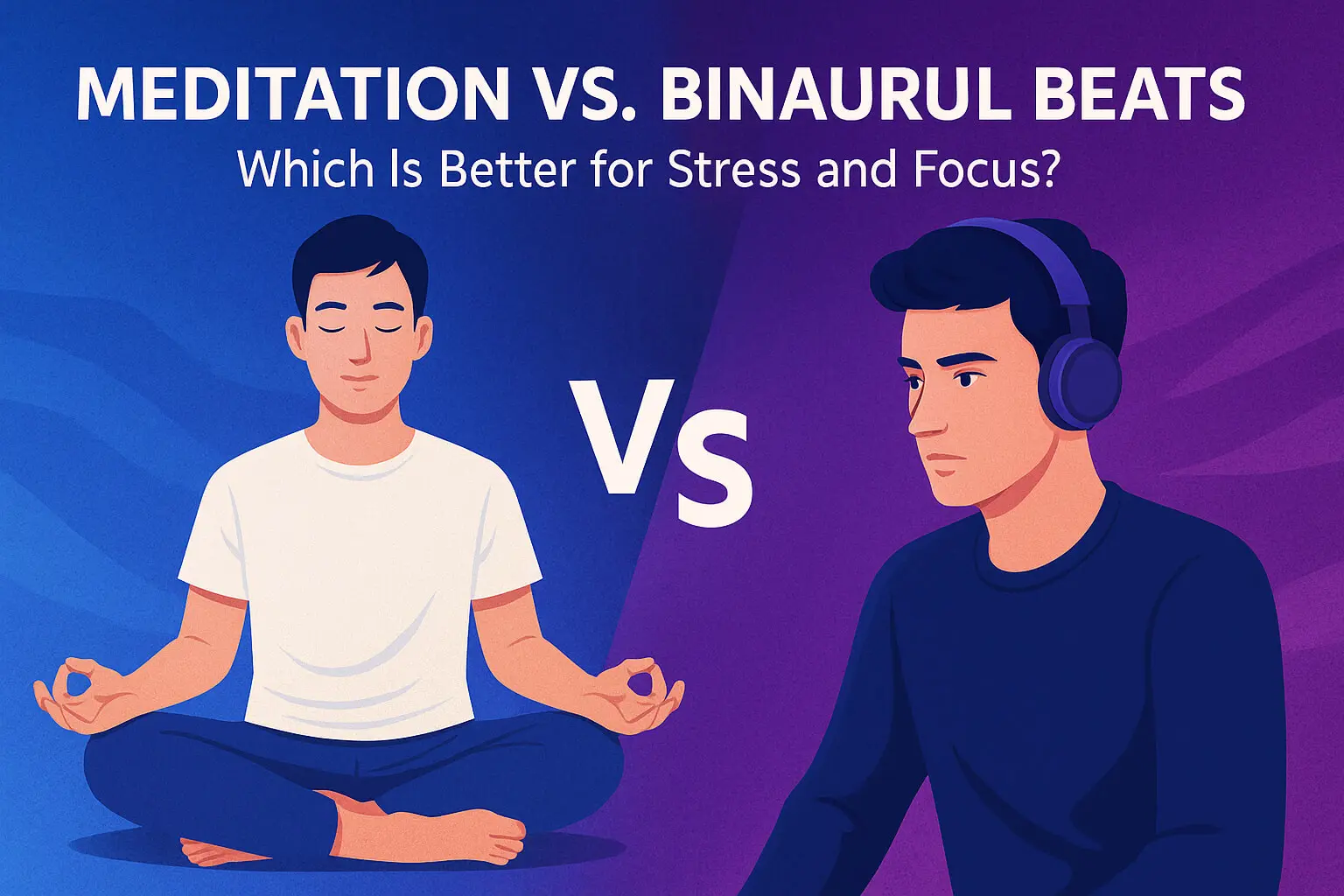
Meditation vs. Binaural Beats: Which Is Better for Stress and Focus?
Meditation vs. Binaural Beats: Which Is Better for Stress and Focus?
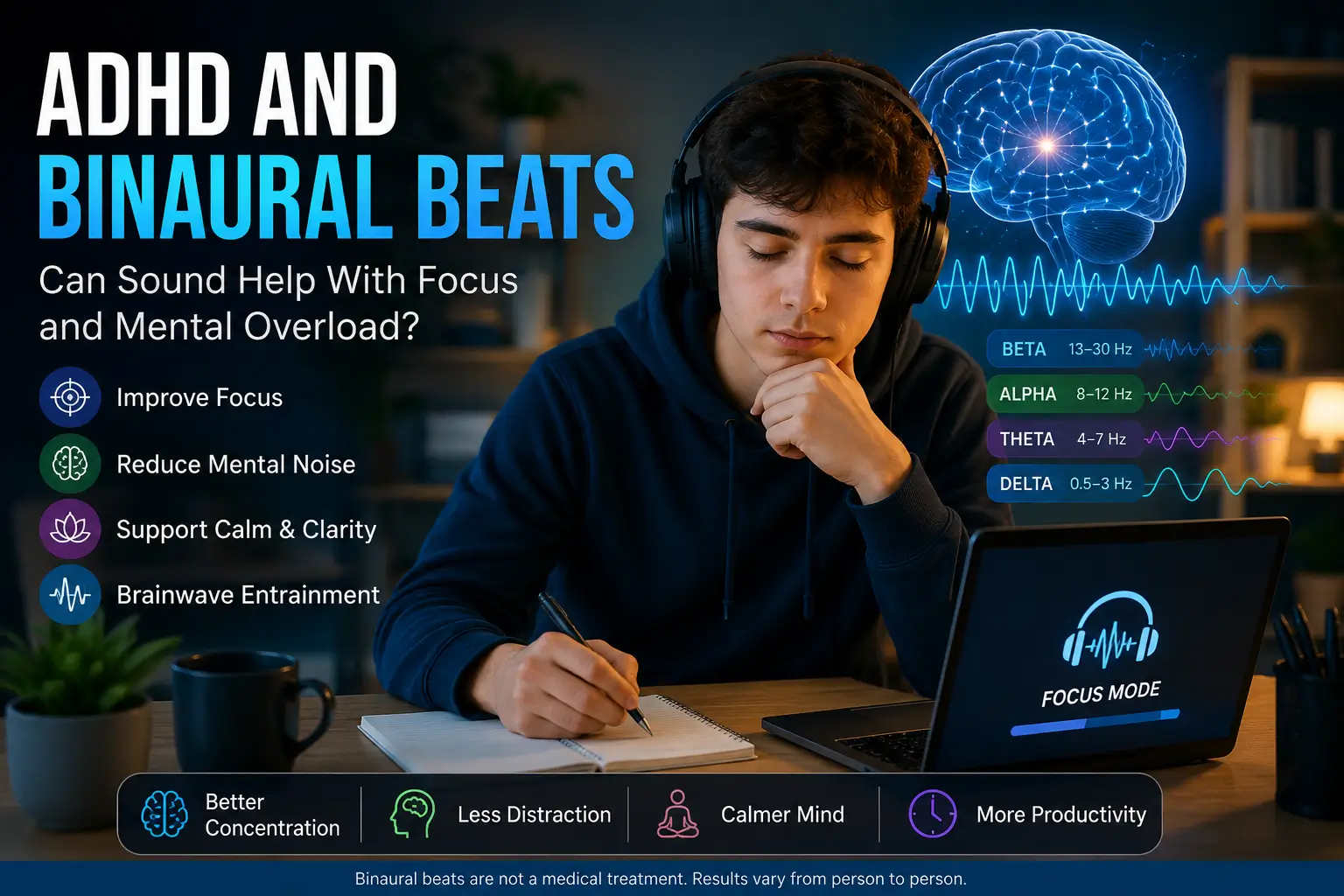
Modern life leaves many people mentally overwhelmed.
Stress, constant notifications, fragmented attention, and digital overstimulation have increased interest in tools that may help support:
- relaxation,
- focus,
- emotional balance,
- and mental clarity.
Two popular approaches are:
- meditation
and - binaural beats.
Supporters of meditation often emphasize mindfulness, awareness, and emotional regulation.
Fans of binaural beats frequently describe immersive sound experiences that may encourage relaxation or concentration.
But which approach actually works better?
The answer depends less on “which one wins” — and more on how different people respond to different mental environments.
🧠 What Is Meditation?
Meditation is a broad practice involving intentional attention and mental awareness.
Different meditation styles may focus on:
- breathing,
- mindfulness,
- observation,
- visualization,
- emotional regulation,
- or calming mental activity.
Meditation has been practiced for thousands of years across many cultures and traditions.
Modern research suggests meditation may help support:
- stress management,
- emotional awareness,
- attention regulation,
- and relaxation under certain conditions.
Further reading:
https://www.nih.gov/health-information/meditation-and-mindfulness
🎧 What Are Binaural Beats?
Binaural beats are auditory illusions created when slightly different frequencies are played separately into each ear.
The brain perceives the frequency difference as a rhythmic internal pulse.
Different beat frequencies are often associated online with:
- focus,
- relaxation,
- meditation,
- sleep,
- or mental clarity.
However, many exaggerated internet claims surrounding binaural beats are not strongly supported by scientific evidence.
For most people, binaural beats are better understood as:
- immersive sound environments,
- relaxation tools,
- or focus-supportive audio experiences.
🌊 Meditation and Binaural Beats Affect the Mind Differently
Meditation primarily trains:
- awareness,
- attention,
- emotional observation,
- and mental regulation.
Binaural beats, by contrast, focus more on:
- sensory atmosphere,
- rhythmic stimulation,
- ambient relaxation,
- and auditory immersion.
One approach is internally guided.
The other is externally guided through sound.
This is why some people find meditation more personally transformative over time, while others prefer audio-supported relaxation environments.
🔬 What Science Actually Supports
Research suggests both meditation and calming audio environments may influence:
- stress response,
- emotional regulation,
- attention,
- and relaxation under certain conditions.
Meditation has significantly more long-term scientific research behind it overall.
Binaural beat research remains more limited and mixed, though some studies suggest possible short-term effects involving:
- relaxation,
- anxiety reduction,
- or calmer attention states.
Further reading:
https://www.frontiersin.org/articles/10.3389/fnhum.2019.00425/full
https://www.apa.org/topics/mindfulness/meditation
The most balanced perspective is that neither method should be treated as magical mind transformation.
Both are simply tools that may help create healthier mental routines for some individuals.
☁️ Why Some People Prefer Binaural Beats
Meditation can initially feel difficult for many beginners.
Some individuals struggle with:
- racing thoughts,
- impatience,
- distraction,
- or difficulty sitting quietly.
This is one reason binaural beats and ambient sound systems became popular.
Structured audio may help create:
- calming atmosphere,
- sensory consistency,
- and immersive focus environments
that feel easier for some people to engage with initially.
Some listeners explore neuroacoustic relaxation programs that combine ambient sound layering with calming rhythmic audio experiences.
🧩 Why Meditation May Offer Deeper Long-Term Benefits
Meditation often encourages active self-awareness rather than passive listening.
Over time, consistent mindfulness practices may help people improve:
- emotional resilience,
- stress awareness,
- attention control,
- and cognitive flexibility.
This is one reason meditation remains widely recommended in:
- mindfulness programs,
- stress-management practices,
- and mental wellness routines.
⚖️ Meditation vs Binaural Beats: Which Is Better?
There is probably no universal answer.
Some people prefer:
- silence,
- mindfulness,
- and self-guided awareness.
Others respond better to:
- immersive sound environments,
- ambient stimulation,
- or guided relaxation audio.
Many people actually combine both approaches.
For example:
- meditation with calming audio,
- binaural beats during breathwork,
- or ambient sound during mindfulness sessions.
⚠️ Common Misconceptions
Myth:
“Binaural beats instantly replace meditation.”
Reality:
Meditation involves broader awareness and behavioral practices beyond audio stimulation.
Myth:
“Meditation always works immediately.”
Reality:
Meditation often requires patience and consistency before benefits become noticeable.
Myth:
“One method works for everyone.”
Reality:
Stress regulation and focus are highly individual experiences.
🧘 Practical Ways to Use Both Together
Many people successfully combine:
- meditation,
- ambient sound,
- mindfulness,
- breathwork,
- and calming audio routines.
The healthiest approach is usually experimentation without unrealistic expectations.
Consistency matters far more than chasing dramatic instant transformation claims.
Final Thoughts
Meditation and binaural beats are not necessarily competing systems.
They simply influence the mind in different ways.
Meditation focuses more on awareness and intentional mental training.
Binaural beats focus more on sensory atmosphere and auditory immersion.
For many individuals, both approaches may help support calmer mental states and healthier focus routines when used realistically and consistently.
Related Articles

Stay Informed With the Latest & Most Important News
Previous Post
Next Post