
Now Reading: Theta Waves Explained: Why They’re Linked to Creativity and Deep Relaxation
-
01
Theta Waves Explained: Why They’re Linked to Creativity and Deep Relaxation
Theta Waves Explained: Why They’re Linked to Creativity and Deep Relaxation
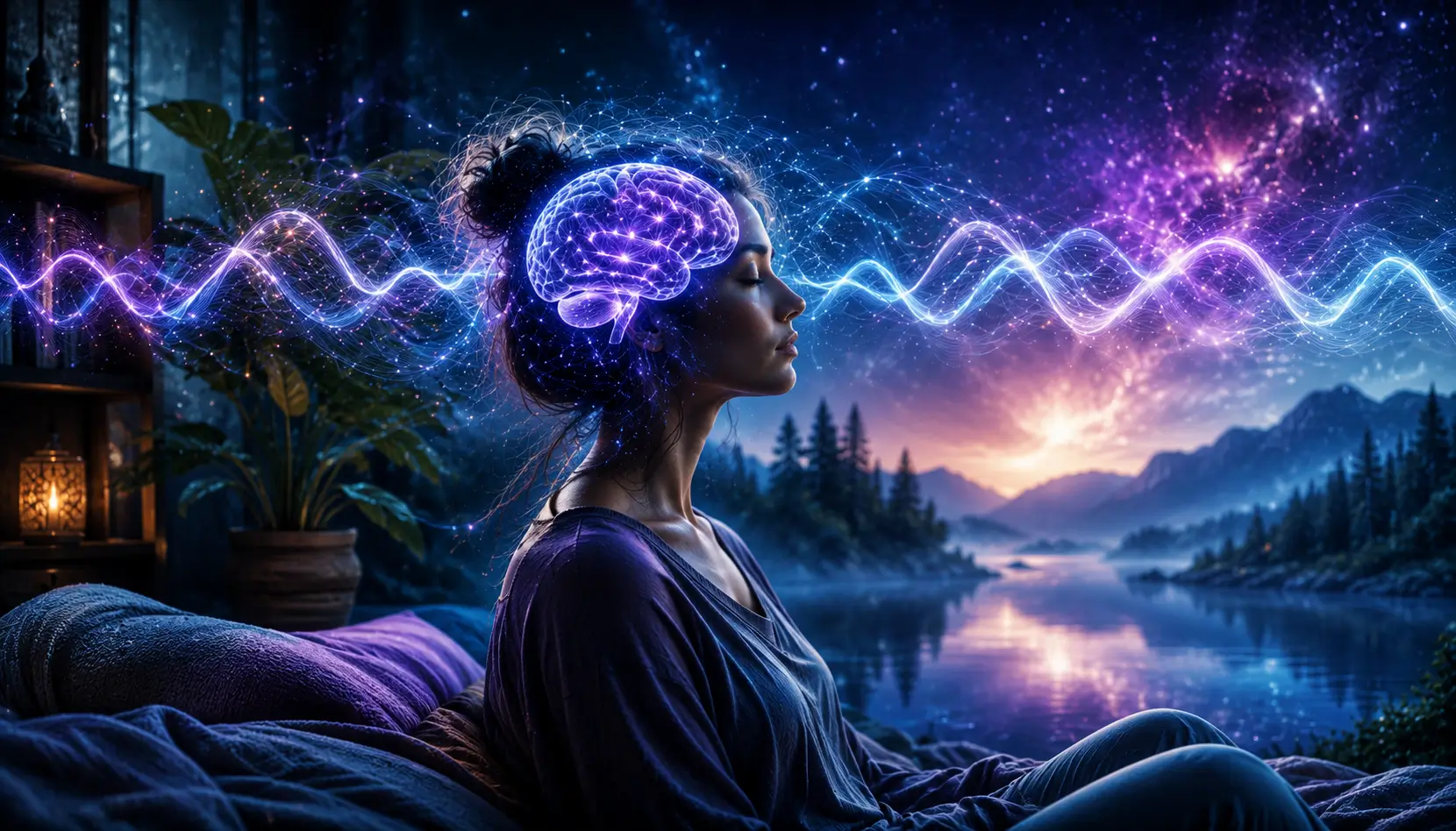
Certain mental states feel very different from ordinary waking attention.
There are moments when:
- thoughts become more fluid,
- imagination feels stronger,
- emotions feel deeper,
- and awareness becomes calmer and less analytical.
These experiences are often associated with theta brain wave activity.
Theta waves are among the most discussed brainwave patterns in:
- meditation,
- relaxation research,
- creativity discussions,
- and mindfulness practices.
Online conversations sometimes portray theta states as mystical or supernatural.
In reality, theta activity is a measurable pattern of neural activity linked to deeply relaxed mental states.
🧠 What Are Theta Brain Waves?
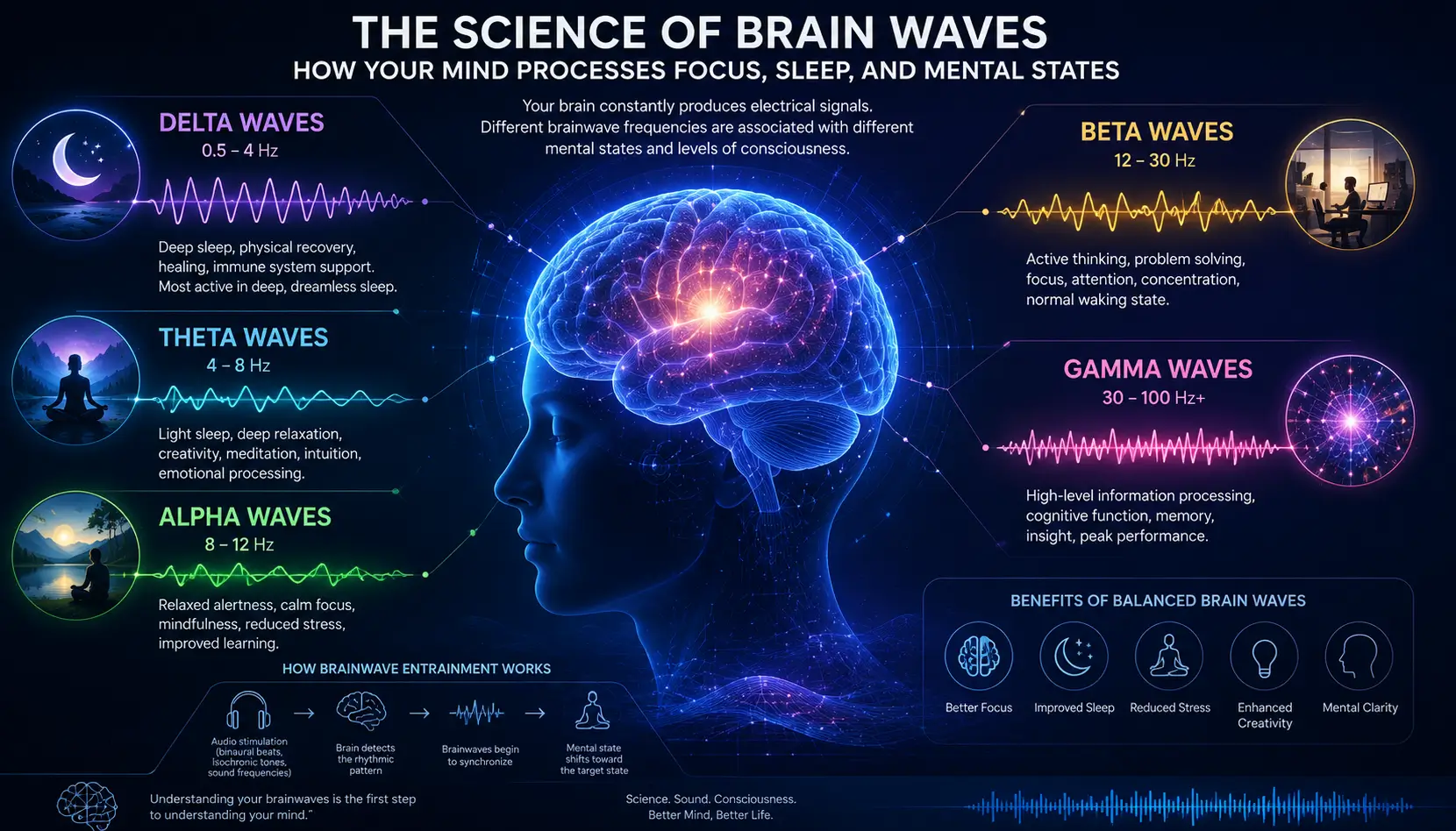
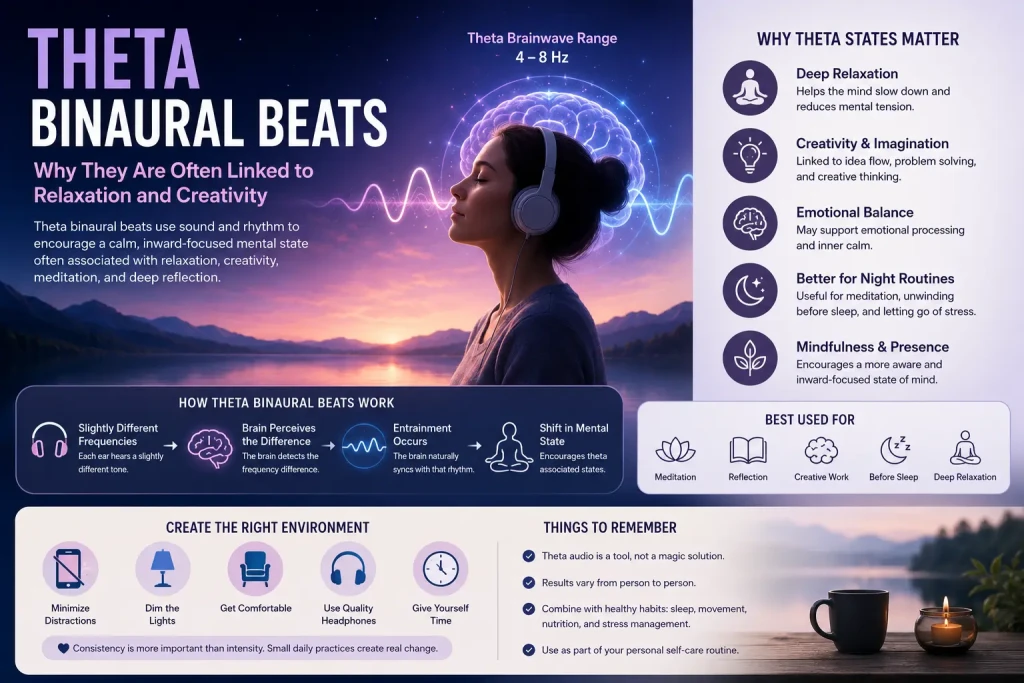
Theta brain waves are neural oscillations generally measured between:
- 4–8 Hz.
Theta activity commonly appears during:
- deep relaxation,
- meditation,
- light sleep,
- daydreaming,
- and internally focused awareness.
Unlike highly alert brain states associated with active problem-solving, theta-related states often feel:
- slower,
- calmer,
- and more emotionally immersive.
Researchers frequently observe theta activity during transitions between:
- wakefulness,
- relaxation,
- and early sleep stages.

☁️ Why Theta Waves Are Linked to Creativity
Theta states are often associated with imagination and creative thinking because they may involve reduced external focus and increased internal processing.
Many artists, writers, and meditators describe creative moments where:
- ideas feel more fluid,
- associations emerge naturally,
- and thinking becomes less rigid.
This does not mean theta waves magically create creativity.
However, deeply relaxed mental states may help support:
- imagination,
- reflective thinking,
- emotional processing,
- and creative exploration.
For calmer and more balanced mental states linked with relaxed attention, explore our guide to alpha brain waves and relaxed focus.
🧘 Theta Waves and Meditation
Theta activity is commonly discussed in mindfulness and meditation research.
Some meditation practices encourage states involving:
- reduced mental stimulation,
- slower thought patterns,
- emotional awareness,
- and inward attention.
This is one reason theta waves became strongly associated online with:
- meditation,
- subconscious exploration,
- emotional reflection,
- and deep relaxation.
Importantly:
theta activity itself is not mystical.
It is simply a measurable brainwave pattern observed during certain calm mental states.
You may also enjoy our article on alpha waves and calm focus to better understand how different brainwave states interact with awareness and attention.
For a broader look at sound-based mental states, read our guide to brainwave entrainment audio for focus and relaxation.
🔬 What Science Says About Theta Activity
Research suggests theta activity may play a role in:
- memory processing,
- emotional regulation,
- meditation,
- creativity,
- and relaxed cognitive states.
Some studies also explore possible connections between theta synchronization and:
- learning,
- mindfulness,
- and internally directed attention.
Further reading:
https://www.frontiersin.org/articles/10.3389/fnhum.2019.00425/full
https://www.ncbi.nlm.nih.gov/pmc/articles/PMC10198548/
At the same time, exaggerated internet claims involving:
- instant emotional healing,
- subconscious reprogramming,
- or mystical transformation
should be approached carefully.
🎧 Can Audio Encourage Theta States?
Some audio systems use:
- ambient soundscapes,
- binaural beats,
- rhythmic pulses,
- and calming frequency environments
designed to support relaxation-focused listening experiences.
Many listeners explore theta-oriented neuroacoustic audio programs during:
- meditation,
- journaling,
- creative routines,
- mindfulness,
- or stress-reduction practices.
Research involving long-term brainwave entrainment effects remains limited, and experiences vary significantly between individuals.
🌙 Theta Waves and Sleep Transition
Theta activity is also connected to the transition between wakefulness and sleep.
This is one reason theta-oriented sound environments are often used before:
- bedtime,
- meditation,
- or relaxation sessions.
Many people describe theta-related states as:
- dreamy,
- immersive,
- calm,
- or emotionally reflective.
⚠️ Common Myths About Theta Waves
Myth:
“Theta waves instantly unlock hidden subconscious powers.”
Reality:
Current science does not support extreme transformation claims.
Myth:
“Theta frequencies permanently rewire emotions.”
Reality:
Emotional well-being depends on many biological and psychological factors.
Myth:
“More theta activity is always better.”
Reality:
Healthy cognition depends on balanced transitions between multiple brainwave states.
🌊 Theta Waves vs Other Brainwave States
Different brainwave ranges are commonly associated with different mental conditions:
- Delta → deep sleep
- Theta → deep relaxation and imagination
- Alpha → calm focus
- Beta → alert thinking
- Gamma → high-level cognitive processing
Healthy brain function depends on flexibility between these states rather than remaining fixed in one frequency pattern.
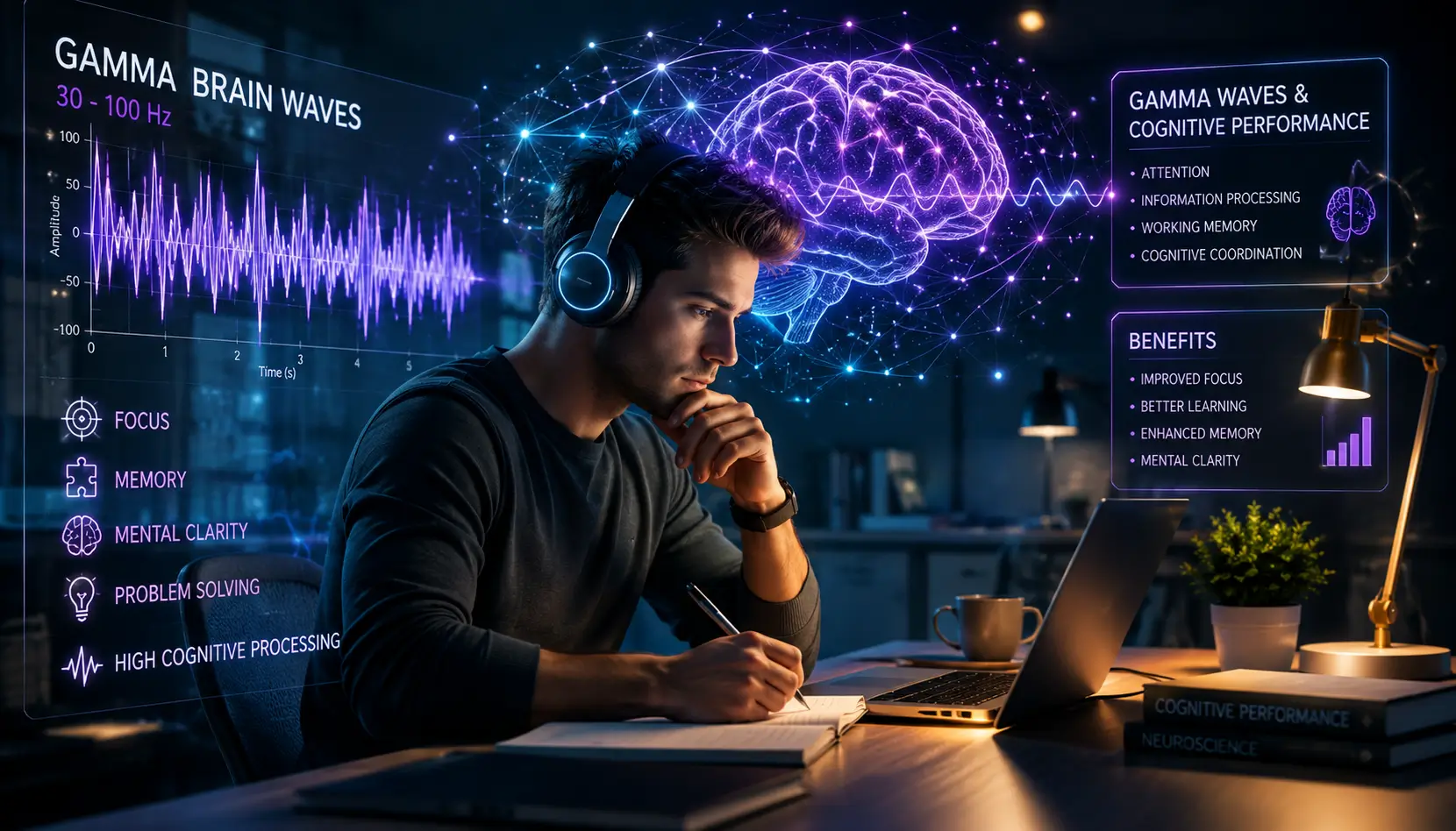
You can also explore our guide on gamma brain waves and cognition to understand how different brainwave states may support different forms of awareness.
To better understand how theta activity compares with other mental states, read our guide to the different types of brain waves and how they affect the mind.
🔗 Related Relaxation and Creativity Topics
Theta-wave discussions are often connected to:
- mindfulness,
- creativity,
- emotional reflection,
- relaxation,
- and meditation.
You may also find our articles on meditation vs binaural beats and binaural beats vs isochronic tones helpful for understanding different relaxation-oriented audio approaches.
Final Thoughts
Theta brain waves remain one of the most fascinating areas of neuroscience and meditation research.
Current evidence suggests theta activity may be associated with:
- deep relaxation,
- inward attention,
- creativity,
- and reflective awareness under certain conditions.
At the same time, exaggerated internet claims should be approached carefully.
The healthiest perspective is viewing theta states as one part of a larger and highly adaptive brain system involved in relaxation, awareness, and emotional processing.
Related Articles
Related Posts
Stay Informed With the Latest & Most Important News
Previous Post
Next Post