
Now Reading: Best Binauraal Beats for Sleep: A Calm Guide to Deeper Rest
-
01
Best Binauraal Beats for Sleep: A Calm Guide to Deeper Rest
Best Binauraal Beats for Sleep: A Calm Guide to Deeper Rest
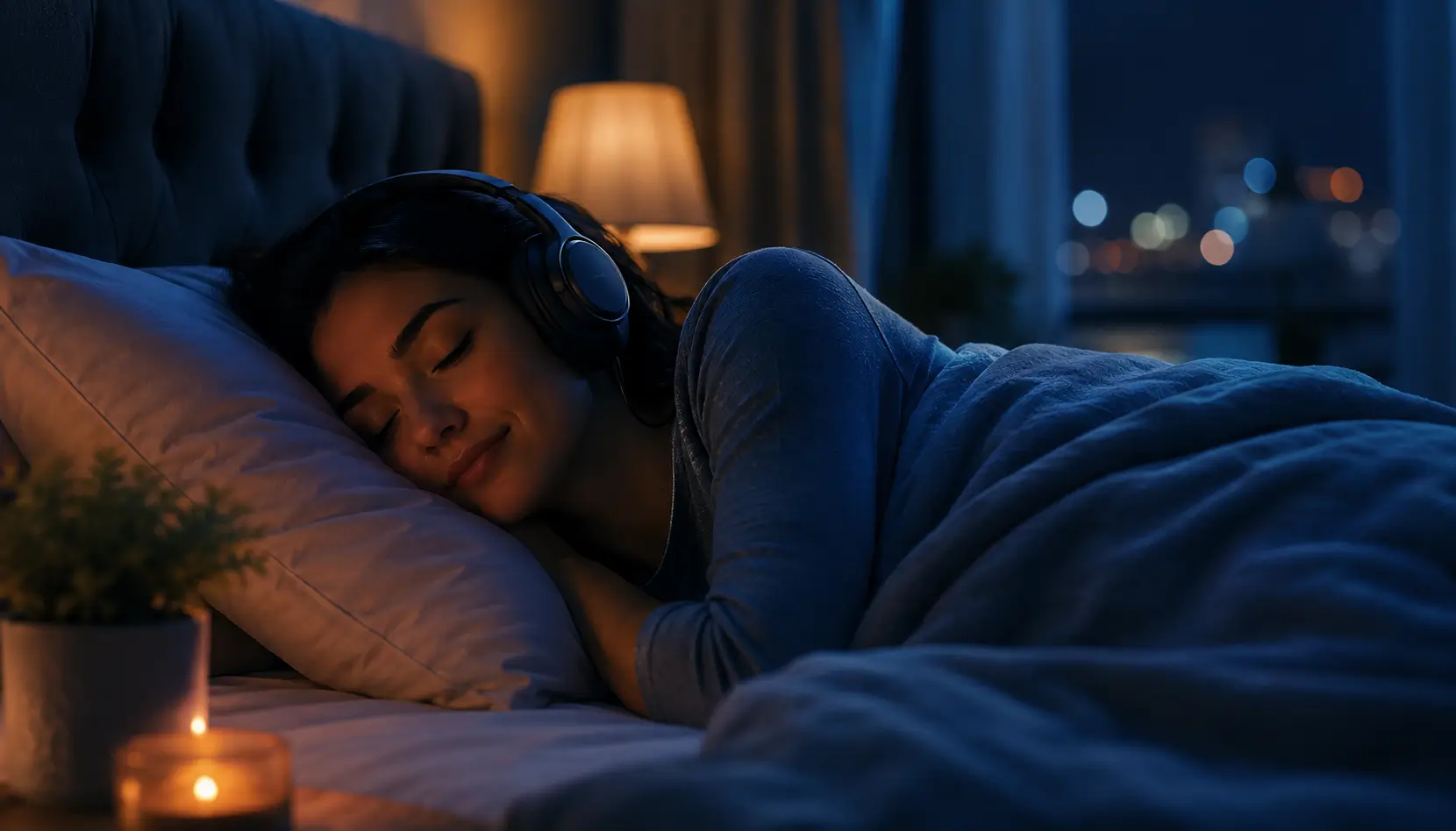
Sleep should feel natural.
But for many people, bedtime becomes the moment when the mind gets louder. Thoughts repeat, stress rises, the body feels tired, but the brain refuses to slow down.
That is why many people explore binaural beats for sleep as part of a calmer nighttime routine. The goal is not to force sleep instantly. The goal is to create an audio environment that helps the nervous system relax, reduce mental noise, and prepare the brain for rest.
Binaural beats are not a cure for insomnia, anxiety, or medical sleep disorders. But when used carefully, they may become a useful support tool for people who want a more peaceful transition into sleep.
Affiliate disclosure: This article may include affiliate links. If you choose to buy through them, Megs Brain may earn a commission at no extra cost to you.
🌙 What Are Binaural Beats for Sleep?
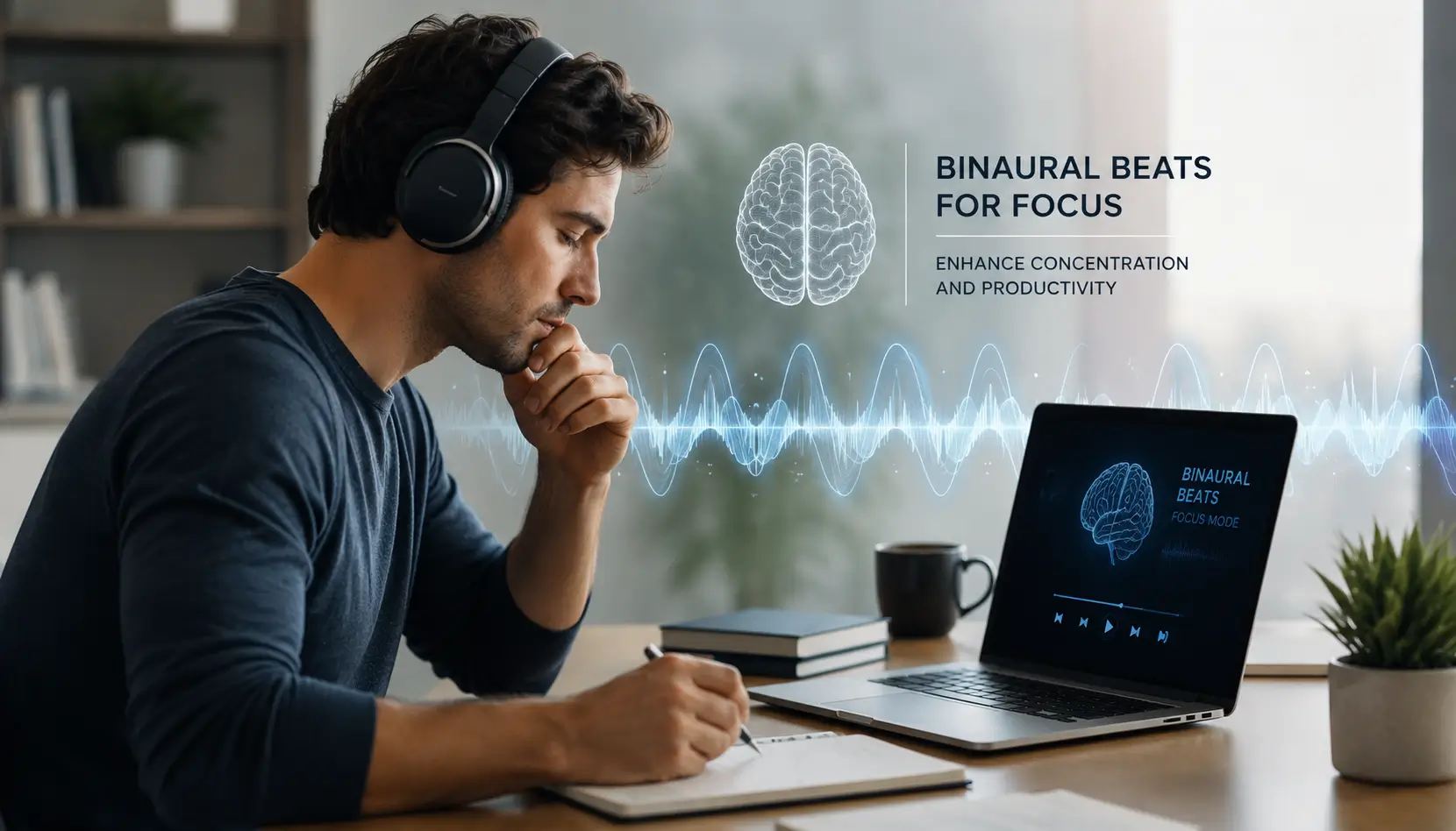
Binaural beats are created when each ear receives a slightly different tone.
For example, one ear may hear one frequency while the other ear hears a slightly different frequency. The brain may perceive the difference between those two tones as a separate rhythmic beat.
This perceived beat is often discussed in relation to brainwave entrainment, a concept based on the idea that rhythmic sound patterns may influence mental-state activity for some listeners.
Because each ear needs to receive a different signal, binaural beats usually work best with headphones.
People commonly use sleep-focused binaural beats for:
- Relaxing before bed
- Reducing nighttime mental noise
- Creating a consistent sleep cue
- Supporting meditation before sleep
- Building a calmer evening routine
Related guide:
Brainwave Entrainment Explained: How Sound Shapes Your Mental State
To better understand how sleep-related brain activity works, read our guide to the different types of brain waves and how they affect relaxation and sleep.
🧠 How Brainwaves Change Before Sleep
The brain does not simply switch off at night.
As you move from wakefulness into sleep, brain activity usually shifts through different patterns. Fast, alert states gradually give way to slower, calmer rhythms.
In basic brainwave discussions, these ranges are often described like this:
- Beta waves: active thinking and alert attention
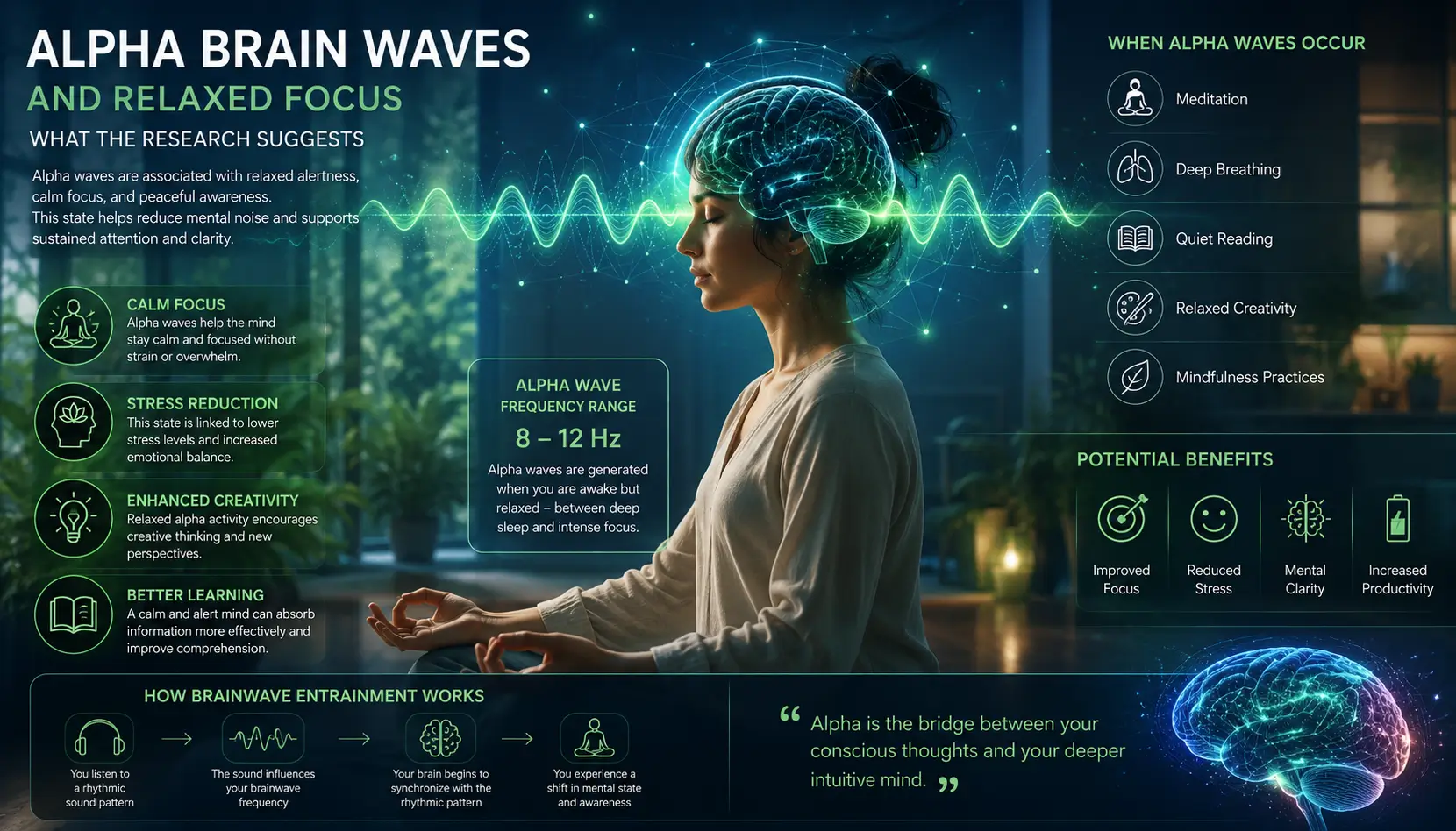
- Alpha waves: relaxed awareness
- Theta waves: drowsiness, meditation, and early sleep stages
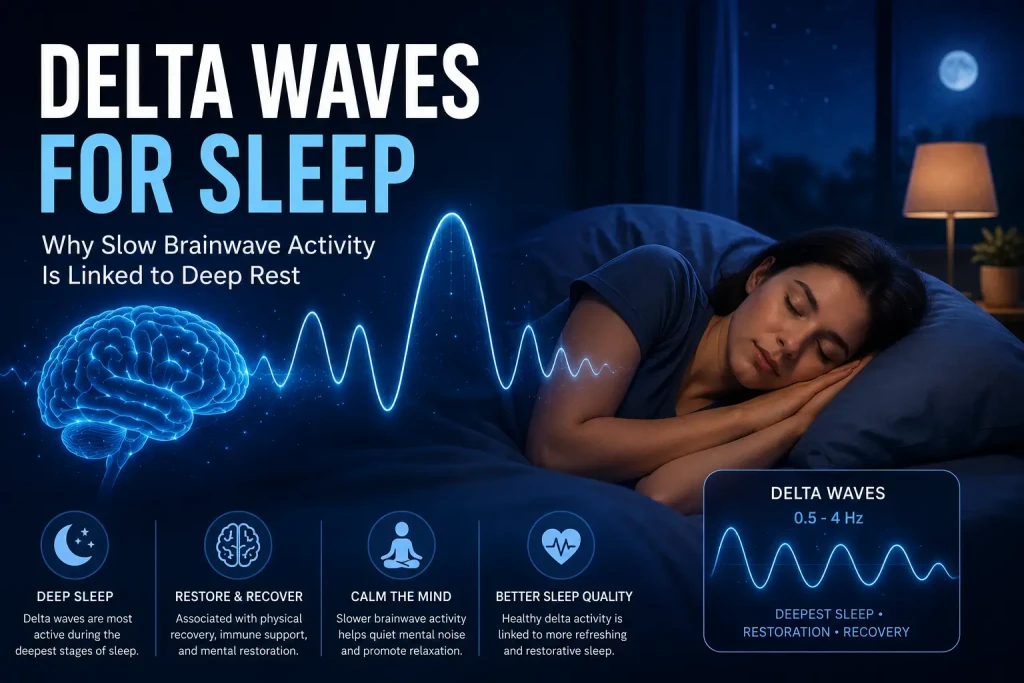
- Delta waves: deep sleep and physical restoration
Sleep-oriented binaural beats usually focus on slower rhythms because the goal is to help the mind move away from high-alert thinking.
Related article:
Sleep Waves: Delta and Theta Brainwave States Explained
To better understand how different sleep-related brain states work, read our guide to the different types of brain waves and how they affect relaxation and sleep.
💤 Best Binaural Beat Frequencies for Sleep
There is no single “perfect” frequency that works for everyone.
However, sleep-focused audio often uses slower frequency ranges because they are commonly associated with relaxation, drowsiness, and deeper rest.
1. Delta Frequencies for Deep Sleep
Delta brainwave activity is commonly associated with deep, restorative sleep.
Delta-style binaural beats are often used by people who want audio that feels slow, heavy, and deeply calming. These tracks are usually better suited for bedtime rather than daytime relaxation.
Delta-focused audio may be useful when your goal is to:
- Wind down fully at night
- Create a deeper rest environment
- Reduce stimulation before bed
- Support a consistent sleep routine
For a deeper explanation of restorative sleep states, explore our guide to delta waves and deep sleep.
2. Theta Frequencies for Pre-Sleep Relaxation
Theta activity is often discussed in connection with deep relaxation, meditation, imagination, and the transition between waking and sleep.
For many people, theta-style audio feels less heavy than delta and may be easier to use before actually going to bed.
Theta binaural beats may be useful for:
- Evening meditation
- Letting go of racing thoughts
- Relaxing after a stressful day
- Preparing the mind for sleep
If you want to explore meditative and deeply relaxed mental states, see our guide to theta waves, creativity, and deep calm.
3. Alpha Frequencies for Evening Calm
Alpha activity is usually linked with relaxed awareness rather than deep sleep itself.
If you are not ready to sleep yet but want to calm your mind, alpha-style audio may be useful earlier in the evening. It can help create a softer mental transition before moving into theta or delta-based tracks later.
If you are interested in calmer mental states linked with relaxation, read our guide to alpha brain waves and relaxed focus.
🎧 Do You Need Headphones?
For true binaural beats, headphones are usually recommended.
This is because the effect depends on each ear receiving a different frequency. Without headphones, the tones may blend in the room before reaching your ears, which can weaken the binaural effect.
That said, not everyone wants to sleep with headphones on. If headphones feel uncomfortable, you may prefer:
- Soft ambient sleep music
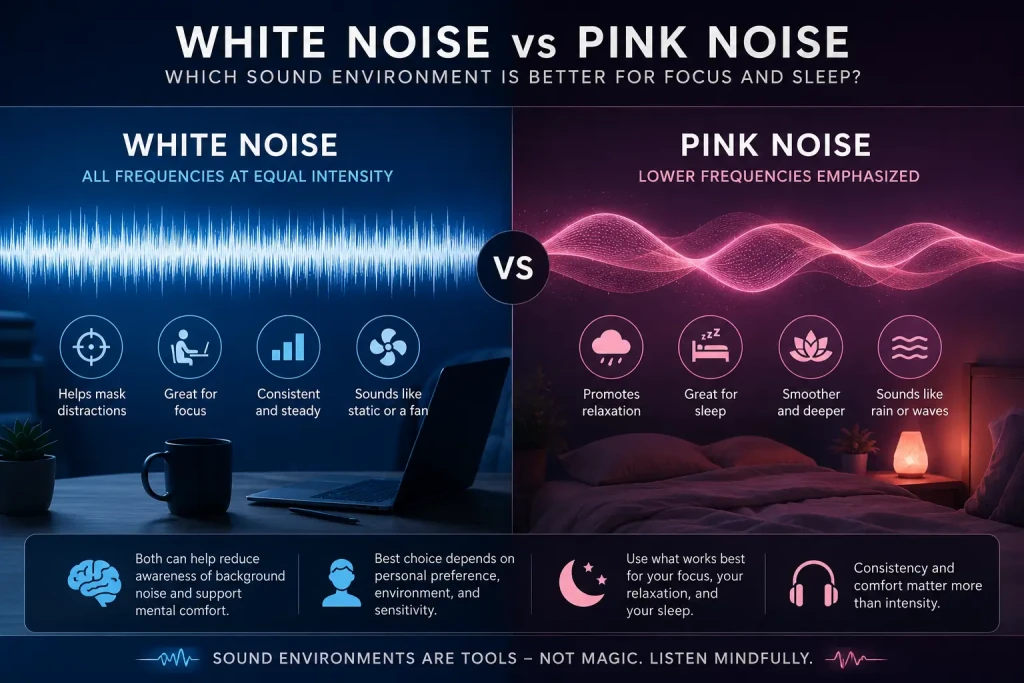
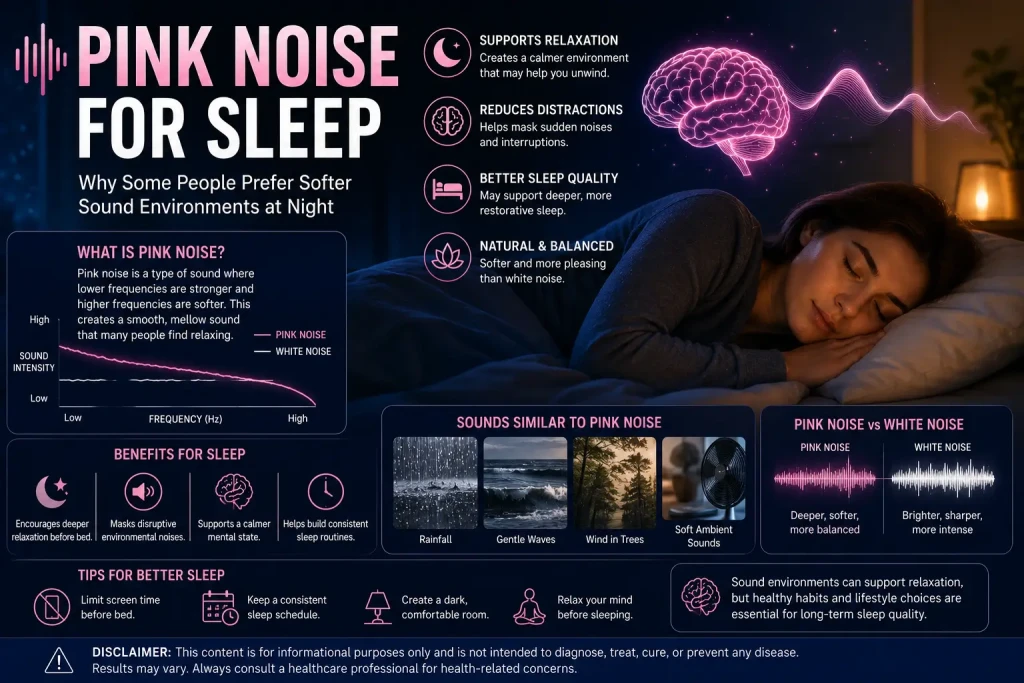
- Brown noise or white noise
- Nature sounds
- Isochronic tones
- Low-volume speaker-based relaxation audio
The best sleep audio is the one you can use comfortably and consistently.
🕯️ A Simple Nighttime Binaural Beats Routine
Binaural beats usually work better when they are part of a repeatable bedtime pattern.
Here is a simple routine you can test:
- Dim the lights 30–60 minutes before bed.
- Put your phone on Do Not Disturb.
- Choose a calm theta or delta-oriented sleep track.
- Use a low, comfortable volume.
- Avoid scrolling while listening.
- Breathe slowly and let the audio stay in the background.
- Stop if the sound feels distracting or uncomfortable.
The routine matters as much as the audio itself. If you play sleep frequencies while checking emails, reading stressful news, or jumping between apps, the brain may stay alert despite the sound.
🌊 Binaural Beats vs Sleep Music
Sleep music can be helpful even when it does not use binaural beat technology.
Many people relax well with soft piano, ambient drones, rain sounds, ocean waves, or low-frequency noise. Binaural beats are different because they are designed around a perceived frequency difference between the ears.
Neither option is automatically better.
Binaural beats may be a good fit if you want structured brainwave-inspired audio. Sleep music may be better if you simply need a peaceful sound environment without headphones.
Related comparison:
Binaural Beats vs Isochronic Tones for Sleep
🚀 Where Genius Wave Fits Into Sleep Audio
Some people prefer simple single-frequency binaural beat tracks. Others prefer more layered audio experiences that combine atmosphere, rhythm, and guided sound design.
One example is The Genius Wave audio program, which uses structured sound environments inspired by brainwave concepts, calm focus, and mental clarity routines.
For nighttime use, this type of audio may be helpful if you want a more polished listening experience than basic tone-based tracks.
Still, no audio program should replace healthy sleep habits. The strongest results usually come from combining calming sound with a regular schedule, reduced screen exposure, and a lower-stress evening routine.
🔬 What Does Research Suggest?
Research on binaural beats is still evolving.
Some studies suggest that binaural beat stimulation may influence mood, attention, relaxation, or sleep-related experiences for certain people. Other findings are mixed, and individual responses can vary.
That means binaural beats should be viewed as a possible support tool rather than a guaranteed sleep solution.
Useful research starting points:
https://www.frontiersin.org/articles/10.3389/fnhum.2019.00425/full
https://www.ncbi.nlm.nih.gov/pmc/articles/PMC4428073/
https://pubmed.ncbi.nlm.nih.gov/11191043/
⚠️ Safety Tips for Sleep Listening
Most people use binaural beats casually without problems, but safe listening still matters.
- Keep the volume low and comfortable.
- Do not use intense focus tracks at bedtime.
- Stop listening if you feel dizzy, tense, irritated, or uncomfortable.
- Avoid sleeping with wired headphones if they bother you or restrict movement.
- Speak with a medical professional if you have epilepsy, seizure history, serious neurological concerns, or persistent insomnia.
Related guide:
Are Binaural Beats Safe?
✅ How to Choose the Best Binaural Beats for Sleep
The best binaural beats for sleep are usually the ones that feel calming, non-intrusive, and easy to repeat.
When choosing a track, look for:
- Soft sound design
- Low volume comfort
- Slow pacing
- No sudden changes
- No distracting vocals
- A length that matches your routine
- A tone that makes your body feel safe and relaxed
A track can have the “right” frequency and still be wrong for you if it feels annoying, harsh, or too stimulating.
For broader sound-based relaxation strategies, explore our guide to brainwave entrainment audio for focus and relaxation.
📌 Final Thoughts
Binaural beats for sleep may help some listeners create a calmer transition from daytime alertness into nighttime rest.
Delta-style audio is often used for deep sleep support. Theta-style audio may help with pre-sleep relaxation. Alpha-style audio may be useful earlier in the evening when the mind needs to slow down gently.
But the real foundation of better sleep is still simple: a consistent routine, less stimulation before bed, a comfortable environment, and realistic expectations.
If you want a more structured sound experience, The Genius Wave audio program may be worth exploring as part of a calm nighttime listening habit.
Related Articles
Related Posts
Stay Informed With the Latest & Most Important News
Previous Post
Next Post