
Now Reading: Binaural Beats vs Isochronic Tones for Sleep: Which Works Better?
-
01
Binaural Beats vs Isochronic Tones for Sleep: Which Works Better?
Binaural Beats vs Isochronic Tones for Sleep: Which Works Better?
Sleep audio is everywhere now.
Some tracks use binaural beats. Others use isochronic tones. Both are often connected to brainwave entrainment, relaxation, meditation, and nighttime routines.
But if your goal is better sleep, one question matters most:
Should you use binaural beats or isochronic tones before bed?
The honest answer is that both may help some listeners, but they work differently. The best choice depends on your comfort, your listening setup, and how your nervous system responds to rhythmic sound.
Affiliate disclosure: This article may include affiliate links. If you choose to buy through them, Megs Brain may earn a commission at no extra cost to you.
🎧 What Are Binaural Beats?
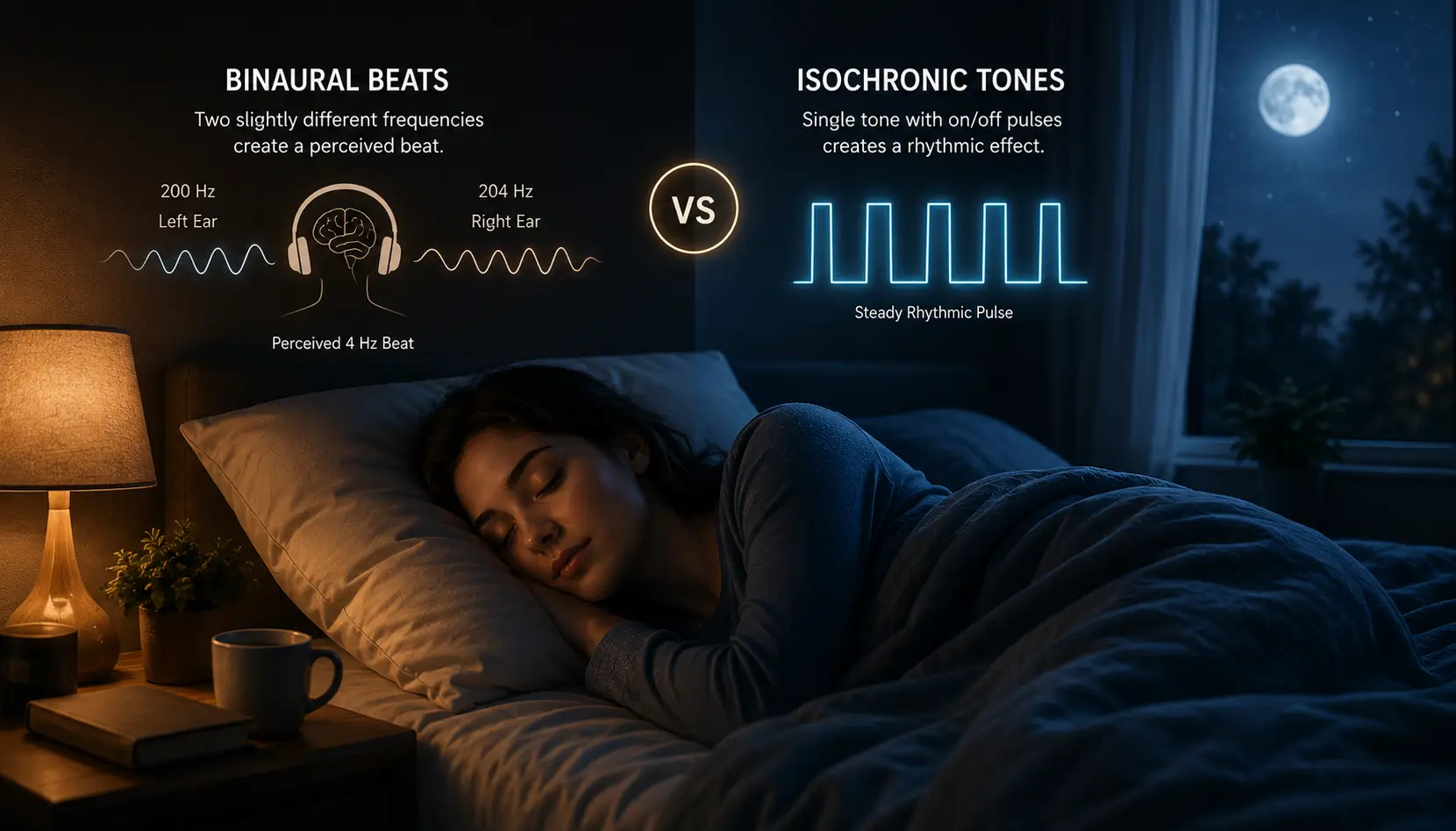
Binaural beats happen when each ear hears a slightly different tone.
For example, one ear may receive 200 Hz while the other receives 204 Hz. The brain may perceive the difference between them as a 4 Hz beat.
Because each ear needs a separate signal, binaural beats usually require headphones.
For sleep, binaural beats are often designed around slower frequency ranges connected with relaxation, drowsiness, and deeper rest.
Related guide:
Best Binaural Beats for Sleep
🔊 What Are Isochronic Tones?
Isochronic tones are different.
Instead of sending two slightly different tones to each ear, isochronic tones use one tone that turns on and off in a clear rhythmic pulse.
This pulsing pattern can be easier to hear, even without headphones.
That is why some people prefer isochronic tones for speaker-based listening, meditation rooms, or bedtime routines where headphones feel uncomfortable.
Related article:
Isochronic Tones Explained
🌙 Which Is Better for Sleep?
For sleep, comfort matters more than technical theory.
Binaural beats may feel smoother and more subtle. Isochronic tones may feel clearer and more rhythmic.
If you like soft, immersive headphone audio, binaural beats may be a better fit.
If you dislike headphones in bed, isochronic tones or ambient sleep audio may be easier to use consistently.
The best sleep audio is the one that helps your body relax rather than making your mind analyze the sound.
🧠 Brainwave Ranges Commonly Used for Sleep
Both binaural beats and isochronic tones are often designed around slower brainwave ranges.
- Alpha: relaxed awareness before sleep
- Theta: deep relaxation and pre-sleep drowsiness
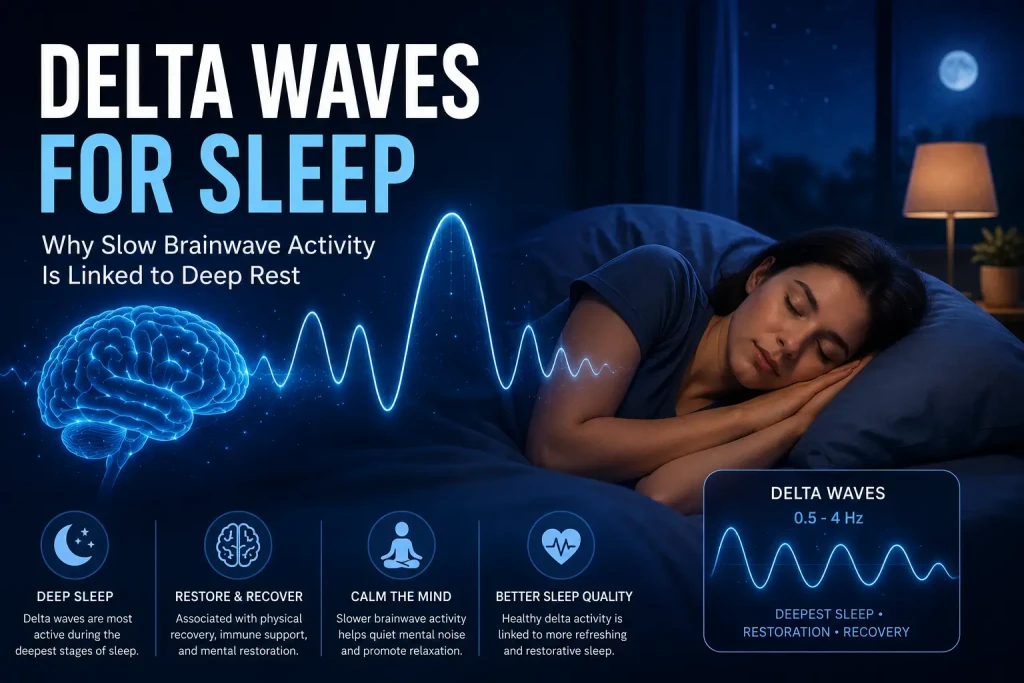
- Delta: deep sleep and physical recovery
For bedtime, theta and delta-style audio are usually more relevant than high-focus beta or gamma tracks.
Related guide:
Sleep Waves: Delta and Theta Brainwave States Explained
🎧 Headphones vs Speakers
This is one of the biggest practical differences.
Binaural beats generally work best with headphones because each ear needs to receive a different tone.
Isochronic tones can usually be played through speakers because the pulse is already built into the sound itself.
So if you sleep comfortably with headphones, binaural beats are worth testing.
If headphones bother you, isochronic tones may be more practical.
🕯️ Which One Feels More Relaxing?
Many listeners describe binaural beats as smoother and more atmospheric.
Isochronic tones can feel more noticeable because of the pulsing structure. Some people find that helpful. Others find it distracting, especially at bedtime.
For sleep, the sound should feel gentle, not demanding.
If the rhythm pulls your attention too much, it may keep you mentally active instead of helping you unwind.
🚀 Where Genius Wave Fits In
Some people prefer simple frequency tracks. Others prefer more layered audio experiences that combine rhythm, atmosphere, and brainwave-inspired sound design.
One example is The Genius Wave audio program, which uses structured sound environments inspired by focus, calm, and mental clarity concepts.
For sleep or evening relaxation, layered audio may feel more polished than raw tone-based tracks, especially if you prefer a more guided listening experience.
⚠️ Safety Tips Before Bed
Sleep audio should never feel intense or uncomfortable.
- Keep the volume low.
- Avoid aggressive focus tracks at night.
- Stop listening if you feel tense, dizzy, or irritated.
- Do not use sleep audio as a replacement for medical care.
- Speak with a professional if you have persistent insomnia, seizure history, or neurological concerns.
Related guide:
Are Binaural Beats Safe?
📌 Final Thoughts
Binaural beats and isochronic tones can both be useful sleep-support tools, but they are not the same.
Binaural beats are usually smoother and headphone-based. Isochronic tones are more direct and can work through speakers.
If you want subtle bedtime audio, start with binaural beats. If you want a clearer pulsing rhythm without headphones, try isochronic tones.
The best option is the one that helps you relax, stay consistent, and build a calmer nighttime routine.
🔗 Related Articles
Related Posts
Stay Informed With the Latest & Most Important News
Previous Post
Next Post