
Now Reading: White Noise vs Pink Noise: Which Sound Environment Do People Prefer for Sleep and Focus?
-
01
White Noise vs Pink Noise: Which Sound Environment Do People Prefer for Sleep and Focus?
White Noise vs Pink Noise: Which Sound Environment Do People Prefer for Sleep and Focus?
Not all background sound feels the same.
Some people instantly relax when they hear steady rainfall.
Others prefer the sharper sound of a fan or air conditioner.
And for many people trying to sleep, study, or focus, the type of sound environment matters more than they initially expect.
That’s why discussions around white noise and pink noise have become increasingly popular online.
Both are commonly used in sleep and concentration routines, but they create noticeably different listening experiences.
🎧 What Is White Noise?
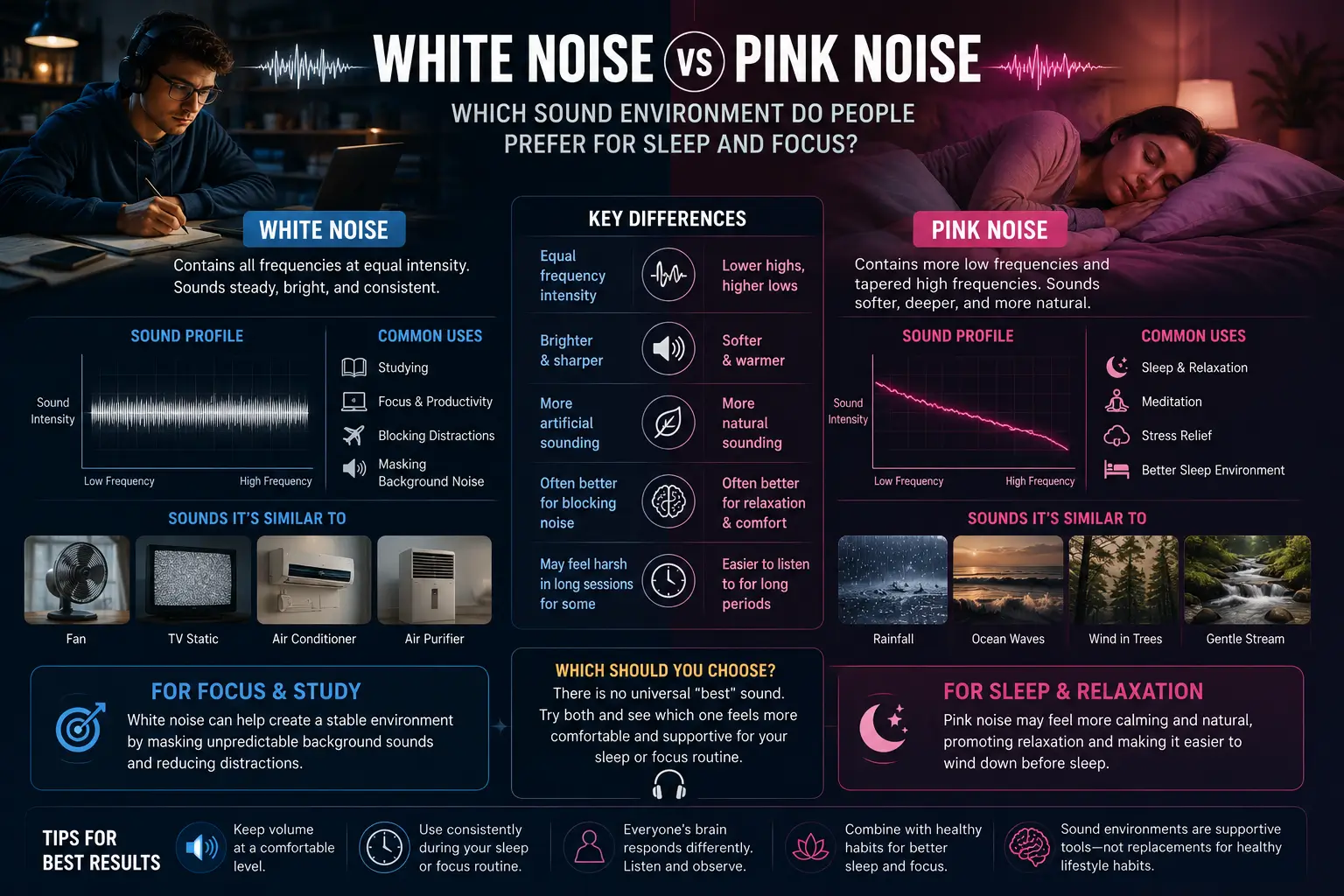
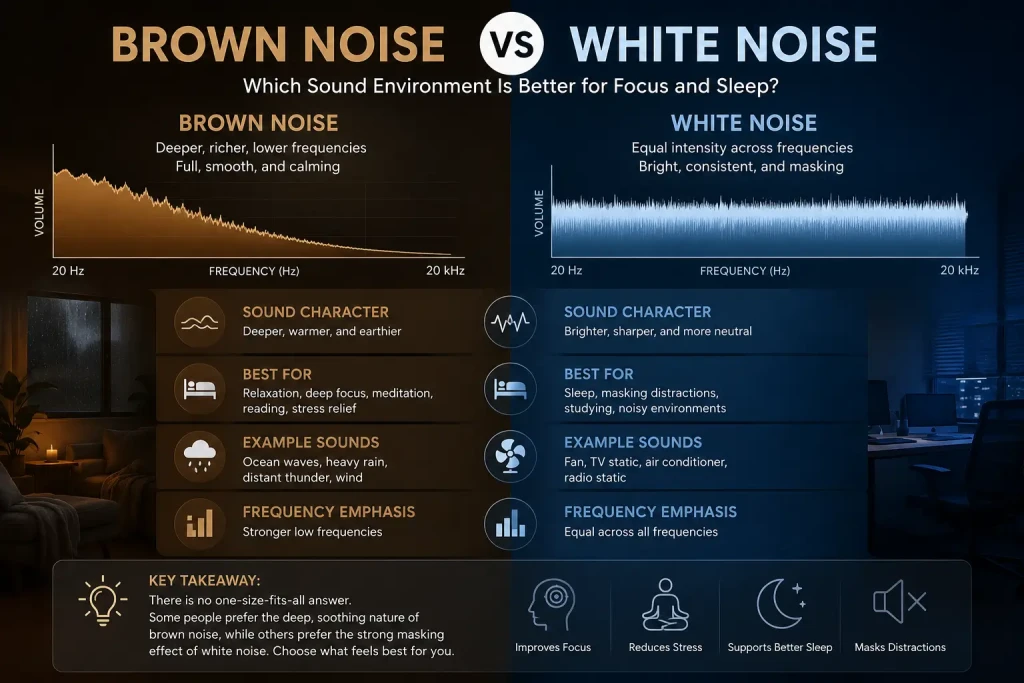
White noise contains a broad balance of sound frequencies played at relatively equal intensity.
To many listeners, it sounds:
- bright,
- steady,
- consistent,
- and slightly sharper.
People often compare white noise to:
- a running fan,
- television static,
- air conditioning systems,
- or continuous electronic hum.
Some individuals enjoy white noise because it creates a stable audio backdrop that masks sudden environmental sounds.
🌸 What Is Pink Noise?
Pink noise distributes sound frequencies differently.
Compared to white noise, it reduces some of the harsher high-frequency intensity and emphasizes softer lower frequencies.
As a result, many listeners describe pink noise as:
- smoother,
- warmer,
- more natural,
- and easier to listen to for long periods.
People often compare pink noise to:
- steady rainfall,
- wind through trees,
- or soft ocean waves.
Related article: Pink Noise for Sleep.
😴 Why Some People Prefer Pink Noise for Sleep
For certain listeners, pink noise feels less mentally aggressive during nighttime routines.
Instead of sounding sharp or electronic, it often blends more naturally into the background.
Some people use pink noise while:
- falling asleep,
- reading before bed,
- meditating,
- or trying to reduce awareness of outside noise.
The goal is usually not “instant perfect sleep.”
Instead, people often want calmer environmental conditions that feel less disruptive.
📚 Why White Noise Remains Popular for Focus
White noise continues to be widely used in study and productivity environments.
Some listeners feel the sharper and more neutral sound profile helps:
- mask distractions,
- reduce awareness of conversations,
- or create more consistent concentration environments.
In busy spaces, stable background audio may feel mentally easier to ignore than unpredictable sound interruptions.
🧠 Sound Preference Is Highly Personal
One of the biggest misconceptions online is the idea that there is a universally “best” sound for everyone.
In reality, people respond differently to environmental audio.
Some individuals find white noise energizing.
Others find it exhausting after long listening periods.
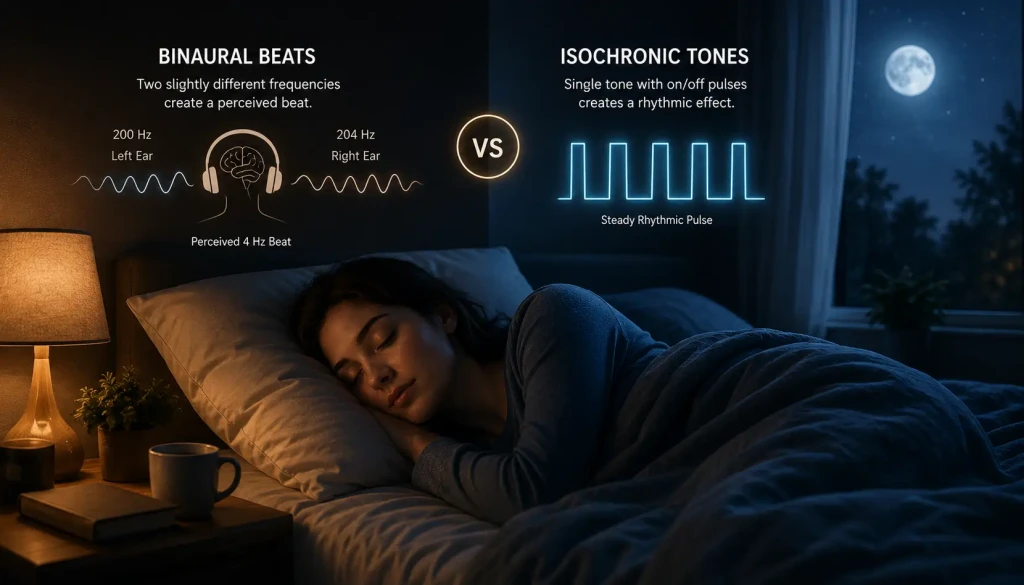
The same is true for pink noise, brown noise, ambient music, and binaural beats.
📱 Modern Overstimulation Changes How People Relax
Many people now spend entire days inside overstimulating digital environments.
Notifications, scrolling, multitasking, and nonstop information exposure can make true mental quiet feel unfamiliar.
Related article: Modern Brain Overstimulation.
Because of this, some individuals use sound environments simply to create more intentional spaces for relaxation or concentration.
🎵 Brown Noise Enters the Conversation Too
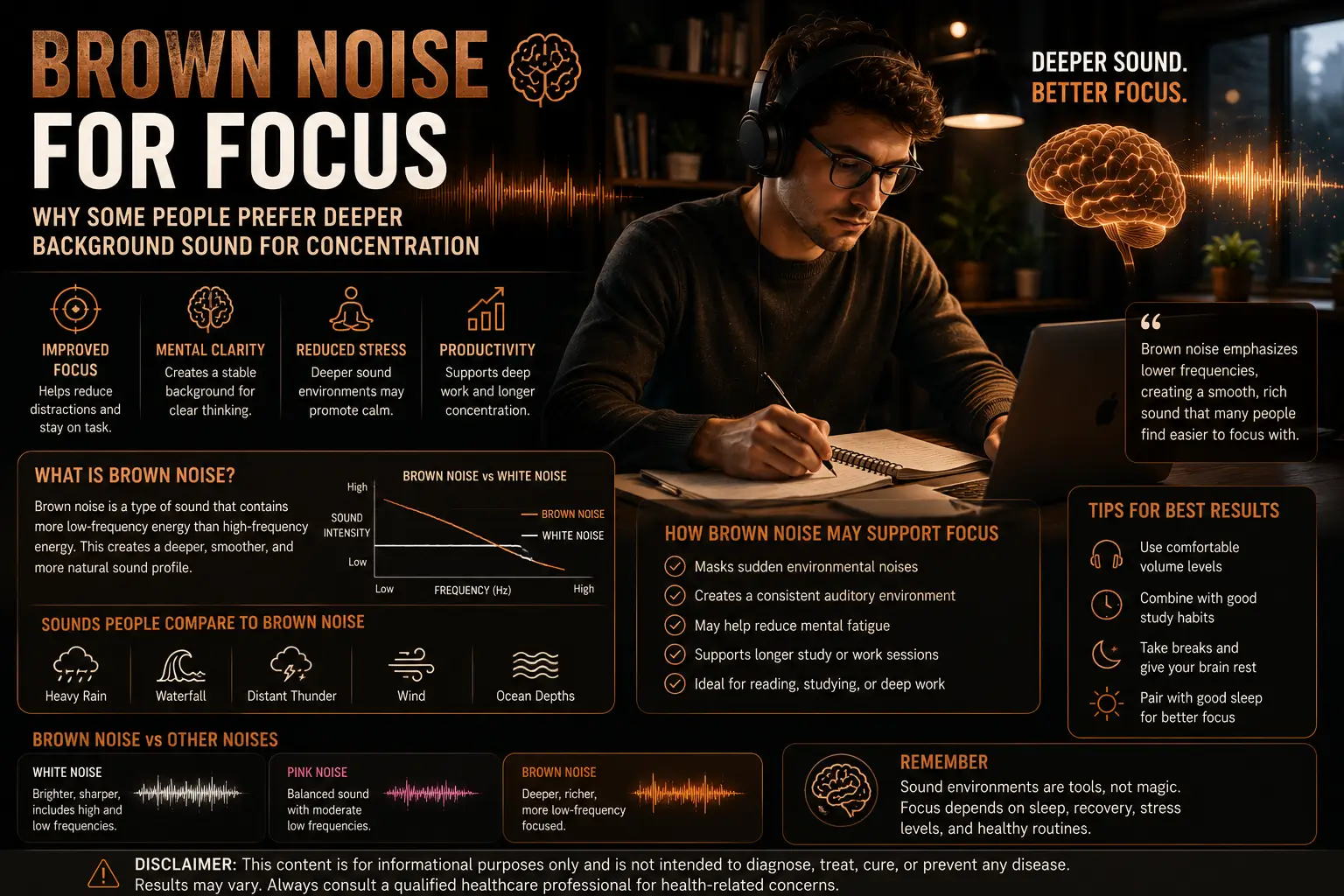
In recent years, brown noise has also become extremely popular online.
Compared to both white noise and pink noise, brown noise emphasizes deeper low-frequency sound.
Many listeners describe it as richer and heavier.
Related article: Brown Noise for Focus.
⚠️ Sound Environments Are Tools, Not Magic Solutions
Online discussions sometimes exaggerate what sound environments can realistically do.
You may encounter claims about:
- perfect sleep,
- instant concentration,
- or dramatic cognitive enhancement.
In reality, focus and sleep depend on many factors including:
- stress,
- sleep quality,
- environment,
- mental recovery,
- and healthy routines.
🎧 Neuroacoustic Audio and Relaxation Routines
Some people also explore neuroacoustic audio environments designed around calm focus, relaxation, and mental recovery routines.
These systems are generally most effective when combined with healthy habits and realistic expectations.
🧠 Final Thoughts
White noise and pink noise remain popular because different people prefer different sound environments for sleep, focus, and relaxation.
Some listeners enjoy the brighter consistency of white noise.
Others prefer the softer and more natural feel of pink noise.
In many cases, the best option simply depends on personal comfort, environment, and how the brain responds to different types of background sound over time.
Related Articles
Related Posts
Stay Informed With the Latest & Most Important News
Previous Post
Next Post