
Now Reading: Memory Consolidation During Sleep: How the Brain Strengthens Learning While You Rest
-
01
Memory Consolidation During Sleep: How the Brain Strengthens Learning While You Rest
Memory Consolidation During Sleep: How the Brain Strengthens Learning While You Rest

Most people assume learning happens only while they are studying, reading, practicing, or paying attention.
But the brain does not stop working when the lesson ends.
Long after a book is closed, a video is finished, or a new skill is practiced, the brain may continue organizing that information in the background.
This process is known as memory consolidation.
It is one reason sleep is so important for learning, recall, and long-term cognitive performance.
📚 What Is Memory Consolidation?
Memory consolidation is the process that helps newly learned information become more stable over time.
When people first learn something, the memory is often fragile.
Without reinforcement, sleep, attention, or repeated use, much of it can fade quickly.
During sleep, the brain appears to organize recent experiences, strengthen useful connections, and integrate new information with older knowledge.
In simple terms, learning does not fully end when practice stops.
Sometimes the brain continues refining what it learned while the body is resting.

😴 Why Sleep Matters for Memory
Sleep is not just downtime.
Throughout the night, the brain moves through different sleep stages, each playing a role in recovery and mental function.
These stages may support:
- memory consolidation,
- emotional regulation,
- attention recovery,
- learning efficiency,
- and cognitive restoration.
This is why poor sleep can make information harder to remember, even when someone studied carefully the day before.
Related article: Non-Restorative Sleep.
⚡ The Role of Sleep Spindles
Sleep spindles are short bursts of rhythmic brain activity that occur during non-REM sleep.
Most people never feel them happening.
They are detected through brain activity measurements such as EEG.
Researchers are interested in sleep spindles because they appear to be connected with memory processing and learning.
While science is still exploring exactly how they work, sleep spindles may help coordinate communication between brain regions involved in storing and organizing information.
They are like small nighttime signals that appear while the brain is sorting through what matters.
🧠 Sleep Helps the Brain Sort Information
Not everything from the day needs to be remembered.
The brain must constantly decide what deserves storage and what can be ignored.
Sleep may help this sorting process.
Important information can become more stable, while unnecessary noise may gradually fade.
This may help explain why sleep supports learning better than simply forcing the brain to stay awake longer.
Related article: Memory Recall and Retention.
🎯 Learning Requires More Than Repetition
Repetition matters, but it is not the whole story.
Memory also depends on attention, emotional relevance, timing, sleep quality, and how information is organized.
Someone can repeat the same material for hours and still struggle to remember it if the brain is tired, distracted, or overloaded.
This is why effective learning usually combines focus during the day with recovery at night.
Related article: Cognitive Performance and Attention Span.
📱 Modern Life Can Interrupt Memory Recovery
Late-night screen use, constant notifications, stress, and irregular sleep schedules can all interfere with recovery.
The brain needs time to shift away from stimulation before high-quality sleep begins.
When evenings are filled with endless scrolling or mental overload, sleep may become less restorative.
This does not mean technology must be avoided completely.
But it does mean the brain benefits from calmer transitions into sleep.
Related article: Sensory Overload and the Brain.
🌙 Memory Consolidation and Deep Recovery
Memory consolidation is closely tied to the quality of sleep, not just the number of hours spent in bed.
A person may sleep long enough but still wake up mentally tired if recovery is poor.
This is why sleep quality matters for students, professionals, creators, and anyone who depends on clear thinking.
The brain does not only need time asleep.
It needs the right conditions for restoration.
🎧 Sleep Environments and Mental Clarity
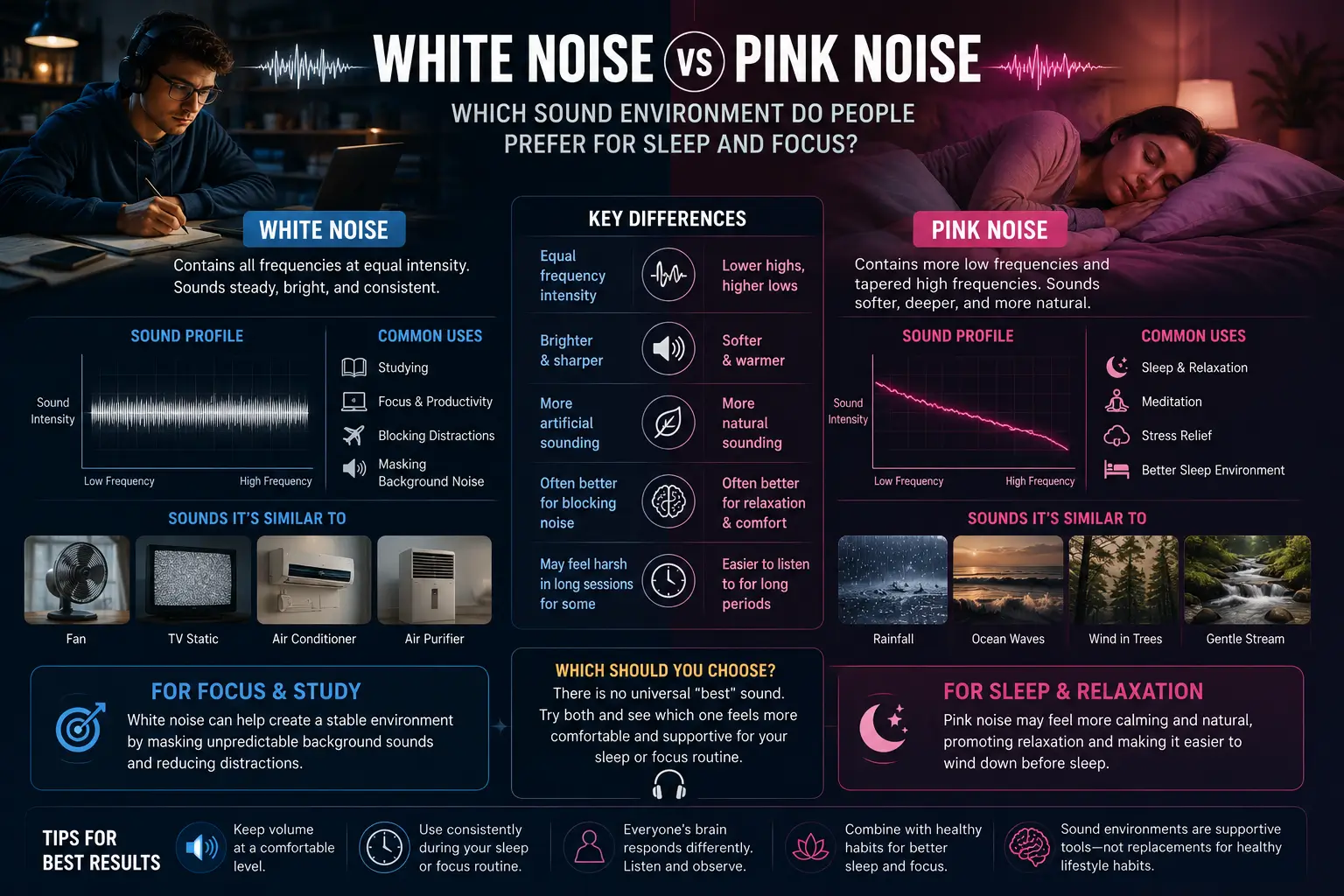
Some people sleep best in silence.
Others use gentle soundscapes, calming music, or structured audio environments as part of their evening routine.
The goal is not to force a specific result.
The goal is to create a calmer environment that supports relaxation and recovery.
Some individuals also explore audio environments designed around relaxation and mental clarity as part of broader sleep-support habits.
Individual experiences can vary.
⚠️ Common Misunderstandings About Sleep and Memory
❌ “Learning Ends When Studying Stops”
The brain may continue organizing and strengthening information during sleep.
❌ “More Study Always Beats More Sleep”
Without recovery, learning efficiency and recall may decline.
❌ “Sleep Is Only Physical Rest”
Sleep also supports memory, attention, emotional balance, and cognitive performance.
🌿 Better Memory Often Starts With Better Recovery
People often search for memory tricks, study hacks, and productivity systems.
Those tools can help.
But they work better when the brain is rested enough to use them properly.
Better memory is rarely built from effort alone.
It often comes from the combination of attention, repetition, meaning, and recovery.
🧠 Final Thoughts
Memory consolidation during sleep shows that learning is not limited to waking effort.
The brain continues working quietly while the body rests.
Sleep spindles, sleep stages, and nighttime recovery all point to the same idea: sleep is part of the learning process.
For anyone who wants better recall, clearer thinking, and stronger cognitive performance, protecting sleep may be just as important as studying harder.
Related Articles
Stay Informed With the Latest & Most Important News
Previous Post
Next Post