
Now Reading: Sensory Overload and the Brain: How Modern Stimulation Affects Mental Clarity and Stress
-
01
Sensory Overload and the Brain: How Modern Stimulation Affects Mental Clarity and Stress
Sensory Overload and the Brain: How Modern Stimulation Affects Mental Clarity and Stress
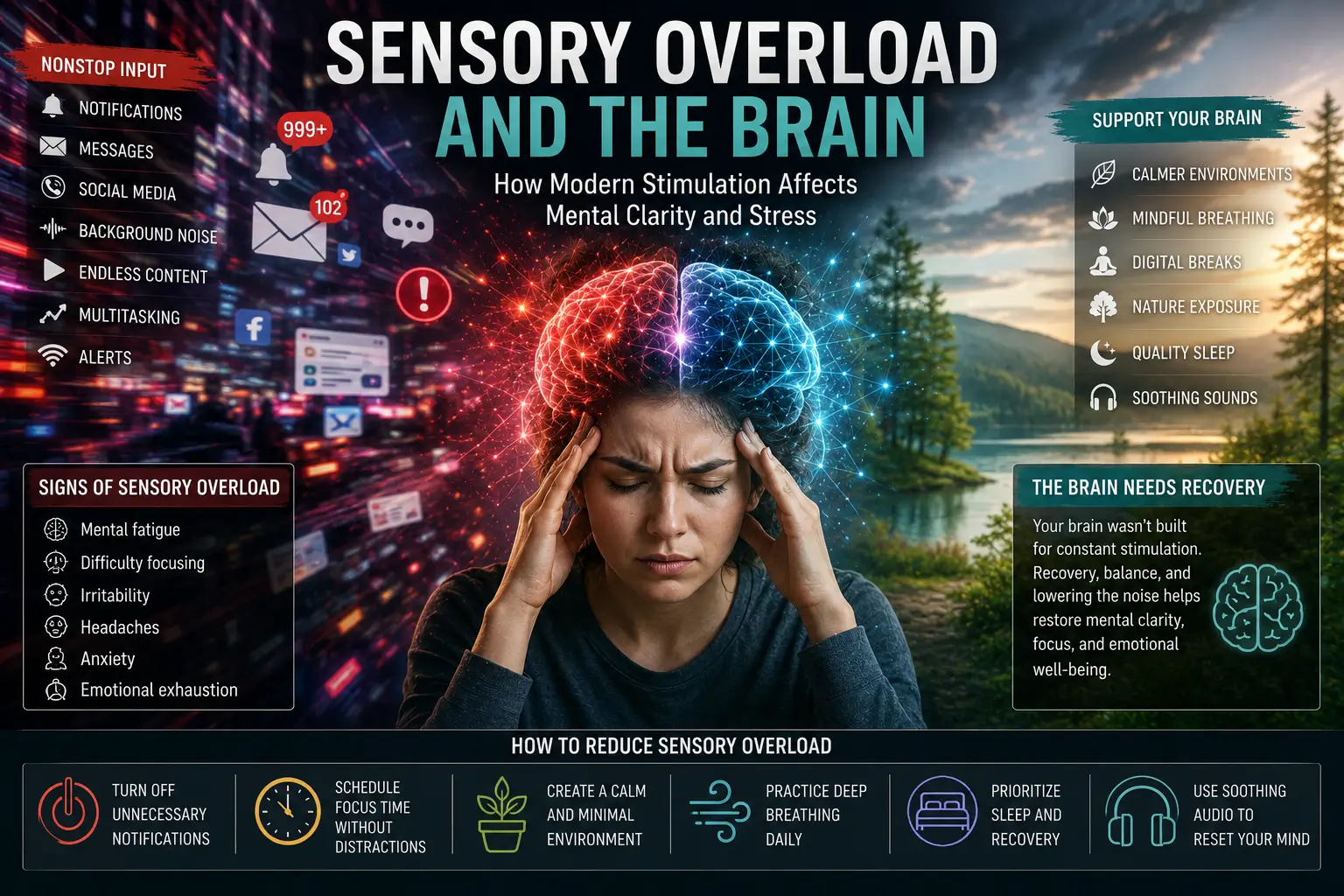
Maybe the human brain was never designed for modern life.
For most of human history, the nervous system evolved in relatively quiet environments compared to today’s nonstop digital stimulation.
Now the average brain moves through:
- constant notifications,
- bright screens,
- background noise,
- social media feeds,
- multitasking,
- and endless information streams.
Many people no longer feel mentally tired only after difficult work.
Instead, they often feel exhausted from continuous stimulation itself.
This growing experience is commonly discussed through the idea of sensory overload.
⚡ What Is Sensory Overload?
Sensory overload generally happens when the brain receives more stimulation than it can comfortably process.
This stimulation may involve:
- visual input,
- sound,
- social interaction,
- stress,
- digital media,
- or environmental intensity.
When stimulation becomes excessive, some individuals may experience:
- mental fatigue,
- difficulty concentrating,
- irritability,
- attention fragmentation,
- or emotional exhaustion.
The brain is constantly filtering information.
When too much arrives at once, cognitive systems may become overwhelmed.
📱 Why Modern Environments Feel Mentally Exhausting
Modern digital platforms compete aggressively for attention.
Apps, advertisements, videos, and algorithms are often designed to maximize engagement and stimulation.
The brain rarely gets long periods of uninterrupted recovery.
Even moments of silence are often replaced with:
- scrolling,
- background media,
- notifications,
- or multitasking.
Over time, this constant cognitive input may increase mental fatigue for some individuals.
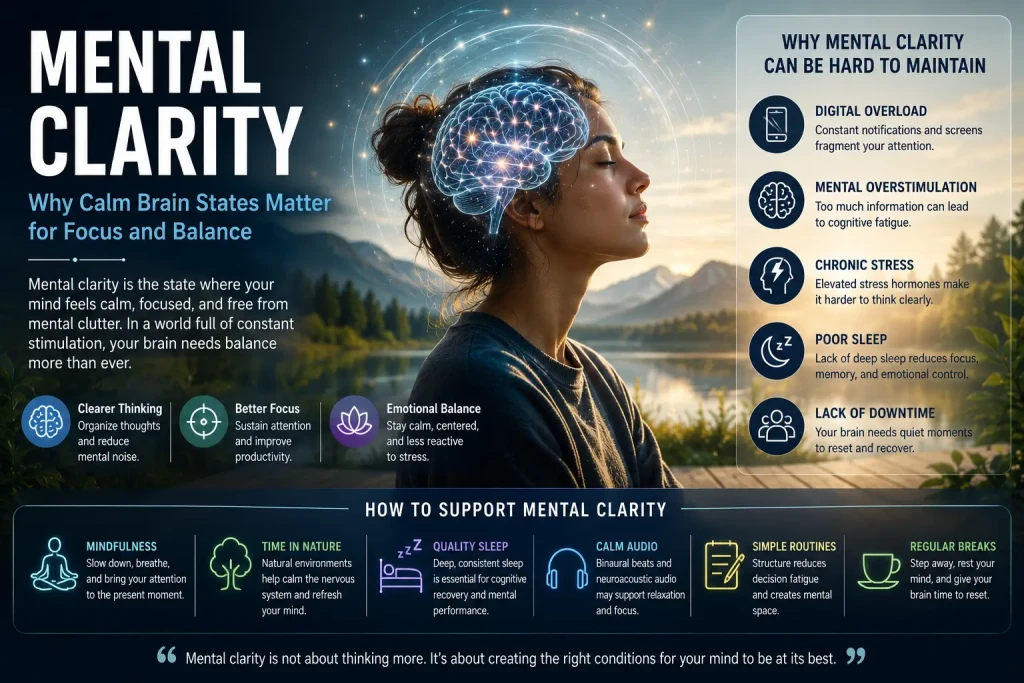
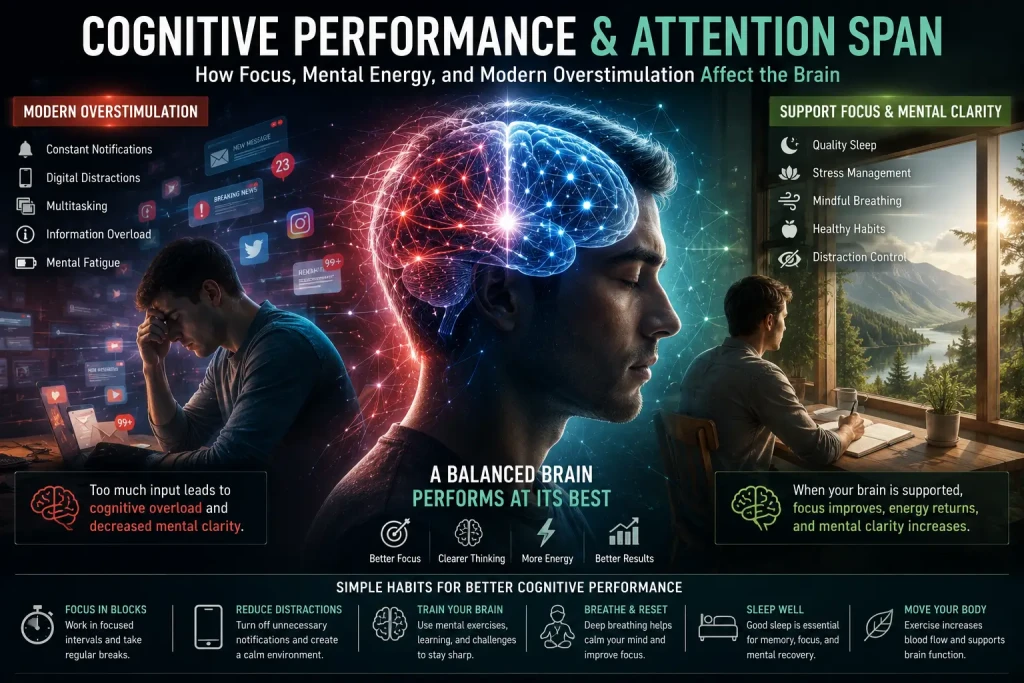
Related article: Cognitive Performance and Attention Span.
🧠 The Brain Filters More Information Than People Realize
The human brain processes enormous amounts of sensory information every second.
Most of this activity happens automatically.
The brain continuously evaluates:
- movement,
- sound,
- light,
- social signals,
- potential threats,
- and emotional cues.
Without filtering systems, everyday environments would quickly become mentally overwhelming.
However, modern environments may place unusually high demands on these systems.
🎯 Attention Fragmentation and Mental Clarity
Many people describe feeling unable to focus deeply for long periods.
This may not always be a motivation problem.
In some situations, the brain may simply be overloaded with competing inputs.
Constant interruption can make sustained attention more difficult.
This is one reason many individuals now search for ways to reduce stimulation and improve mental clarity.
Related article: Brain Waves for Focus.
😴 Recovery Is Becoming More Important
The brain depends heavily on recovery time.
Sleep, calmer environments, and reduced stimulation may all influence cognitive restoration.
Without recovery, the nervous system may remain in more reactive states for extended periods.
This can sometimes contribute to:
- difficulty relaxing,
- mental exhaustion,
- reduced patience,
- and emotional fatigue.
Related article: Delta Waves for Sleep.
🌿 Why Calmer Environments Matter
Some people notice major differences in mental clarity depending on their environment.
Natural spaces, quieter rooms, reduced visual clutter, and intentional breaks from digital stimulation may sometimes feel mentally restorative.
This does not mean people must completely avoid technology.
However, many individuals are beginning to recognize how strongly environments may influence cognitive comfort.
🫁 Stress, Breathing, and Nervous System Balance
Sensory overload does not affect only attention.
It may also influence stress responses and nervous system activity.
When the brain constantly processes stimulation, the body may spend more time in heightened alert states.
Because of this, some individuals explore:
- mindfulness,
- breathwork,
- meditation,
- and relaxation routines
designed to reduce mental overload and support nervous system recovery.
Related article: Breathwork and the Nervous System.
🎧 Audio Environments and Cognitive Recovery
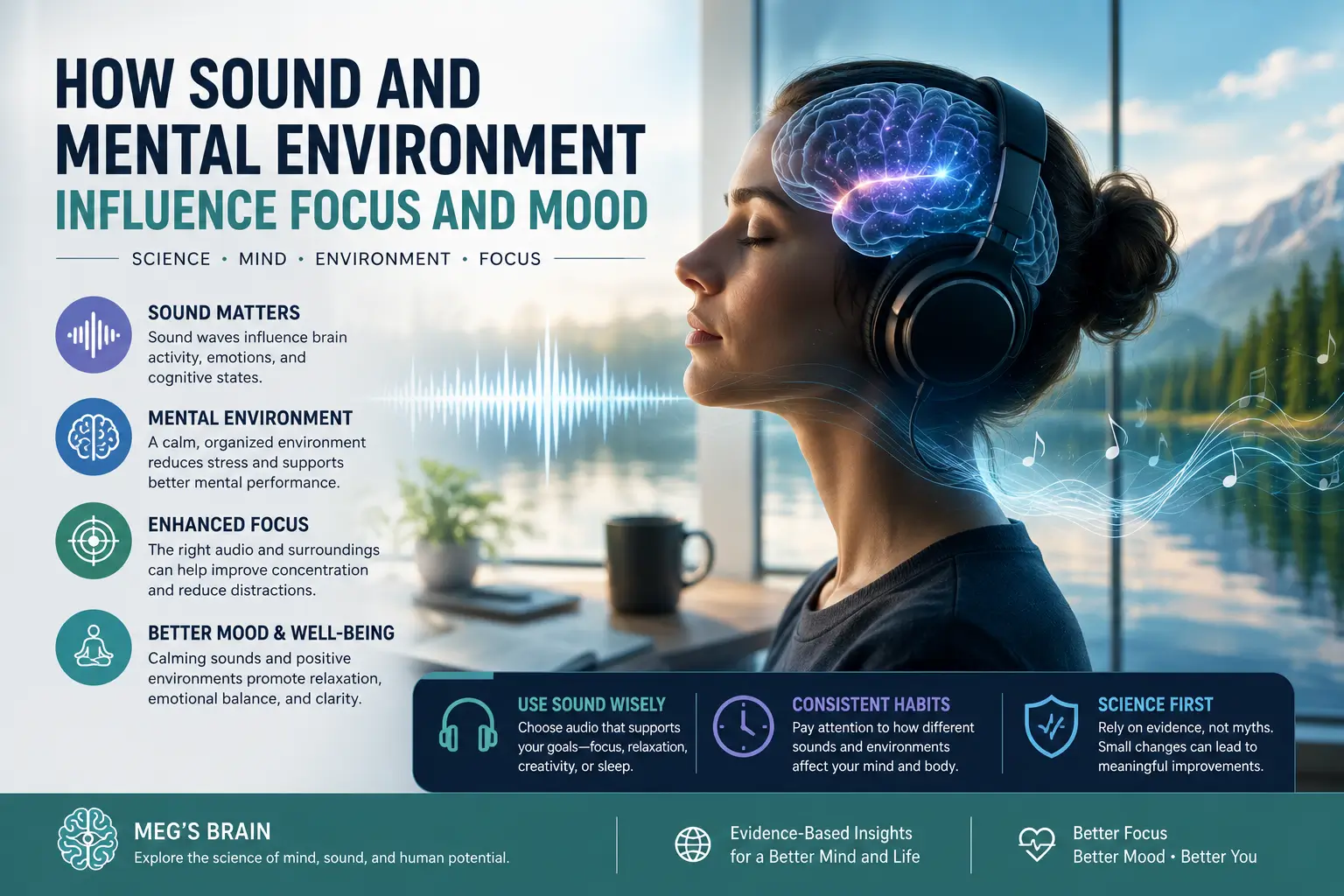
The brain responds continuously to sound environments.
Some individuals prefer quieter spaces, while others use ambient soundscapes or calming audio to reduce environmental distraction.
Related article: How Hearing Works in the Brain.
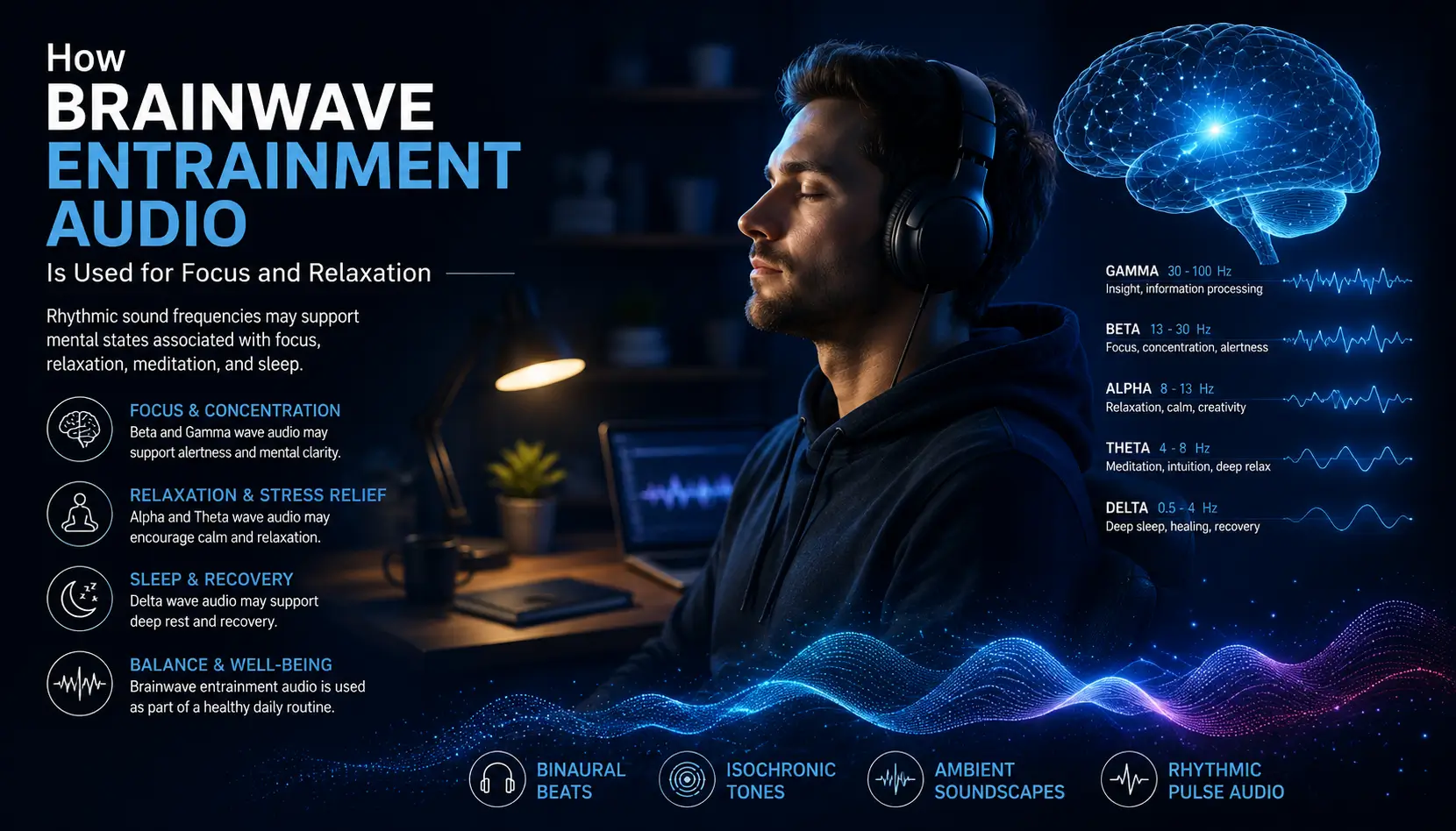
Some people also explore audio environments designed around focus and mental clarity as part of broader cognitive wellness routines.
⚠️ Common Misunderstandings About Sensory Overload
❌ “People Are Simply Less Disciplined Today”
Modern environments expose the brain to unprecedented levels of continuous stimulation.
❌ “More Productivity Always Requires More Stimulation”
Excessive stimulation may sometimes reduce focus rather than improve it.
❌ “Mental Exhaustion Means Weakness”
Cognitive systems require recovery just like physical systems do.
🧠 Final Thoughts
Sensory overload is becoming an increasingly common experience in modern digital environments.
As the brain processes larger amounts of information every day, more individuals are noticing the effects of overstimulation on focus, stress, and mental clarity.
Modern neuroscience continues exploring how environments influence attention systems, nervous system regulation, and cognitive fatigue.
In many cases, improving mental clarity may not require adding more stimulation to the brain — but reducing unnecessary overload instead.
Related Articles
Related Posts

Stay Informed With the Latest & Most Important News
Previous Post
Next Post