
Now Reading: Focus, Motivation, and Mental Energy: Building Sustainable Productivity
-
01
Focus, Motivation, and Mental Energy: Building Sustainable Productivity
Focus, Motivation, and Mental Energy: Building Sustainable Productivity
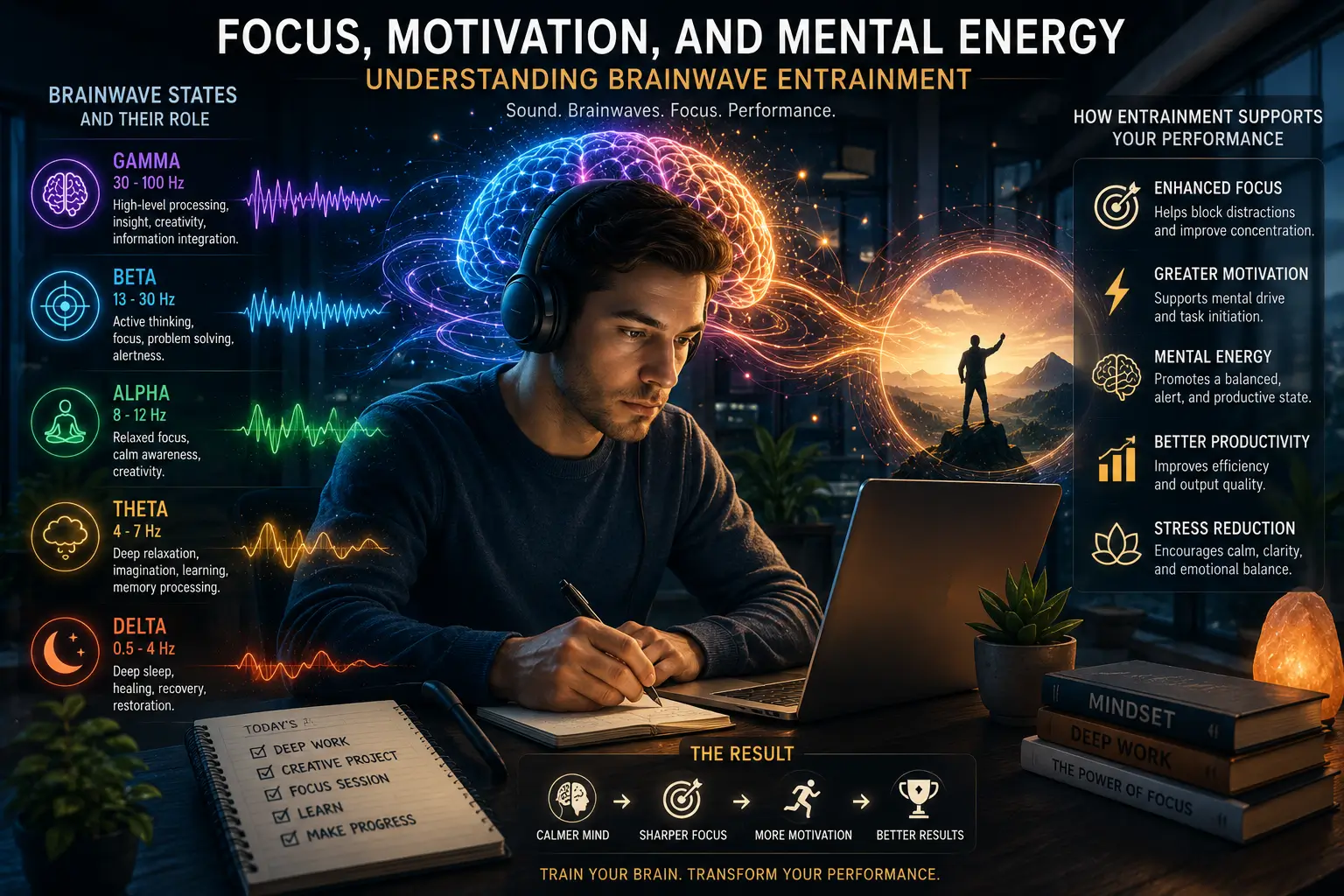
Many people believe productivity depends primarily on motivation.
When motivation is high, work feels easier. When motivation disappears, progress often slows down.
While motivation certainly matters, research in psychology and cognitive performance suggests that focus, mental energy, habits, and recovery may be even more important over the long term.
The most productive individuals are not necessarily the most motivated. They are often the most consistent.
Understanding how focus, motivation, and mental energy interact can help create a more sustainable approach to performance and personal growth.
🧠 What Is Motivation?
Motivation is the internal drive that encourages action toward a goal.
It helps people start projects, pursue challenges, and continue working toward meaningful outcomes.
However, motivation is rarely constant.
It naturally rises and falls depending on mood, stress levels, sleep quality, environment, and personal circumstances.
This is why relying entirely on motivation can be risky.
Even highly successful people experience days when they feel less motivated than usual.
⚡ Mental Energy Drives Performance
Motivation may influence whether people want to work.
Mental energy influences whether they can perform effectively.
Mental energy supports:
- attention,
- decision-making,
- problem-solving,
- learning,
- and emotional regulation.
When mental energy becomes depleted, focus often declines regardless of motivation.
This explains why people sometimes feel motivated to work but struggle to concentrate.
Related article: Mental Energy and Brain Activity.
🎯 Focus Is a Skill, Not a Personality Trait
Many people assume that naturally focused individuals simply have better concentration abilities.
In reality, focus is often developed through habits, environment design, and practice.
Modern technology constantly competes for attention.
Notifications, messages, emails, and social media create an environment that encourages distraction.
Protecting attention has become one of the most valuable productivity skills in the digital age.
Related article: Cognitive Performance and Attention Span.
📚 Why Motivation Alone Often Fails
Motivation is excellent for starting.
Consistency is what produces results.
People frequently begin new habits with enthusiasm, only to abandon them once excitement fades.
This happens because motivation is emotional.
Long-term performance depends more heavily on systems and routines than temporary emotional states.
Successful habits reduce the need to constantly feel motivated before taking action.
🧩 The Brain’s Reward System
The brain naturally responds to progress.
Completing tasks, solving problems, and achieving goals can create a sense of accomplishment that reinforces future behavior.
This process helps explain why small wins are important.
Large goals may feel overwhelming.
Breaking them into smaller milestones often increases engagement and maintains momentum.
Progress itself can become motivating.
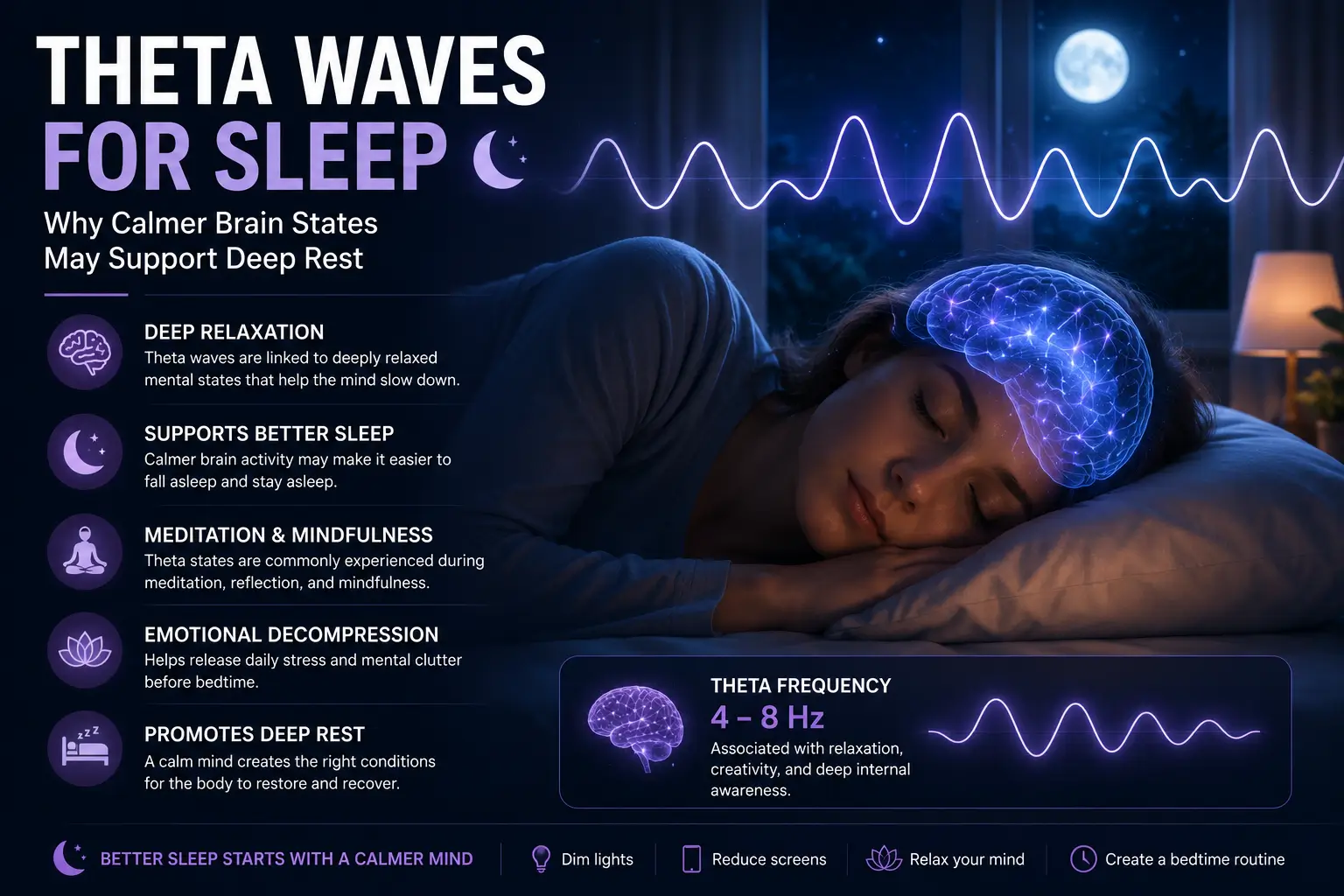
😴 Sleep, Recovery, and Productivity
Many productivity problems begin with recovery rather than motivation.
Poor sleep quality, chronic stress, and mental overload can significantly reduce cognitive performance.
Recovery supports:
- memory consolidation,
- attention regulation,
- emotional balance,
- and decision-making.
Without recovery, sustained productivity becomes increasingly difficult.
Related article: Sleep Waves Explained.
🌿 Building Habits That Support Focus
Habits reduce the amount of mental effort required to begin important tasks.
Rather than deciding whether to work each day, productive routines make action more automatic.
Examples include:
- starting work at the same time each day,
- creating distraction-free environments,
- using focused work sessions,
- planning tasks in advance,
- and taking structured breaks.
These habits help preserve mental energy while supporting consistency.
Related article: Brain Training and Focus Habits.
🚀 The Relationship Between Confidence and Motivation
Confidence often influences motivation more than people realize.
When individuals believe they can make progress, they are more likely to take action.
Repeated success builds confidence.
Confidence increases willingness to continue.
This creates a positive cycle that supports long-term performance.
Related article: Confidence and Mindset.
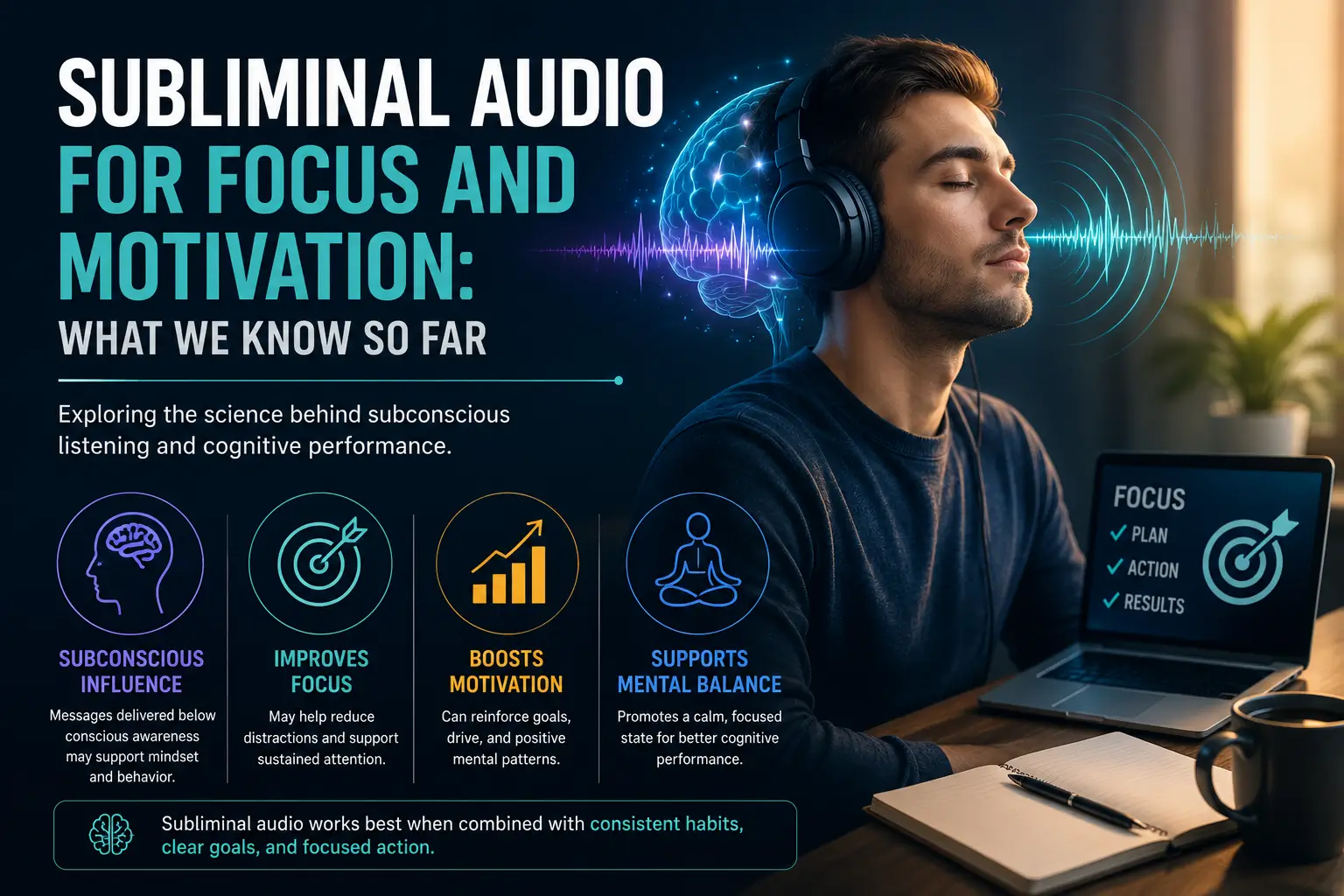
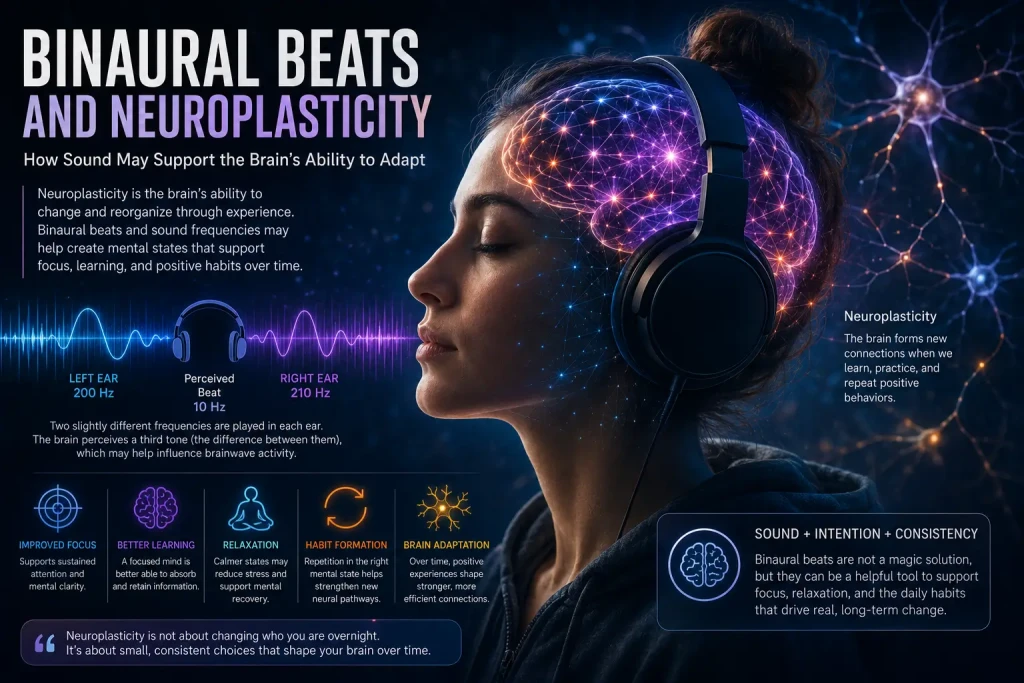
🎧 Can Audio Support Focus?
Some individuals use structured audio environments while studying, working, or engaging in creative activities.
These environments may include:
- ambient soundscapes,
- instrumental music,
- binaural beats,
- or neuroacoustic listening experiences.
The objective is often to create conditions that support attention and reduce external distractions.
Researchers continue studying how different listening environments influence cognitive performance.
Related article: Audio Programs for Focus and Mental Clarity.
⚠️ Common Productivity Myths
❌ “Highly Productive People Are Always Motivated”
Most productive individuals rely on routines and systems rather than constant motivation.
❌ “Working Longer Means Better Results”
Extended effort without recovery often reduces effectiveness and increases fatigue.
❌ “Multitasking Improves Efficiency”
Research consistently shows that frequent task switching can reduce focus and productivity.
🧠 Sustainable Productivity Comes From Balance
Long-term performance is not built through endless effort.
It is built through balance.
Focus requires attention.
Motivation requires meaningful goals.
Mental energy requires recovery.
When these factors work together, productivity becomes more sustainable and less dependent on temporary bursts of enthusiasm.
🎧 Focus Routines and Neuroacoustic Listening
Many people create personal routines that help signal the brain it is time to focus.
These routines may involve movement, breathing exercises, mindfulness practices, or structured listening environments.
Some individuals also explore neuroacoustic audio experiences designed around focus, mental clarity, and productivity as part of broader performance routines.
Results vary between individuals, and no audio method replaces healthy habits, recovery, or deliberate practice.
🧠 Final Thoughts
Focus, motivation, and mental energy are closely connected, but they are not the same thing.
Motivation may help initiate action, but sustainable productivity depends on attention management, consistent habits, recovery, and mental resilience.
By understanding how these factors interact, people can create systems that support performance even when motivation fluctuates.
The goal is not to work harder every day. The goal is to build an environment that makes focused work easier and more sustainable over time.
Related Articles
Related Posts
Stay Informed With the Latest & Most Important News
Previous Post
Next Post