
Now Reading: Binaural Beats for Sleep: Can Sound Support Better Rest?
-
01
Binaural Beats for Sleep: Can Sound Support Better Rest?
Binaural Beats for Sleep: Can Sound Support Better Rest?
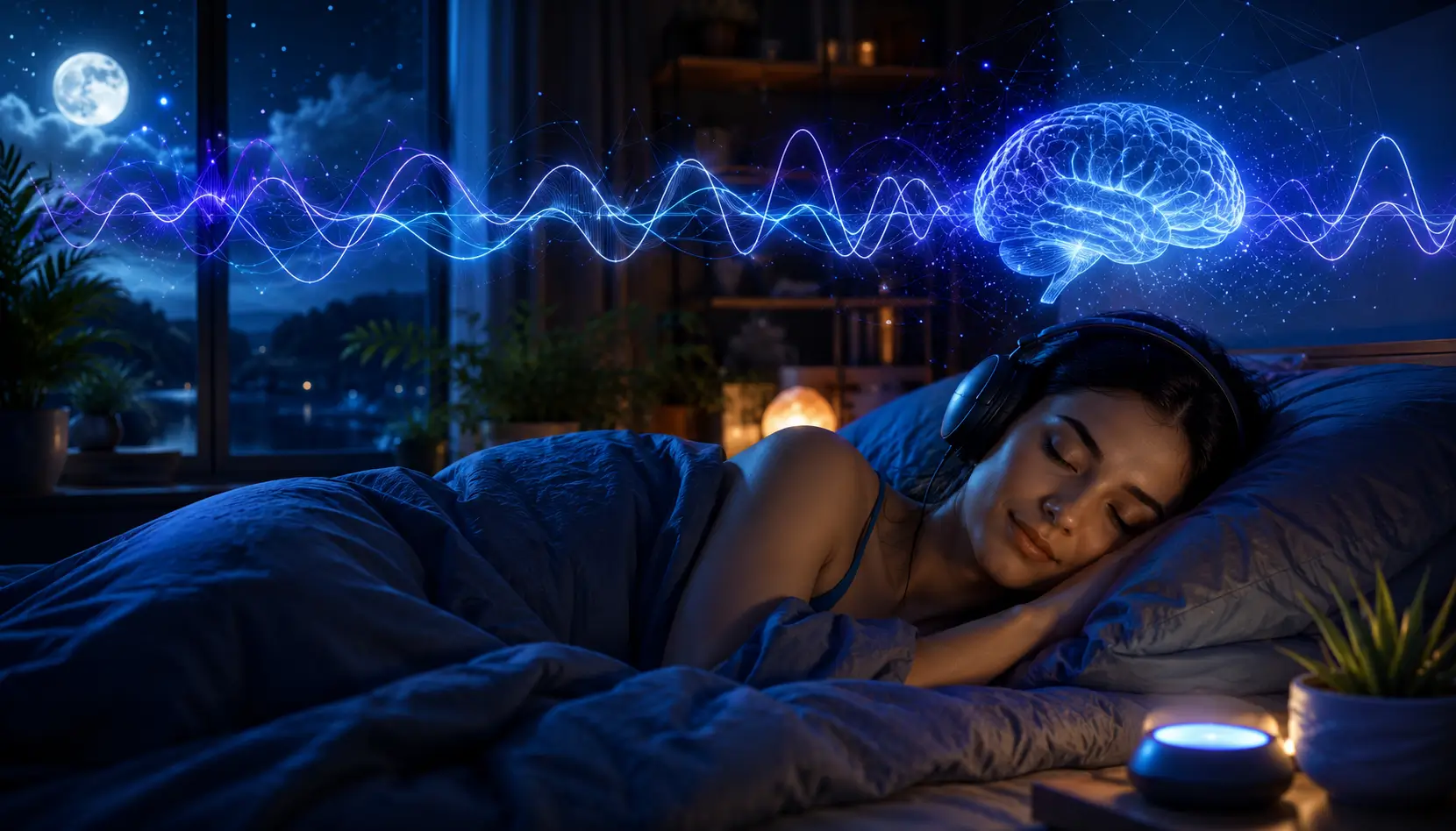
Sleep has become increasingly difficult for many people.
Modern life often involves:
- constant stimulation,
- late-night screen exposure,
- stress,
- anxiety,
- and overstimulated attention.
As a result, many individuals search for calming nighttime routines that may help support relaxation before bed.
One increasingly popular option is binaural beats.
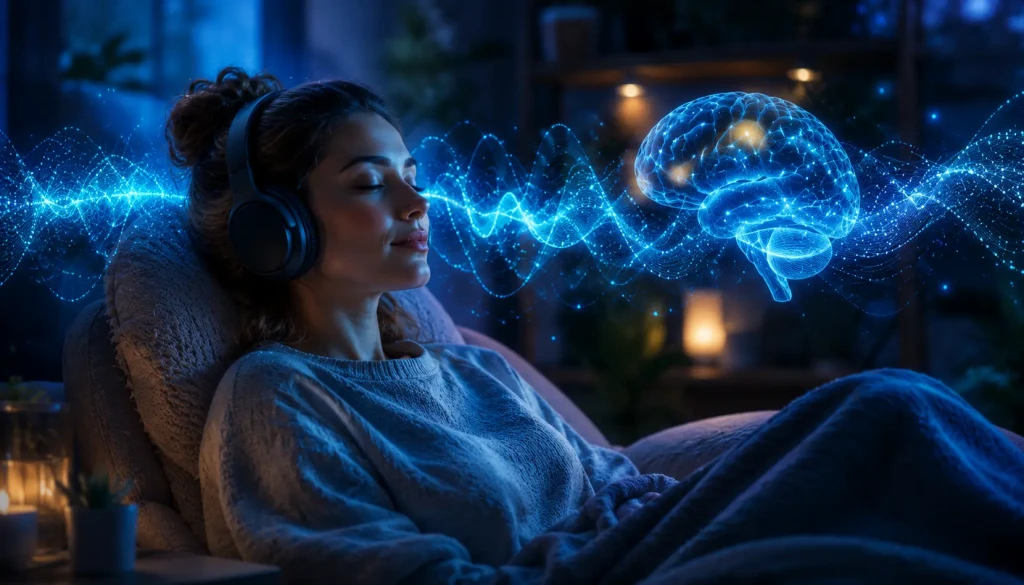
Supporters of binaural audio often describe immersive sound environments that may encourage:
- relaxation,
- mental quietness,
- reduced nighttime stress,
- and calmer transitions into sleep.
But can binaural beats actually improve sleep quality?
The answer is more nuanced than many dramatic internet claims suggest.
🧠 What Are Binaural Beats?
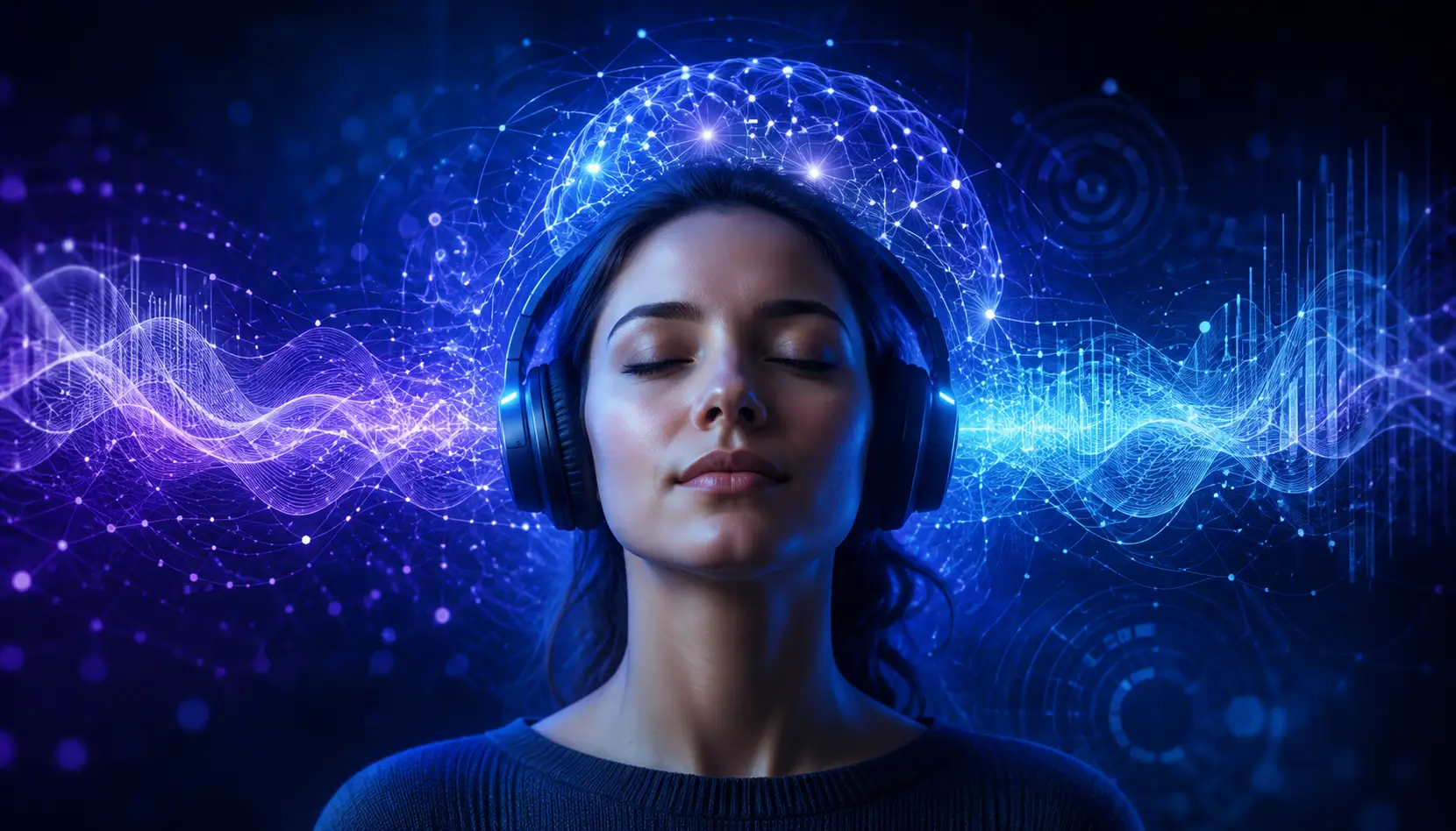
Binaural beats are auditory illusions created when slightly different frequencies are played separately into each ear.
For example:
- left ear: 200 Hz
- right ear: 205 Hz
The brain perceives the frequency difference as a rhythmic internal pulse.
Different frequencies are often associated online with:
- relaxation,
- meditation,
- focus,
- or sleep-supportive environments.
Because each ear receives a different signal, headphones are generally required for binaural beats to function properly.
🌊 Why People Use Binaural Beats for Sleep
Many people use binaural audio before bed because repetitive sound environments may feel:
- calming,
- immersive,
- predictable,
- and mentally soothing.
Modern sleep problems are often connected to:
- racing thoughts,
- overstimulation,
- stress,
- or difficulty mentally slowing down.
Soft rhythmic audio may help reduce external distraction and create conditions that feel more supportive for relaxation.
This does not necessarily mean binaural beats “force” sleep.
Instead, they may help create calmer sensory environments before bedtime.
🔬 What Science Says About Sleep Audio
Research involving binaural beats and sleep remains ongoing.
Some studies suggest rhythmic audio stimulation may influence:
- relaxation,
- stress response,
- mood,
- and pre-sleep mental states under certain conditions.
However, there is currently no strong scientific evidence proving binaural beats can:
- cure insomnia,
- replace medical treatment,
- or guarantee deep sleep.
Further reading:
https://www.frontiersin.org/articles/10.3389/fnhum.2019.00425/full
https://www.ncbi.nlm.nih.gov/pmc/articles/PMC10198548/
The most balanced perspective is viewing sleep-oriented binaural audio as:
- a relaxation aid,
- a calming nighttime routine,
- or a supportive sensory environment.
🌙 Brainwaves Commonly Associated With Sleep
Sleep discussions often involve slower brainwave states.
Delta Waves
Delta activity is commonly associated with:
- deep sleep,
- physical recovery,
- and restorative rest.
Theta Waves
Theta activity is often linked to:
- deep relaxation,
- dreamlike states,
- and transitions into sleep.
You may also find our articles on theta brain waves and brainwave entrainment helpful for understanding how different brainwave states are commonly discussed in sleep and relaxation research.
☁️ Why Nighttime Audio Feels So Relaxing
The nervous system naturally responds to:
- rhythm,
- repetition,
- atmosphere,
- and sensory consistency.
This is one reason:
- rain sounds,
- ambient music,
- meditation audio,
- and calming frequencies
often feel psychologically soothing before sleep.
For many people, the value of sleep audio is not mystical transformation.
It is simply creating a more calming mental environment at the end of an overstimulating day.
🎧 Types of Sleep Audio People Commonly Use
Sleep-oriented audio environments may include:
- binaural beats,
- ambient soundscapes,
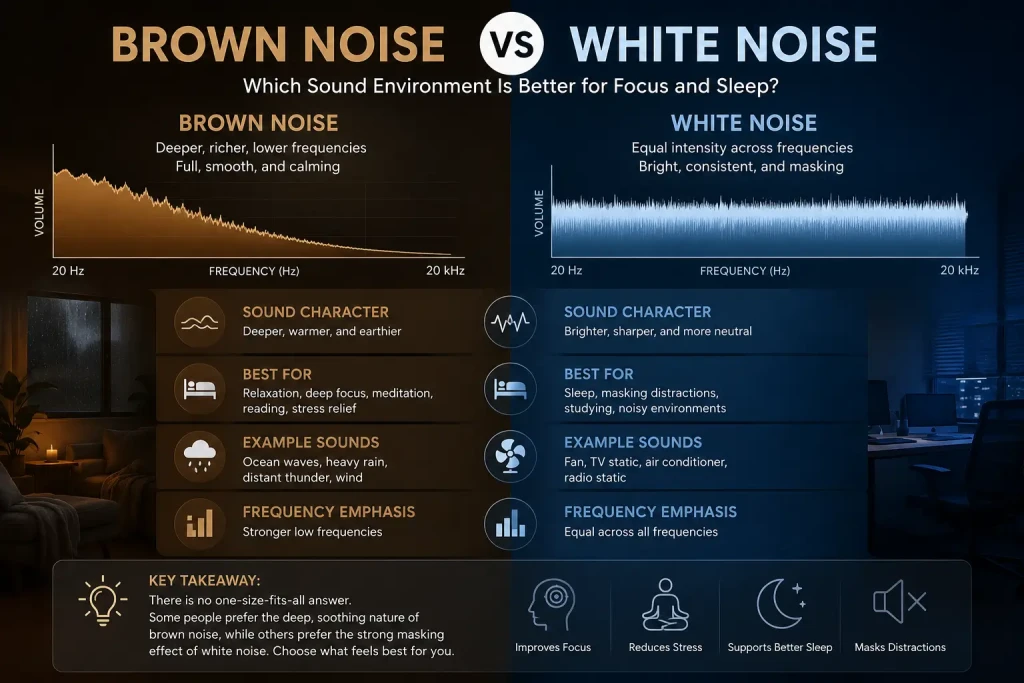
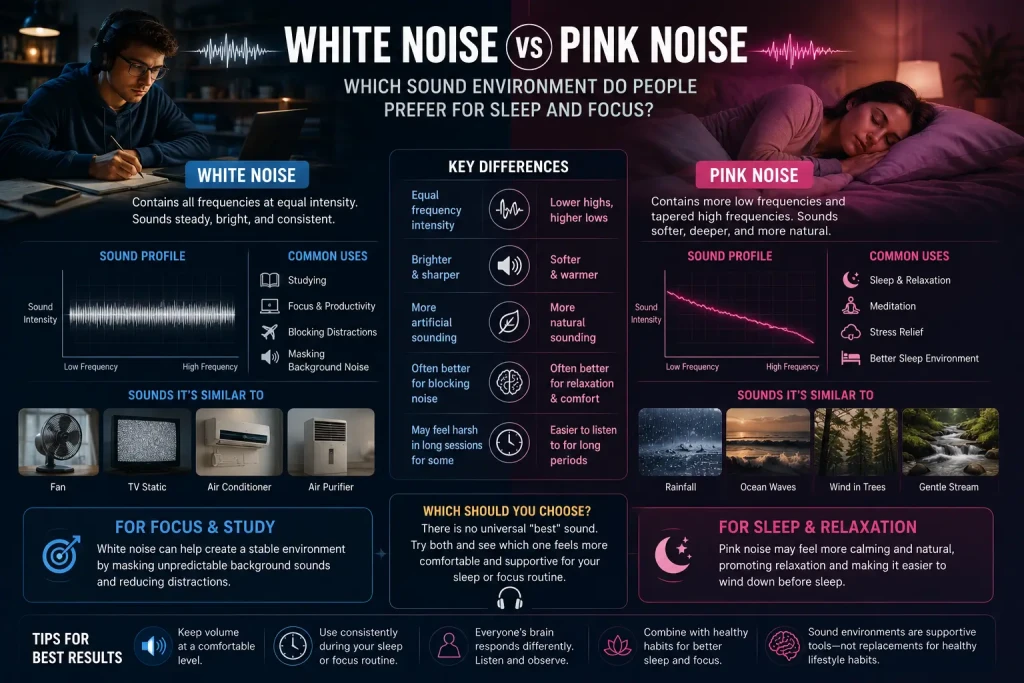
- white noise,
- nature sounds,
- meditation audio,
- or rhythmic calming tones.
Some listeners explore neuroacoustic nighttime audio systems designed to support relaxation-focused bedtime routines.
Personal comfort and consistency matter more than exaggerated “instant sleep hack” claims.
⚠️ Common Myths About Binaural Beats and Sleep
Myth:
“Binaural beats instantly cure insomnia.”
Reality:
Sleep difficulties can involve many medical, psychological, and lifestyle factors.
Myth:
“One frequency works perfectly for everyone.”
Reality:
People respond differently to sound environments and nighttime stimulation.
Myth:
“Sleep audio permanently rewires the brain.”
Reality:
Current evidence does not support dramatic transformation claims.
🛌 Healthy Ways to Improve Sleep Naturally
Binaural beats may work best when combined with healthier sleep habits such as:
- reducing nighttime screen exposure,
- keeping a consistent sleep schedule,
- lowering stress,
- limiting caffeine late in the day,
- and creating calmer evening routines.
Sound environments alone are rarely the entire solution.
🔗 Related Sleep and Relaxation Topics
Sleep-related brainwave discussions are often connected to:
- relaxation,
- mindfulness,
- stress reduction,
- meditation,
- and nervous system recovery.
You may also enjoy our articles on:
Final Thoughts
Binaural beats continue attracting attention because many people are searching for calmer ways to unwind before sleep.
Research suggests rhythmic audio may help support relaxation and reduced mental overstimulation under certain conditions.
At the same time, exaggerated sleep-transformation claims should be approached carefully.
The healthiest perspective is viewing binaural sleep audio as one possible tool for creating more peaceful nighttime environments rather than a guaranteed solution for sleep problems.
Related Articles
Related Posts
Stay Informed With the Latest & Most Important News
Previous Post
Next Post