
Now Reading: Ultimate Guide to Brainwave Entrainment: How Sound Frequencies Rewire the Mind
-
01
Ultimate Guide to Brainwave Entrainment: How Sound Frequencies Rewire the Mind
Ultimate Guide to Brainwave Entrainment: How Sound Frequencies Rewire the Mind
🎧 Introduction
Most people think focus, creativity, deep sleep, and emotional calm are controlled purely by motivation or discipline.
Neuroscience suggests something different.
Your mental state is heavily influenced by the electrical rhythms constantly moving through your brain — patterns known as brainwaves.
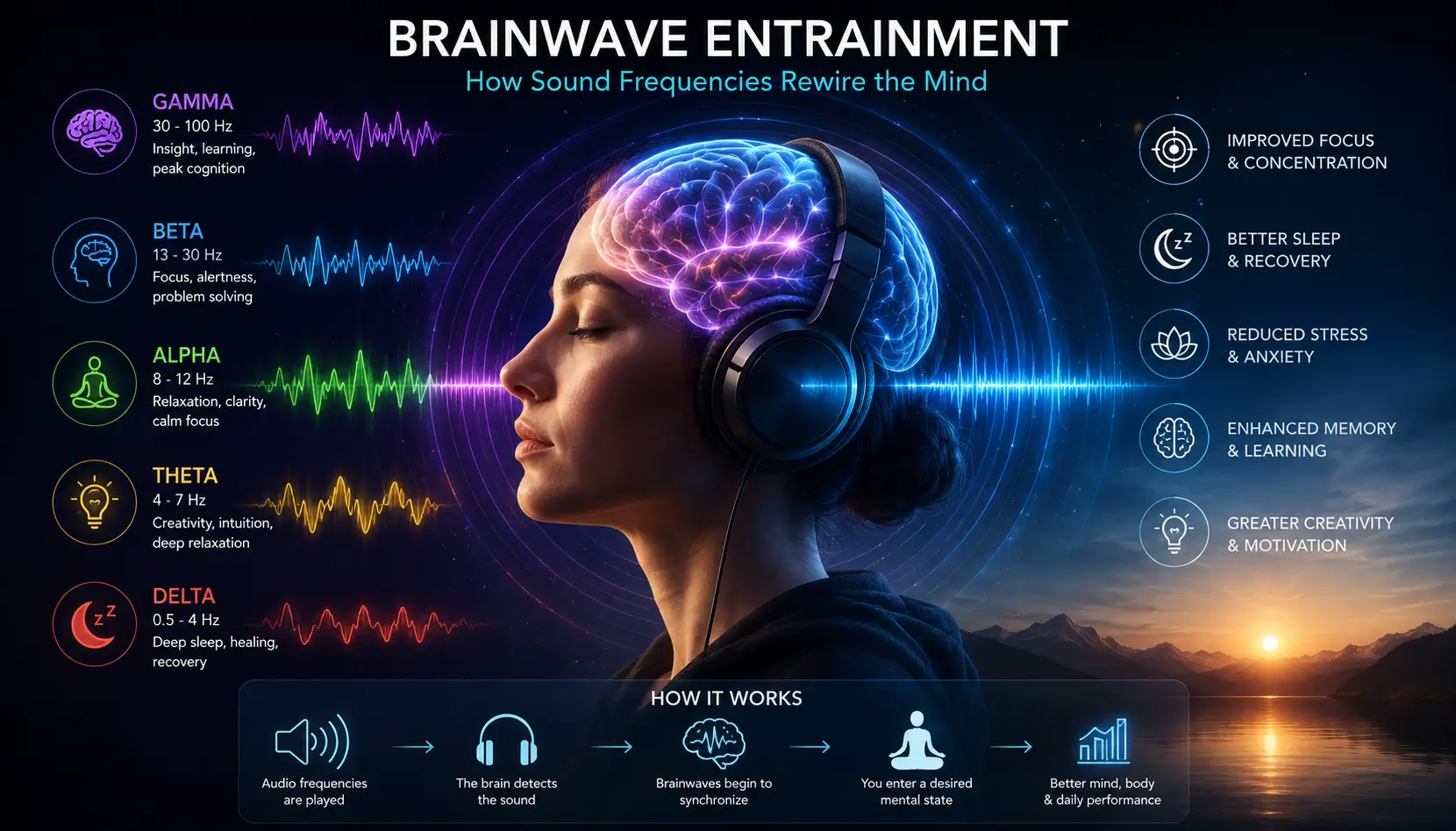
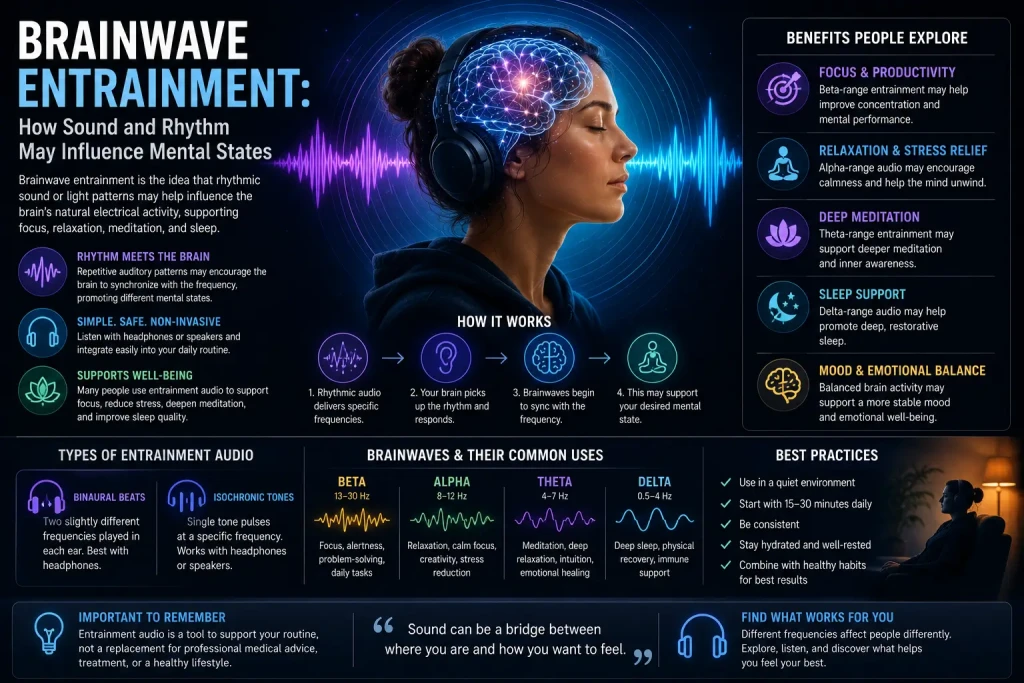
Brainwave entrainment is the process of using rhythmic sound frequencies to gently guide those patterns into more productive or restorative states.
For some people, the effects feel subtle at first. Others notice changes quickly, especially during relaxation or sleep-focused sessions. Like meditation, the impact tends to grow with consistency rather than intensity.
This guide breaks down:
- what brainwave entrainment actually is,
- how it works scientifically,
- which frequencies affect focus, sleep, memory, and anxiety,
- and how beginners can use it safely and effectively.
Brainwave entrainment refers to the brain’s natural tendency to synchronize with external rhythmic stimuli.
The process is based on something neuroscientists call the frequency-following response.
When the brain hears a repeated rhythmic pulse, electrical activity gradually begins aligning with that rhythm.
This is not hypnosis or mind control.
It’s closer to how:
- your foot unconsciously taps to music,
- your breathing slows during calm audio,
- or your attention locks onto repetitive patterns naturally.
The brain responds to rhythm because rhythm is deeply connected to neural timing.
⚡ How Brainwaves Actually Work
Your brain is made up of billions of neurons communicating through electrical signals.
These signals form measurable frequency patterns called brainwaves.
Different brainwave ranges are associated with different mental states.
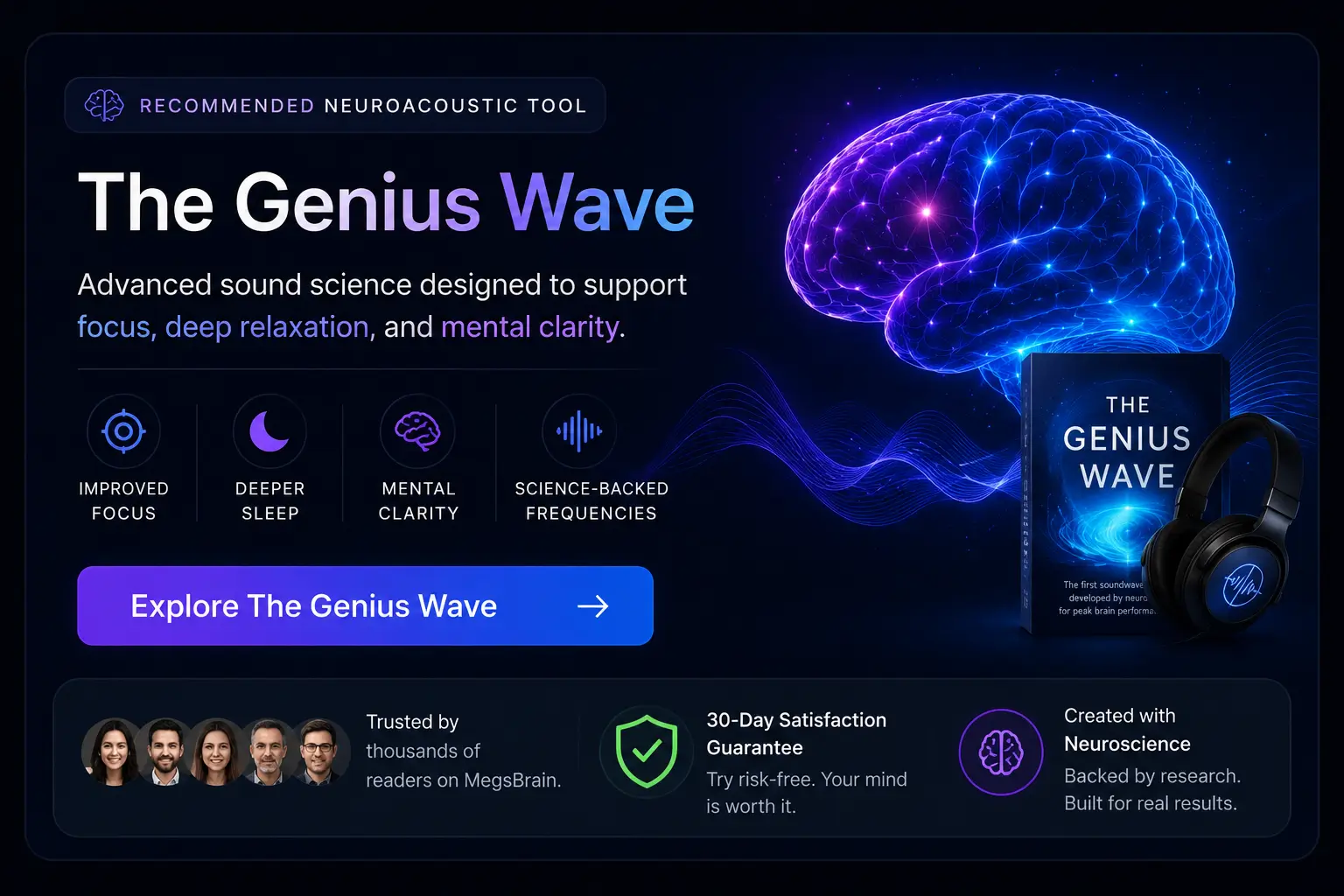
💤 Delta Waves (0.5–4 Hz)
Delta waves dominate during:
- deep sleep,
- physical recovery,
- cellular restoration.
This is the slowest brainwave state.
People lacking sufficient Delta sleep often wake up tired even after spending many hours in bed.
Delta-heavy audio is usually used before sleep rather than during work or study sessions.
🌙 Theta Waves (4–7 Hz)
Theta is linked to:
- meditation,
- imagination,
- creativity,
- emotional processing,
- dream-like mental states.
Many people describe Theta sessions as deeply calming or introspective.
Some listeners report vivid imagery or unusually creative thinking during Theta-focused audio experiences.
Theta is also heavily associated with memory formation and subconscious learning.
Memory-focused visualization techniques are explored further in our guide on
Memory Palace with Brainwaves.
🧘 Alpha Waves (8–12 Hz)
Alpha is often considered the brain’s “ideal balance” state.
It combines:
- relaxation,
- awareness,
- calm focus.
Alpha waves are commonly associated with:
- reading,
- light studying,
- journaling,
- mindfulness,
- relaxed productivity.
For beginners, Alpha-based entrainment is often the easiest and most comfortable starting point.
👉 Many structured entrainment programs begin with Alpha frequencies because they help quiet mental noise without causing drowsiness.
For a deeper look at calm-focus frequencies, read our full guide on Alpha Waves for Relaxation.
🚀 Beta Waves (13–30 Hz)
Beta waves support:
- analytical thinking,
- active concentration,
- decision-making,
- problem-solving.
However, there’s an important distinction:
Balanced Beta supports productivity.
Excessive Beta is often associated with stress and anxiety.
Modern lifestyles already overstimulate high-Beta activity through:
- notifications,
- multitasking,
- constant information exposure.
This is one reason many people struggle to relax naturally.
🔥 Gamma Waves (30–100 Hz)
Gamma waves are the fastest measurable brainwaves.
They are associated with:
- peak cognition,
- information integration,
- advanced focus,
- memory processing,
- insight moments.
Research involving experienced meditators has shown unusually strong Gamma synchronization during deep meditative states.
Gamma is not necessarily “better” than slower waves — it simply serves different functions.
We explored high-performance cognitive frequencies further in our article about Gamma Waves Benefits.
🎵 Types of Brainwave Entrainment Audio
Not all entrainment methods work the same way.
Understanding the difference matters.
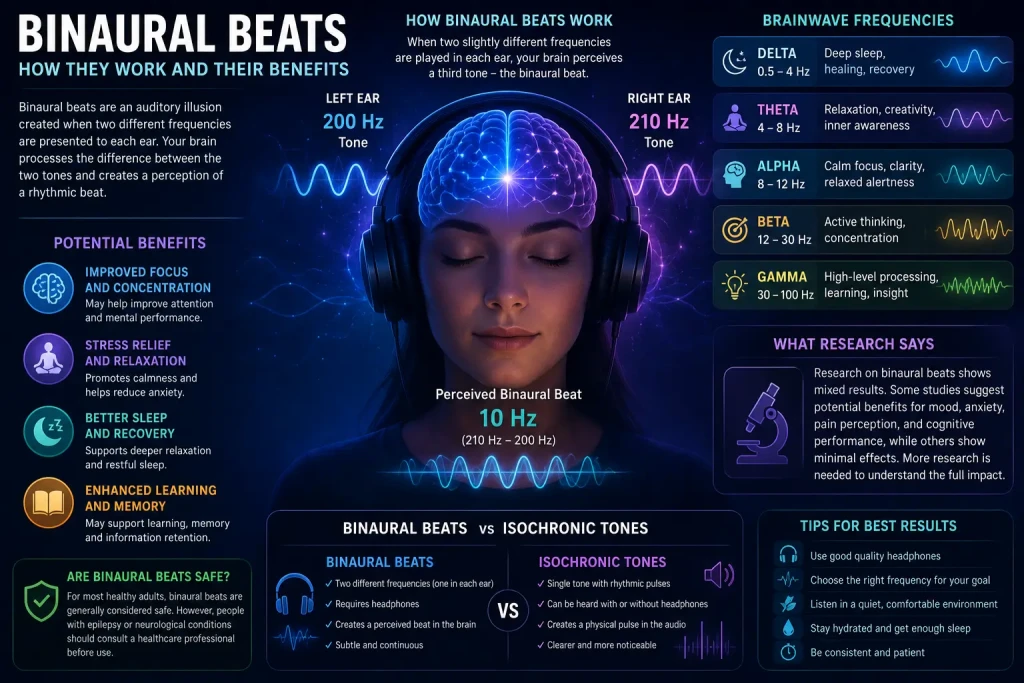
🎧 Binaural Beats
Binaural beats occur when:
- one tone enters the left ear,
- a slightly different tone enters the right ear.
The brain perceives the difference between them as a rhythmic beat.
Example:
- Left ear: 200 Hz
- Right ear: 210 Hz
- Brain perceives: 10 Hz Alpha beat
Stereo headphones are essential for binaural beats to work properly.
If you’re new to entrainment audio, start with our beginner-friendly guide to binaural beats and emotional balance.
🔊 Isochronic Tones
Isochronic tones use a single pulsing tone switched on and off rapidly.
Unlike binaural beats:
- they do not require headphones,
- and many users find them stronger or more stimulating.
Some people prefer isochronic tones for focus sessions because the pulses feel more pronounced.
🎼 Monaural Beats
Monaural beats combine tones before they reach the ears.
They are less commonly discussed but still used in some neuroacoustic systems.
🧪 Does Brainwave Entrainment Actually Work?
This is the question most beginners ask.
The short answer:
yes — but not magically.
Research using EEG monitoring has shown measurable shifts in brainwave activity during entrainment sessions.
Studies have linked certain frequency exposure to:
- improved relaxation,
- reduced stress perception,
- better focus,
- improved sleep onset,
- temporary cognitive enhancement.
However, results vary depending on:
- consistency,
- session quality,
- frequency accuracy,
- listening environment,
- and individual brain chemistry.
People expecting instant transformation are usually disappointed.
People approaching it like mental training often report better long-term outcomes.
😴 Brainwave Entrainment for Sleep
Sleep is one of the most common reasons people explore entrainment.
The goal is usually to encourage:
- Theta transition,
- followed by Delta dominance.
Many users report that sleep-focused sessions help reduce:
- racing thoughts,
- bedtime anxiety,
- mental restlessness.
However, sound alone cannot replace poor sleep habits.
The most effective approach combines:
- reduced screen exposure,
- consistent sleep timing,
- and calming audio support.
If sleep optimization interests you, you may also enjoy our complete guide on brain waves for sleep.
🎯 Brainwave Entrainment for Focus
Focus-oriented sessions typically combine:
- Alpha,
- low Beta,
- and sometimes Gamma frequencies.
This balance matters.
Too much stimulation can increase mental tension instead of concentration.
Some listeners describe focus sessions as:
“feeling mentally quieter while still alert.”
You can learn more about deep cognitive immersion in our guide to flow state brain waves.
That subtle difference is important.
We also covered work-focused concentration strategies in our article on binaural beats for focus and productivity.
😌 Brainwave Entrainment for Anxiety
Calming frequencies do not “erase” anxiety.
What they may do is help the nervous system shift away from chronic overstimulation.
Alpha and Theta ranges are most commonly associated with:
- emotional calming,
- reduced internal noise,
- relaxation.
Some people experience noticeable effects quickly. Others require repeated exposure before the brain begins transitioning more easily into calmer states.
⚠️ Is Brainwave Entrainment Safe?
For most healthy adults:
yes.
Brainwave entrainment is generally considered non-invasive and low risk.
Potential temporary effects may include:
- mild dizziness,
- fatigue,
- emotional sensitivity,
- or headaches from excessive volume.
People with epilepsy or neurological conditions should consult a medical professional before using entrainment audio.
Using moderate volume and reasonable session lengths is usually recommended.
🧩 Common Myths About Brainwave Entrainment
“It instantly rewires your brain.”
No. Neural adaptation takes time.
“Higher frequencies are better.”
Different frequencies serve different purposes.
“One session changes everything.”
Consistency matters far more than intensity.
“It’s just placebo.”
EEG studies show measurable synchronization effects, though subjective results vary.
🎧 How Beginners Should Start
For most people, the best approach is simple:
- Start with Alpha sessions
- Use stereo headphones
- Listen for 15–20 minutes
- Avoid multitasking
- Stay consistent for 1–2 weeks
The goal is not to force a state.
It’s to train familiarity with it.
👉 Some users prefer structured multi-frequency systems like Genius Wave because the sessions are designed to transition gradually between states instead of relying on abrupt pulses.
🔬 Why Audio Quality Matters
One overlooked factor is sound design quality.
Poorly engineered tracks may include:
- inconsistent frequencies,
- harsh transitions,
- compressed audio artifacts,
- unstable pulsing patterns.
This can reduce effectiveness or even create mental fatigue.
Professional neuroacoustic systems typically use:
- smoother layering,
- phase balancing,
- and gradual transitions.
🌌 The Future of Brainwave Training
Brainwave entrainment is moving far beyond simple meditation audio.
Emerging areas include:
- neurofeedback integration,
- AI-assisted frequency adaptation,
- cognitive performance training,
- trauma recovery support,
- and sleep optimization systems.
The technology is still evolving, but interest continues growing rapidly.
🧘 Final Thoughts
Brainwave entrainment is not magic.
It will not instantly transform your life overnight.
What it can do is help the brain access states that already exist within it:
- calm,
- focus,
- creativity,
- deep rest,
- and emotional balance.
When approached with realistic expectations and consistent practice, sound becomes more than entertainment.
It becomes a tool for training the mind itself.
👉 Related read: Brainwave Entrainment Explained: The Science of Sound and Focus for more insights on brainwave focus and mental clarity.
Related Posts
Stay Informed With the Latest & Most Important News
Previous Post
Next Post