
Now Reading: Binaural Beats for Anxiety Relief: Can Sound Therapy Calm the Mind?
-
01
Binaural Beats for Anxiety Relief: Can Sound Therapy Calm the Mind?
Binaural Beats for Anxiety Relief: Can Sound Therapy Calm the Mind?
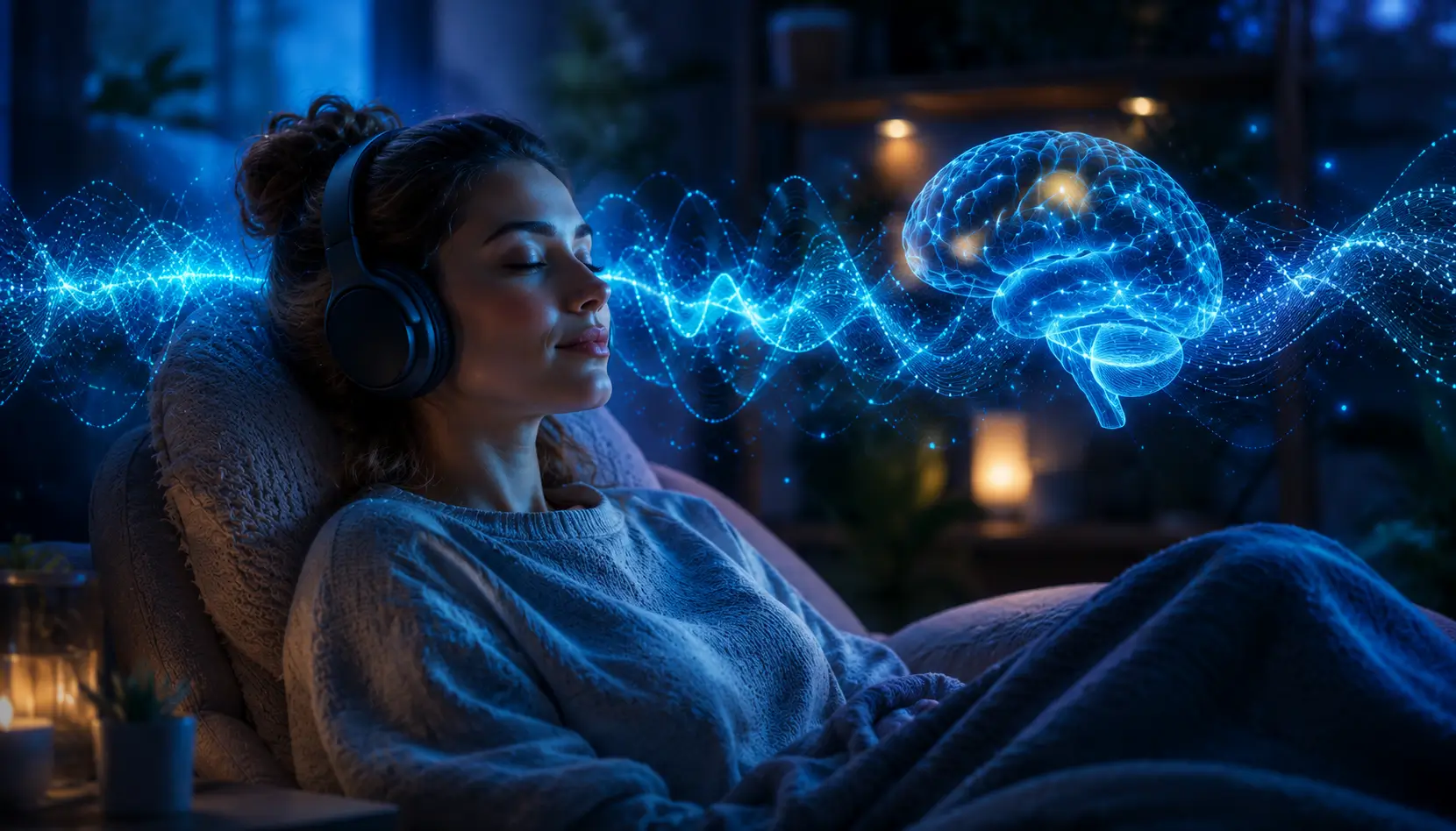
Anxiety has become one of the most common struggles of modern life.
Constant notifications, overstimulation, stress, lack of sleep, and endless mental noise leave many people searching for ways to feel calmer and more emotionally balanced.
One increasingly popular approach is:
binaural beats.
Supporters claim these sound frequencies help calm the nervous system, reduce anxiety, and create deeper relaxation states.
Skeptics often dismiss them entirely as pseudoscience.
So what does research actually suggest?
The answer is more nuanced than most internet discussions make it seem.
🧠 What Are Binaural Beats?
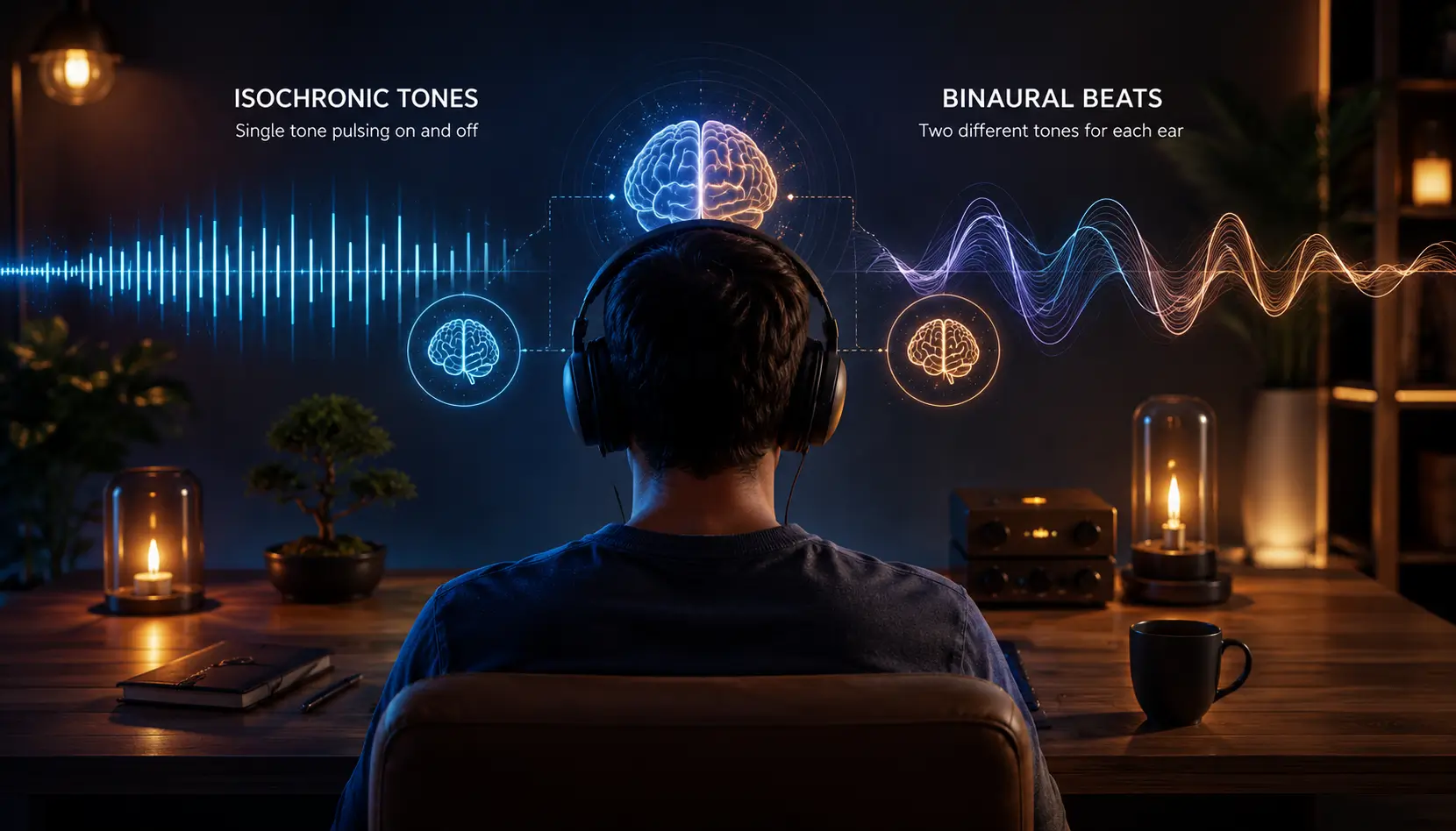
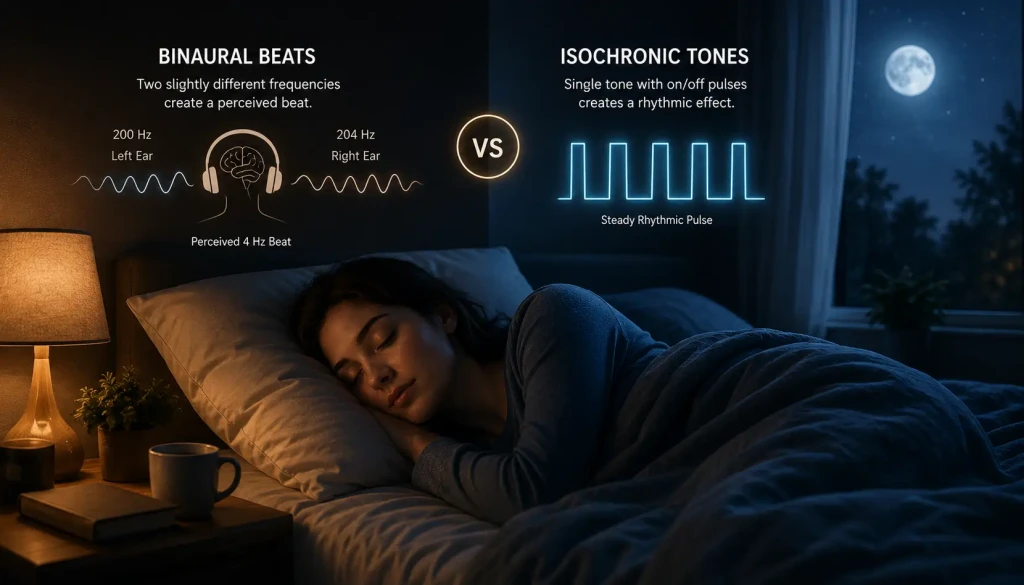
Binaural beats are an auditory illusion created when two slightly different frequencies are played separately into each ear.
The brain perceives the difference between the tones as a rhythmic pulse.
For example:
- Left ear: 200 Hz
- Right ear: 210 Hz
- Perceived internal beat: 10 Hz
This perceived rhythm is thought to influence mental states under certain conditions.
Different frequencies are often associated online with different experiences such as:
- relaxation,
- focus,
- meditation,
- or sleep support.
However, many exaggerated internet claims go far beyond current scientific evidence.
🌊 Why People Use Binaural Beats for Anxiety
Many listeners report that binaural beat sessions feel:
- calming,
- immersive,
- mentally quieting,
- or emotionally grounding.
Why?
Because sound strongly affects the nervous system.
The brain naturally responds to:
- rhythm,
- repetition,
- atmosphere,
- emotional association,
- and sensory pacing.
Slower ambient audio environments may help reduce feelings of mental overload — especially in overstimulating modern environments.
This does not necessarily mean binaural beats “cure” anxiety.
But they may help some individuals create calmer mental conditions during stressful periods.
For a broader look at sound-based mental states and relaxation-focused audio environments, explore our guide to brainwave entrainment audio for focus and relaxation.
🔬 What Research Actually Says
Research involving binaural beats remains ongoing.
Some studies suggest certain frequency-based sessions may support:
- temporary relaxation,
- stress reduction,
- meditative states,
- and calmer attention patterns.
Other studies show weaker or inconsistent effects.
Further reading:
https://www.frontiersin.org/articles/10.3389/fnhum.2019.00425/full
https://www.ncbi.nlm.nih.gov/pmc/articles/PMC10198548/
The important distinction is this:
There is currently no strong evidence showing binaural beats permanently eliminate anxiety disorders.
However, under certain conditions, relaxing sound environments may help some people temporarily reduce feelings of stress and mental overstimulation.
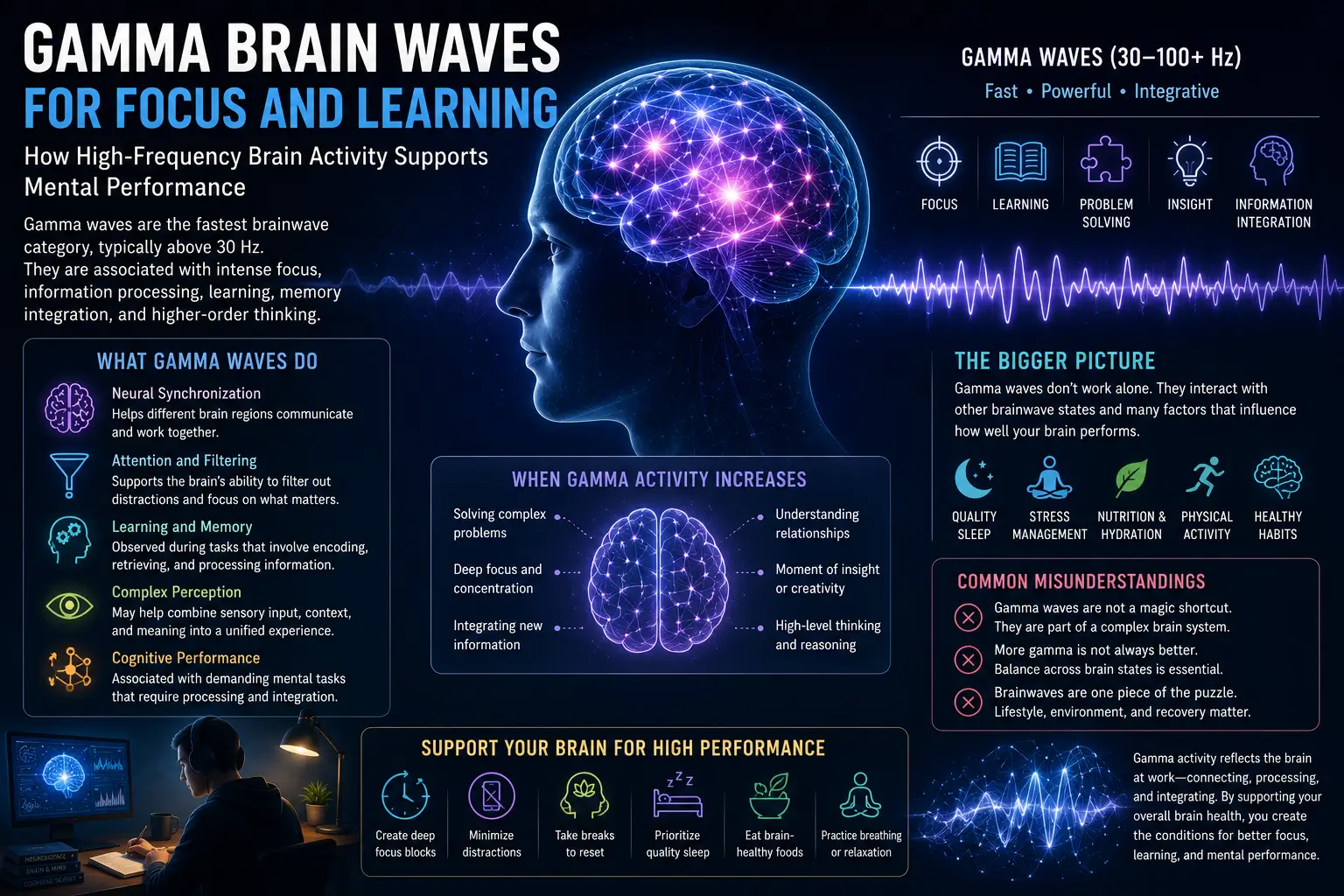
To better understand how different brainwave states are associated with focus, sleep, and relaxation, read our guide to the different types of brain waves and how they affect the brain.
☁️ Why Modern Brains Feel Constantly Overstimulated
Human nervous systems evolved in far quieter environments.
Today, many people spend hours surrounded by:
- screens,
- social media,
- multitasking,
- notifications,
- artificial lighting,
- and nonstop cognitive input.
Over time, this constant stimulation may make relaxation more difficult.
This is one reason calming audio environments continue attracting attention.
Not because they create “mind control” effects — but because many individuals are searching for practical ways to mentally slow down.
🎧 Binaural Beats vs Relaxing Music
Although they are often grouped together, binaural beats are different from ordinary background music.
Relaxation-focused binaural systems often combine:
- rhythmic pulses,
- ambient sound layering,
- frequency balancing,
- and repetitive audio pacing.
Some listeners explore neuroacoustic relaxation programs that blend binaural stimulation with calming atmospheric sound design instead of relying entirely on mystical frequency claims.
🧩 The Psychology Behind Calming Audio
One reason sound therapy can feel emotionally powerful is:
expectation and association.
If someone strongly connects certain sounds with:
- calmness,
- meditation,
- safety,
- or relaxation,
their nervous system may respond more positively during the listening experience.
This does not automatically mean the frequencies themselves contain supernatural properties.
Human perception is deeply influenced by:
- context,
- emotional state,
- sensory interpretation,
- and habit formation.
⚠️ Common Myths About Binaural Beats
Myth:
“Binaural beats permanently cure anxiety.”
Reality:
There is currently no strong scientific evidence supporting this claim.
Myth:
“Specific frequencies unlock hidden brain abilities.”
Reality:
Most of these claims are heavily exaggerated online.
Myth:
“Binaural beats replace therapy or professional care.”
Reality:
Sound-based relaxation tools should never replace professional mental health support when needed.
🧘 Practical Ways to Use Binaural Beats
If you enjoy binaural beat audio:
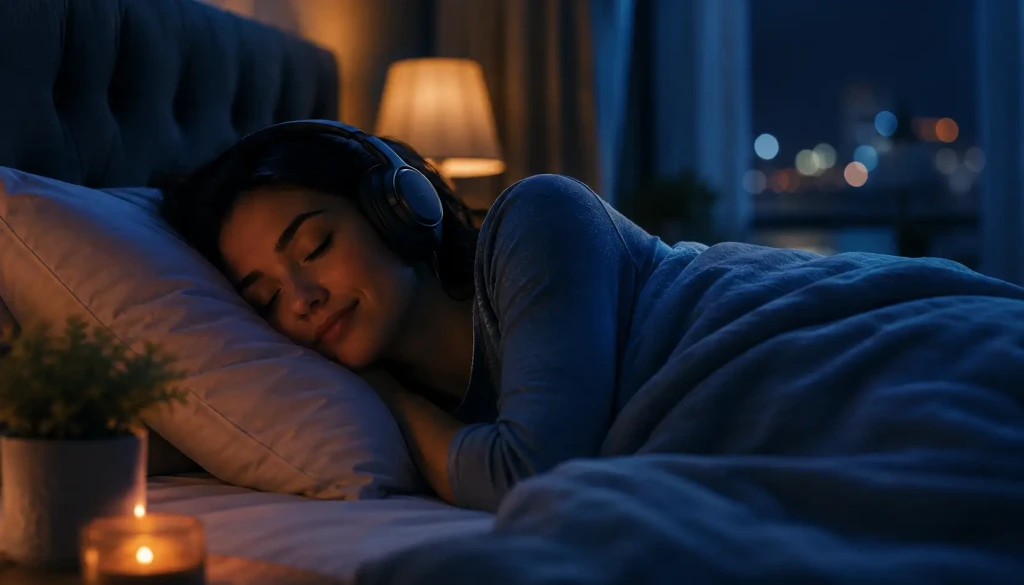
- use headphones,
- listen in calm environments,
- keep expectations realistic,
- reduce distractions beforehand,
- and focus on relaxation rather than dramatic transformation claims.
Many people simply use these sound environments as calming background tools during:
- meditation,
- journaling,
- studying,
- deep work,
- or nighttime relaxation routines.
Final Thoughts
Binaural beats exist somewhere between neuroscience, wellness culture, and personal experience.
Some online claims are exaggerated.
Others may contain partial truth mixed with marketing hype.
But relaxing sound environments can still feel psychologically meaningful for many individuals.
The healthiest perspective is usually the most balanced one:
Sound may support relaxation and calmer mental states without needing supernatural explanations to feel valuable.
Related Articles
- 5 Types of Brain Waves and How They Affect You
- How Brainwave Entrainment Audio Is Used for Focus and Relaxation
- Best Binaural Beats for Sleep: A Calm Guide to Deeper Rest
- Alpha Brain Waves: Calm Focus and Mental Clarity
- Stress, Anxiety, and the Brain: How to Regain Calm and Mental Balance
👉 Related read: Brain Wave Frequency: Understanding the Science of Mental Energy for more insights on brainwave focus and mental clarity.
Related Posts
Stay Informed With the Latest & Most Important News
Previous Post
Next Post