
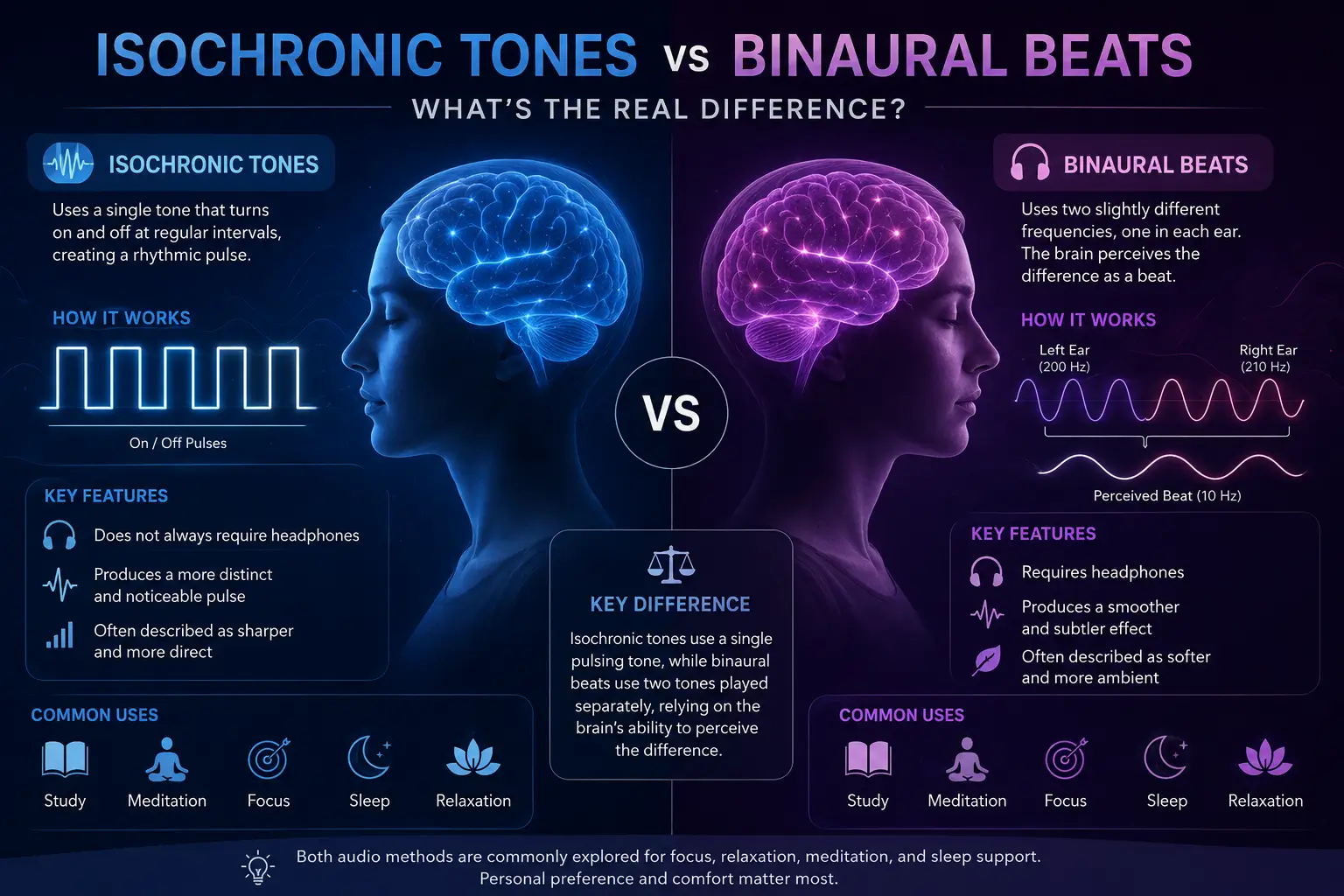
If you spend enough time exploring brainwave audio, you will eventually encounter the same question: Are isochronic tones better than binaural beats? For years, discussions about audio entrainment have often
If you spend enough time exploring brainwave audio, you will eventually encounter the same question: Are isochronic tones better than binaural beats? For years, discussions about audio entrainment have often
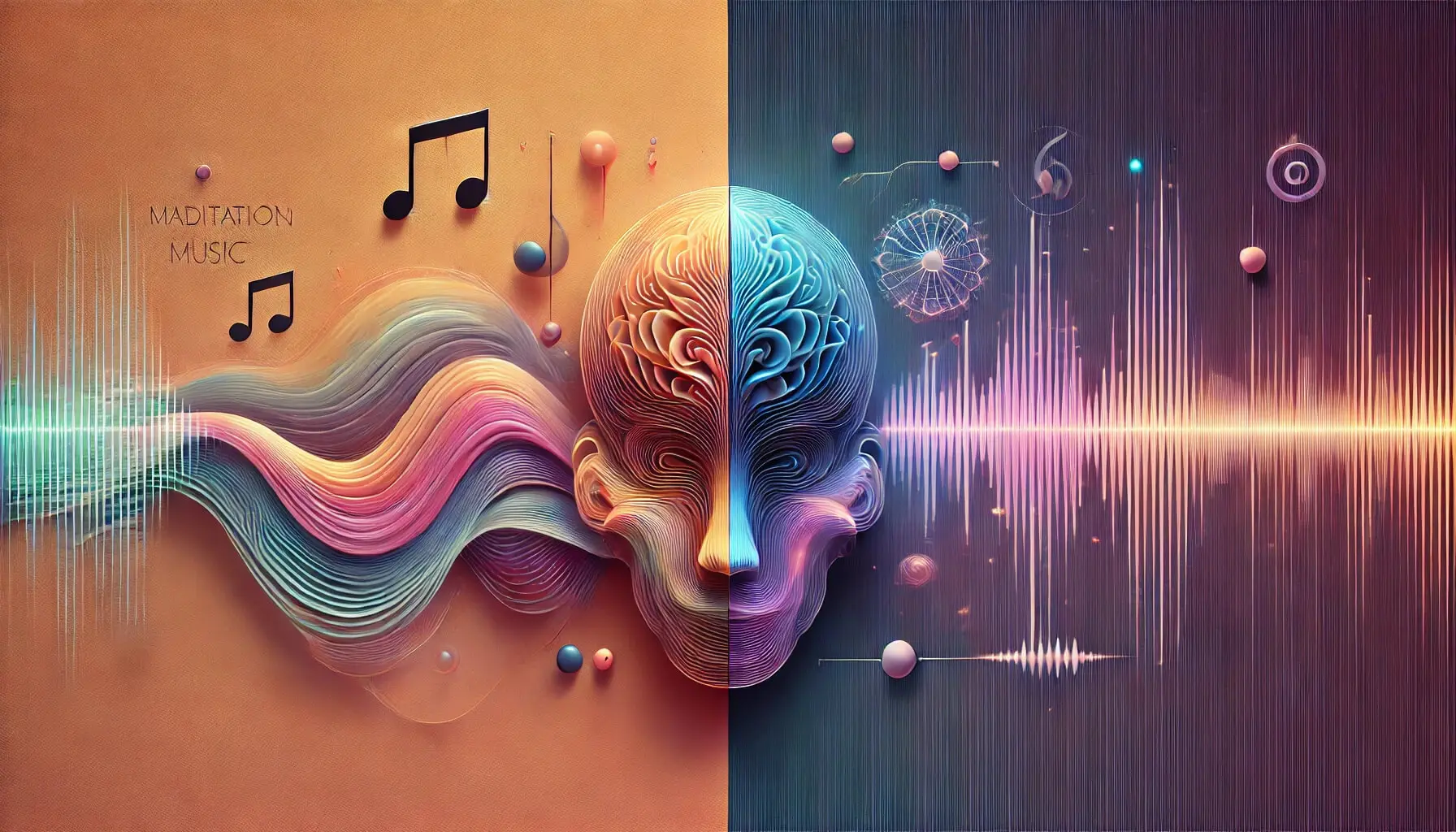
🎧 Meditation Music vs Brainwave Audio: Why People Compare Them As interest in focus enhancement, sleep support, and relaxation audio continues to grow, many people discover two popular categories of
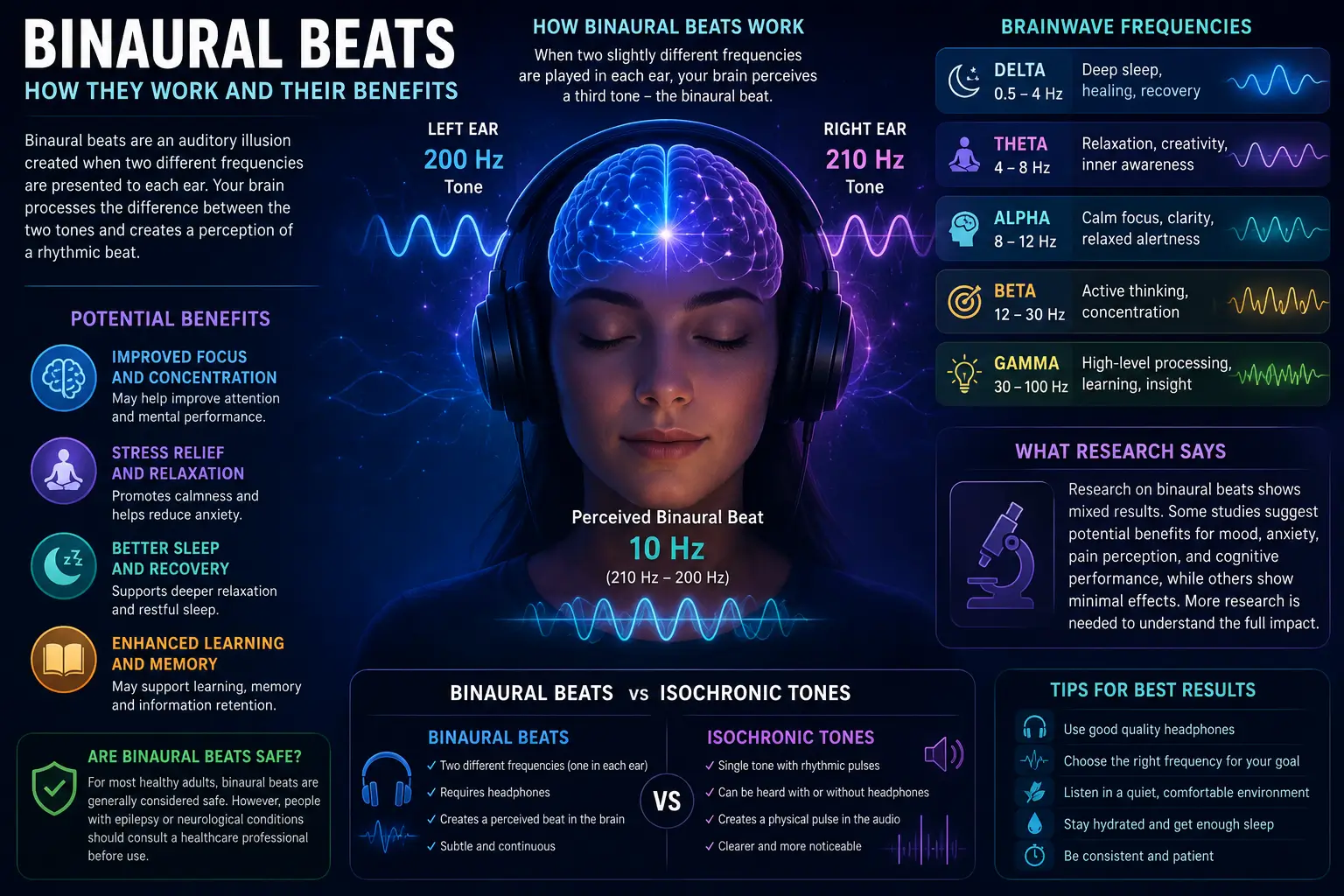
Binaural beats have become one of the most discussed topics in the world of brainwave entrainment, meditation, and cognitive performance. Supporters claim they may help with relaxation, focus, sleep, and
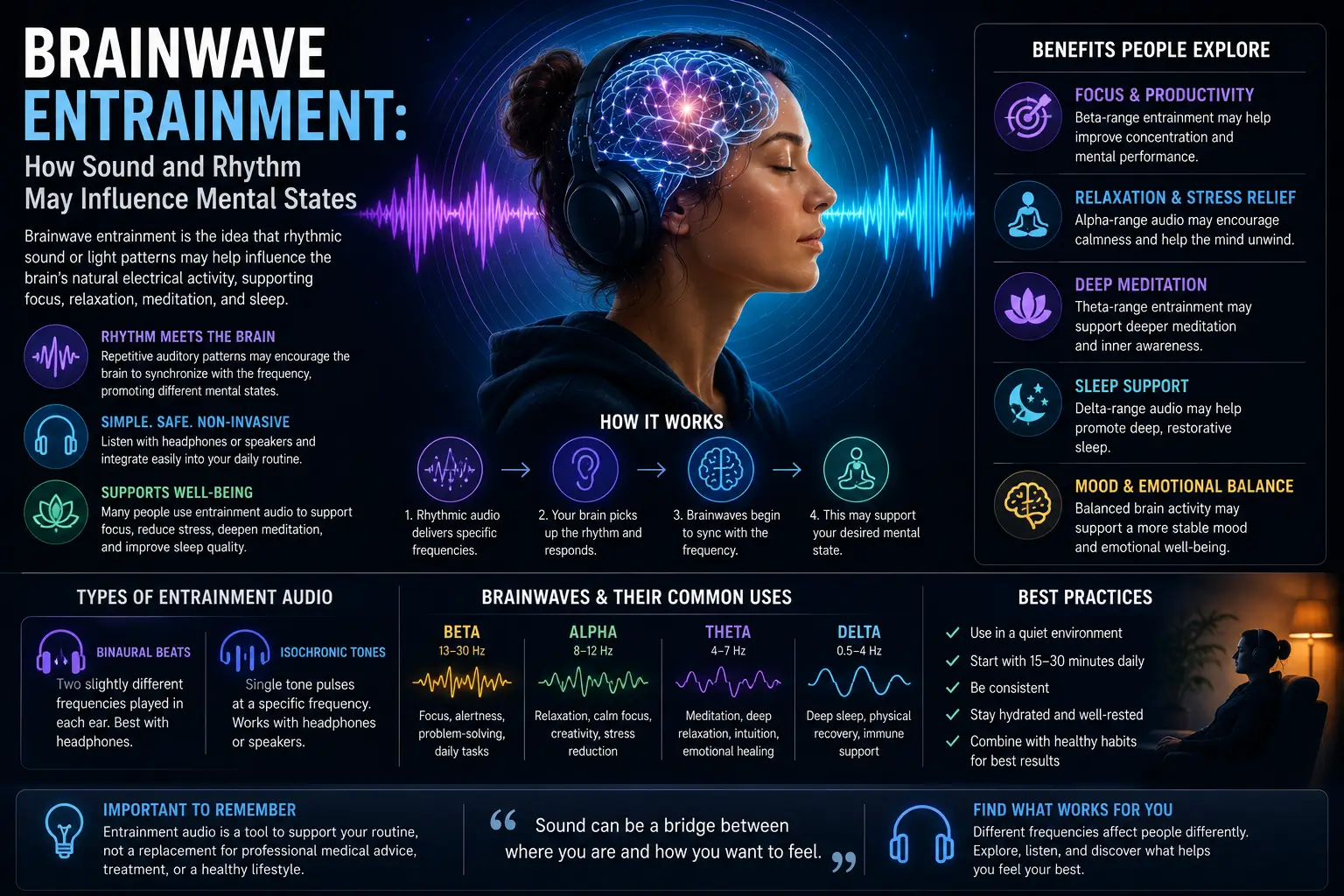
Modern life constantly stimulates the brain. Notifications, multitasking, background noise, stress, and endless digital input can make it difficult to fully relax or maintain stable focus. Because of this, many
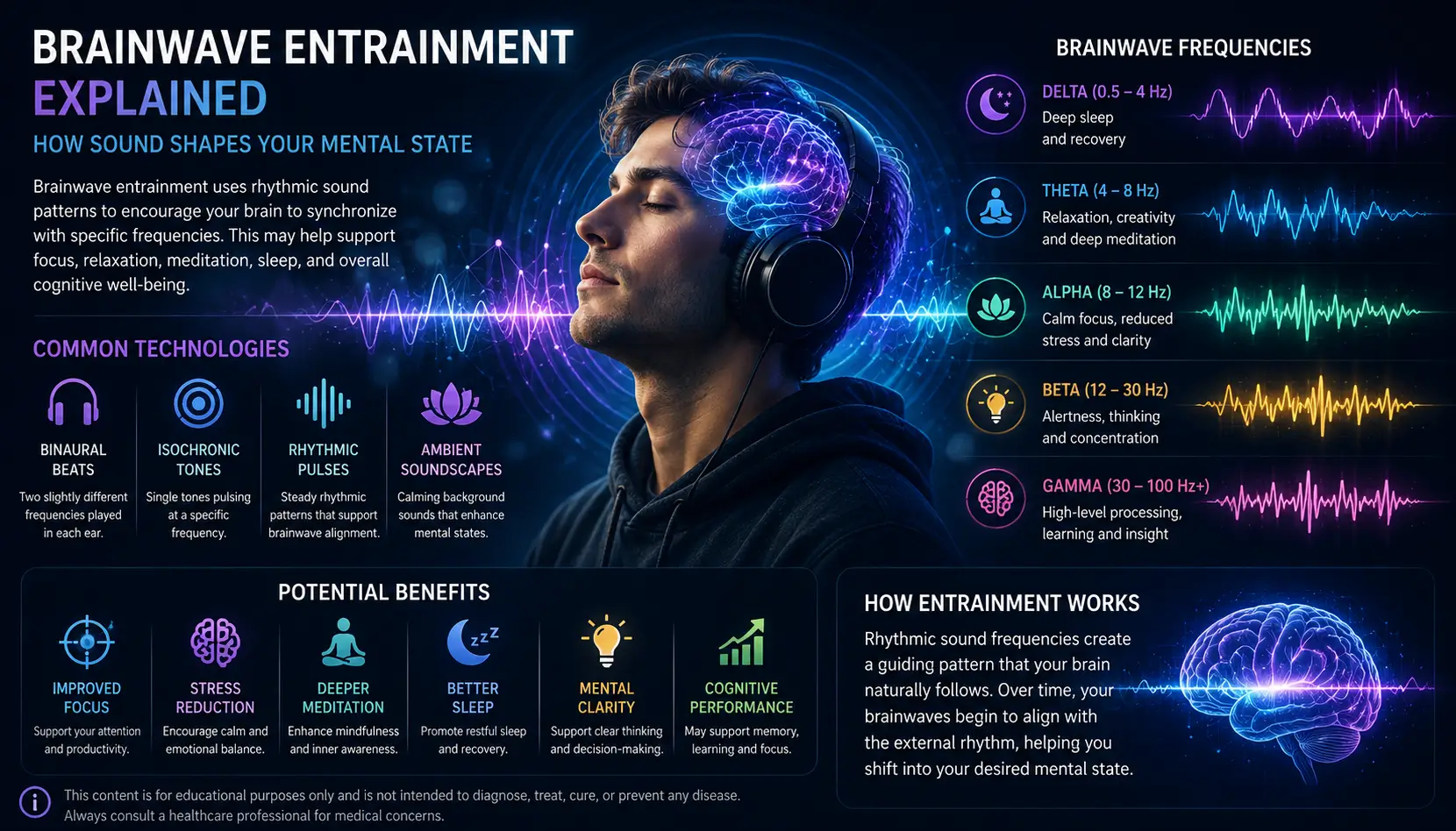
🧠 What Is Brainwave Entrainment? Brainwave entrainment is a concept based on rhythmic sensory stimulation. The theory suggests that repetitive sound patterns may influence mental-state activity by encouraging the brain
The human brain constantly produces rhythmic electrical activity. These patterns — commonly known as brainwaves — change depending on: attention, stress, sleep, emotional state, and cognitive activity. Brainwave entrainment is
🌊 Introduction Your brain is an orchestra — and sometimes, the instruments fall out of tune.That’s where a brainwave reset comes in.By blending binaural and isochronic tones, you can harmonize
Anxiety has become one of the most common struggles of modern life. Constant notifications, overstimulation, stress, lack of sleep, and endless mental noise leave many people searching for ways to
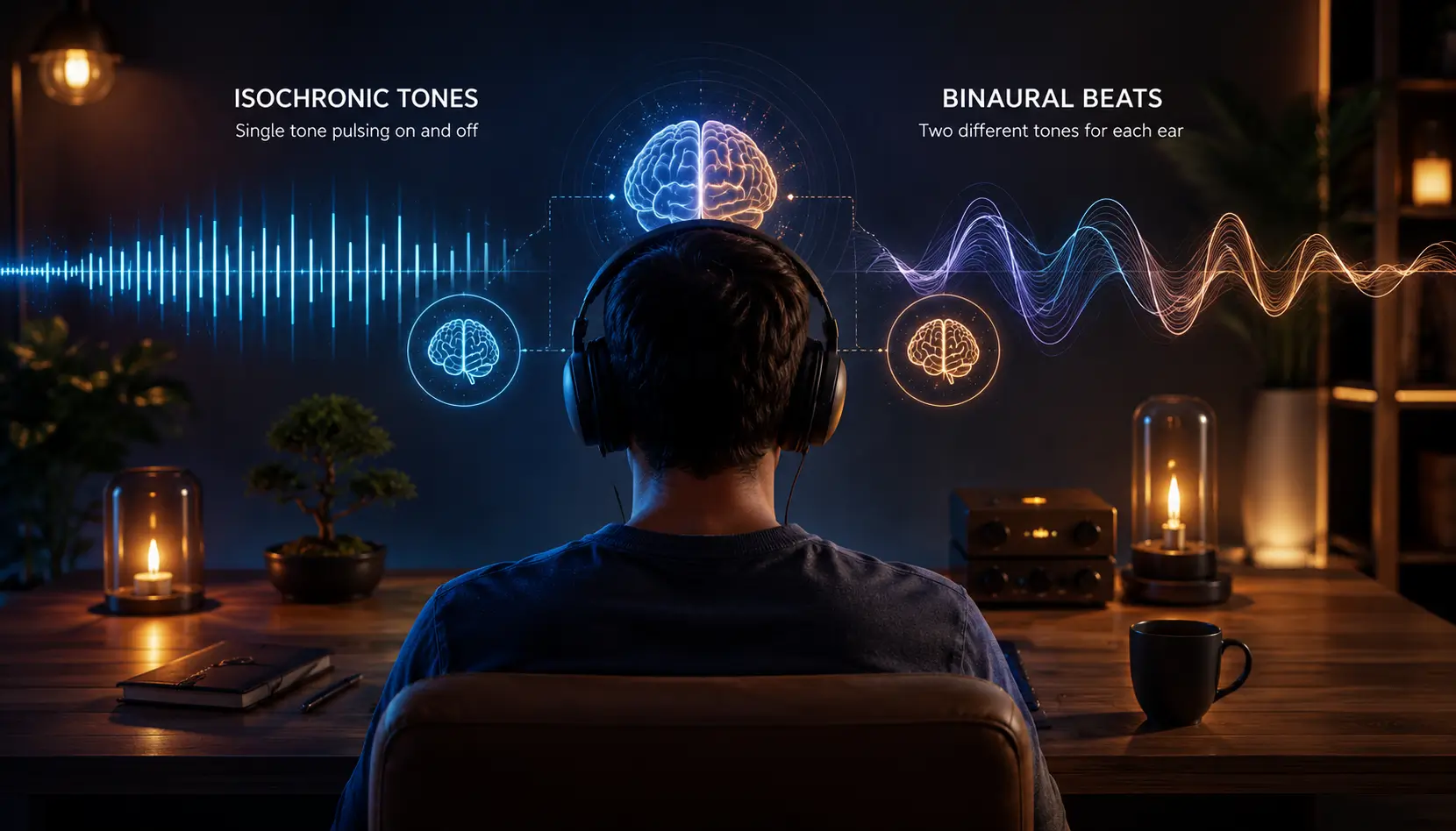
Brainwave audio has become increasingly popular for focus, meditation, sleep, and relaxation. But many people eventually run into the same question: Which works better — isochronic tones or binaural beats?
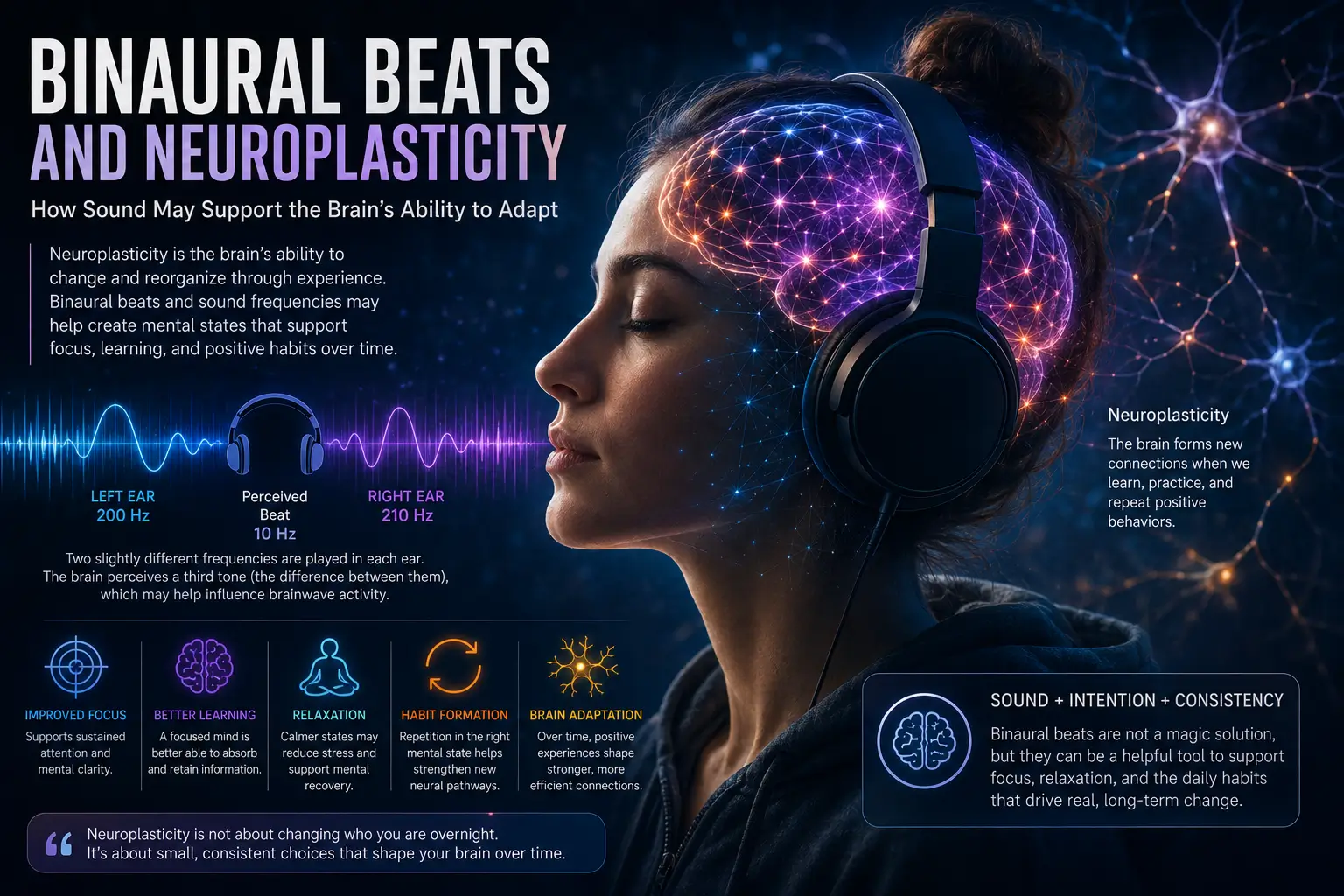
The human brain is not static. It constantly changes in response to experience, behavior, learning, attention, stress, and environment. This ability to adapt is known as neuroplasticity. In recent years,