
Now Reading: Meditation Music vs Brainwave Audio: What’s the Difference?
-
01
Meditation Music vs Brainwave Audio: What’s the Difference?
Meditation Music vs Brainwave Audio: What’s the Difference?
🎧 Meditation Music vs Brainwave Audio: Why People Compare Them
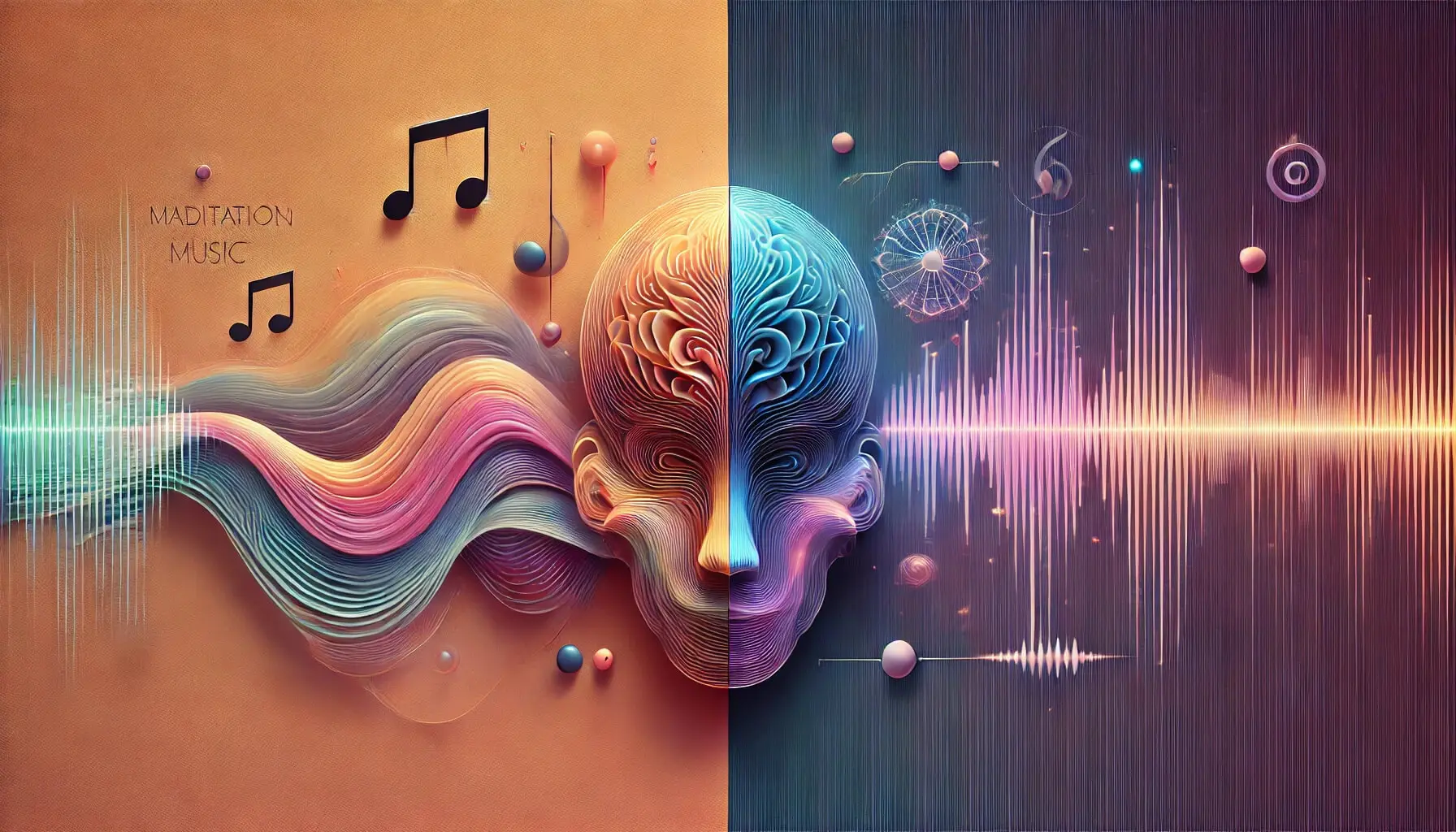
As interest in focus enhancement, sleep support, and relaxation audio continues to grow, many people discover two popular categories of sound environments: meditation music and brainwave audio.
At first, they may sound similar. Both are often used during meditation, studying, deep work, relaxation, or nighttime routines. However, the way these audio styles are designed — and the experiences they create — can be very different.
Some listeners prefer calming ambient music for emotional relaxation, while others look for more structured sound environments like binaural beats or isochronic tones designed around rhythmic stimulation.
Understanding the difference between these approaches can help you choose the right listening environment for your goals.
If you’re new to brainwave audio, this guide may also help:
Brainwave Entrainment Explained: How Sound Shapes Your Mental State
🧠 What Is Meditation Music?
Meditation music is primarily designed to create a calming emotional atmosphere.
It often includes:
- Ambient textures
- Soft piano or strings
- Nature sounds
- Slow instrumental layers
- Atmospheric drones
- Gentle rhythmic patterns
The goal is usually emotional relaxation rather than mental stimulation.
Meditation music does not typically attempt to synchronize the brain to a specific rhythm. Instead, it creates a peaceful environment that may help reduce mental noise and encourage relaxation naturally.
People commonly use meditation music for:
- Yoga
- Mindfulness
- Evening routines
- Stress reduction
- Sleep preparation
- Relaxation sessions
🔊 What Is Brainwave Audio?
Brainwave audio takes a more structured approach.
This category includes:
- Binaural beats
- Isochronic tones
- Monaural beats
- Rhythmic pulse audio
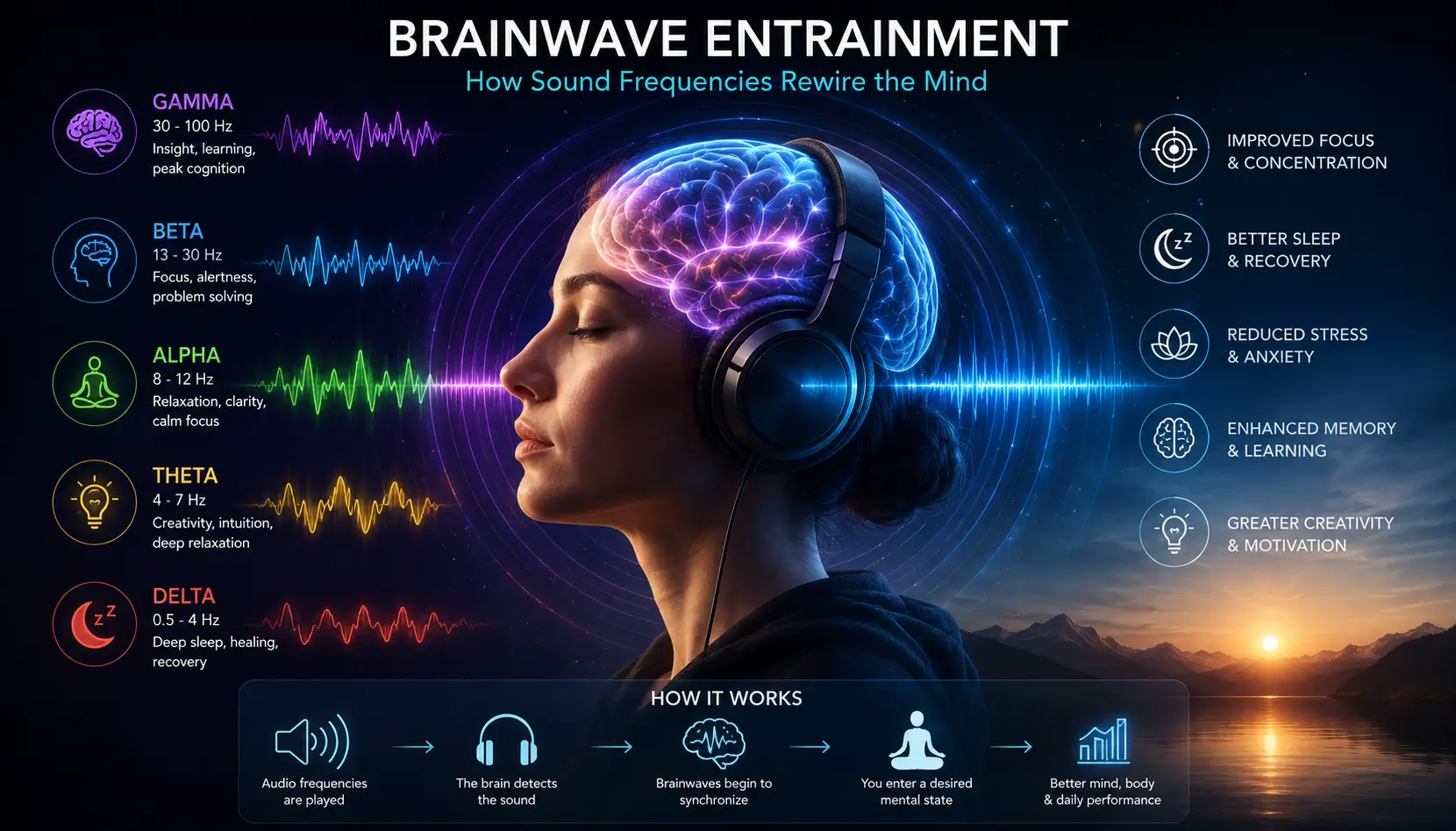
These sound environments are often associated with the concept of brainwave entrainment — the idea that repetitive auditory stimulation may encourage the brain to respond to rhythmic external patterns.
Different frequency ranges are commonly associated with different mental states:
- Delta waves → deep sleep
- Theta waves → meditation and creativity
- Alpha waves → calm focus and relaxation
- Beta waves → alertness and concentration
- Gamma waves → cognitive processing and awareness
You can learn more about these states here:
Brainwave States and Mental Performance
⚡ The Biggest Difference Between Them
The biggest difference is intention.
Meditation music focuses on emotional atmosphere.
Brainwave audio focuses on rhythmic stimulation.
One creates a mood.
The other attempts to create a structured auditory environment designed around mental-state targeting.
Neither approach is universally “better.” Different listeners respond differently depending on personal preference and listening goals.
🎯 Which One Is Better for Focus?
Many people prefer brainwave audio during deep work sessions because repetitive sound patterns can feel less distracting than traditional music.
Focus-oriented audio environments are often used during:
- Studying
- Writing
- Coding
- Reading
- Long concentration sessions
Alpha and beta frequency environments are commonly associated with concentration and mental alertness.
Related reading:
Audio Environments for Focus and Deep Work
Some listeners also combine brainwave audio with noise environments such as:
White Noise vs Pink Noise
🌙 Which One Works Better for Sleep?
Meditation music is often easier for beginners because it feels natural and emotionally calming.
Brainwave audio for sleep frequently uses slower delta or theta pulse patterns designed to encourage relaxation and reduced mental activity.
Some people combine:
- Soft ambient music
- Brown noise
- Rain sounds
- Low-frequency pulse audio
This can create a more immersive nighttime sound environment.
Related guide:
Which Brain Waves Help You Sleep?
🎧 Do You Need Headphones?
For meditation music:
Usually no.
For binaural beats:
Yes — headphones are strongly recommended.
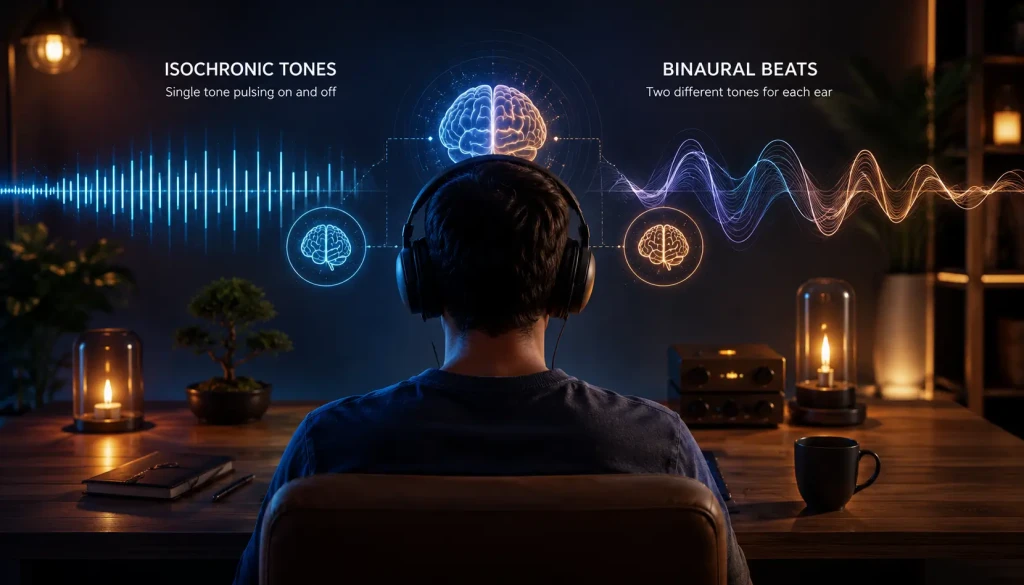
Binaural beats require slightly different frequencies entering each ear separately. Without stereo separation, the intended effect may not function properly.
Isochronic tones, however, can often be used without headphones because they rely on rhythmic pulses rather than stereo frequency separation.
Related comparison:
Isochronic Tones vs Binaural Beats
🔬 What Does Research Say?
Research surrounding sound-based cognitive stimulation is still evolving.
Some studies suggest rhythmic audio stimulation may influence:
- Relaxation
- Attention
- Mood regulation
- Meditation depth
- Sleep preparation
However, exaggerated claims should always be approached carefully.
Brainwave audio is not a miracle solution, medical treatment, or shortcut to instant transformation.
Healthy routines, sleep quality, stress management, and consistency still play a far larger role in cognitive performance.
🧩 Choosing the Right Audio Environment
Meditation music may be better if you want:
- Relaxation
- Emotional calm
- Stress reduction
- Mindfulness support
- Sleep preparation
Brainwave audio may be better if you want:
- Structured focus sessions
- Background concentration audio
- Experimental meditation environments
- Deep work support
- Repetitive non-musical stimulation
Some listeners alternate between both depending on the situation and time of day.
🚀 A Growing Interest in Focus Audio
As interest in cognitive audio environments continues to grow, more people are experimenting with structured listening sessions designed around focus, relaxation, and mental clarity.
Some modern audio programs combine ambient sound design with rhythmic pulse patterns intended to create immersive concentration environments.
One example is:
The Genius Wave audio program, which combines layered sound environments inspired by brainwave entrainment concepts.
📌 Final Thoughts
Meditation music and brainwave audio may seem similar on the surface, but they are built around very different ideas.
Meditation music focuses on atmosphere and emotional relaxation.
Brainwave audio focuses on rhythmic stimulation and structured listening environments.
The best option depends on your goals, your listening preferences, and the type of mental environment you want to create.
For many people, the most effective approach is not choosing one over the other — but understanding when each works best.
🔗 Related Articles
Related Posts

Stay Informed With the Latest & Most Important News
Previous Post
Next Post