
Now Reading: Are Binaural Beats Safe? Understanding Risks, Side Effects, and Common Concerns
-
01
Are Binaural Beats Safe? Understanding Risks, Side Effects, and Common Concerns
Are Binaural Beats Safe? Understanding Risks, Side Effects, and Common Concerns
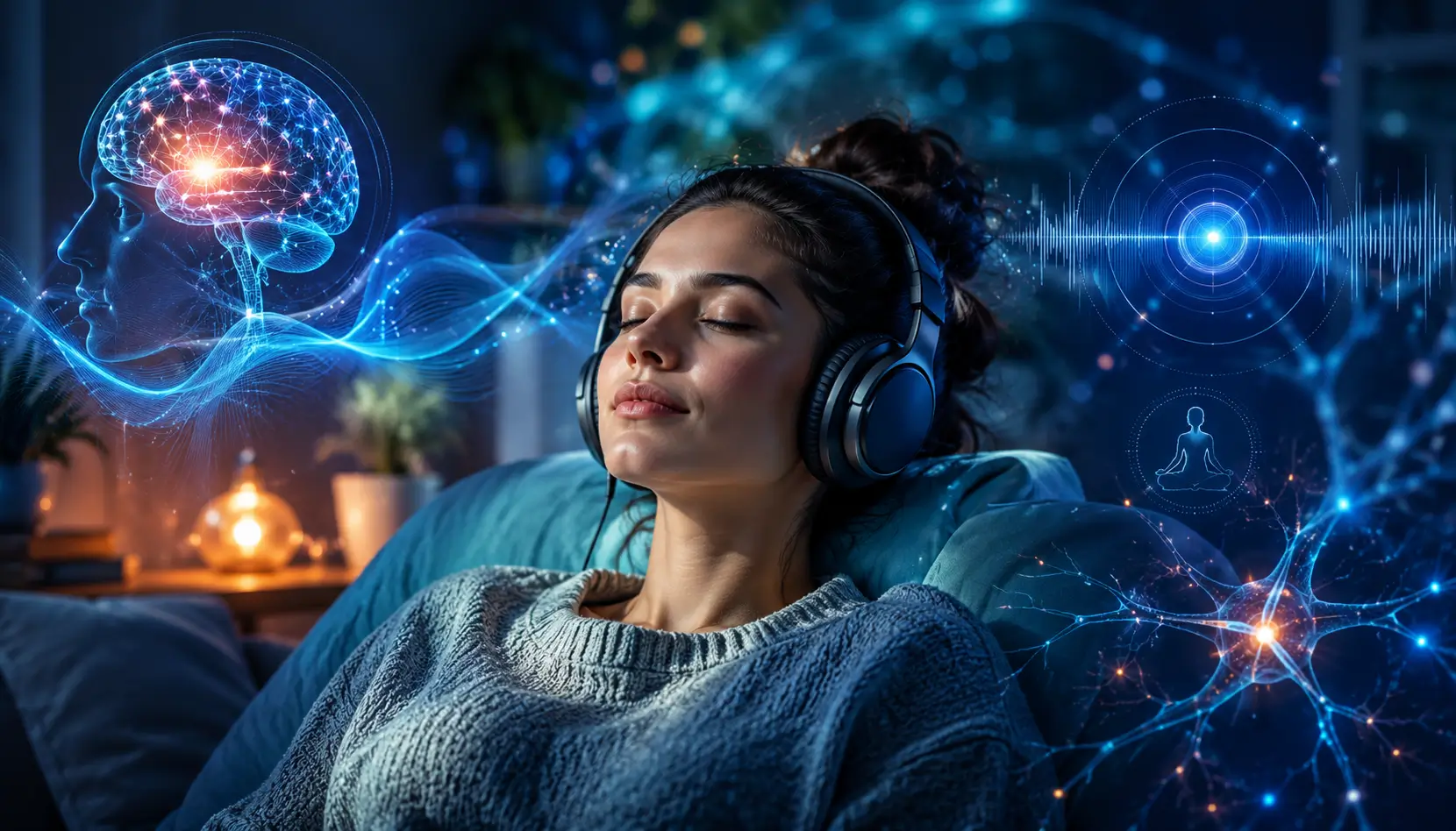
As binaural beats become more popular online, many people are asking an important question:
Are binaural beats actually safe?
Supporters often describe these sound experiences as calming, relaxing, or mentally immersive.
Critics sometimes worry about:
- brain manipulation,
- psychological effects,
- overstimulation,
- or unknown neurological risks.
So what does current research suggest?
For most healthy individuals, binaural beats are generally considered low-risk when used responsibly at moderate listening levels.
However, that does not mean they are completely risk-free for every person or every situation.
Understanding realistic expectations and proper usage matters.
🧠 What Are Binaural Beats?
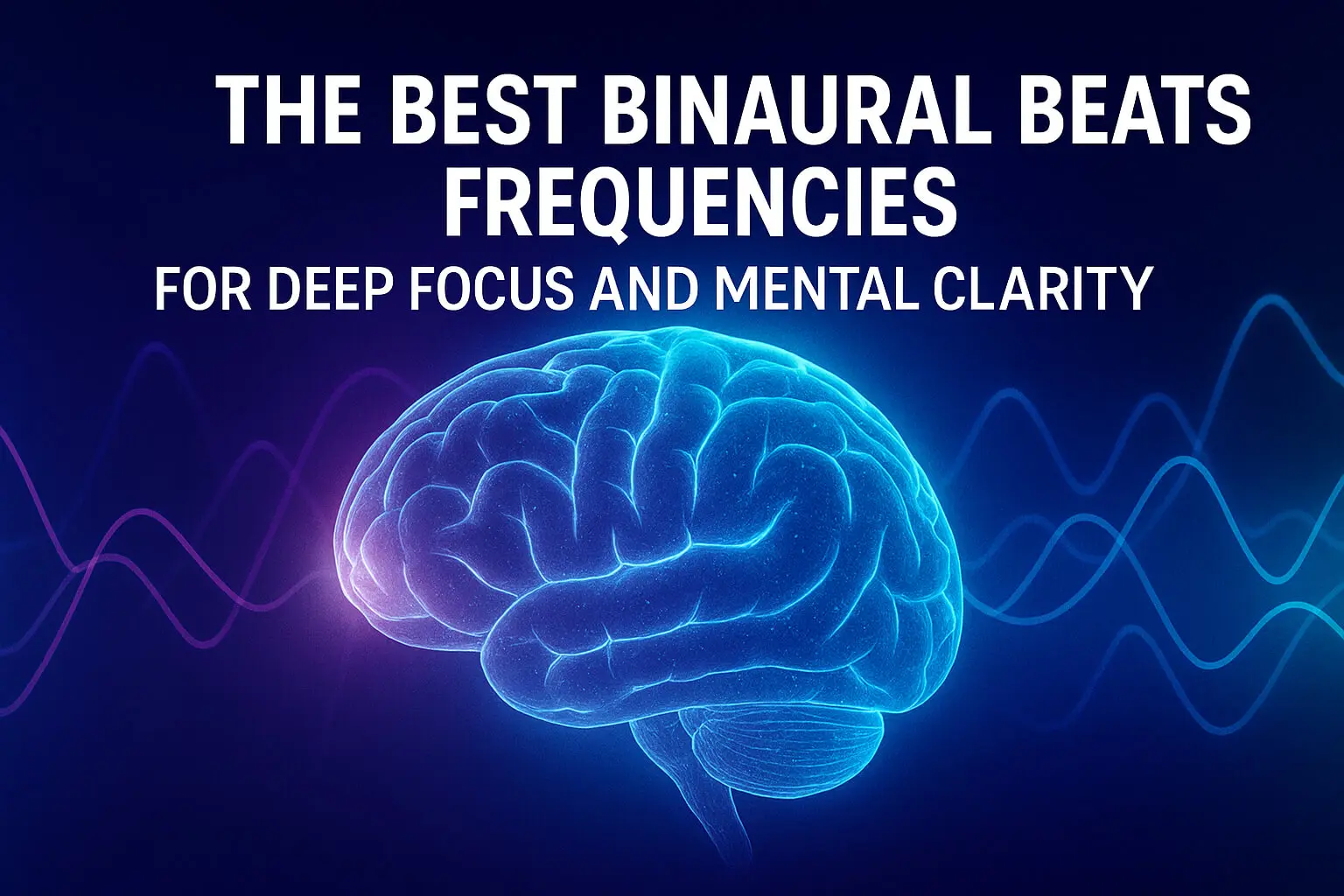
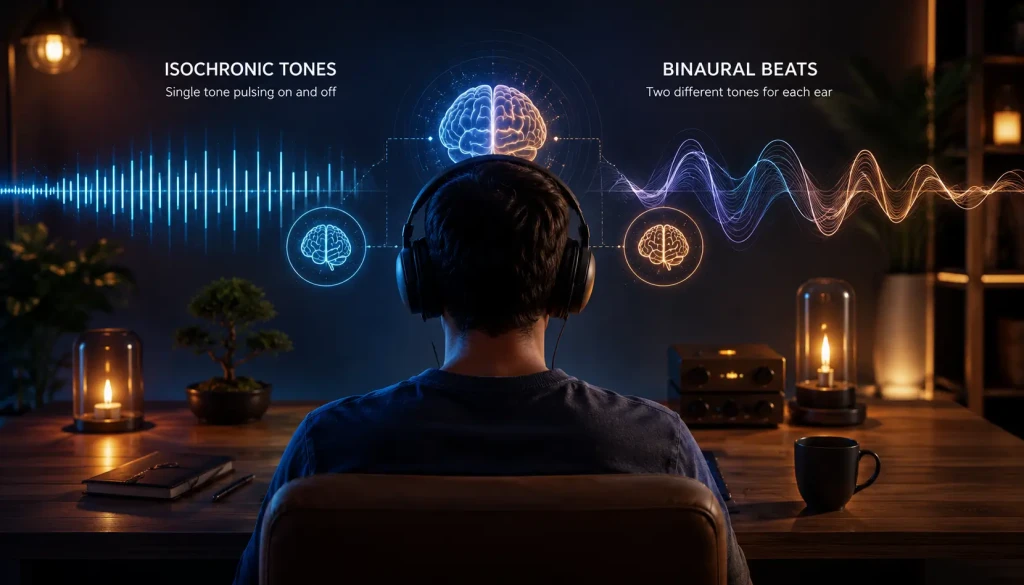
Binaural beats are auditory illusions created when slightly different sound frequencies are played separately into each ear.
The brain perceives the frequency difference as a rhythmic internal pulse.
For example:
- Left ear: 200 Hz
- Right ear: 210 Hz
- Perceived beat: 10 Hz
This phenomenon is often used in:
- meditation audio,
- focus sessions,
- relaxation music,
- sleep support tracks,
- and neuroacoustic listening environments.
Many online creators associate certain frequencies with:
- relaxation,
- focus,
- creativity,
- or emotional calmness.
However, some internet claims dramatically exaggerate what these sounds can realistically do.
🔬 What Science Says About Safety
Current research does not show strong evidence that binaural beats are dangerous for most healthy adults when used moderately.
Studies involving binaural beats generally focus on:
- relaxation,
- attention,
- anxiety reduction,
- meditation,
- or mood effects.
Further reading:
https://www.frontiersin.org/articles/10.3389/fnhum.2019.00425/full
https://www.ncbi.nlm.nih.gov/pmc/articles/PMC10198548/
That said, scientific research in this area is still developing, and individual responses can vary.
Some listeners report positive experiences.
Others notice little effect at all.
⚠️ Possible Side Effects Some People Report
Although binaural beats are typically low-risk, some individuals report temporary effects such as:
- mild dizziness,
- headaches,
- mental fatigue,
- overstimulation,
- distraction,
- or emotional discomfort.
These experiences are usually temporary and may depend on:
- listening volume,
- session length,
- sensitivity to repetitive sound,
- stress levels,
- or individual neurological differences.
Very loud audio exposure itself can also contribute to listening fatigue regardless of content type.
🚨 Who Should Be More Careful?
People with certain neurological conditions should use extra caution with intense sensory stimulation.
This may include individuals with:
- epilepsy,
- seizure disorders,
- severe sound sensitivity,
- or certain neurological conditions.
While binaural beats are not generally considered dangerous, individuals with medical concerns should speak with qualified healthcare professionals before using intense sensory or stimulation-based audio systems regularly.
☁️ Why Some Audio Feels Emotionally Intense
Sound strongly affects the nervous system.
The brain naturally responds to:
- rhythm,
- repetition,
- atmosphere,
- emotional association,
- and sensory pacing.
This is one reason immersive audio experiences can sometimes feel surprisingly emotional or mentally absorbing.
However, emotional response does not necessarily mean the sound is “rewiring the brain” in extreme ways.
Human perception is deeply connected to:
- expectation,
- context,
- emotional state,
- and psychological association.
🎧 Binaural Beats vs Dangerous “Mind Control” Claims
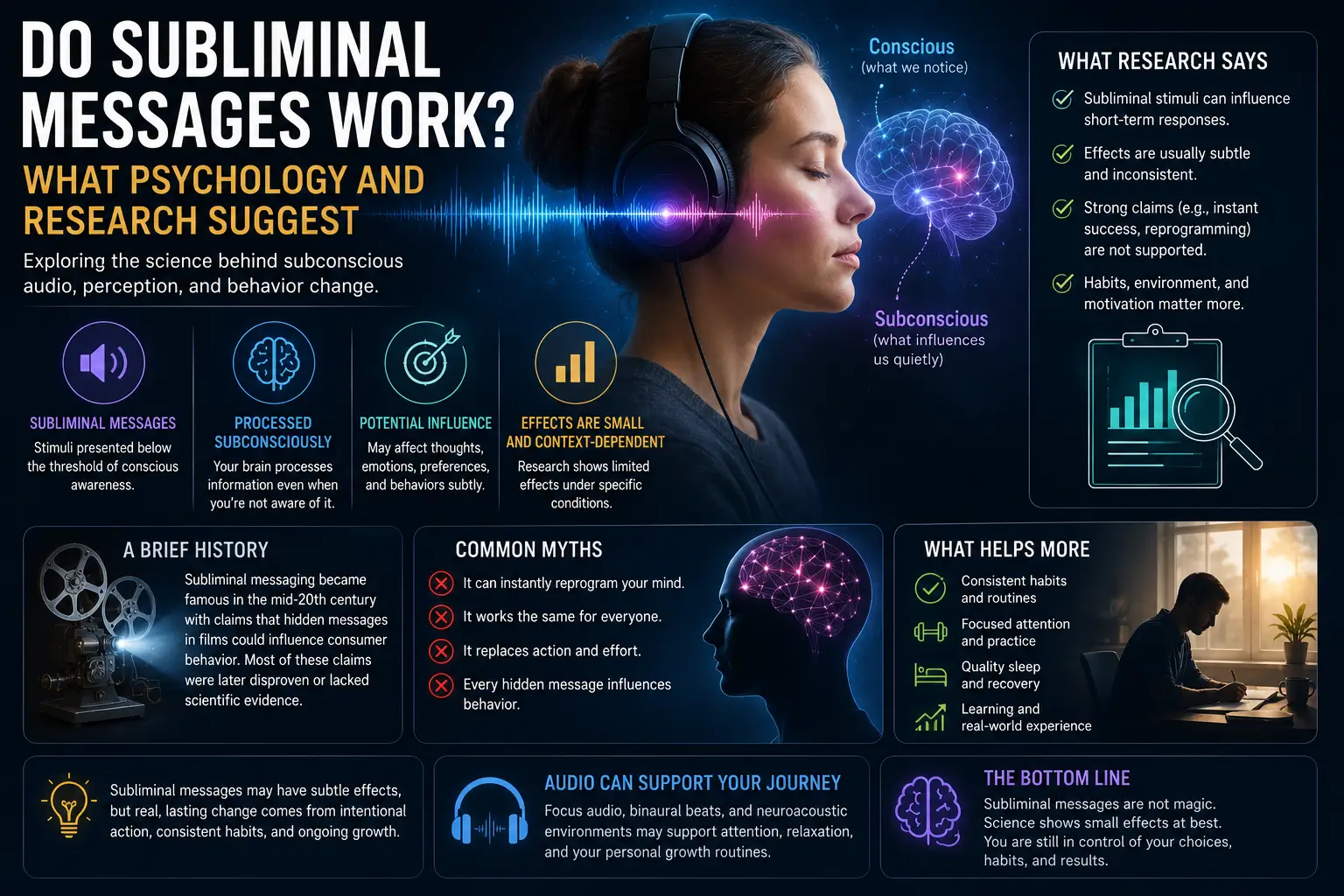
One of the biggest misconceptions online is the idea that binaural beats secretly manipulate the brain in powerful or dangerous ways.
Most scientific evidence does not support these extreme claims.
Binaural beats are better understood as:
- structured audio environments,
- rhythmic sensory experiences,
- or relaxation-focused listening tools
rather than hidden mind-control systems.
Some listeners explore neuroacoustic relaxation programs that combine ambient sound design with calming listening environments instead of relying on dramatic fear-based marketing.
🧘 Practical Tips for Safe Listening
If you use binaural beats:
- keep the volume moderate,
- avoid excessively long sessions,
- use quality headphones,
- take breaks if discomfort appears,
- and avoid unrealistic expectations.
Many people simply use these audio environments during:
- meditation,
- study sessions,
- relaxation,
- journaling,
- or nighttime routines.
⚖️ The Importance of Balanced Expectations
The internet often pushes binaural beats into two extremes:
- “miracle brain enhancement”
or - “dangerous mind manipulation”
Reality is usually more balanced.
For most users, binaural beats are simply immersive sound experiences that may support:
- relaxation,
- calmness,
- focus,
- or meditation routines under certain conditions.
Final Thoughts
Current evidence suggests binaural beats are generally safe for most healthy adults when used responsibly.
At the same time, exaggerated internet claims — both positive and negative — should be approached carefully.
The healthiest approach is usually moderation, realistic expectations, and paying attention to personal comfort levels.
Sound can strongly influence mood and perception without needing supernatural explanations or fear-based narratives.
Related Articles
Related Posts
Stay Informed With the Latest & Most Important News
Previous Post
Next Post