
Now Reading: Do Binaural Beats Really Work? Myth vs Reality
-
01
Do Binaural Beats Really Work? Myth vs Reality
Do Binaural Beats Really Work? Myth vs Reality
Some people describe binaural beats as life-changing.
Others dismiss them as pseudoscience or placebo.
If you spend enough time online, you’ll find extreme claims on both sides:
- “They completely rewired my brain.”
- “They do absolutely nothing.”
The reality is more complicated — and far more interesting.
Binaural beats are neither magic nor meaningless. Their effects appear to depend on several factors, including brain state, listening consistency, audio quality, and individual neurological differences.
👉 Some listeners use structured audio systems like Genius Wave
because the sessions are designed with smoother frequency transitions instead of random pulsing tones often found online.
Let’s separate internet mythology from what neuroscience actually suggests.
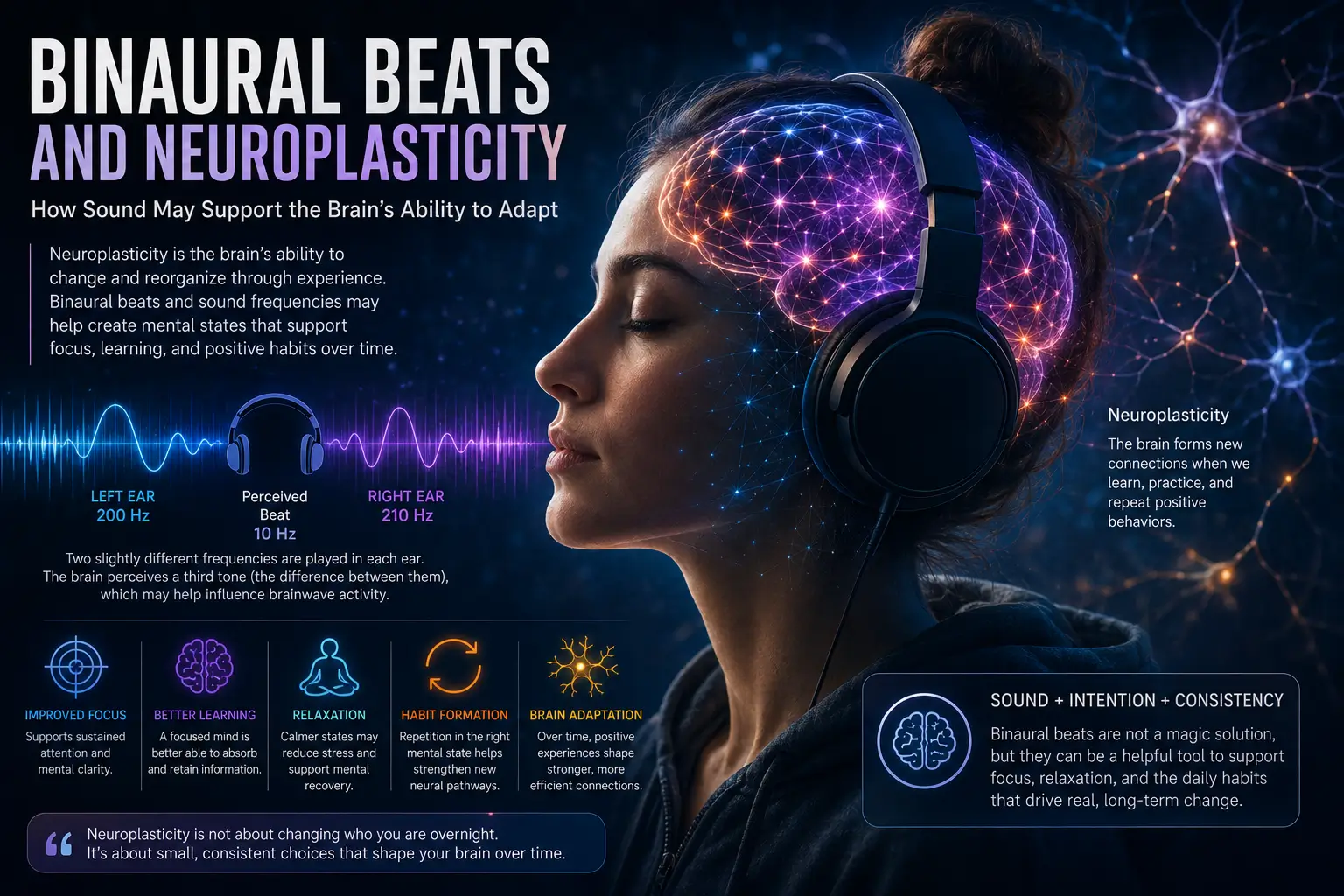
🧠 What Are Binaural Beats, Exactly?
Binaural beats occur when:
- one frequency is played into the left ear,
- and a slightly different frequency enters the right ear.
Your brain processes the difference between them as a perceived rhythmic pulse.
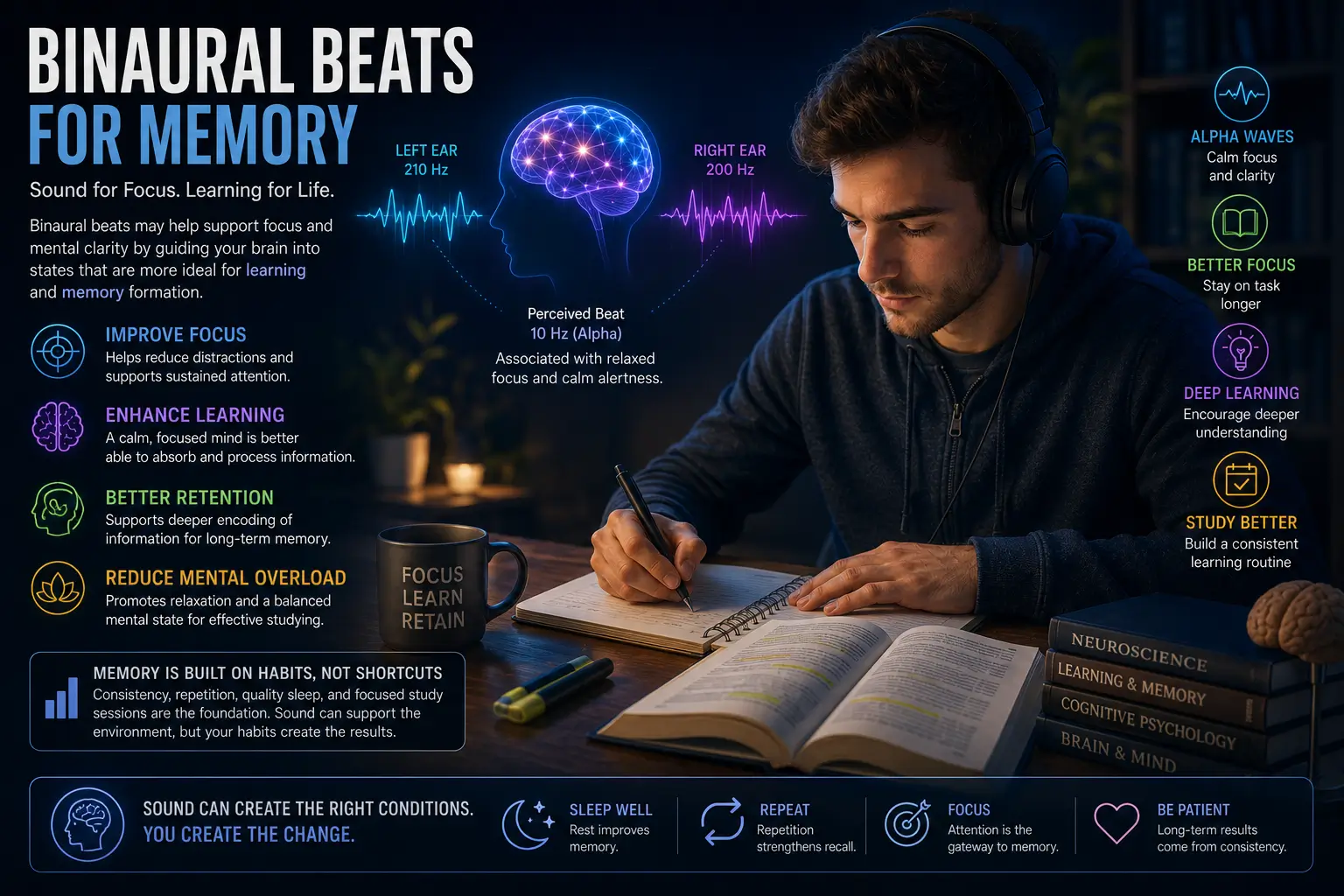
For example:
- Left ear → 200 Hz
- Right ear → 210 Hz
- Perceived beat → 10 Hz
That 10 Hz falls within the Alpha brainwave range, commonly associated with calm focus and relaxed awareness.
Stereo headphones are essential because each ear must receive a separate tone.
🔬 What EEG Research Actually Shows
This is where the conversation becomes more nuanced.
Some EEG-based studies suggest that rhythmic auditory stimulation may temporarily influence measurable brainwave activity — especially within Alpha and Theta ranges.
Researchers have explored potential effects involving:
- relaxation,
- stress reduction,
- focus,
- meditation support,
- and sleep preparation.
However, scientific findings are mixed.
Some participants show stronger responses than others, and not every study reports significant cognitive changes.
That’s important.
The strongest scientific position right now is probably this:
Binaural beats appear capable of influencing mental states under certain conditions, but they are not instant neurological transformation tools.
That may sound less exciting than internet hype — but it’s far more realistic.
⚠️ Why Some People Feel Strong Effects — And Others Don’t
This is one of the most misunderstood parts of brainwave entrainment.
Different nervous systems respond differently to rhythmic stimulation.
Some people naturally enter relaxed states easily. Others remain mentally resistant even during meditation or breathwork.
Several factors may influence responsiveness:
- stress levels,
- sleep quality,
- attention span,
- nervous system sensitivity,
- and listening environment.
Many listeners report that the effects become clearer only after repeated sessions rather than during the first attempt.
This pattern is actually common in many forms of mental training.
🌊 The Internet Often Exaggerates the Claims
One reason binaural beats have a controversial reputation is because online marketing frequently overpromises.
You’ll often see claims like:
- “Unlock hidden powers instantly”
- “Reach genius-level intelligence overnight”
- “Reprogram your subconscious in minutes”
There is currently no strong scientific evidence supporting these types of dramatic promises.
Brainwave entrainment is better understood as:
a supportive mental-state tool,
not a miracle shortcut.
Balanced expectations usually lead to better experiences.
🎧 Why Audio Quality Matters More Than Most People Realize
This is something many beginners overlook.
Not all binaural beat tracks are created equally.
Poor-quality audio may contain:
- unstable frequencies,
- harsh transitions,
- heavy compression,
- or randomly generated tones.
Some listeners describe these tracks as mentally tiring instead of calming.
Professionally designed neuroacoustic sessions often use:
- gradual layering,
- smoother transitions,
- ambient masking,
- and carefully balanced frequencies.
👉 Many users exploring long-term brainwave training prefer structured systems like Genius Wave
because the sessions feel more natural and less mechanically repetitive than generic online tracks.
😴 When Binaural Beats Tend To Work Best
People usually report the strongest effects during:
- relaxation sessions,
- meditation,
- sleep preparation,
- journaling,
- and low-distraction environments.
Trying to force dramatic results while multitasking often leads to disappointment.
Many experienced listeners approach binaural beats more like:
- meditation support,
- mental conditioning,
- or nervous system regulation.
Not instant transformation.
🧩 Placebo vs Real Neurological Effects
The placebo discussion appears constantly online.
But even this topic is more nuanced than people assume.
Yes:
- expectations influence perception.
But measurable EEG synchronization effects have also been documented in multiple studies involving auditory entrainment.
So the debate is probably not:
“real vs fake”
but rather:
“how strong, how consistent, and for whom?”
That’s a much more scientifically honest question.
🧘 Practical Tips for Better Results
If you want to experiment realistically:
- Use stereo headphones
- Start with Alpha frequencies
- Listen for 15–20 minutes
- Avoid multitasking
- Use moderate volume
- Stay consistent for at least several sessions
The goal is not to “force” the brain into something unnatural.
The goal is to gently guide attention and mental rhythm.
🔍 So… Do Binaural Beats Really Work?
For many people:
yes — to a degree.
Not as magic.
Not as instant brain hacking.
And not equally for everyone.
But under the right conditions, binaural beats may help support:
- relaxation,
- focus,
- sleep preparation,
- and emotional calm.
The most realistic perspective is usually the most useful one.
👉 For listeners interested in more structured brainwave audio experiences, Genius Wave
offers a more guided and beginner-friendly approach than randomly generated frequency tracks.
Final Thoughts
Binaural beats probably survived internet hype for one simple reason:
Some people genuinely find them helpful.
Not because they create superpowers — but because the brain naturally responds to rhythm, repetition, and sound.
When approached with realistic expectations, brainwave entrainment becomes less about fantasy and more about learning how your mind responds to carefully designed mental environments.
And that’s where the real value may begin.
Related Articles
Ultimate Guide to Brainwave Entrainment
Flow State Brain Waves
Gamma Waves Benefits
Which Waves Help You Sleep?
👉 Related read: 5 Types of Brain Waves and How They Affect You for more insights on brainwave focus and mental clarity.
Stay Informed With the Latest & Most Important News
Previous Post
Next Post