
Now Reading: Subliminal Audio for Focus and Motivation: What We Know So Far
-
01
Subliminal Audio for Focus and Motivation: What We Know So Far
Subliminal Audio for Focus and Motivation: What We Know So Far
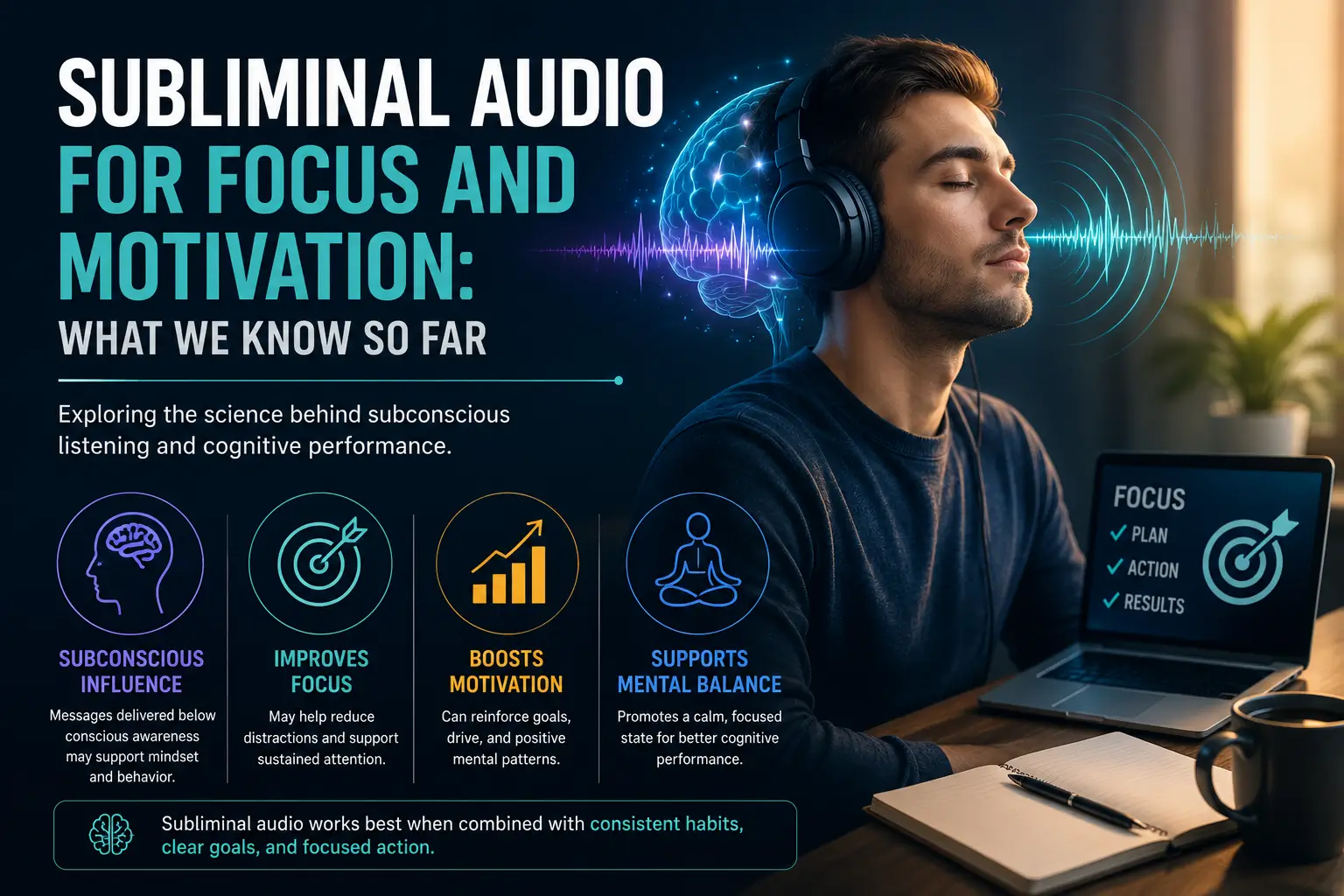
Subliminal audio has become increasingly popular among people interested in productivity, personal development, focus, and motivation.
Supporters often claim that hidden messages embedded within audio recordings can influence the subconscious mind and encourage positive behavioral changes.
Others remain skeptical and question whether subliminal audio produces any meaningful effects at all.
The reality is more complex than either extreme position suggests.
Understanding what psychology and cognitive science currently say about subliminal audio can help separate evidence-based possibilities from exaggerated claims.
🧠 What Is Subliminal Audio?
Subliminal audio typically contains spoken messages or suggestions presented below the threshold of conscious awareness.
The listener may hear music, ambient sounds, or background audio while hidden verbal messages are embedded beneath the surface.
The underlying theory is that the brain may process some information without conscious attention, potentially influencing thoughts, attitudes, or behaviors over time.
This concept is closely related to subliminal messaging, which has been debated in psychology for decades.
🎯 Why People Use Subliminal Audio
People explore subliminal recordings for many different reasons.
- improving focus,
- increasing motivation,
- building confidence,
- reducing procrastination,
- supporting positive habits,
- or reinforcing personal goals.
Many users are attracted by the idea of making progress without needing to actively concentrate on affirmations or self-improvement exercises.
🔬 What Research Suggests
Research indicates that unconscious processing does occur in the human brain.
People can respond to information they are not fully aware of noticing.
However, the scientific evidence does not support the idea that subliminal messages can instantly transform personality, intelligence, motivation, or life outcomes.
When measurable effects are observed, they are generally modest and highly dependent on context.
The strongest evidence suggests that subconscious influences may affect short-term preferences or attention under certain conditions rather than producing dramatic life changes.
⚡ Focus, Attention, and Mental Performance
Focus depends on multiple factors, including attention management, sleep quality, stress levels, motivation, and mental energy.
No audio recording can completely replace these foundational elements.
However, some people find that structured listening routines help them establish a more focused mindset before work or study sessions.
In these cases, the listening ritual itself may contribute as much as the audio content.
Related article: Focus, Motivation, and Mental Energy.
📚 Motivation and Behavioral Change
Long-term motivation rarely comes from a single source.
Instead, it is typically influenced by goals, habits, rewards, environment, and consistency.
People who experience meaningful improvements in productivity often combine multiple strategies, including better routines, improved sleep, reduced distractions, and structured work habits.
Subliminal audio may become part of that system, but it is unlikely to be the sole cause of lasting change.
🎵 The Power of Listening Rituals
One often-overlooked factor is the psychological effect of routines.
When individuals consistently listen to the same audio before working, studying, or practicing a skill, the routine itself may become associated with focused effort.
Over time, the brain may begin to connect that listening experience with concentration and productivity.
This mechanism does not necessarily require hidden messages to be effective.
🎧 Subliminal Audio vs Other Cognitive Audio Tools
Subliminal recordings are only one category of cognitive audio.
Other commonly used approaches include:
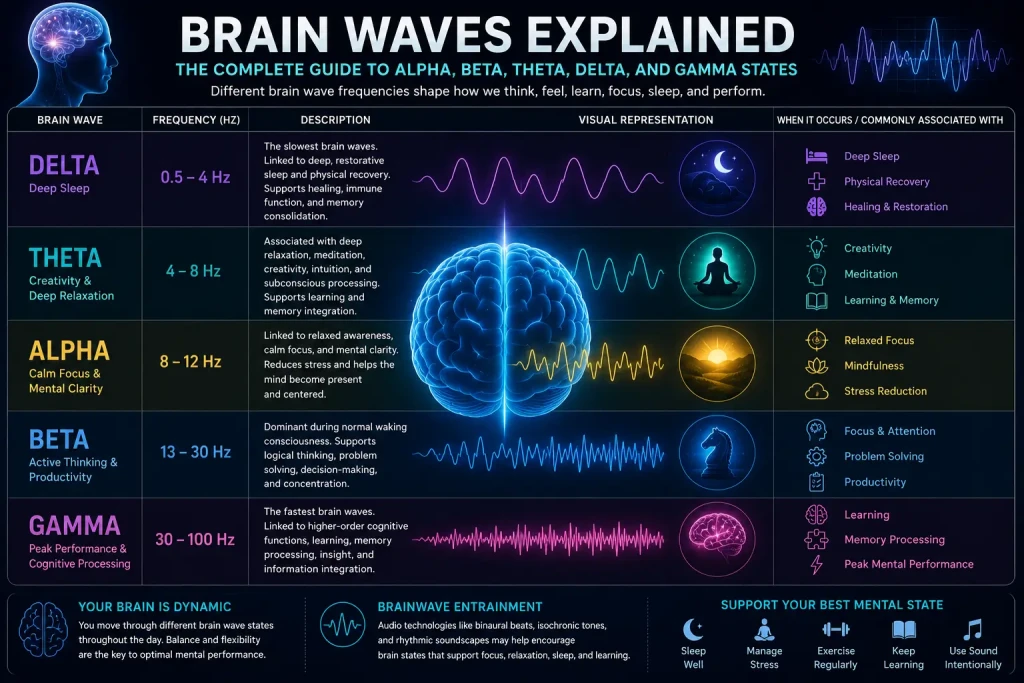
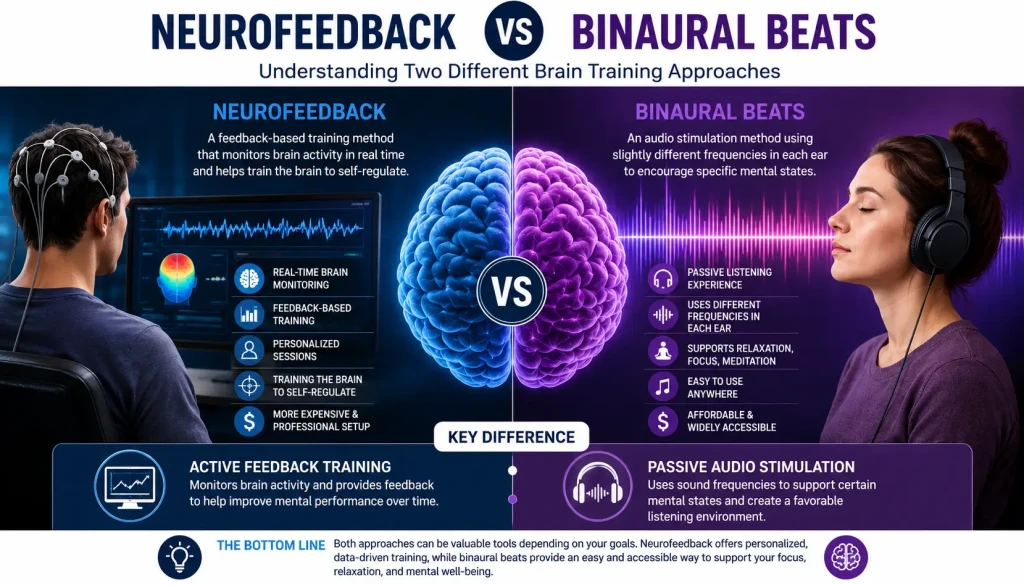
- binaural beats,
- ambient soundscapes,
- white noise,
- pink noise,
- instrumental music,
- and neuroacoustic listening environments.
Unlike subliminal recordings, many of these tools focus on shaping the listening environment rather than delivering hidden messages.
Related article: Audio Programs for Focus and Mental Clarity.
❌ Common Myths About Subliminal Audio
Myth 1: Subliminal Audio Instantly Reprograms the Brain
There is no strong scientific evidence supporting dramatic overnight transformations through subliminal listening alone.
Myth 2: Subliminal Messages Work the Same for Everyone
People respond differently to audio experiences, expectations, and personal development techniques.
Myth 3: Subliminal Audio Replaces Action
Lasting improvement typically requires effort, learning, habit formation, and consistent practice.
Myth 4: More Listening Guarantees Better Results
Quantity of exposure does not automatically translate into stronger outcomes.
🧘 A Balanced Perspective
The most balanced view is that subliminal audio may provide subtle psychological benefits for some individuals while falling far short of many extraordinary claims found online.
People who use subliminal recordings successfully often combine them with goal setting, habit tracking, focused work sessions, and personal development practices.
The audio becomes one tool within a larger system rather than a standalone solution.
🎧 Modern Neuroacoustic Listening Experiences
Today’s cognitive audio landscape extends beyond traditional subliminal recordings.
Many people now explore structured sound environments designed around focus, attention, relaxation, and productivity.
Some individuals also explore neuroacoustic audio experiences designed around focus, mental clarity, and productivity as part of broader performance routines.
Results vary between individuals, and no audio approach guarantees specific outcomes.
🧠 Final Thoughts
Subliminal audio remains an intriguing topic because it sits at the intersection of psychology, attention, motivation, and personal development.
Research suggests that unconscious influences exist, but the effects are generally smaller and more nuanced than popular myths often claim.
For most people, sustainable improvements in focus and motivation are more likely to come from consistent habits, effective recovery, structured goals, and deliberate practice than from hidden messages alone.
Subliminal audio may serve as a supportive tool, but it works best when combined with evidence-based strategies for cognitive performance and personal growth.
Scientific References
- https://pmc.ncbi.nlm.nih.gov/articles/PMC6204644/
- https://www.apa.org/monitor/2012/03/unconscious
- https://www.ncbi.nlm.nih.gov/books/NBK538455/
- https://www.frontiersin.org/articles/10.3389/fpsyg.2016.00967/full
Related Articles
Related Posts
Stay Informed With the Latest & Most Important News
Previous Post
Next Post