
Now Reading: Audio Environments for Focus and Deep Work
-
01
Audio Environments for Focus and Deep Work
Audio Environments for Focus and Deep Work
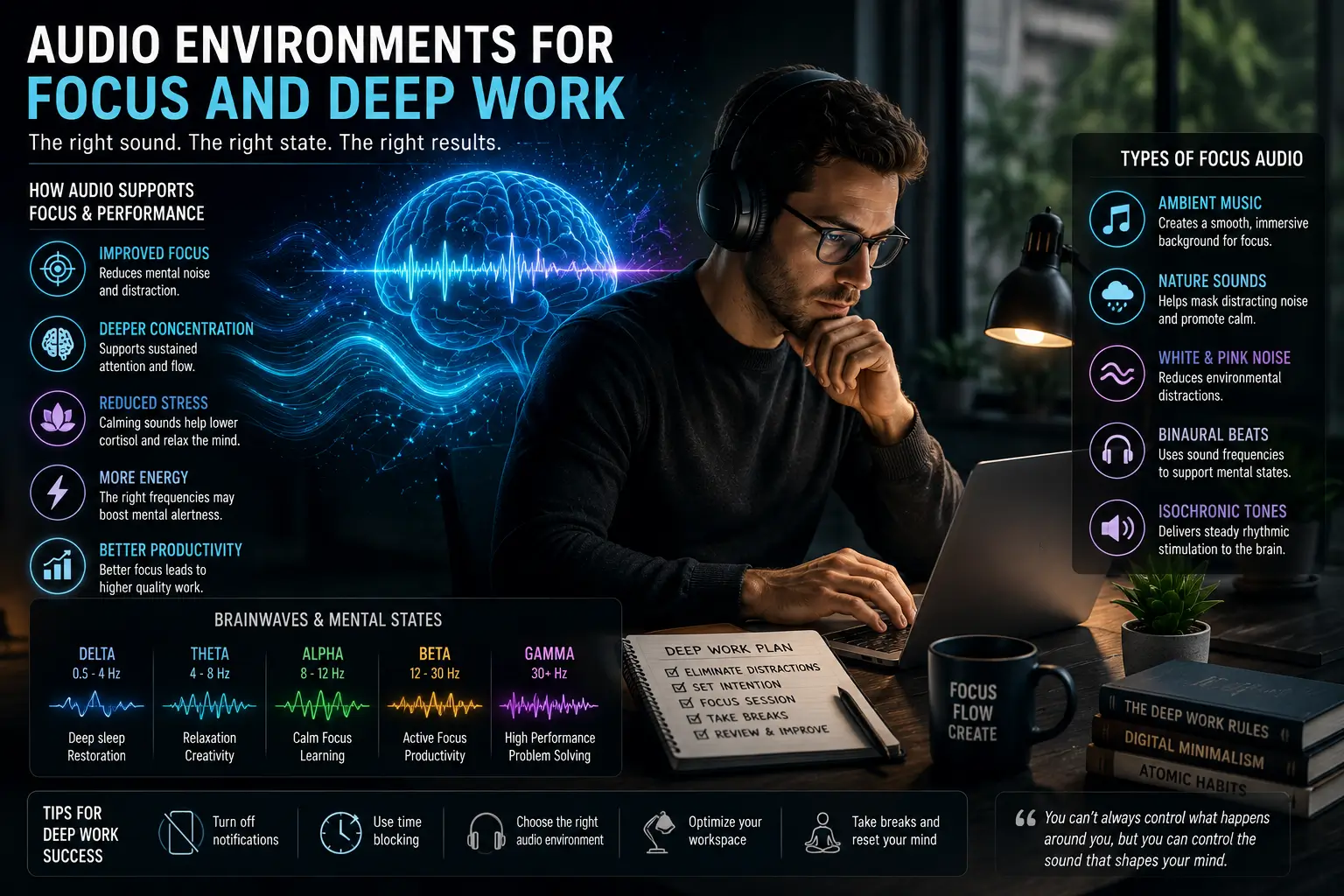
Maintaining deep focus has become increasingly difficult.
Modern digital life constantly interrupts attention through:
- notifications,
- multitasking,
- background noise,
- and endless information streams.
As a result, many people search for ways to create better environments for:
- concentration,
- productivity,
- creative work,
- and mental clarity.
One growing area of interest is:
focus-oriented audio environments.
From ambient music to rhythmic soundscapes, many listeners use structured audio to support:
- deep work,
- sustained attention,
- and calmer cognitive states.
But can sound really influence focus?
And what does neuroscience actually say?
🧠 Why Sound Affects Attention
The human brain constantly processes sensory information from the environment.
Noise, rhythm, repetition, and auditory atmosphere may all influence:
- attention,
- stress levels,
- emotional state,
- and cognitive comfort.
This is one reason some environments feel:
- mentally draining,
while others feel: - immersive,
- calming,
- or easier to focus within.
Certain sound environments may help reduce the feeling of:
- mental clutter,
- distraction,
- and overstimulation.
⚡ What Is Deep Work?
Deep work refers to periods of:
- uninterrupted concentration,
- cognitive immersion,
- and focused mental engagement.
Many people struggle to maintain these states because modern environments encourage:
- rapid task switching,
- fragmented attention,
- and constant interruption.
Creating calmer sensory conditions may help support more stable concentration routines.
🌊 Common Types of Focus Audio
People commonly explore:
- ambient music,
- white noise,
- nature sounds,
- binaural beats,
- isochronic tones,
- and low-distraction instrumental audio.
These environments are often used during:
- studying,
- writing,
- coding,
- reading,
- or creative projects.
Some listeners report that repetitive and predictable sound environments feel:
- mentally quieter,
- less distracting,
- and easier to work within.
🔬 What Science Actually Says
Research suggests sound environments may influence:
- attention,
- relaxation,
- stress response,
- and cognitive engagement under certain conditions.
However, many exaggerated internet claims involving:
- “instant productivity,”
- “mind hacking,”
- or guaranteed brain enhancement
go beyond current scientific evidence.
Further reading:
https://www.frontiersin.org/articles/10.3389/fnhum.2019.00425/full
https://www.ncbi.nlm.nih.gov/pmc/articles/PMC10198548/
The healthiest perspective is viewing structured audio as:
- a supportive work environment,
- a concentration aid,
- or part of broader productivity habits.
☁️ Why Repetitive Audio Feels Immersive
The nervous system naturally responds to:
- repetition,
- rhythm,
- and sensory consistency.
Predictable sound environments may reduce the mental effort involved in processing:
- sudden noise,
- chaotic stimulation,
- or environmental distraction.
For some people, this creates a stronger sense of:
- immersion,
- mental pacing,
- and calmer attention.
🎵 Music and Cognitive Atmosphere
Music can influence:
- emotional tone,
- energy levels,
- motivation,
- and environmental comfort.
Instrumental and ambient audio are often preferred during focus sessions because lyrics may compete with:
- language processing,
- reading,
- or writing tasks.
You may also enjoy our article on how music affects focus and mental performance to explore how neuroscience discusses sound and cognition.
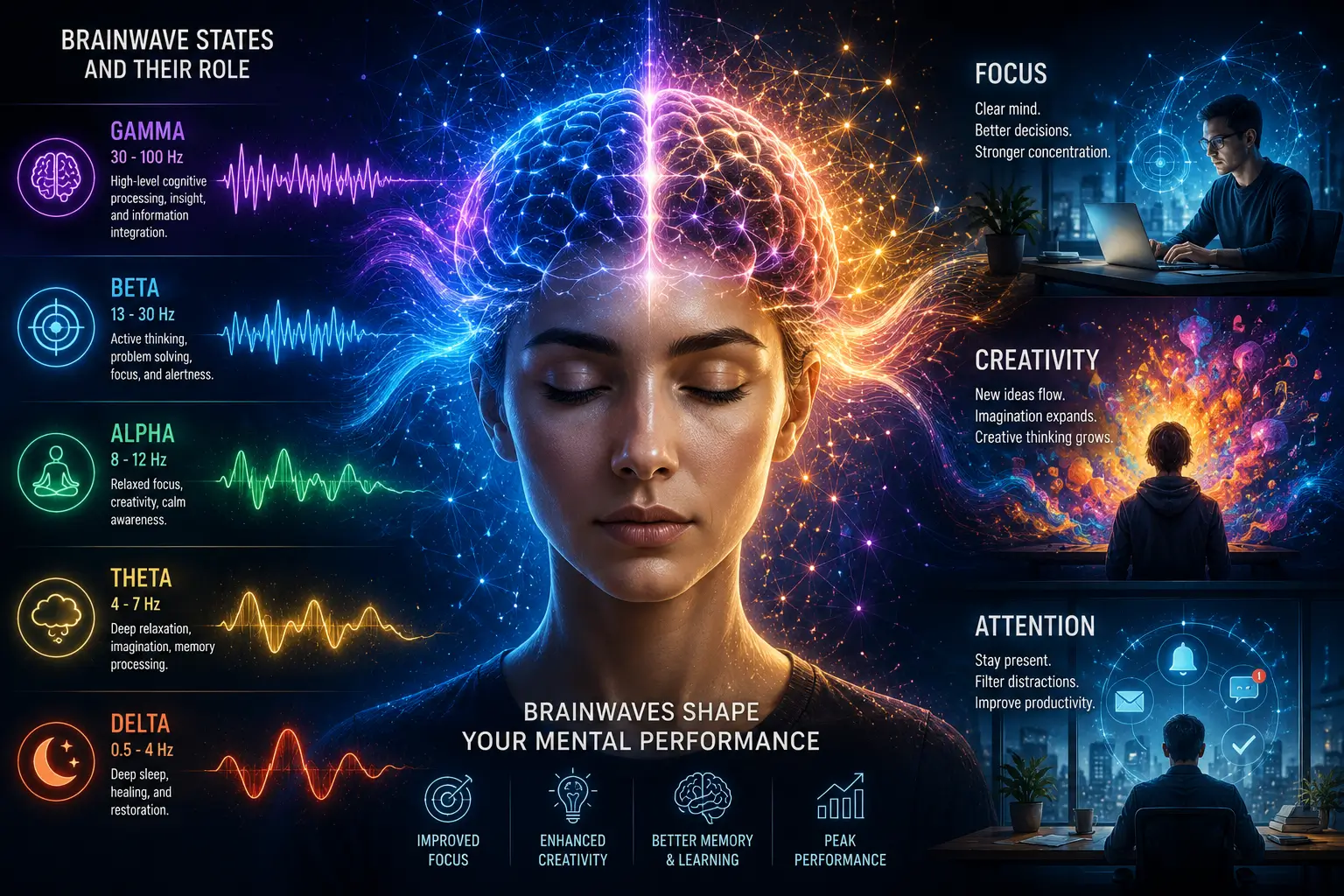
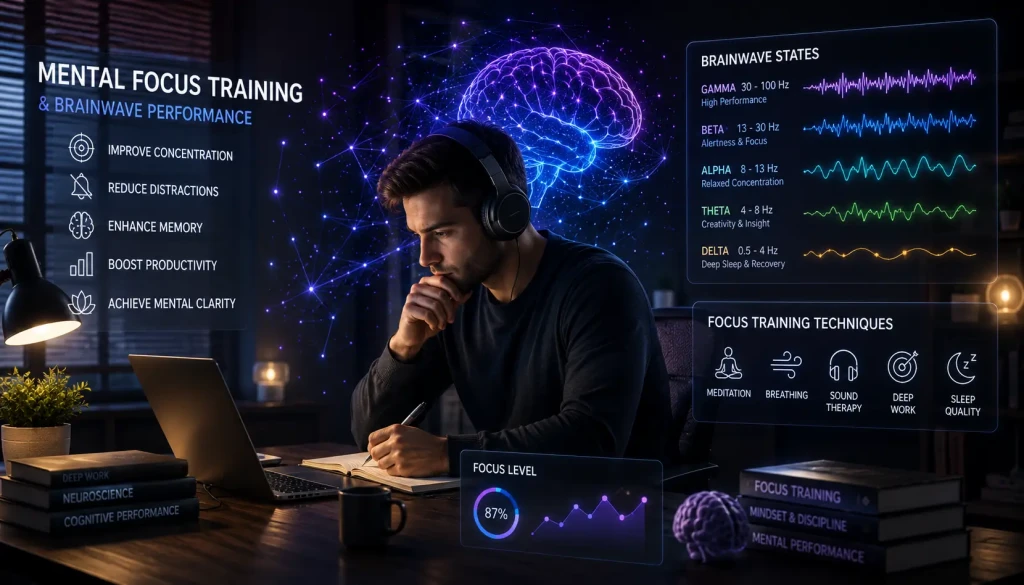
🎧 Brainwave Audio and Focus Routines
Some audio systems combine:
- ambient sound,
- rhythmic stimulation,
- binaural beats,
- and neuroacoustic layering
to create immersive focus environments.
Some listeners explore neuroacoustic focus audio systems designed to support calmer concentration and mental clarity routines.
At the same time, dramatic “brain upgrade” marketing claims should be approached realistically.
⚡ Focus Requires More Than Audio
No sound environment can fully replace:
- sleep,
- emotional balance,
- stress management,
- physical health,
- or sustainable work habits.
Mental performance is influenced by many broader factors.
However, structured environments may help some individuals reduce:
- distraction,
- sensory overload,
- and cognitive fragmentation.
🌍 Why Focus Audio Keeps Growing
Interest in productivity audio continues growing because modern life creates constant mental interruption.
Many people are searching for:
- calmer workspaces,
- improved concentration,
- mental clarity,
- and healthier productivity routines.
In overstimulating digital environments, structured soundscapes may simply help people feel:
- more grounded,
- more immersed,
- and less mentally scattered.
⚠️ Common Myths About Focus Audio
Myth:
“One audio track instantly creates deep focus.”
Reality:
Focus depends on many psychological, biological, and environmental factors.
Myth:
“Binaural beats permanently enhance intelligence.”
Reality:
Current scientific evidence does not support extreme cognitive-enhancement claims.
Myth:
“Everyone responds the same way to sound.”
Reality:
People react differently to music, rhythm, and sensory environments.
Final Thoughts
Audio environments remain a fascinating intersection between:
- neuroscience,
- productivity,
- attention,
- and sensory experience.
Research suggests structured sound environments may influence focus and relaxation under certain conditions.
At the same time, exaggerated “productivity hacking” claims should be approached carefully.
The healthiest perspective is viewing focus audio as a supportive environmental tool rather than a magical shortcut to mental performance.
Related Articles
Related Posts


Stay Informed With the Latest & Most Important News
Previous Post
Next Post