
Now Reading: How Music Affects Focus, Mood, and Mental Performance
-
01
How Music Affects Focus, Mood, and Mental Performance
How Music Affects Focus, Mood, and Mental Performance
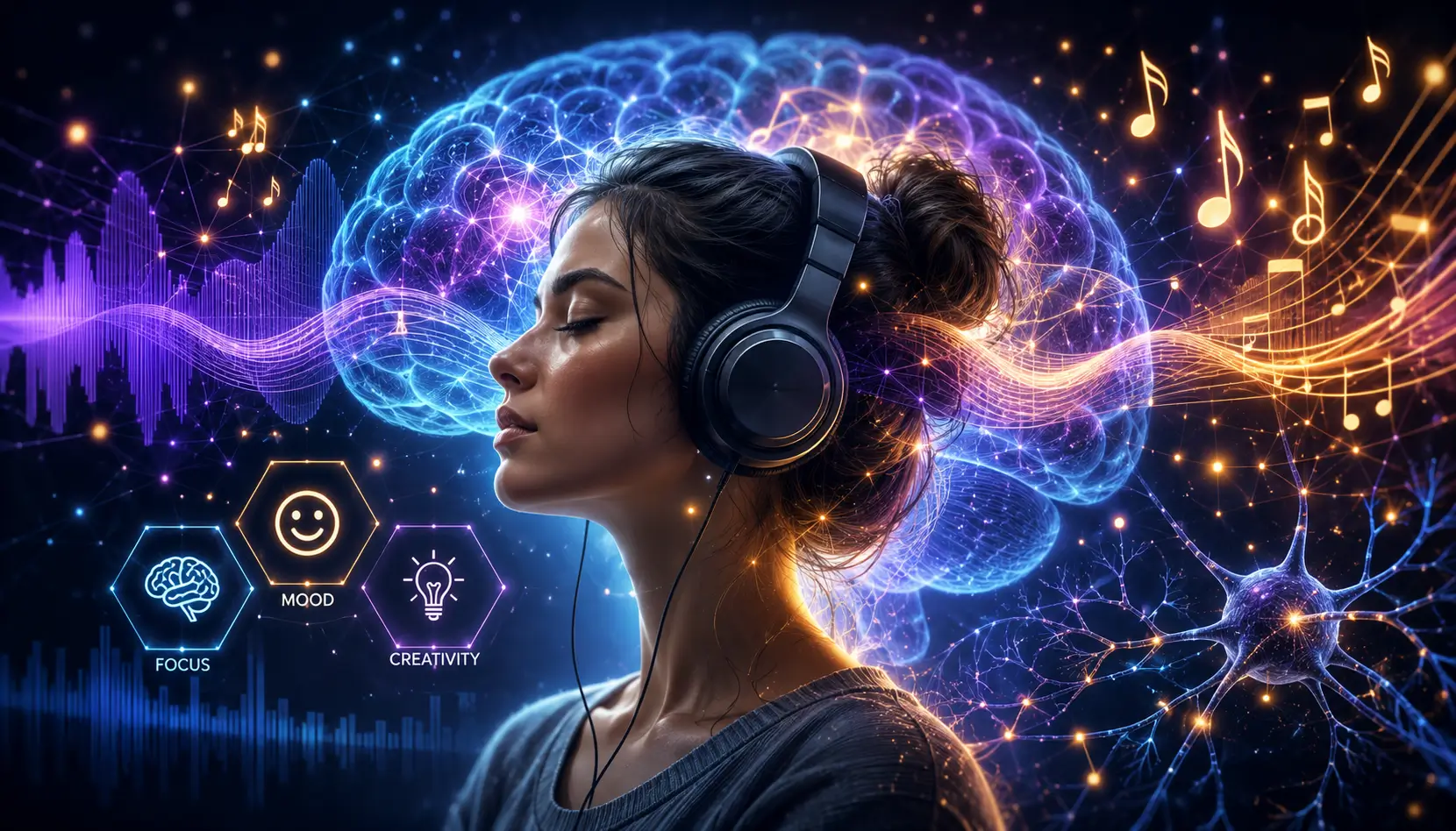
Music affects people in deeply emotional and psychological ways.
A single song can sometimes:
- improve focus,
- shift mood,
- trigger memories,
- increase motivation,
- or create a calming atmosphere.
This is one reason music has become closely connected to discussions involving:
- productivity,
- relaxation,
- creativity,
- mindfulness,
- and cognitive performance.
But how does music actually affect the brain?
And how much of the internet hype surrounding “brain-enhancing music” is scientifically realistic?
The answer is more nuanced than many dramatic marketing claims suggest.
🧠 Why the Brain Responds So Strongly to Music
The human brain naturally responds to:
- rhythm,
- repetition,
- tempo,
- melody,
- and emotional tone.
Music interacts with several systems involved in:
- emotion,
- attention,
- memory,
- and sensory processing.
This is why different types of music may feel:
- energizing,
- calming,
- emotionally immersive,
- or mentally stimulating.
Researchers continue exploring how music may influence:
- stress response,
- concentration,
- mood regulation,
- and cognitive engagement under certain conditions.

⚡ Music and Focus
Many people use music while:
- studying,
- working,
- reading,
- or performing repetitive tasks.
Certain sound environments may help reduce:
- external distractions,
- mental noise,
- or fragmented attention.
For some listeners, instrumental or ambient audio creates a more stable concentration environment.
However, responses to music vary significantly between individuals.
Some people focus better with:
- soft ambient sound,
while others require: - silence.
You may also enjoy our article on focus-oriented sound frequencies to better understand how structured audio environments are commonly used for concentration routines.
🌊 Music and Emotional State
Music is strongly connected to emotion.
People often use music to:
- relax,
- decompress,
- process emotions,
- increase motivation,
- or create psychological comfort.
Calming sound environments may help support:
- slower breathing,
- reduced tension,
- and emotional regulation.
This emotional connection is one reason music therapy and relaxation-focused audio continue attracting scientific interest.
🔬 What Science Actually Says
Research suggests music may influence:
- mood,
- stress response,
- attention,
- memory,
- and relaxation under certain conditions.
However, exaggerated claims involving:
- “instant intelligence,”
- “brain rewiring,”
- or “superhuman cognition”
go far beyond current scientific evidence.
Further reading:
https://www.frontiersin.org/articles/10.3389/fnhum.2019.00425/full
https://www.ncbi.nlm.nih.gov/pmc/articles/PMC10198548/
The healthiest perspective is viewing music as:
- a supportive sensory environment,
- a relaxation tool,
- or a focus-enhancing habit rather than a magical shortcut.
☁️ Why Repetitive Audio Feels Mentally Immersive
The nervous system naturally reacts to:
- repetition,
- predictable rhythm,
- and sensory pacing.
This is one reason:
- ambient music,
- meditation audio,
- white noise,
- and rhythmic soundscapes
often feel mentally immersive.
For many individuals, these environments reduce the feeling of overstimulation created by:
- constant notifications,
- multitasking,
- and digital distraction.
🎧 Music, Brainwaves, and Audio Environments
Some audio systems combine:
- music,
- rhythmic stimulation,
- binaural beats,
- and ambient sound design
to create immersive listening experiences focused on:
- concentration,
- mindfulness,
- creativity,
- or relaxation.
Some listeners explore neuroacoustic audio systems designed to support calmer focus and mental clarity routines.
At the same time, long-term cognitive transformation claims should be approached realistically.
🧘 Music and Relaxation
Music is frequently used during:
- meditation,
- journaling,
- mindfulness,
- yoga,
- and nighttime relaxation routines.
Soft repetitive sound environments may help create:
- calmer attention,
- emotional decompression,
- and reduced sensory overload.
You can also explore our guide on binaural beats for sleep to understand how audio environments are commonly used in relaxation-focused nighttime routines.
⚠️ Common Myths About Music and the Brain
Myth:
“Specific music instantly upgrades intelligence.”
Reality:
Current research does not support dramatic cognitive-enhancement claims.
Myth:
“One type of music works perfectly for everyone.”
Reality:
Personal preference and sensory response vary widely between individuals.
Myth:
“Music permanently rewires the brain.”
Reality:
Human cognition and emotional processing are highly complex and influenced by many broader factors.
🌍 Why Music Remains So Powerful
Music combines:
- emotion,
- rhythm,
- memory,
- atmosphere,
- and sensory engagement.
This combination makes it one of the most psychologically influential forms of human experience.
In overstimulating modern environments, calming or structured soundscapes may simply help people feel:
- more focused,
- emotionally balanced,
- or mentally grounded.
Final Thoughts
Music remains one of the most fascinating intersections between:
- neuroscience,
- emotion,
- psychology,
- and sensory experience.
Research suggests sound environments may influence:
- focus,
- mood,
- relaxation,
- and attention under certain conditions.
At the same time, exaggerated “brain supercharging” claims should be approached carefully.
The healthiest perspective is viewing music as a supportive mental environment rather than a magical shortcut to cognitive transformation.
Related Articles
Related Posts


Stay Informed With the Latest & Most Important News
Previous Post
Next Post