
Now Reading: The Best Binaural Beats Frequencies for Deep Focus and Mental Clarity
-
01
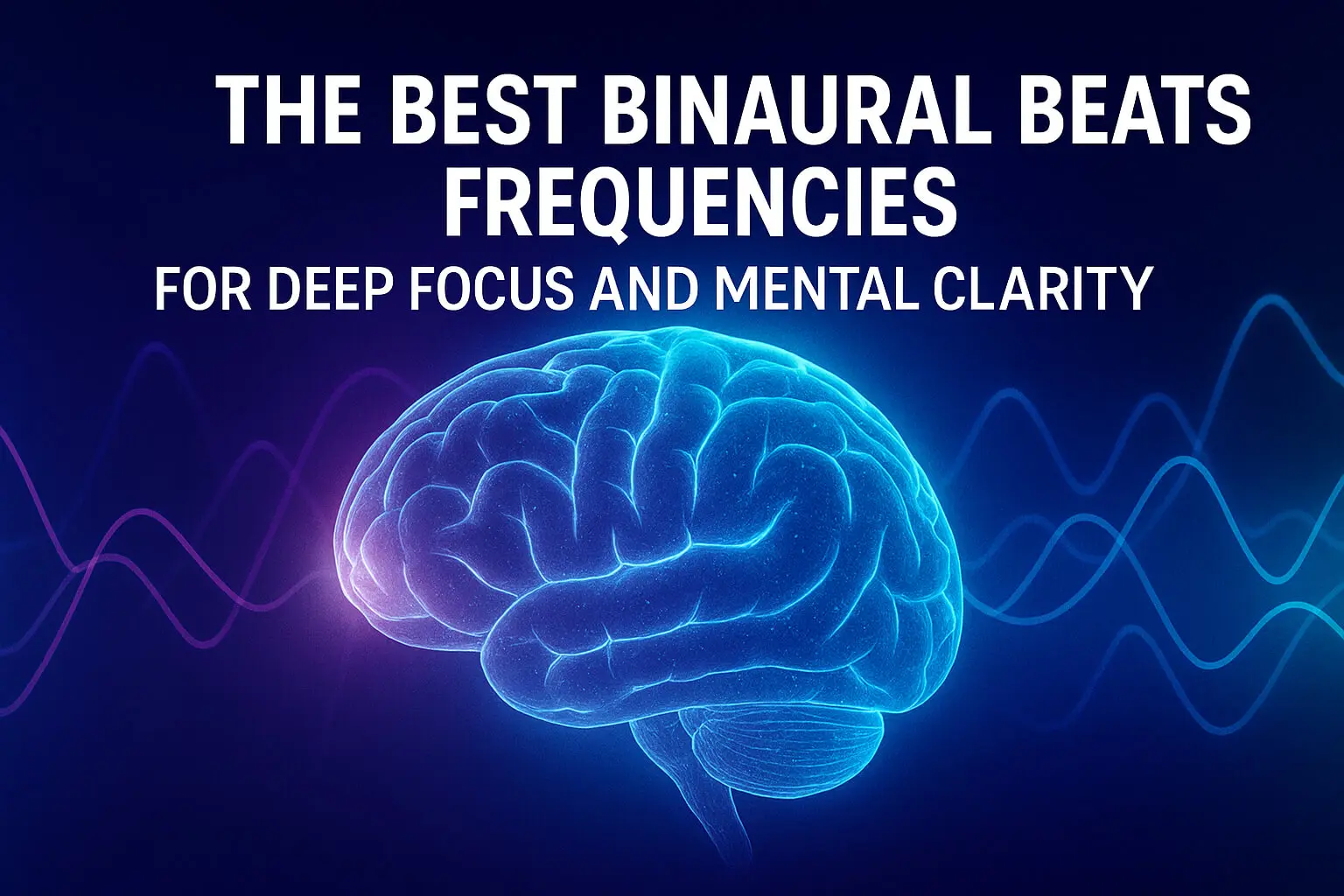
The Best Binaural Beats Frequencies for Deep Focus and Mental Clarity
The Best Binaural Beats Frequencies for Deep Focus and Mental Clarity
Maintaining deep focus has become increasingly difficult in modern life.
Notifications, multitasking, social media, and constant digital stimulation make sustained concentration harder than ever for many people.
This is one reason binaural beats have become popular among:
- students,
- remote workers,
- creatives,
- meditators,
- and productivity enthusiasts.
Some listeners believe certain frequencies may help support:
- concentration,
- mental clarity,
- calm focus,
- or cognitive flow states.
But which frequencies are actually associated with focus — and what does science realistically support?
The answer is more nuanced than many online “brain hack” claims suggest.
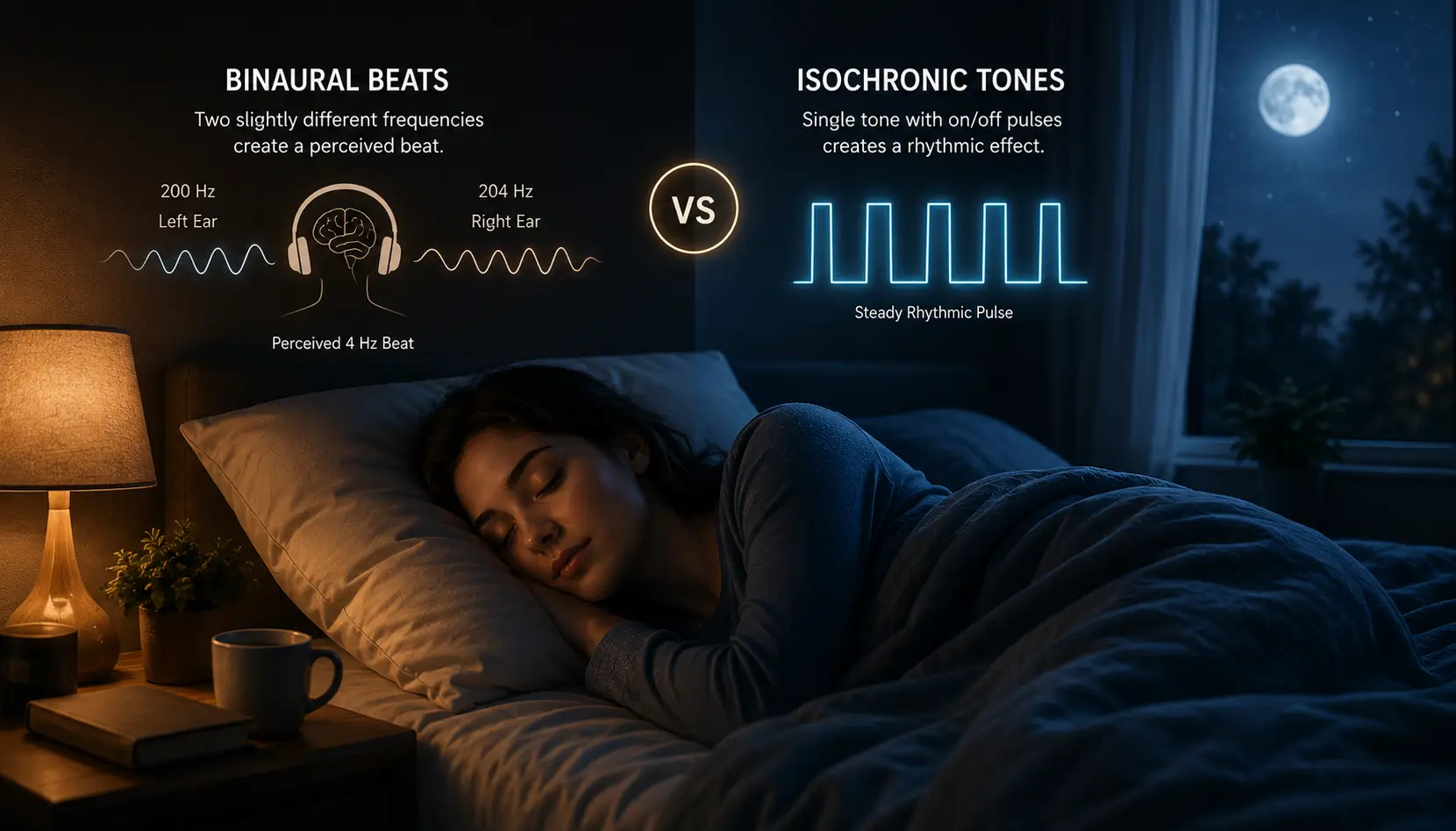
🧠 What Are Binaural Beats?
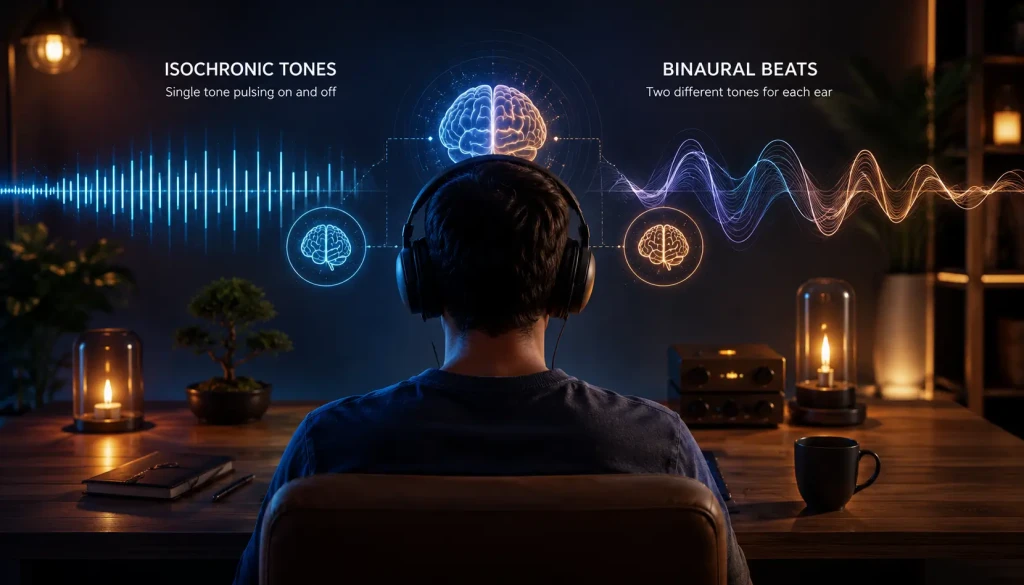
Binaural beats are auditory illusions created when slightly different frequencies are played separately into each ear.
The brain perceives the frequency difference as a rhythmic internal pulse.
For example:
- Left ear: 200 Hz
- Right ear: 210 Hz
- Perceived beat: 10 Hz
Different beat frequencies are often associated with different mental states online.
However, these associations are not absolute scientific rules.
Individual experiences vary significantly.
🌊 Frequencies Commonly Linked to Focus
Although research is still developing, certain frequency ranges are commonly discussed in focus-oriented audio.
🔹 Alpha Frequencies (8–12 Hz)
Alpha activity is often associated with:
- relaxed awareness,
- calm concentration,
- and reduced mental tension.
Many people prefer Alpha-oriented sessions while:
- reading,
- studying,
- journaling,
- or doing creative work.
Alpha frequencies are generally considered among the most calming focus states.
🔹 Beta Frequencies (13–30 Hz)
Beta activity is associated with:
- alertness,
- active thinking,
- analytical processing,
- and task-oriented concentration.
Some focus audio sessions use lower Beta ranges to encourage mental engagement during:
- work,
- problem-solving,
- or productivity tasks.
However, excessively stimulating audio may feel mentally tiring for some listeners.
🔹 Gamma Frequencies (30–100 Hz)
Gamma activity is sometimes linked to:
- cognitive processing,
- attention integration,
- and intense concentration states.
Online discussions often exaggerate Gamma-related claims, but some listeners report that higher-frequency stimulation feels mentally energizing during demanding tasks.
Research involving Gamma activity remains ongoing and should be approached realistically.
🔬 What Science Actually Supports
Research involving binaural beats suggests they may influence:
- relaxation,
- attention,
- mood,
- and meditative states under certain conditions.
However, there is currently:
no strong scientific evidence
showing that specific frequencies instantly create genius-level concentration or dramatic cognitive transformation.
Further reading:
https://www.frontiersin.org/articles/10.3389/fnhum.2019.00425/full
https://www.ncbi.nlm.nih.gov/pmc/articles/PMC10198548/
The most realistic perspective is that binaural beats may help create supportive mental environments for focus rather than acting as magical productivity shortcuts.
☁️ Why Focus Audio Sometimes Feels Effective
The brain naturally responds to:
- rhythm,
- repetition,
- atmosphere,
- and sensory consistency.
Calming sound environments may help reduce external distractions and create conditions that feel more supportive for sustained attention.
This is especially valuable in overstimulating modern environments filled with:
- notifications,
- fragmented attention,
- stress,
- and multitasking.
🎧 Focus Audio vs Background Music
Traditional music is usually designed for entertainment.
Focus-oriented binaural sessions often aim to create:
- repetitive structure,
- minimal distraction,
- ambient consistency,
- and rhythmic pacing.
Some listeners explore neuroacoustic focus audio systems that combine binaural stimulation with immersive atmospheric sound design instead of relying on exaggerated “brain unlocking” claims.
⚠️ Common Myths About Focus Frequencies
Myth:
“One frequency works perfectly for everyone.”
Reality:
People respond differently to sound environments and stimulation patterns.
Myth:
“Binaural beats instantly increase intelligence.”
Reality:
There is no strong scientific evidence supporting dramatic intelligence-enhancement claims.
Myth:
“Higher frequencies always produce better focus.”
Reality:
Overstimulating audio may reduce comfort or concentration for some individuals.
🧘 Practical Tips for Using Focus Frequencies
If you use binaural beats for focus:
- use headphones,
- experiment with different frequency styles,
- keep volume moderate,
- reduce distractions beforehand,
- and focus on consistency instead of instant results.
Many listeners simply use these audio environments during:
- study sessions,
- writing,
- coding,
- deep work,
- meditation,
- or creative routines.
Final Thoughts
Binaural beat frequencies continue attracting attention because many people are searching for ways to improve focus in increasingly distracting environments.
Some claims online are exaggerated.
Others may reflect genuine psychological or relaxation effects under certain conditions.
The most balanced perspective is usually this:
Sound may help support concentration and calmer mental states without needing extreme “superhuman brain” claims to feel useful.
Related Articles
Related Posts
Stay Informed With the Latest & Most Important News
Previous Post
Next Post