
Now Reading: How Sound Influences Mood, Relaxation, and Emotional Well-Being
-
01
How Sound Influences Mood, Relaxation, and Emotional Well-Being
How Sound Influences Mood, Relaxation, and Emotional Well-Being
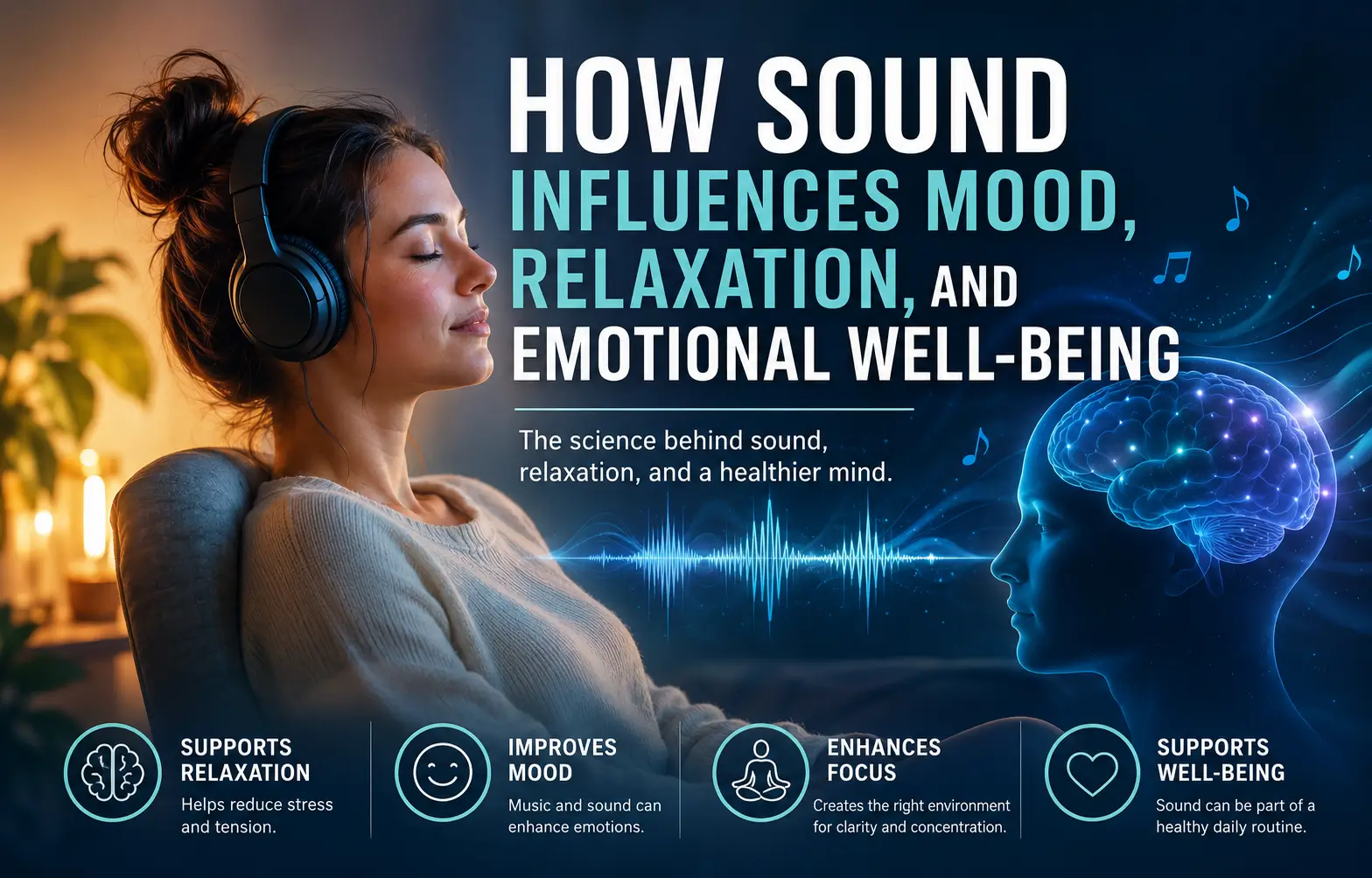
Sound has always been connected to emotion.
A familiar song can bring back memories, calm music can soften stress, and harsh noise can make the mind feel tense or distracted.
This is why people have used music, rhythm, chanting, and calming sound environments for centuries.
Today, neuroscience and psychology are helping explain why sound can influence mood, relaxation, attention, and emotional well-being.
🧠 Why Sound Affects the Brain
The brain constantly processes sound from the environment.
Even when people are not paying close attention, background sounds can still influence mood, alertness, and stress levels.
Sound interacts with brain systems involved in attention, memory, emotion, and physiological arousal.
This helps explain why some listening environments feel calming while others feel mentally draining.

🎯 Sound and Emotional States
Different sounds can create different emotional responses.
Some people feel calmer with nature sounds.
Others prefer instrumental music, ambient textures, or rhythmic audio patterns.
The emotional effect of sound depends on several factors:
- personal preference,
- volume level,
- listening context,
- past memories,
- and the emotional meaning attached to the sound.
This is why one person may find a sound relaxing while another finds it distracting.
🌿 Sound, Relaxation, and Stress
Calming sound environments may help some people relax by reducing the sense of mental tension.
Music and ambient audio are often used during meditation, breathing exercises, stretching, journaling, and evening wind-down routines.
Sound does not remove the causes of stress by itself.
However, it can help create a more supportive environment for relaxation and emotional regulation.
Related article: Stress, Anxiety, and the Brain.
🎵 Music, Memory, and Emotion
Music can be strongly connected to memory.
A song linked to a specific period of life may trigger emotions almost instantly.
This happens because auditory processing is closely connected with brain systems involved in emotional memory.
For this reason, music often feels more personal than ordinary background sound.
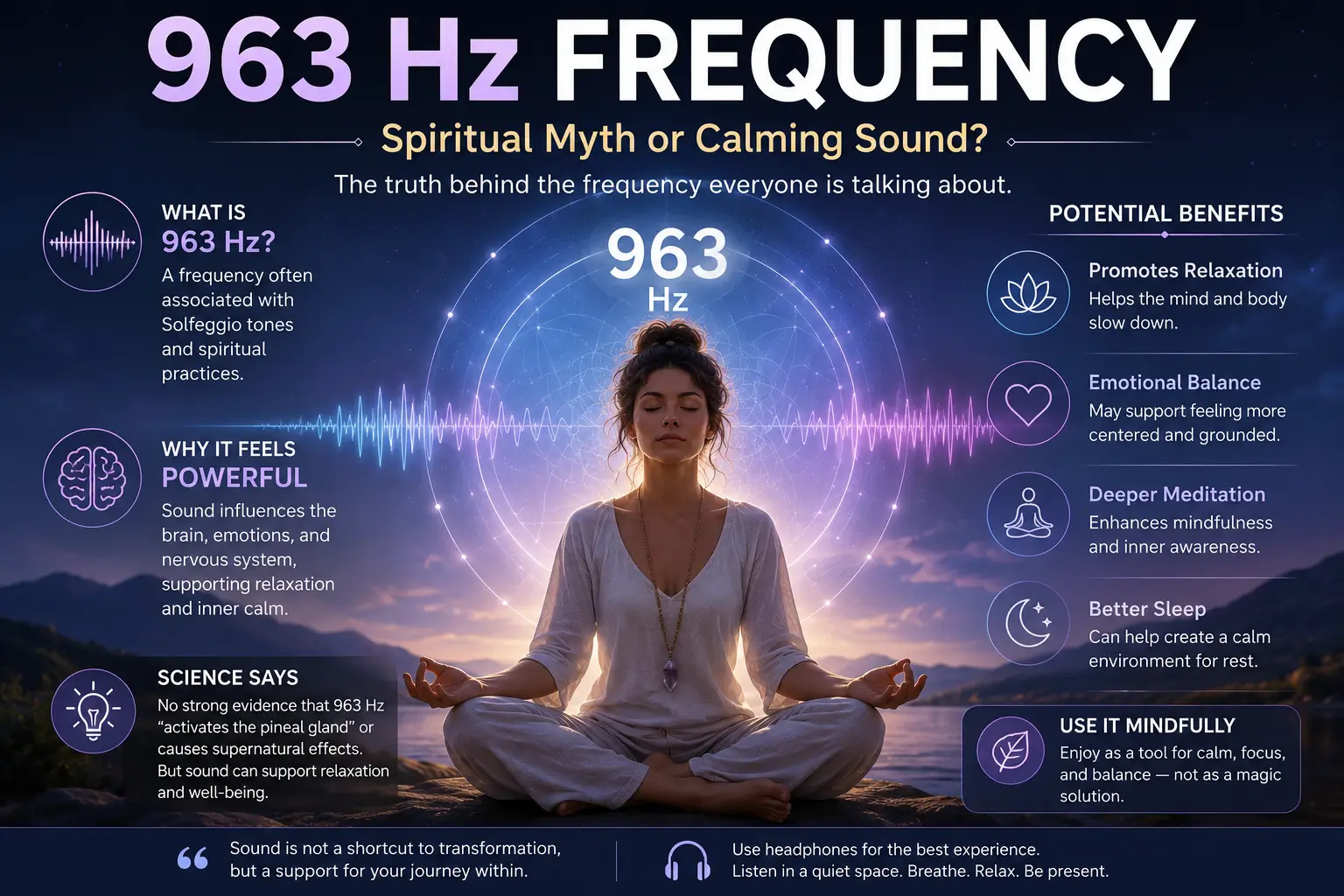
⚡ What About “Healing Frequencies”?
Many websites make strong claims about specific frequencies and emotional healing.
Some of these claims are exaggerated.
Current research does not prove that one exact frequency can automatically heal emotions, remove anxiety, or transform mental health.
Still, sound frequency is part of how audio is experienced.
The more realistic view is that rhythm, tone, volume, musical structure, personal meaning, and listening context all work together to shape emotional response.
🎧 Sound Environments and Mental Clarity
Many people use sound to create a more focused or emotionally balanced environment.
Common examples include:
- ambient music,
- nature sounds,
- white noise,
- pink noise,
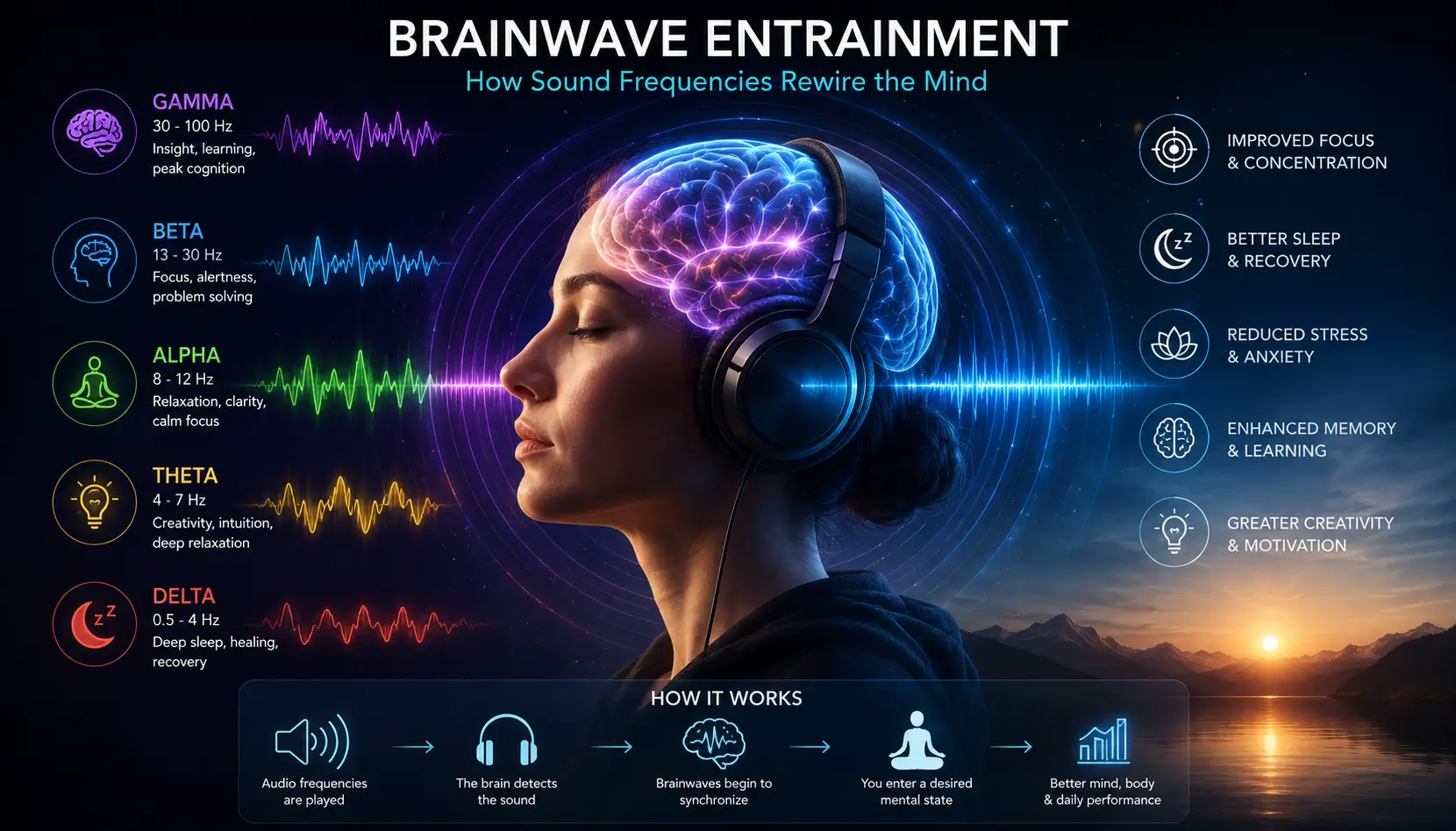
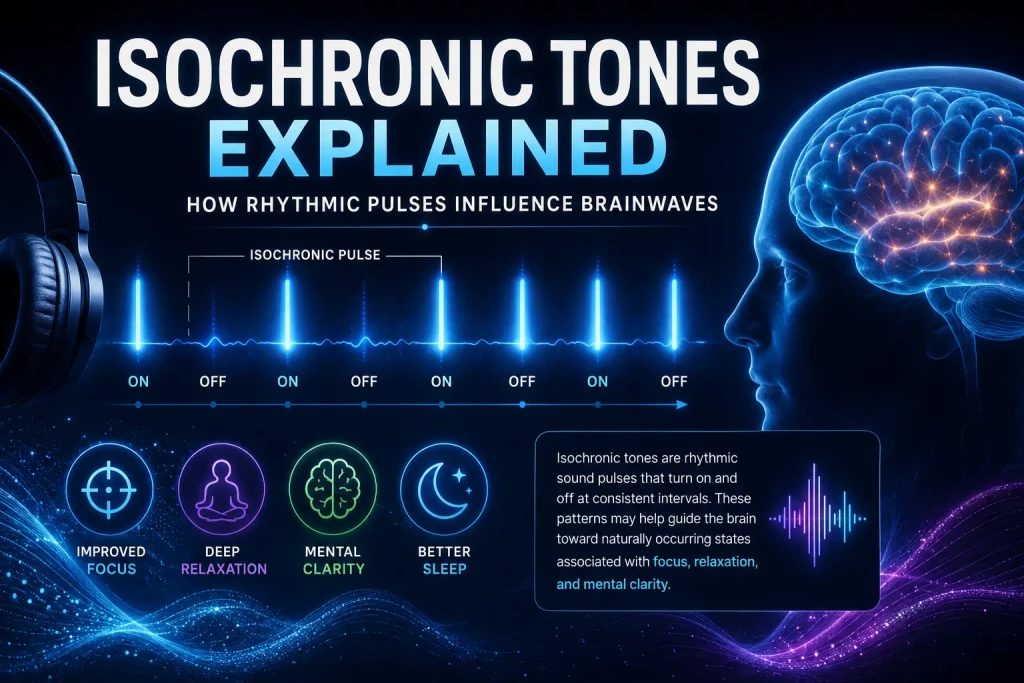
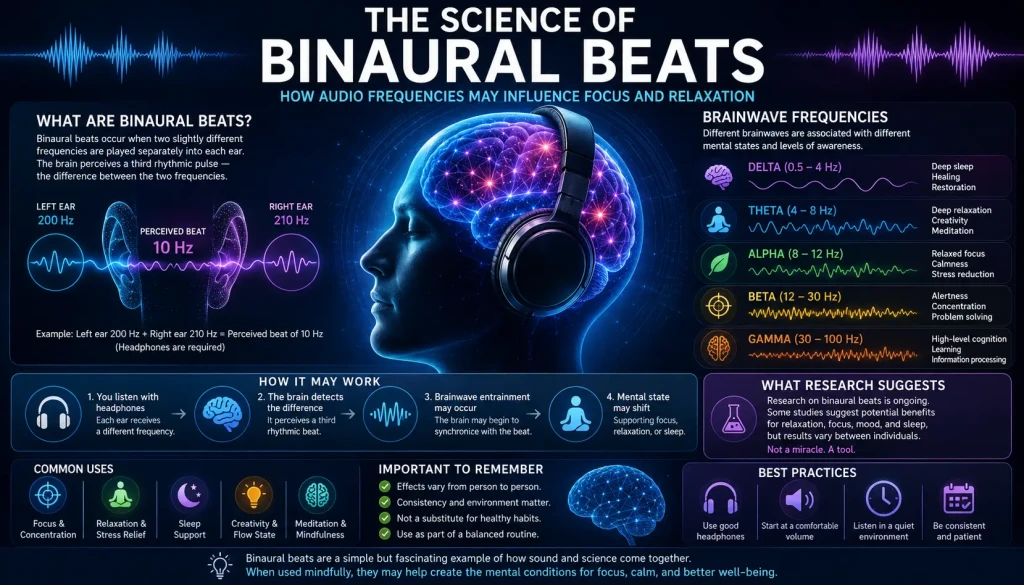
- binaural beats,
- and neuroacoustic audio environments.
These tools may help reduce distraction and support a calmer mental state for some listeners.
Related article: Audio Programs for Focus and Mental Clarity.
🧘 Emotional Well-Being Needs More Than Sound
Sound can support emotional well-being, but it should not be treated as a complete solution.
Sleep, stress management, social support, movement, nutrition, and healthy routines all matter.
Audio is best understood as one supportive tool within a larger wellness routine.
For example, calming music may make meditation easier, but the habit itself still matters.
🎧 Modern Neuroacoustic Listening
Modern neuroacoustic audio often combines ambient textures, rhythm, sound design, and structured listening environments.
Some people use these experiences for focus, relaxation, or mental clarity.
Some individuals also explore neuroacoustic audio experiences designed around relaxation, focus, and mental clarity as part of broader wellness routines.
Experiences vary between individuals, and no audio method works the same way for everyone.
❌ Common Myths About Healing Frequencies
Myth 1: One Frequency Works for Everyone
People respond differently to different sounds and listening experiences.
Myth 2: Sound Alone Can Solve Emotional Challenges
Emotional well-being depends on many factors, not sound alone.
Myth 3: Every Frequency Has Proven Healing Powers
Many popular claims about specific frequencies are not supported by strong scientific evidence.
🧠 Final Thoughts
Sound can influence mood, relaxation, memory, and emotional experience.
The most realistic benefit comes from using sound intentionally to create supportive environments for focus, recovery, and emotional balance.
While claims about magical healing frequencies should be approached carefully, there is no doubt that music and sound can play a meaningful role in how people feel.
Scientific References
- https://pmc.ncbi.nlm.nih.gov/articles/PMC3741536/
- https://pmc.ncbi.nlm.nih.gov/articles/PMC5435671/
- https://www.frontiersin.org/articles/10.3389/fpsyg.2013.00511/full
- https://www.ncbi.nlm.nih.gov/books/NBK553811/
Related Articles
Related Posts
Stay Informed With the Latest & Most Important News
Previous Post
Next Post