
Now Reading: Isochronic Tones Explained: How Rhythmic Pulses Influence Brainwaves
-
01
Isochronic Tones Explained: How Rhythmic Pulses Influence Brainwaves
Isochronic Tones Explained: How Rhythmic Pulses Influence Brainwaves
Interest in audio-based focus and relaxation tools has grown rapidly in recent years.
Among the most discussed topics are:
- binaural beats,
- ambient focus music,
- meditation soundscapes,
- and isochronic tones.
Supporters believe rhythmic audio environments may help create mental conditions associated with:
- concentration,
- calm attention,
- relaxation,
- and mindfulness.
But what exactly are isochronic tones?
And what does science actually say about them?
🧠 What Are Isochronic Tones?
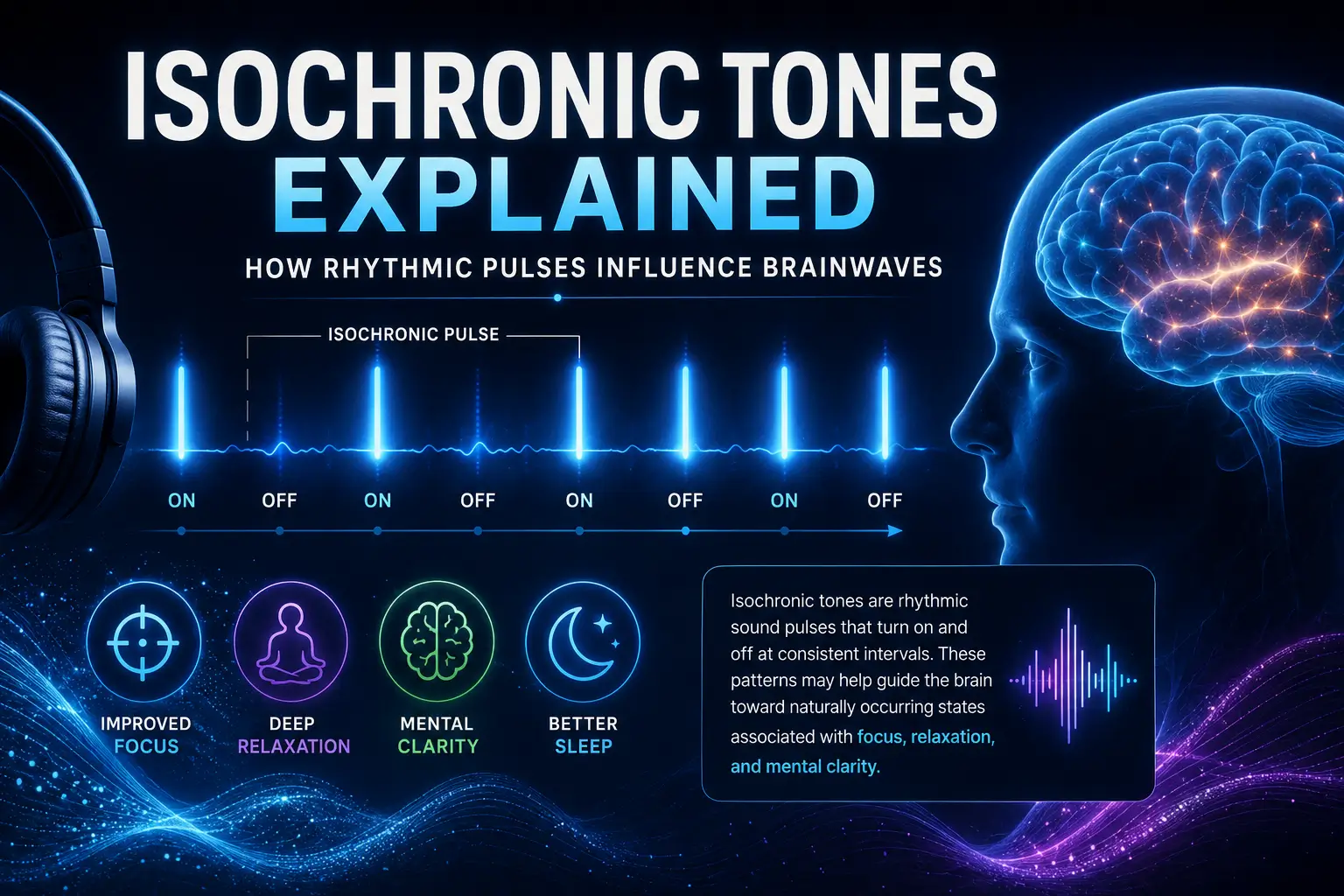
Isochronic tones are rhythmic sound pulses repeated at consistent intervals.
Unlike traditional music, these tones use:
- evenly spaced pulses,
- repetitive timing,
- and structured auditory patterns.
The sound rapidly turns:
- on,
- off,
- on,
- off
in a steady rhythm.
This creates a strong sense of auditory repetition that many listeners describe as:
- immersive,
- hypnotic,
- calming,
- or mentally engaging.
⚡ How Isochronic Tones Differ From Binaural Beats
Isochronic tones are often compared with:
binaural beats.
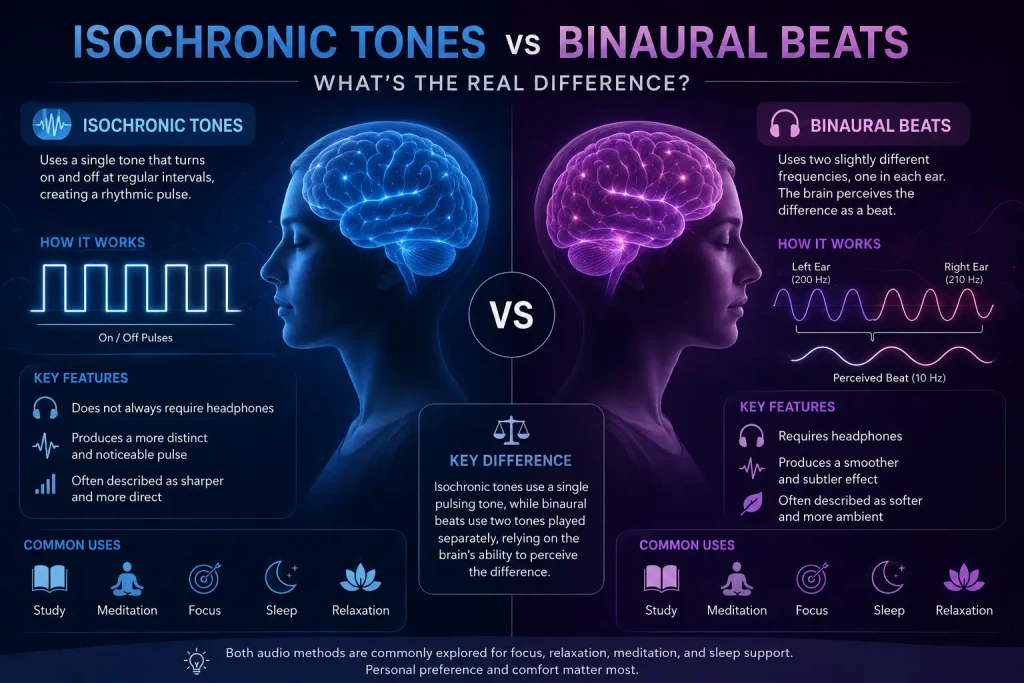
However, the two work differently.
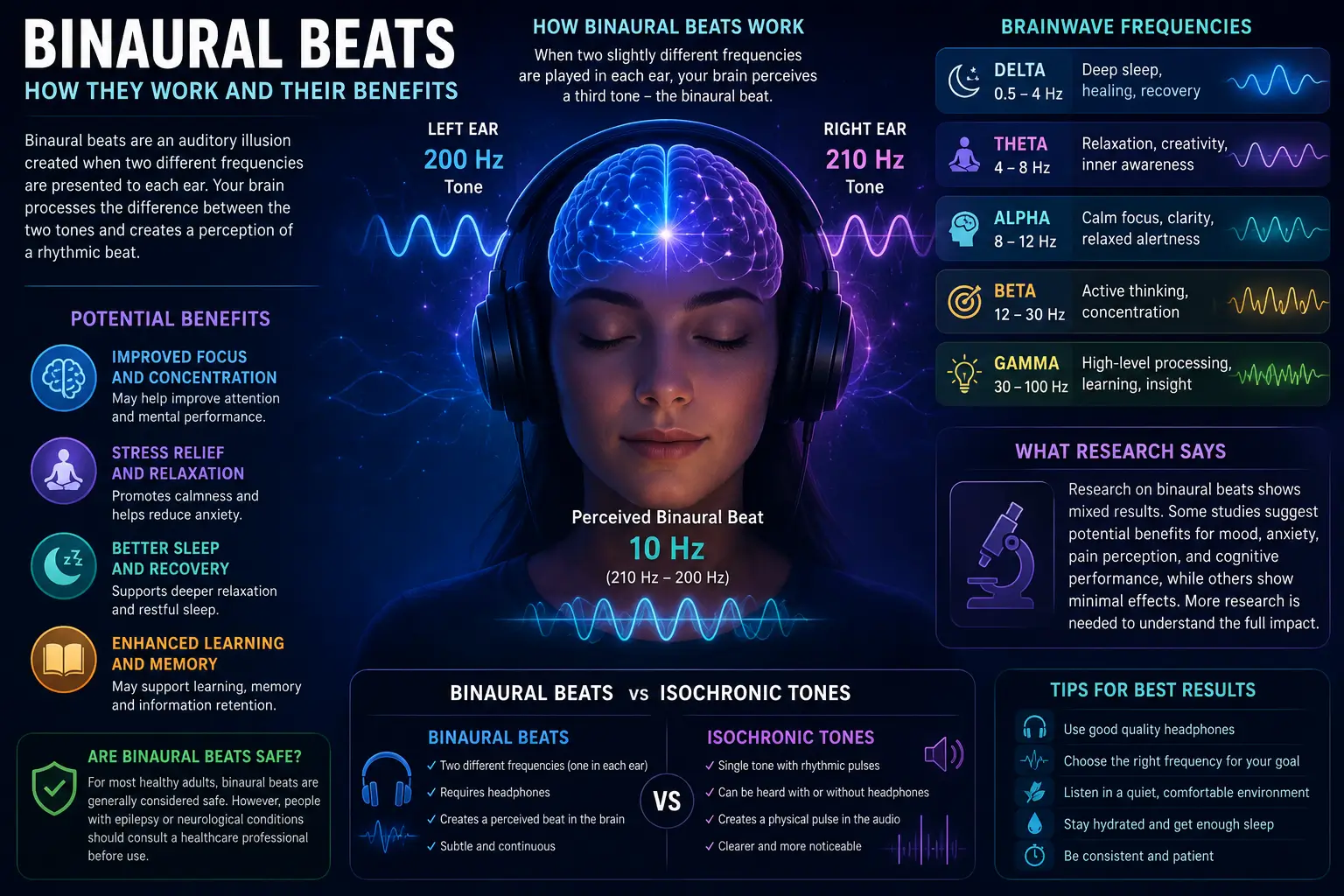
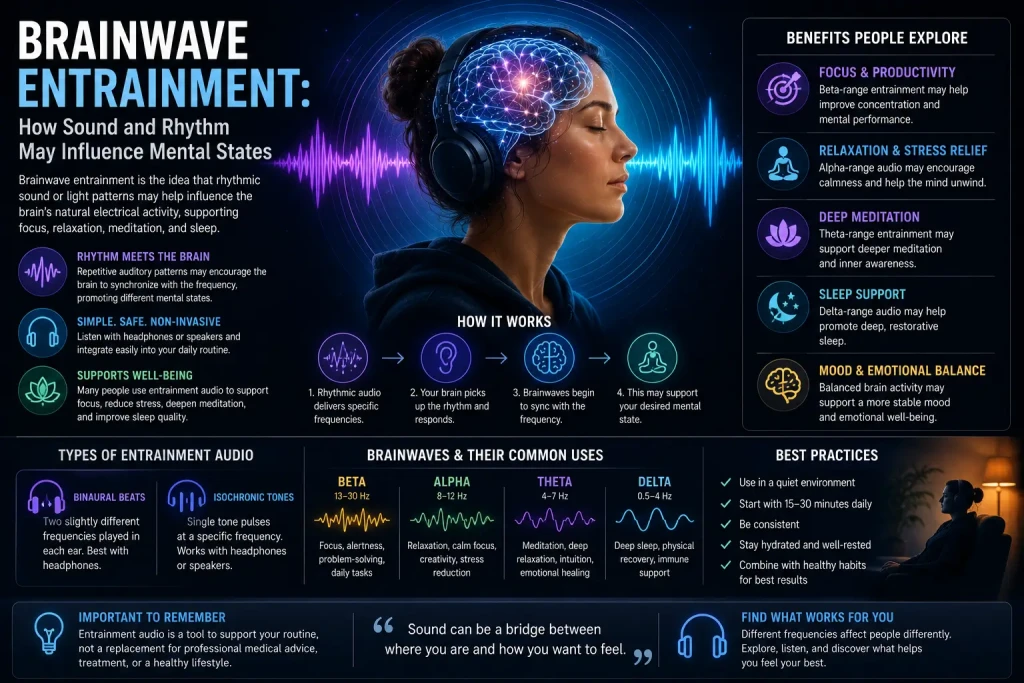
Binaural beats:
use two slightly different frequencies played separately in each ear.
Isochronic tones:
use distinct rhythmic pulses that can often be heard without headphones.
Because the pulses are more pronounced, some listeners find isochronic audio:
- more noticeable,
- more stimulating,
- or easier to follow.
You may also enjoy our comparison article: Binaural Beats vs Isochronic Tones
🌊 Why Rhythmic Audio Feels Mentally Engaging
The human nervous system naturally reacts to:
- rhythm,
- repetition,
- timing,
- and sensory consistency.
Predictable sound environments may help reduce:
- distraction,
- sensory overload,
- and environmental noise.
For some listeners, repetitive audio creates a stronger sense of:
- immersion,
- mental pacing,
- and focused attention.
This is one reason rhythmic sound environments are commonly used during:
- studying,
- meditation,
- journaling,
- reading,
- and deep work sessions.
🔬 What Science Actually Says
Research involving rhythmic auditory stimulation continues evolving.
Some studies suggest repetitive sound environments may influence:
- relaxation,
- sensory processing,
- attention,
- and mood under certain conditions.
However, exaggerated internet claims involving:
- “brain rewiring,”
- instant intelligence,
- or guaranteed cognitive transformation
go far beyond current scientific evidence.
Further reading:
https://www.frontiersin.org/articles/10.3389/fnhum.2019.00425/full
https://www.ncbi.nlm.nih.gov/pmc/articles/PMC10198548/
The healthiest perspective is viewing isochronic tones as:
- a supportive audio environment,
- a relaxation tool,
- or part of a broader focus routine.
☁️ Focus, Relaxation, and Mental Environment
Mental performance is influenced by many broader factors including:
- sleep quality,
- stress,
- emotional balance,
- sensory environment,
- and cognitive overload.
Audio alone does not instantly transform the brain.
However, structured sound environments may help some individuals feel:
- calmer,
- less distracted,
- and more mentally organized.
🎵 Why People Use Isochronic Tones
People commonly listen to isochronic audio during:
- studying,
- meditation,
- creative work,
- sleep preparation,
- mindfulness,
- and relaxation routines.
Some listeners also experiment with neuroacoustic audio systems designed to support focus and reduced sensory overload.
Personal preference plays a major role in how these environments feel.
🌙 Isochronic Tones and Sleep Audio
Slower rhythmic sound environments are sometimes used before sleep because repetitive audio may help reduce:
- racing thoughts,
- environmental distraction,
- and mental overstimulation.
You may also enjoy our article on binaural beats for sleep to explore how calming nighttime audio environments are commonly discussed.
⚠️ Common Myths About Isochronic Tones
Myth:
“Isochronic tones permanently reprogram the brain.”
Reality:
Current scientific evidence does not support extreme transformation claims.
Myth:
“One frequency works identically for everyone.”
Reality:
People respond differently to sound environments and sensory stimulation.
Myth:
“Isochronic tones instantly create deep focus.”
Reality:
Attention and concentration depend on many broader biological and psychological factors.
🌍 Why Interest in Isochronic Audio Keeps Growing
Modern life creates constant cognitive interruption through:
- multitasking,
- notifications,
- digital overload,
- and fragmented attention.
As a result, many people are searching for:
- calmer sensory environments,
- improved concentration,
- emotional balance,
- and healthier focus routines.
Rhythmic audio may simply help some individuals feel:
- more grounded,
- more immersed,
- and less mentally scattered.
Final Thoughts
Isochronic tones remain part of a broader conversation involving:
- neuroscience,
- focus,
- relaxation,
- productivity,
- and sensory experience.
Research suggests structured sound environments may influence attention and mood under certain conditions.
At the same time, exaggerated “brain upgrade” claims should be approached carefully.
The healthiest perspective is viewing rhythmic audio as a supportive environmental tool rather than a guaranteed path to cognitive transformation.
Related Articles
Related Posts
Stay Informed With the Latest & Most Important News
Previous Post
Next Post