
Now Reading: Mental Resilience and Cognitive Recovery: Healthy Ways to Manage Stress
-
01
Mental Resilience and Cognitive Recovery: Healthy Ways to Manage Stress
Mental Resilience and Cognitive Recovery: Healthy Ways to Manage Stress
🧠 What Is Mental Resilience?
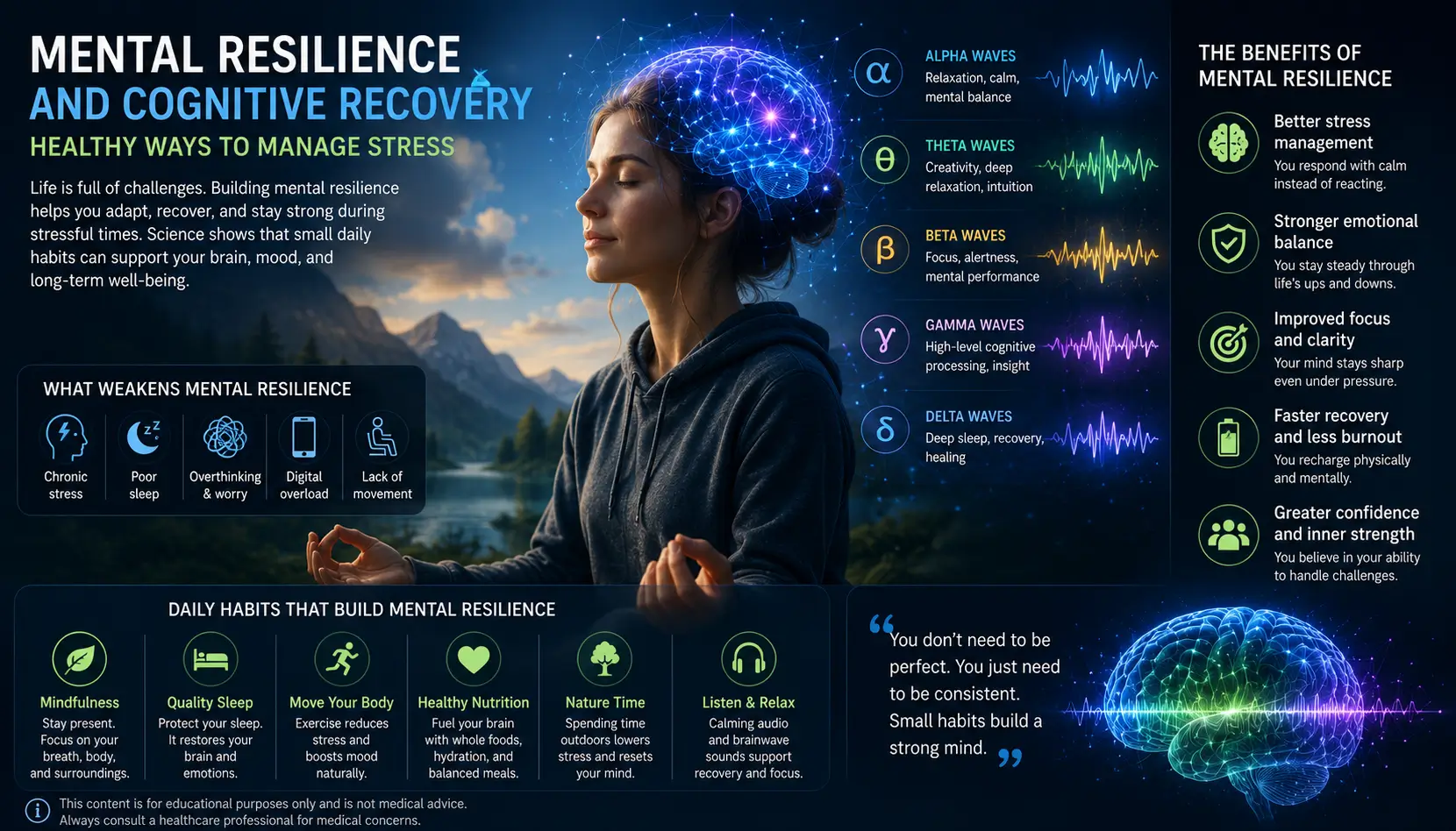
Mental resilience refers to the ability to adapt, recover, and continue functioning during stressful or emotionally difficult periods.
Resilience does not mean ignoring stress or suppressing emotions.
Instead, it involves developing healthier ways to respond to pressure, uncertainty, and mental overload.
Modern neuroscience increasingly recognizes that emotional health, stress management, and cognitive recovery are closely connected.
Related guide:
The Science of Brain Waves
⚡ How Stress Affects the Brain
Stress is a natural biological response designed to help people react to challenges and threats.
Short-term stress can sometimes improve alertness and attention.
However, chronic stress may contribute to:
- Mental fatigue
- Difficulty concentrating
- Sleep disruption
- Emotional exhaustion
- Reduced motivation
- Cognitive overload
This is one reason stress management has become increasingly important in modern discussions about mental wellness and productivity.
🌙 Why Recovery Matters for Cognitive Wellness
The brain requires recovery periods to function effectively.
Constant stimulation without rest may increase mental fatigue over time.
Healthy recovery habits may help support:
- Focus
- Attention
- Emotional regulation
- Mental clarity
- Stress resilience
Recovery is not laziness.
It is an important part of long-term cognitive performance and emotional health.
Related reading:
Which Brain Waves Help You Sleep?
🛌 Sleep and Emotional Balance
Sleep plays a critical role in emotional regulation and mental recovery.
Poor sleep quality may increase:
- Irritability
- Mental fatigue
- Difficulty concentrating
- Stress sensitivity
- Emotional overwhelm
Many people underestimate how strongly sleep influences mental resilience.
This is why healthy sleep routines are often considered foundational for emotional wellness.
🌿 Mindfulness and Nervous System Recovery
Mindfulness practices are frequently discussed in relation to stress reduction and emotional balance.
Examples may include:
- Meditation
- Breathing exercises
- Reduced multitasking
- Quiet reflection
- Nature exposure
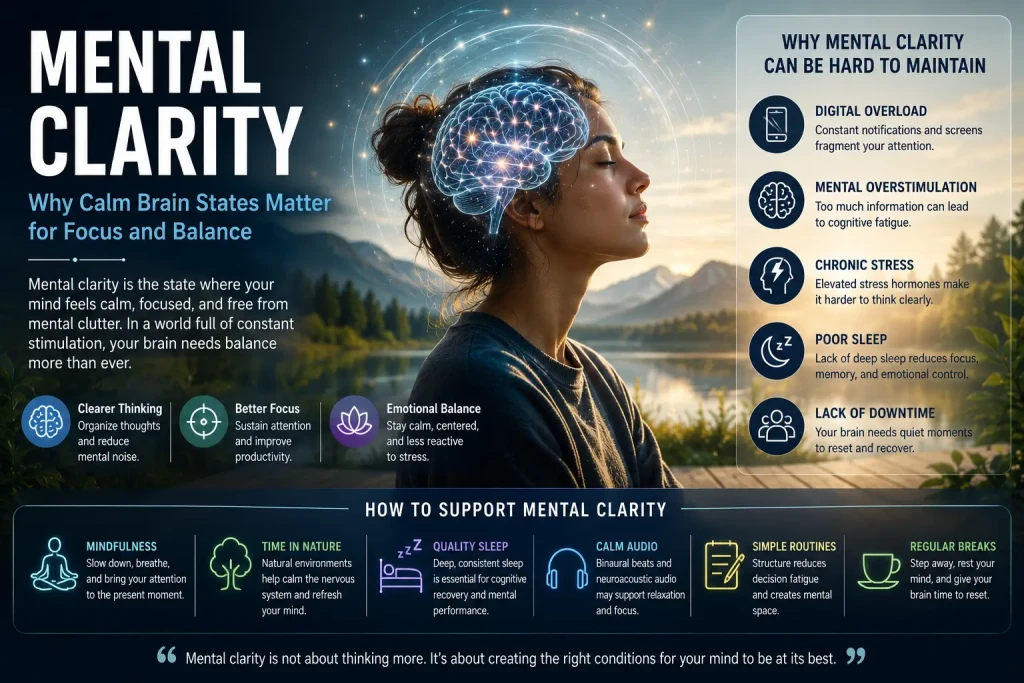
These practices may help reduce constant cognitive stimulation and support calmer mental states.
Related article:
Meditation Audio and Brainwave Entrainment
🎧 Relaxation Audio and Mental Recovery
Some people use structured sound environments during relaxation or mindfulness sessions.
Examples may include:
- Ambient soundscapes
- Binaural beats
- Isochronic tones
- Nature sounds
- Calming audio environments
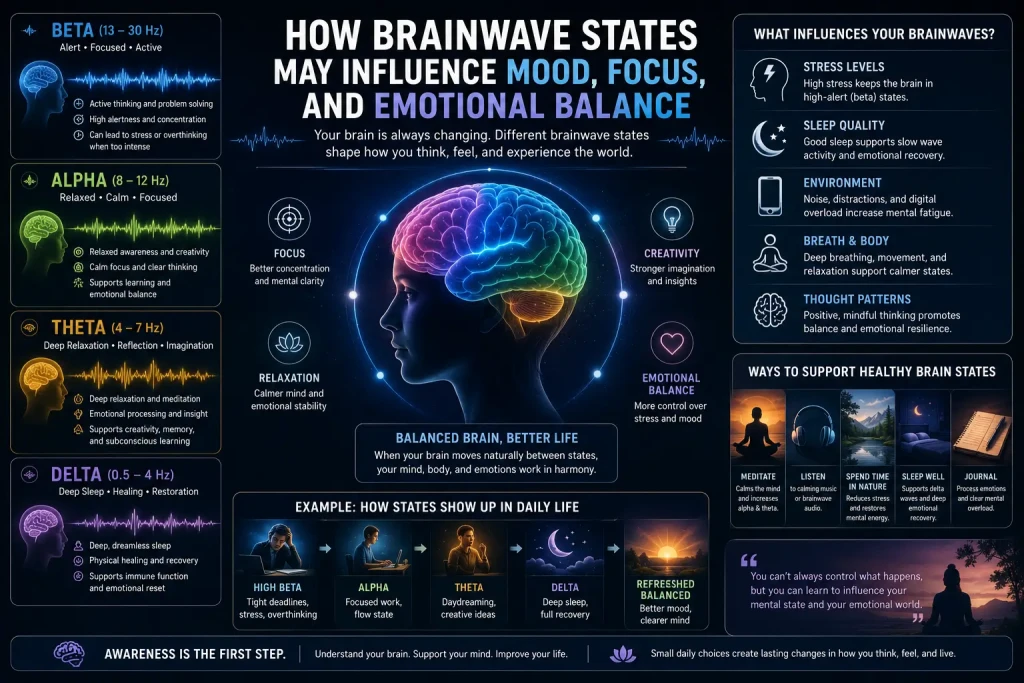
The idea behind many of these systems is connected to brainwave entrainment — the theory that rhythmic sensory stimulation may influence mental-state patterns.
Research in this area is still evolving, and individual responses vary.
Related reading:
Alpha Brain Waves and Relaxed Focus
📱 Cognitive Overload in Modern Life
Modern environments constantly compete for attention.
Notifications, social media, multitasking, and information overload may increase mental exhaustion for some individuals.
Many people now intentionally create lower-stimulation environments by:
- Reducing distractions
- Limiting multitasking
- Creating focused work periods
- Taking digital breaks
- Practicing mindfulness
Calmer attention habits may sometimes support emotional balance more effectively than constantly seeking productivity shortcuts.
🏃 Movement and Emotional Wellness
Physical movement may also influence stress recovery and cognitive wellness.
Exercise is commonly associated with:
- Improved mood
- Reduced stress
- Better sleep
- Increased mental energy
- Emotional balance
Even moderate daily movement can positively influence mental well-being over time.
🔬 What Does Research Actually Suggest?
Modern neuroscience does not support simplistic claims about becoming “mentally unbreakable” or instantly eliminating stress.
However, research increasingly supports the importance of recovery habits, sleep quality, stress management, and emotional regulation for long-term mental wellness.
Mental resilience appears to develop gradually through consistent healthy routines rather than quick fixes.
🌊 Why Relaxation Audio Continues to Grow
As stress and digital overload increase, many people continue exploring calmer sound environments for mindfulness and relaxation sessions.
Some modern audio systems combine ambient soundscapes with rhythmic pulse patterns inspired by focus and relaxation states.
One example is:
The Genius Wave audio program, which combines layered sound environments inspired by relaxation and cognitive recovery concepts.
📌 Final Thoughts
Mental resilience is not about avoiding stress completely.
It is about developing healthier ways to recover, adapt, and maintain emotional balance during difficult periods.
Sleep quality, mindfulness, emotional recovery, movement, and reduced overstimulation all appear to play important roles in long-term cognitive wellness.
Although brainwave-oriented audio environments remain an evolving field, many people enjoy using structured sound environments as part of calmer daily routines focused on stress reduction and mental recovery.
🔗 Related Articles
Related Posts
Stay Informed With the Latest & Most Important News
Previous Post
Next Post