
Now Reading: Meditation Audio and Brainwave Entrainment: A Practical Guide
-
01
Meditation Audio and Brainwave Entrainment: A Practical Guide
Meditation Audio and Brainwave Entrainment: A Practical Guide
🧠 What Is Brainwave Entrainment?
Brainwave entrainment is a concept based on rhythmic sensory stimulation.
The idea is that repetitive audio patterns may influence mental-state activity by encouraging the brain to synchronize with external rhythms.
This concept is commonly discussed in relation to:
- Meditation
- Relaxation
- Focus training
- Sleep routines
- Stress reduction
Although research in this field is still evolving, interest in brainwave-oriented audio environments has grown rapidly in recent years.
Related guide:
The Science of Brain Waves
🎧 Types of Meditation Audio
Meditation-focused sound environments can take many different forms.
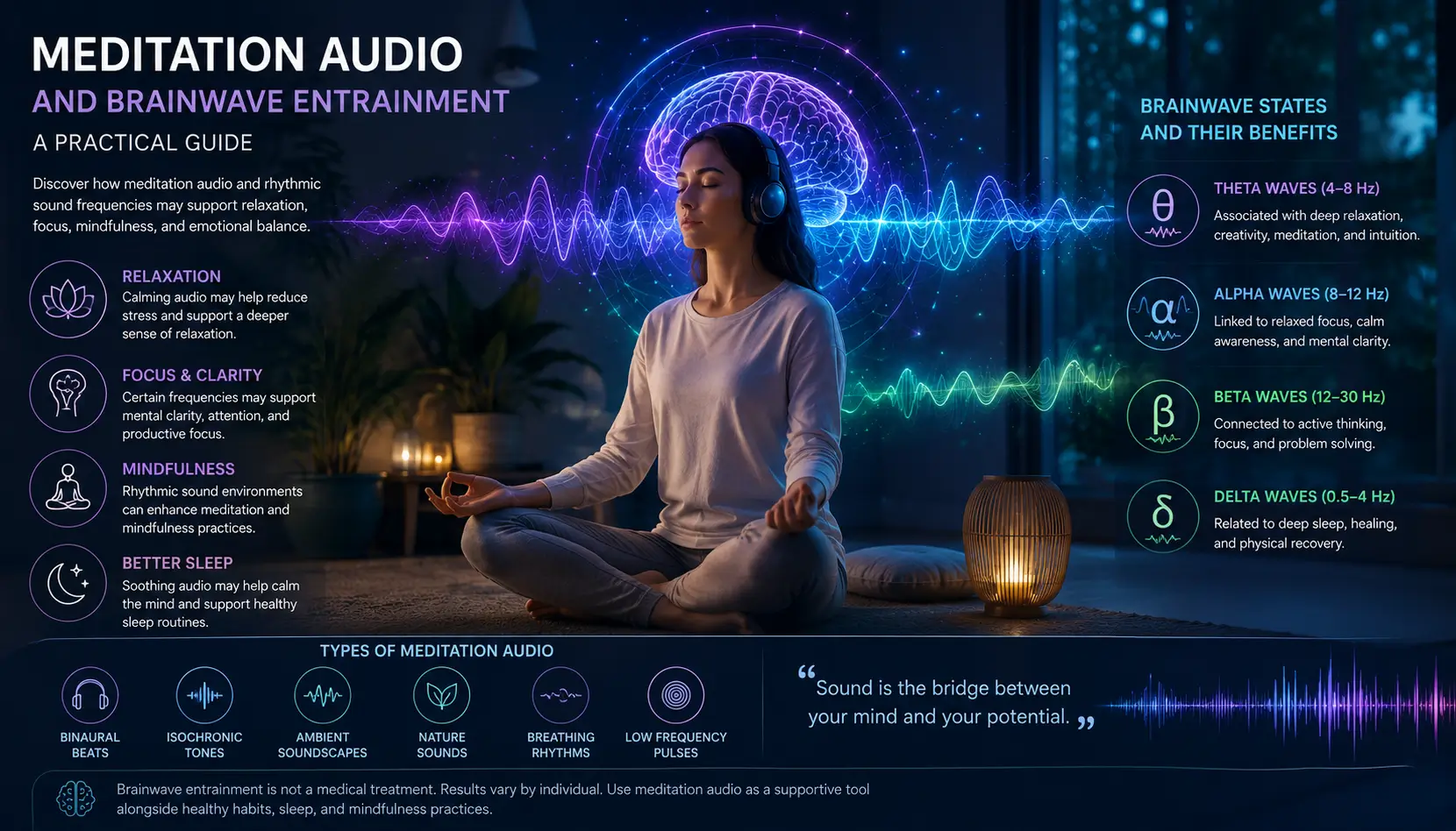
Some commonly used examples include:
- Binaural beats
- Isochronic tones
- Ambient soundscapes
- Nature sounds
- Breathing rhythm audio
- Low-frequency pulse environments
Some listeners prefer minimal rhythmic stimulation, while others enjoy layered ambient sound environments during meditation or relaxation sessions.
🌿 Why People Use Meditation Audio
Modern life creates constant mental stimulation.
Notifications, multitasking, stress, and screen exposure can make it difficult to slow down mentally.
Because of this, many people explore meditation audio to help create calmer mental environments.
Potential goals may include:
- Relaxation
- Reduced distraction
- Mindfulness practice
- Stress management
- Improved focus
- Sleep preparation
Related article:
Alpha Brain Waves and Relaxed Focus
🌌 Meditation and Theta Brain Waves
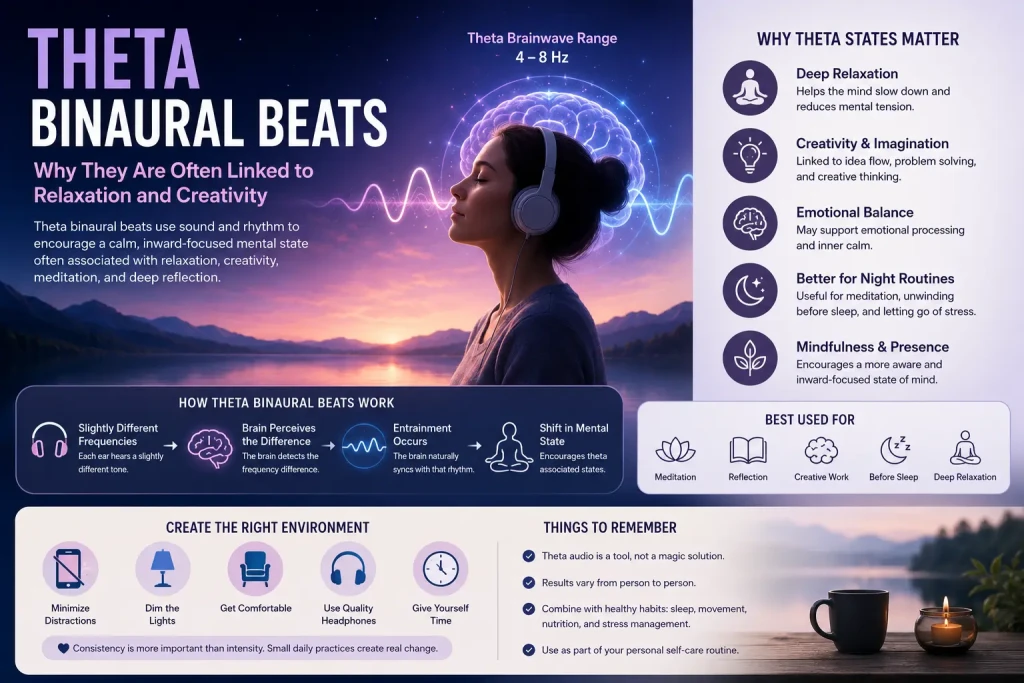
Theta activity is frequently discussed in meditation research because it often appears during deeply relaxed mental states.
Theta-associated states are commonly connected to:
- Relaxation
- Creativity
- Mindfulness
- Meditative awareness
- Reduced mental tension
This is one reason many meditation audio systems are inspired by slower rhythmic patterns associated with theta-oriented states.
Related reading:
Theta Waves and Relaxation
⚡ Alpha Waves and Calm Attention
Alpha waves are commonly associated with relaxed focus and calm awareness.
Some listeners use alpha-inspired sound environments during:
- Reading
- Meditation
- Breathing exercises
- Creative work
- Low-stress concentration sessions
Alpha-associated states are often described as mentally calm without feeling sleepy.
Related guide:
Mental Focus Training and Brainwave Performance
🎵 Can Audio Actually Influence Mental States?
Some research suggests rhythmic audio stimulation may influence relaxation or attention patterns for certain individuals.
However, results vary significantly from person to person.
Some listeners report feeling calmer or more focused during structured sound sessions, while others notice little difference.
The brain is highly complex, and no audio system guarantees specific psychological effects.
This is why exaggerated marketing claims should always be approached carefully.
🛌 Meditation Audio and Sleep Routines
Many people also use calming sound environments as part of nighttime routines.
Sleep-oriented audio may include:
- Brown noise
- Ambient sleep environments
- Delta-inspired pulse patterns
- Soft atmospheric soundscapes
These environments may help create a calmer bedtime atmosphere with reduced distraction.
Related reading:
Which Brain Waves Help You Sleep?
📱 Why Interest in Brainwave Audio Keeps Growing
As more people search for non-invasive ways to reduce stress and improve focus, brainwave-inspired audio continues gaining popularity.
Many listeners enjoy structured sound environments because they may create a calmer mental atmosphere during work, meditation, or relaxation sessions.
Some modern systems combine ambient soundscapes with rhythmic pulse patterns inspired by brainwave entrainment concepts.
One example is:
The Genius Wave audio program, which combines layered sound environments inspired by multiple cognitive and relaxation states.
🔬 What Does Science Actually Say?
Research into meditation audio and brainwave entrainment remains ongoing.
Some studies suggest rhythmic stimulation may influence relaxation or attention for certain listeners, but scientific evidence is still mixed.
No audio program should be viewed as a guaranteed medical or psychological solution.
Healthy routines, stress management, sleep quality, and mindfulness practices remain significantly more important than any single sound environment.
📌 Final Thoughts
Meditation audio and brainwave entrainment continue attracting interest because many people enjoy using sound to support relaxation, focus, and mindfulness routines.
Although research in this area is still evolving, structured audio environments may help some listeners create calmer mental spaces with fewer distractions.
The most sustainable improvements in mental wellness still come from healthy habits, emotional balance, sleep quality, and consistent mindfulness practices.
🔗 Related Articles
Related Posts
Stay Informed With the Latest & Most Important News
Previous Post
Next Post