
Now Reading: The Science of Brain Waves: How Your Mind Processes Focus, Sleep, and Mental States
-
01
The Science of Brain Waves: How Your Mind Processes Focus, Sleep, and Mental States
The Science of Brain Waves: How Your Mind Processes Focus, Sleep, and Mental States
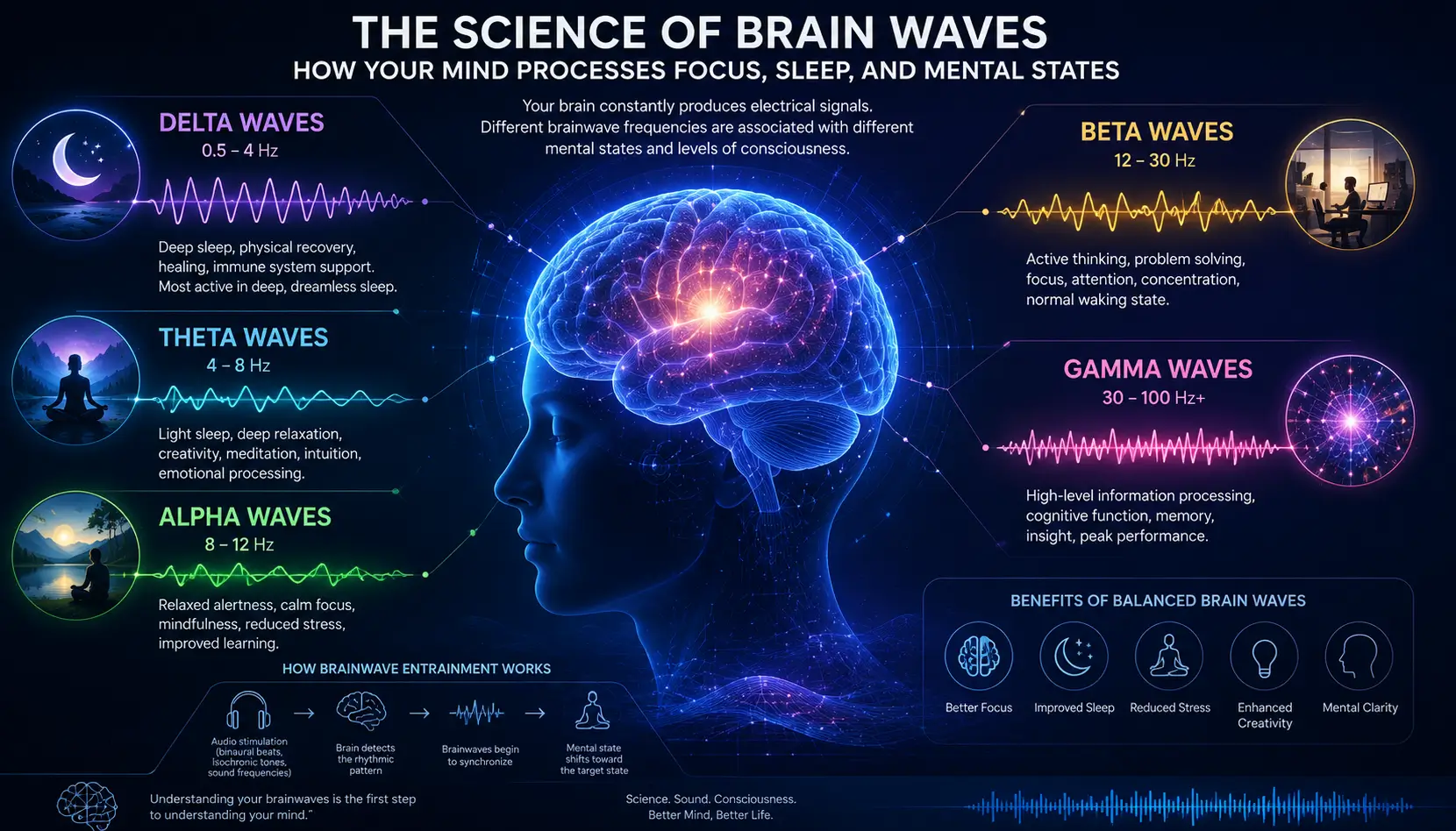
🧠 What Are Brain Waves?
The human brain is constantly active.
Even during sleep, meditation, or quiet rest, billions of neurons continue communicating through electrical signals. These patterns of activity create measurable rhythmic frequencies commonly known as brain waves.
Different brainwave states are associated with different types of mental activity, including:
- Focus
- Relaxation
- Sleep
- Memory processing
- Creativity
- Attention
Interest in brainwave science has expanded rapidly in recent years as more people explore cognitive performance, mindfulness, sleep optimization, and sound-based focus environments.
Related guide:
Brainwave States and Mental Performance
⚡ How Brain Waves Are Measured
Brainwave activity is commonly measured using electroencephalography (EEG), a technique that records electrical patterns produced by neurons in the brain.
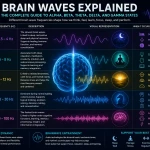
These electrical rhythms are grouped into several categories based on frequency ranges.
Each range is associated with different patterns of awareness and mental activity.
Although brain activity is extremely complex, understanding these categories can help explain why certain mental states feel different from others.
🌙 Delta Waves: Deep Sleep and Recovery
Delta waves are the slowest brainwave patterns and are most strongly associated with deep restorative sleep.
Delta activity is commonly linked to:
- Physical recovery
- Deep sleep
- Reduced awareness
- Nervous system restoration
This is the state most associated with overnight recovery and restorative sleep cycles.
Related article:
Which Brain Waves Help You Sleep?
🌌 Theta Waves: Relaxation and Creativity
Theta waves are commonly associated with:
- Deep relaxation
- Meditation
- Creativity
- Daydreaming
- Early sleep stages
Some people describe theta states as calm, immersive, or reflective.
Theta activity is frequently discussed in meditation and relaxation research because it often appears during deeply relaxed mental states.
Related reading:
Theta Waves and Relaxation
🎯 Alpha Waves: Calm Focus and Mental Clarity
Alpha waves are often associated with calm concentration and relaxed awareness.
Alpha activity commonly appears during:
- Light meditation
- Quiet focus
- Reading
- Relaxed attention
- Stress reduction
Many focus-oriented sound environments are designed around alpha-associated rhythmic patterns because they may feel calming without becoming overly sedating.
Related article:
Audio Environments for Focus and Deep Work
🚀 Beta Waves: Alert Thinking and Productivity
Beta waves are commonly associated with active thinking and mental engagement.
This state is often linked to:
- Problem-solving
- Decision-making
- Concentration
- Alertness
- Task-focused activity
However, excessively overstimulated beta activity may also be associated with stress or mental overload in some situations.
This is one reason many people seek balance between focused attention and relaxation throughout the day.
💡 Gamma Waves: Cognitive Processing and Awareness
Gamma waves are among the fastest measurable brainwave frequencies.
They are commonly discussed in relation to:
- Attention
- Information processing
- Cognitive integration
- High-focus mental states
- Complex learning
Interest in gamma activity has increased significantly in neuroscience discussions surrounding focus and cognition.
Related guide:
Gamma Brain Waves and Cognitive Performance
🎧 Brainwave Entrainment and Audio Stimulation
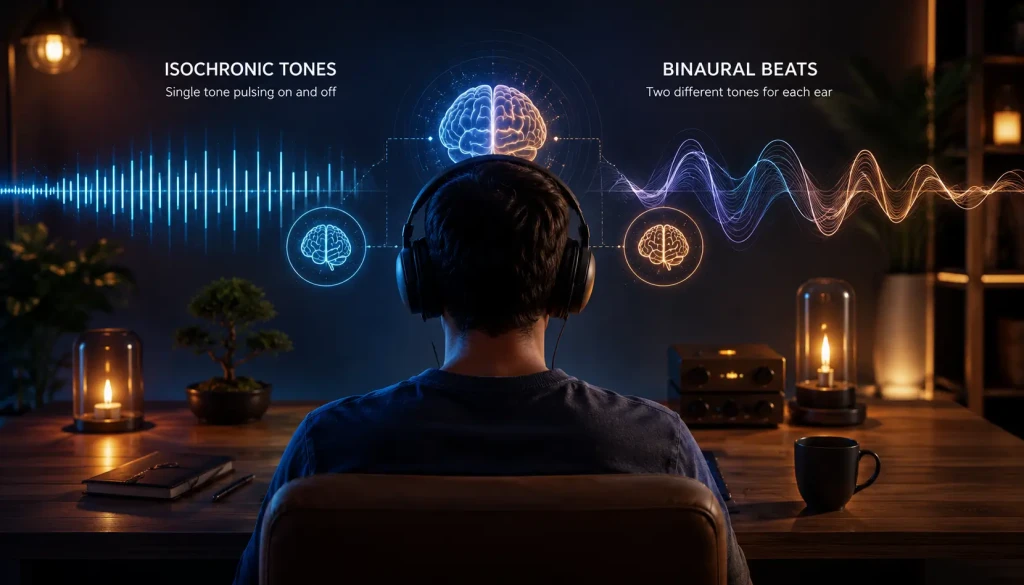
One growing area of interest involves brainwave entrainment — the theory that repetitive auditory stimulation may influence mental-state patterns.
Some sound environments use:
- Binaural beats
- Isochronic tones
- Rhythmic pulse audio
- Ambient concentration soundscapes
These systems are commonly used for:
- Focus sessions
- Meditation
- Sleep routines
- Relaxation environments
Research into brainwave entrainment is still evolving, and results vary between individuals.
Related reading:
Brainwave Entrainment Explained
📱 Modern Life and Mental Overload
One reason brainwave-related topics have become so popular is the growing problem of overstimulation.
Constant notifications, screen exposure, multitasking, and stress can make sustained focus increasingly difficult.
As a result, more people are exploring:
- Mindfulness practices
- Meditation
- Sleep optimization
- Concentration sound environments
- Low-distraction productivity routines
Brainwave science is often discussed as part of this broader interest in mental clarity and cognitive wellness.
🔬 What Does Research Actually Say?
Scientific research surrounding brainwave entrainment and sound-based cognitive stimulation is still developing.
Some studies suggest rhythmic audio stimulation may influence relaxation, attention, or meditation depth for certain individuals.
However, exaggerated claims should always be approached carefully.
No audio program can instantly transform intelligence, eliminate stress, or replace healthy lifestyle habits.
Sleep quality, exercise, emotional health, and consistent routines remain significantly more important for long-term cognitive performance.
🌊 Why Interest in Brainwave Audio Continues to Grow
Despite the hype surrounding some brainwave products online, interest in structured audio environments continues to grow because many listeners enjoy using sound to create calmer or more focused mental spaces.
Some modern programs combine ambient soundscapes with rhythmic pulse patterns inspired by brainwave entrainment concepts.
One example is:
The Genius Wave audio program, which uses layered sound environments inspired by multiple brainwave states.
📌 Final Thoughts
Brain waves are a natural part of how the mind processes attention, sleep, focus, and awareness.
Different brainwave states are associated with different mental experiences, ranging from deep sleep to high-focus concentration.
Although sound-based brainwave stimulation remains an evolving field of research, many people continue exploring audio environments designed to support relaxation, focus, and mindfulness.
The most important thing is maintaining realistic expectations and viewing these tools as part of a broader approach to mental wellness and cognitive health.
🔗 Related Articles
Related Posts
Stay Informed With the Latest & Most Important News
Previous Post
Next Post