
Now Reading: Brain Training and Focus Habits: What Helps Cognitive Performance?
-
01
Brain Training and Focus Habits: What Helps Cognitive Performance?
Brain Training and Focus Habits: What Helps Cognitive Performance?

🧠 What Is Brain Training?
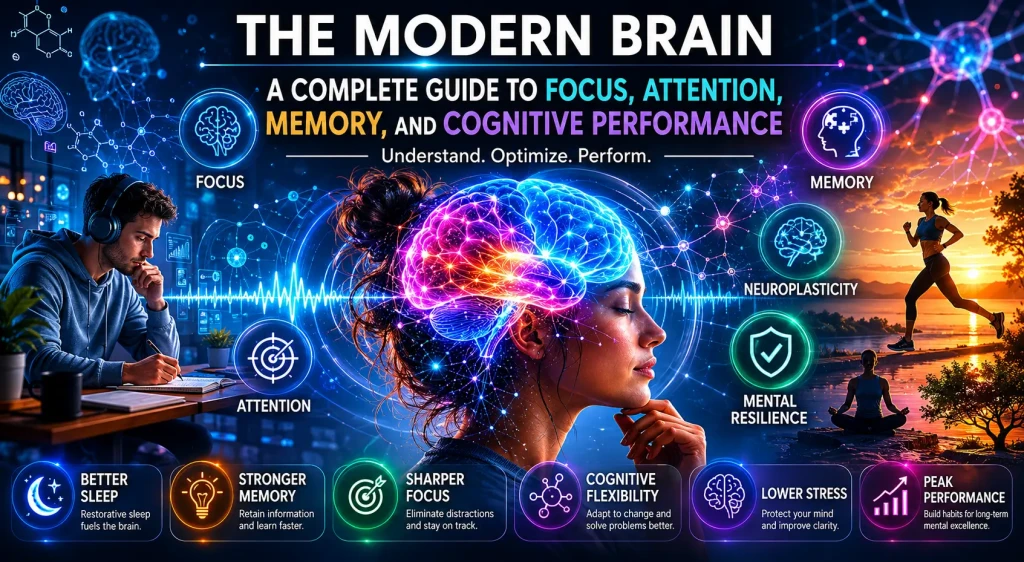
Brain training generally refers to activities and habits designed to support attention, learning, memory, and cognitive performance.
Modern neuroscience increasingly focuses on long-term cognitive wellness rather than unrealistic claims about “unlocking hidden brain power.”
Healthy cognitive performance is influenced by many factors, including:
- Sleep quality
- Stress management
- Attention habits
- Physical movement
- Mental stimulation
- Emotional wellness
Related guide:
The Science of Brain Waves and Mental States
🎯 Focus Is a Trainable Skill
Attention is heavily influenced by environment and habits.
Modern digital life constantly competes for cognitive resources through notifications, multitasking, and information overload.
Many people now intentionally create lower-distraction environments to improve concentration.
Examples may include:
- Deep work routines
- Reduced multitasking
- Scheduled focus sessions
- Mindfulness practices
- Digital breaks
Calmer environments may sometimes support concentration more effectively than constant stimulation.
⚡ Brain Waves and Cognitive Performance
The brain constantly produces measurable electrical activity called brain waves.
Different brainwave ranges are commonly associated with different mental states.
Examples include:
- Alpha waves — calm focus
- Beta waves — alert thinking
- Theta waves — creativity and relaxation
- Gamma waves — cognitive processing
Brainwave patterns naturally shift depending on stress, attention, environment, and mental activity.
Related reading:
Mental Energy and Brainwave Activity
🌿 Why Recovery Matters for Focus
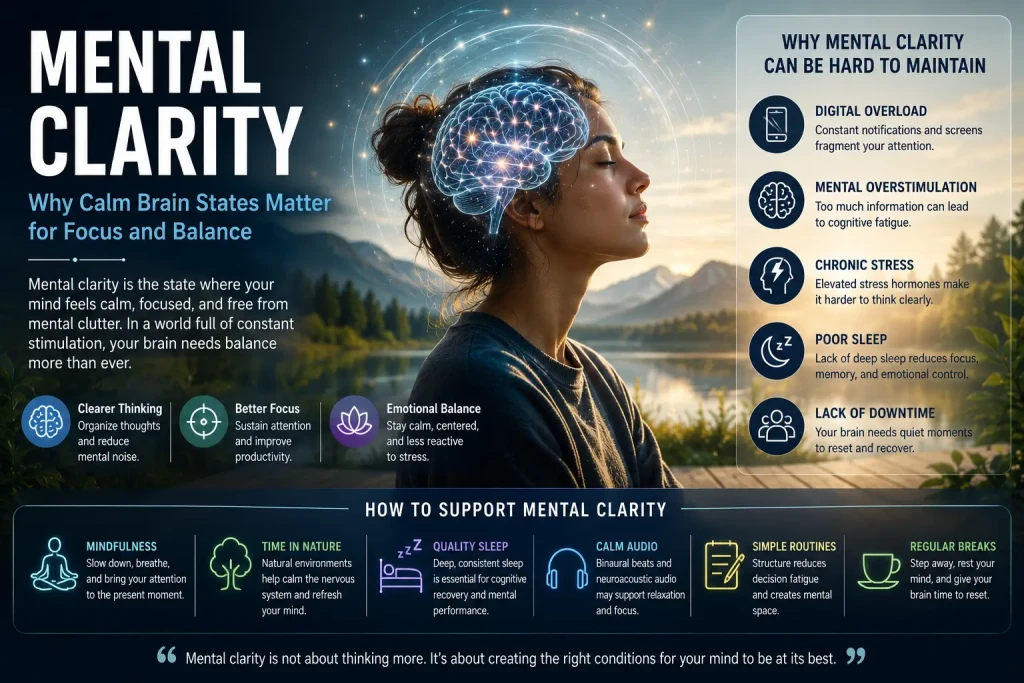
Long-term cognitive performance depends heavily on recovery.
Constant mental stimulation without adequate rest may contribute to:
- Mental fatigue
- Difficulty concentrating
- Reduced motivation
- Brain fog
- Attention overload
Healthy recovery habits may help support:
- Mental clarity
- Focus stability
- Emotional balance
- Cognitive endurance
🌙 Sleep and Learning
Sleep is strongly connected to attention, memory processing, and mental recovery.
Poor sleep quality may negatively influence:
- Concentration
- Reaction time
- Learning performance
- Emotional regulation
- Mental energy
This is one reason sleep optimization is commonly discussed in cognitive wellness research.
Related article:
Which Brain Waves Help You Sleep?
🎧 Focus Audio and Brainwave Entrainment
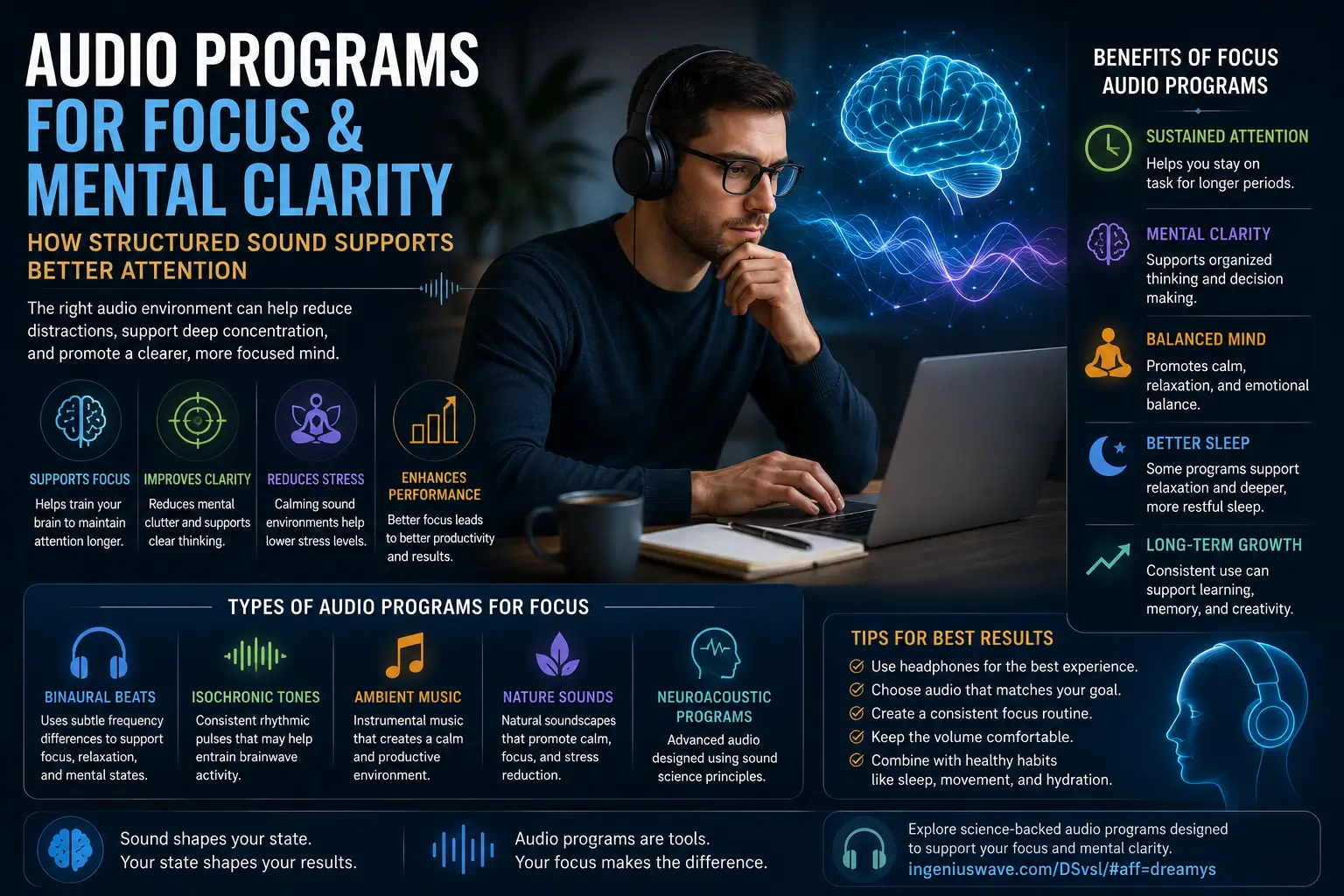
Some people use structured sound environments during focus or study sessions.
These systems may include:
- Binaural beats
- Isochronic tones
- Ambient soundscapes
- Rhythmic pulse audio
- Low-distraction focus environments
The theory behind many of these systems is connected to brainwave entrainment — the idea that rhythmic sensory stimulation may influence mental-state patterns.
Research in this area is still evolving, and experiences vary between individuals.
Related reading:
Brainwave Entrainment Explained
🏃 Movement and Cognitive Energy
Physical movement may also support cognitive wellness.
Exercise is commonly associated with:
- Improved mood
- Better sleep
- Stress reduction
- Mental energy
- Attention support
Even moderate daily activity may positively influence emotional and cognitive well-being over time.
📱 The Problem With Constant Multitasking
Many productivity problems are connected to attention fragmentation.
Frequent task switching may increase cognitive overload and reduce sustained concentration.
Because of this, many focus experts recommend:
- Single-task work sessions
- Reduced notifications
- Structured breaks
- Focused environments
- Mindful attention habits
Simple routines are often more sustainable than aggressive “biohacking” approaches.
🔬 What Does Research Actually Suggest?
Modern neuroscience does not support exaggerated claims about instantly becoming smarter or dramatically boosting intelligence through one technique.
However, research increasingly supports the importance of:
- Healthy sleep
- Stress management
- Attention habits
- Physical movement
- Mental engagement
- Emotional balance
Cognitive performance appears to develop gradually through consistent healthy routines rather than quick fixes.
🌊 Why Brain Training Audio Continues to Grow
As more people search for ways to improve focus and reduce distraction, structured audio environments continue growing in popularity.
Some systems combine ambient soundscapes with rhythmic pulse patterns inspired by focus and relaxation states.
One example is:
The Genius Wave audio program, which combines layered sound environments inspired by concentration and mindfulness concepts.
📌 Final Thoughts
Healthy cognitive performance depends on far more than motivation alone.
Sleep quality, stress management, focus habits, emotional wellness, and mental recovery all appear to play important roles in long-term concentration and productivity.
Although brainwave-oriented sound environments remain an evolving field, many people enjoy using structured audio sessions to create calmer and more focused work environments.
The strongest foundation for sustained cognitive performance still comes from balanced daily habits practiced consistently over time.
🔗 Related Articles
Related Posts

Stay Informed With the Latest & Most Important News
Previous Post
Next Post