
Now Reading: Mental Clarity: Why Calm Brain States Matter for Focus and Balance
-
01
Mental Clarity: Why Calm Brain States Matter for Focus and Balance
Mental Clarity: Why Calm Brain States Matter for Focus and Balance
Modern life rarely gives the brain time to slow down.
People move constantly between screens, notifications, multitasking, deadlines, conversations, and endless information streams.
As a result, many individuals no longer feel mentally clear — even when they are technically “resting.”
This is one reason discussions about mental clarity have become increasingly common.
People are not only searching for productivity.
Many are searching for:
- calmer thinking,
- reduced mental noise,
- better emotional balance,
- and more sustainable focus.
🧠 What Does Mental Clarity Actually Mean?
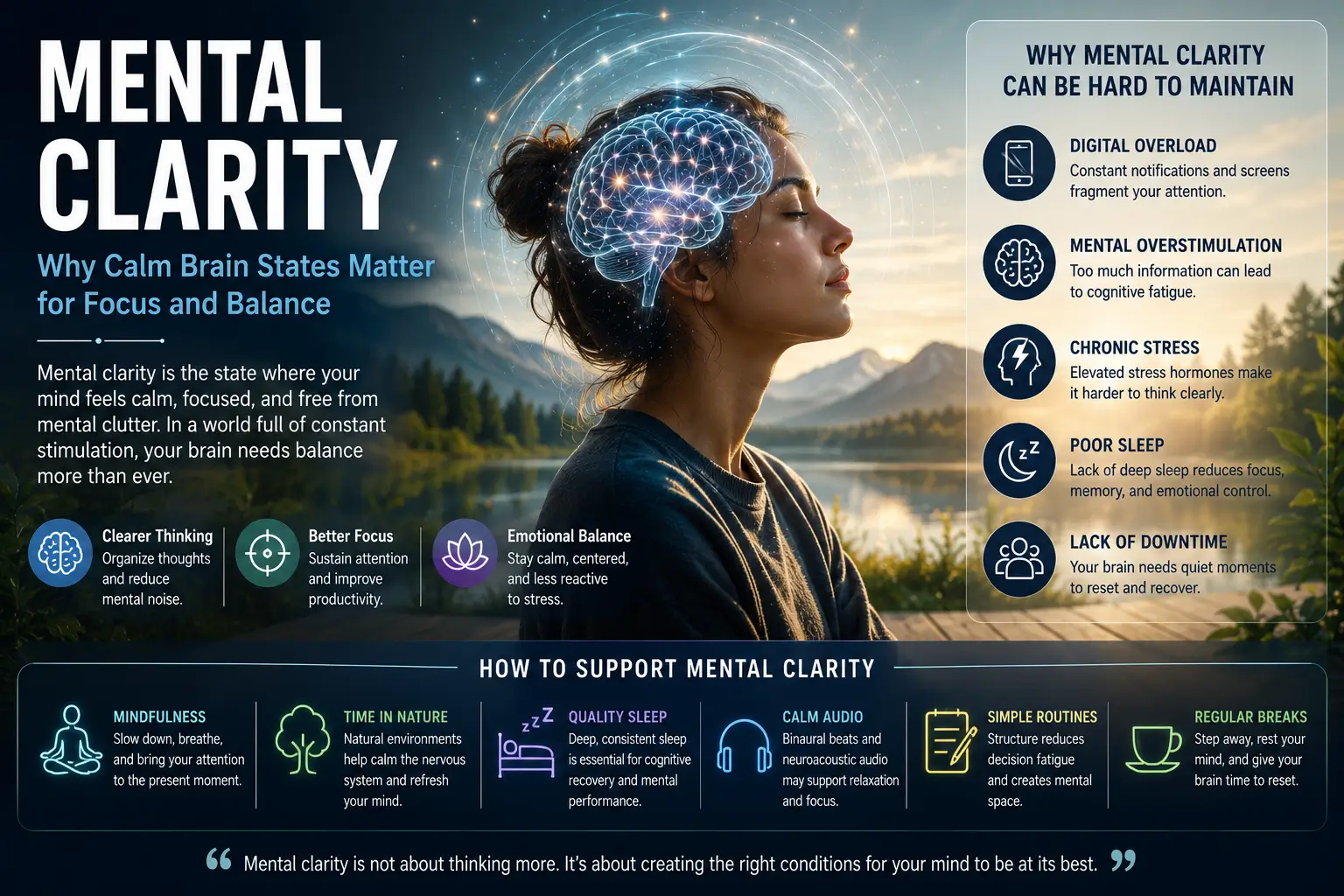
Mental clarity is often described as a state where thoughts feel more organized, calmer, and easier to process.
Instead of feeling mentally scattered or overstimulated, attention may feel:
- more stable,
- more present,
- and less emotionally reactive.
This does not mean the brain becomes “empty.”
Rather, it means mental activity may feel less chaotic and easier to manage.
📱 Why Overstimulation Reduces Mental Clarity
Modern environments constantly compete for attention.
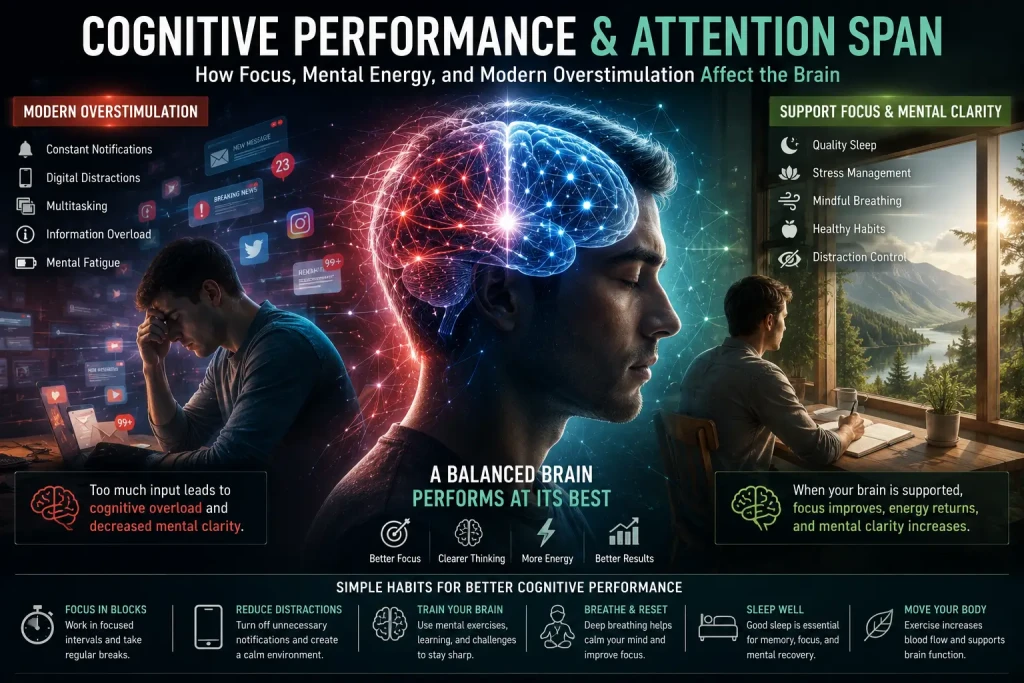
Notifications, multitasking, background noise, endless scrolling, and emotional stress can overload cognitive processing.
Related article: Modern Brain Overstimulation.
Over time, constant stimulation may contribute to:
- mental fatigue,
- attention fragmentation,
- difficulty focusing,
- and emotional exhaustion.
Many people today are not under-stimulated.
They are overwhelmed by nonstop input.
🌿 Calm Brain States and Focus
Interestingly, focus is not always connected to intensity.
Some of the healthiest forms of concentration feel calm rather than aggressive.
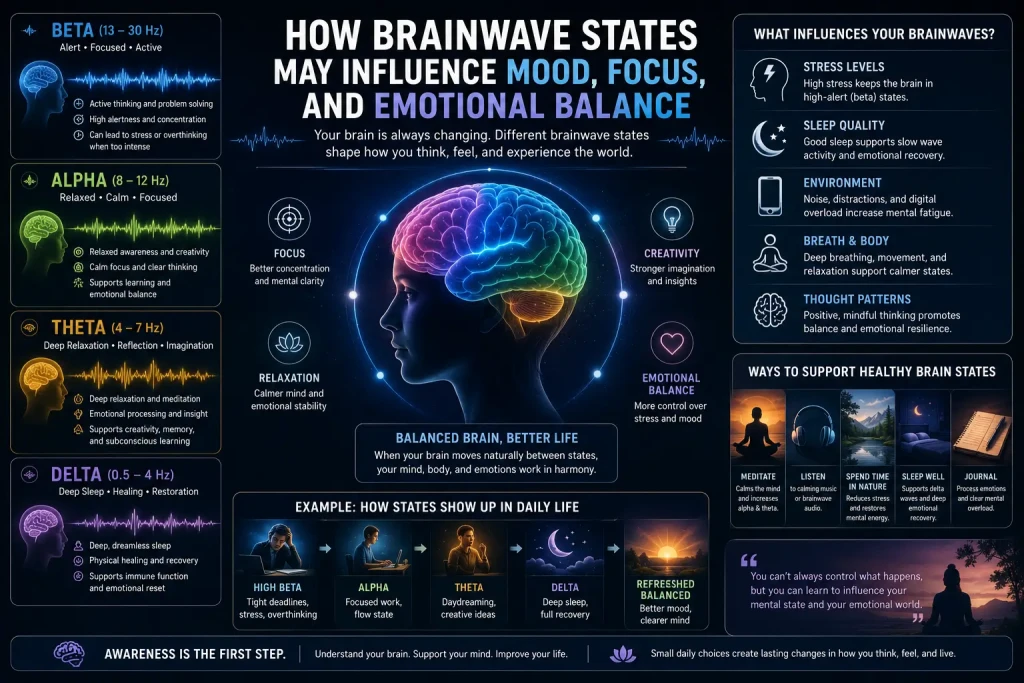
This is one reason discussions about calmer brain states often appear alongside topics involving:
- mindfulness,
- relaxed concentration,
- emotional regulation,
- and sustainable mental performance.
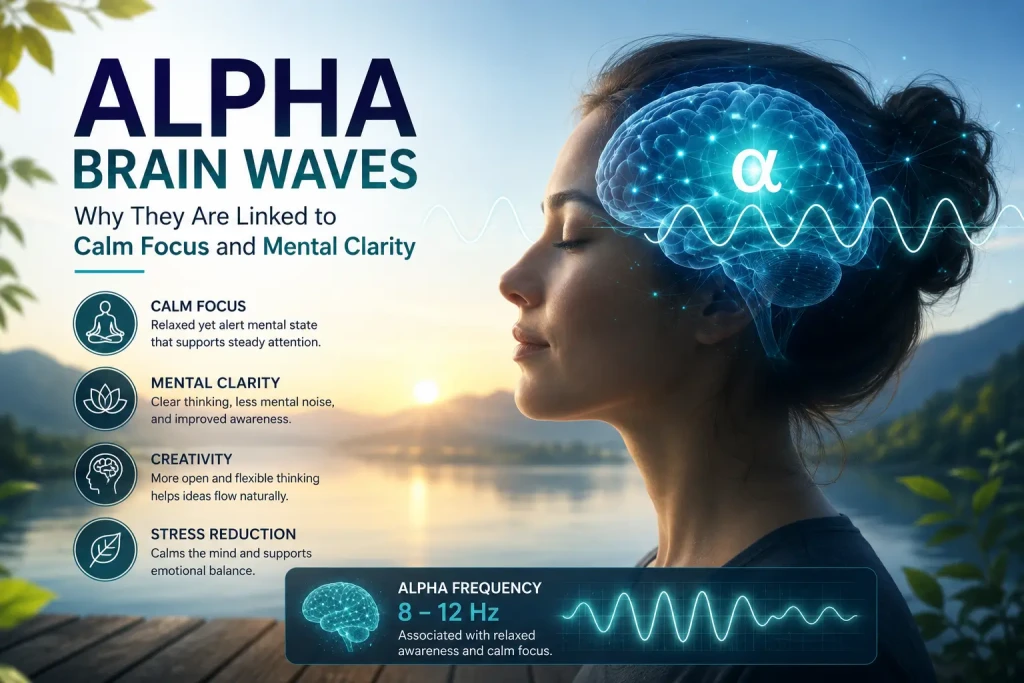
Related article: Alpha Brain Waves.
⚡ The Difference Between Alertness and Mental Chaos
Being mentally active is not necessarily the same as being mentally clear.
Some highly stimulated states may actually reduce cognitive efficiency by increasing stress and mental fragmentation.
Healthy focus often depends on balance between:
- attention,
- recovery,
- emotional regulation,
- and nervous system stability.
This is why recovery and rest remain essential parts of mental performance.
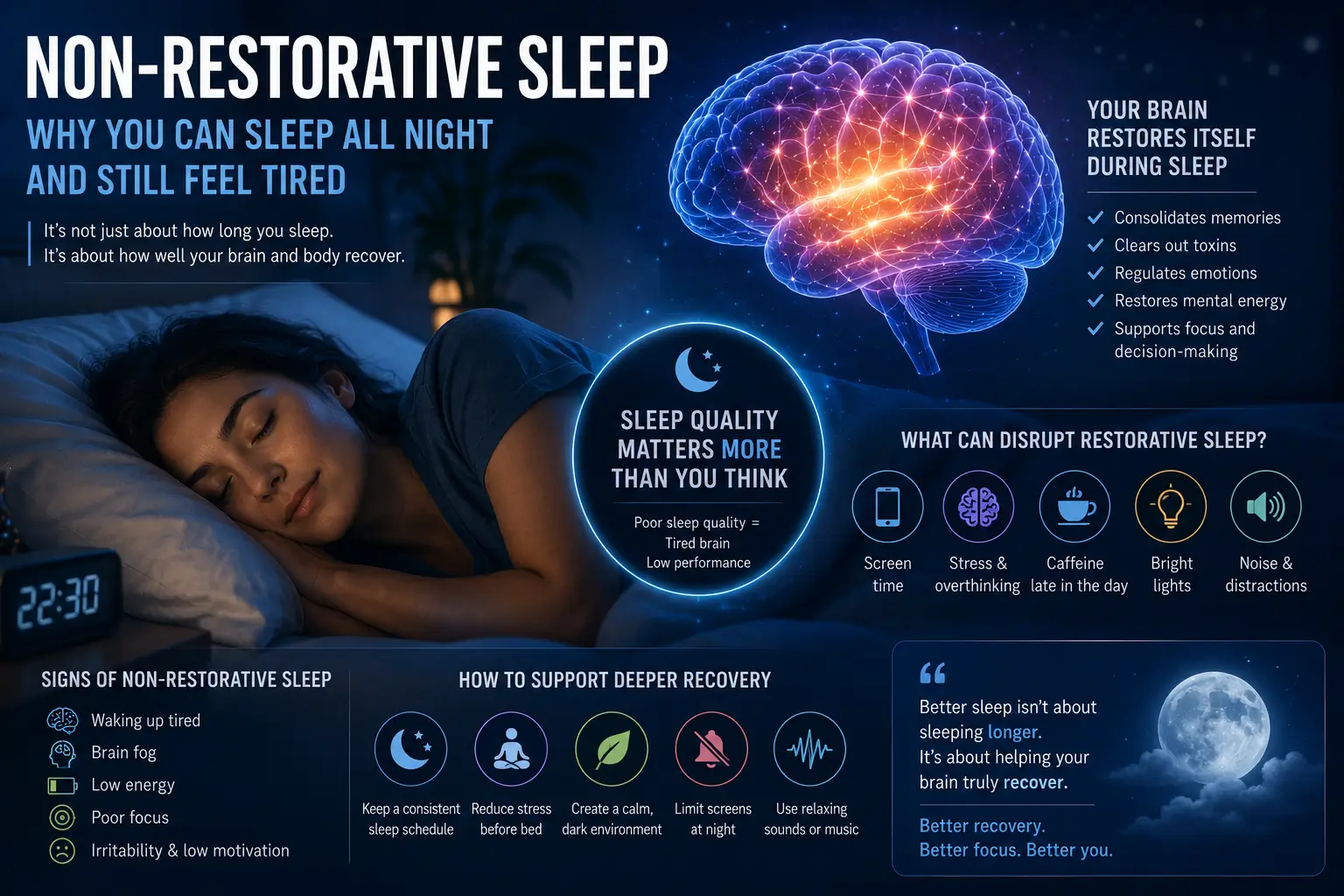
😴 Sleep and Cognitive Recovery
Mental clarity is strongly connected to sleep quality.
Without proper recovery, even simple tasks may begin feeling mentally exhausting.
Sleep supports:
- emotional regulation,
- attention quality,
- memory processing,
- and cognitive recovery.
Related article: Delta Waves for Sleep.
🧘 Mindfulness and Mental Balance
Many people explore mindfulness practices while trying to reduce mental overload.
These practices often encourage:
- slower breathing,
- reduced distraction,
- greater awareness,
- and calmer attention.
The goal is usually not perfection.
Instead, people often want to feel less mentally overwhelmed by constant stimulation.
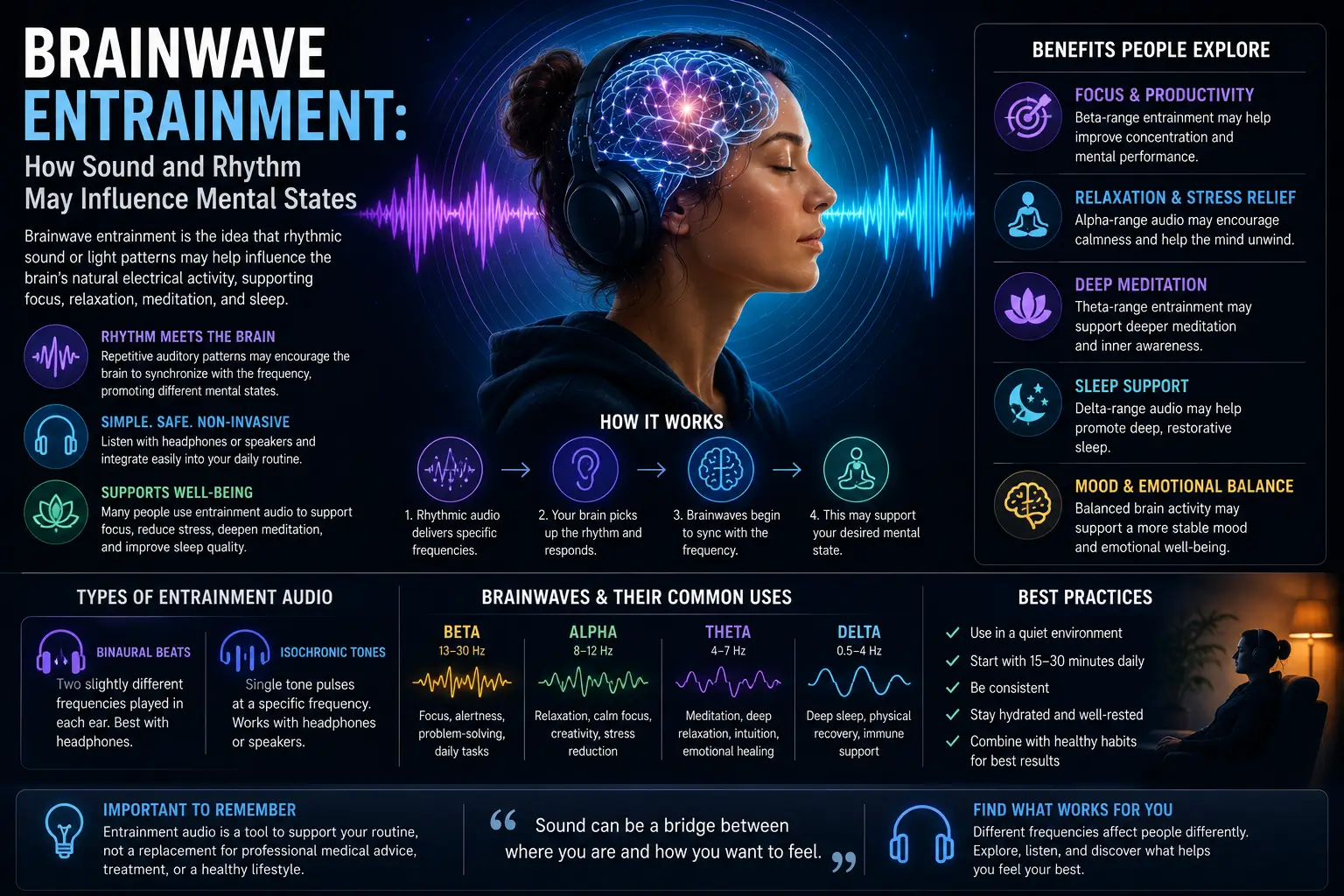
🎧 Audio Environments and Mental Clarity
Some individuals explore sound environments while trying to improve focus or relaxation.
These discussions may involve:
- binaural beats,
- ambient soundscapes,
- neuroacoustic audio,
- or calming listening environments.
Related article: The Science of Binaural Beats.
Others explore neuroacoustic audio experiences designed around calm focus, emotional balance, and cognitive recovery routines.
Still, sound experiences are highly individual, and different people respond differently to different environments.
⚠️ Common Misunderstandings About Mental Clarity
❌ “Mental Clarity Means Constant Productivity”
Healthy cognition is not about working nonstop without rest.
❌ “More Stimulation Improves Focus”
Excess stimulation may sometimes reduce concentration quality and emotional balance.
❌ “One Technique Fixes Everything”
Mental clarity depends on many factors, including:
- sleep,
- stress management,
- environment,
- recovery habits,
- and emotional health.
🌙 Recovery Is Part of Mental Performance
Modern culture often encourages constant optimization and nonstop productivity.
But sustainable focus usually depends on balance.
Without recovery, the brain may remain stuck in cycles of overstimulation and mental fatigue.
Sometimes improving mental clarity begins not with doing more — but with finally slowing down enough for the mind to recover.
🧠 Final Thoughts
Mental clarity continues attracting attention because many people are trying to navigate increasingly overstimulating environments.
While there is no single solution for cognitive balance, calmer mental environments and healthier recovery habits may play an important role in supporting focus, emotional regulation, and sustainable mental performance.
In many cases, mental clarity is less about becoming “superhuman” — and more about creating enough balance for the brain to function naturally again.
Related Articles
Related Posts
Stay Informed With the Latest & Most Important News
Previous Post
Next Post