
Now Reading: Mental Energy and Brain Activity: Why Focus, Recovery, and Attention Matter
-
01
Mental Energy and Brain Activity: Why Focus, Recovery, and Attention Matter
Mental Energy and Brain Activity: Why Focus, Recovery, and Attention Matter
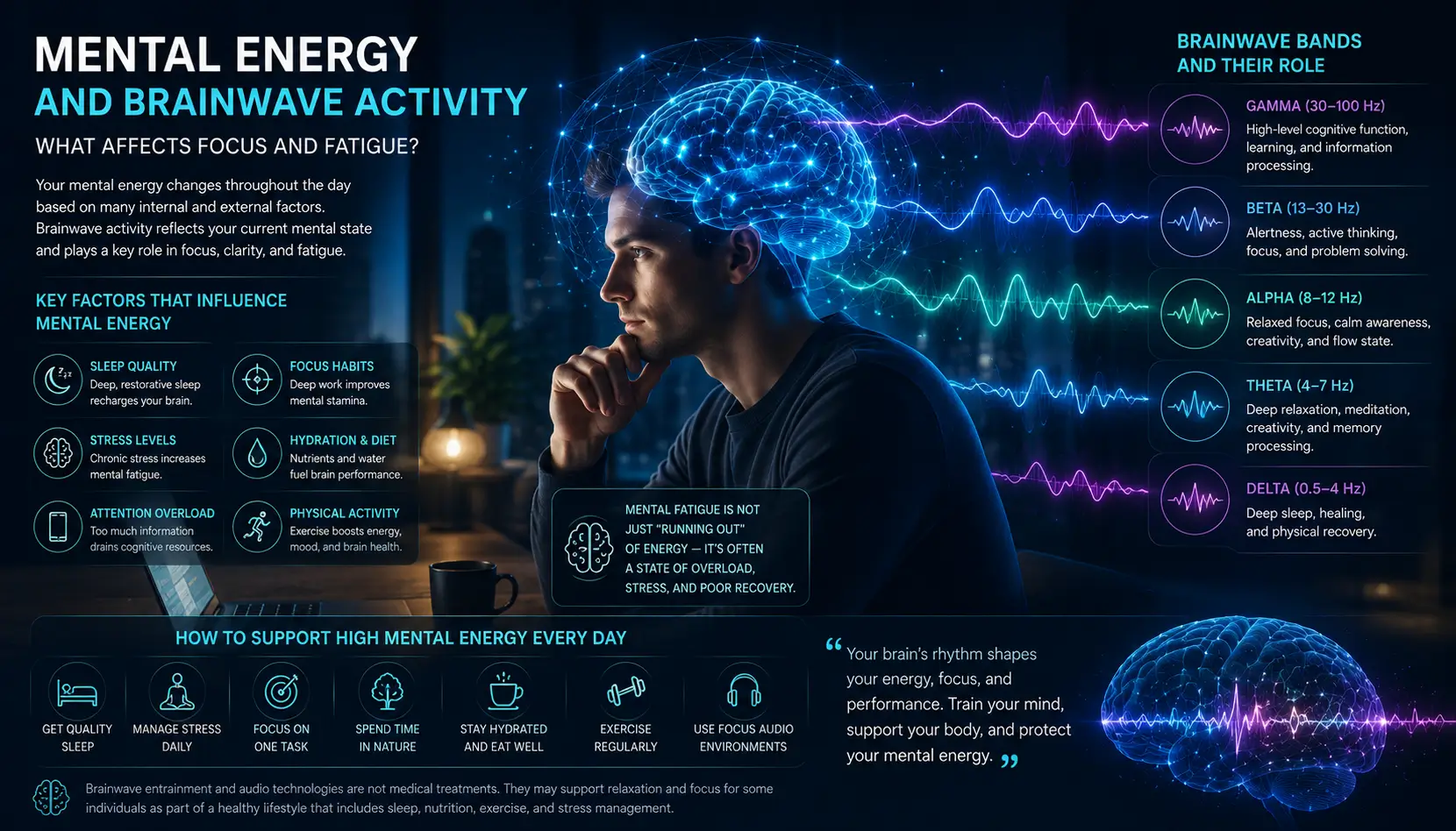
Mental energy is something most people experience every day, yet few stop to think about what it actually means.
Some mornings it feels easy to focus, make decisions, and stay productive. On other days, even simple tasks seem mentally exhausting.
This difference is not simply a matter of motivation.
Mental energy is influenced by a combination of attention, sleep quality, stress levels, recovery, brain activity, and daily habits.
Understanding how these factors interact can help explain why concentration sometimes feels effortless and why it sometimes disappears completely.
⚡ What Is Mental Energy?
Mental energy refers to the brain’s ability to maintain attention, process information, make decisions, and adapt to challenges.
Unlike physical energy, mental energy cannot be measured with a single number.
Instead, it reflects the combined performance of several cognitive systems working together.
When mental energy is high, people often experience:
- better concentration,
- faster decision-making,
- improved problem-solving,
- greater productivity,
- and reduced mental fatigue.
When mental energy is low, even routine tasks can feel demanding.
🧠 Brain Activity and Cognitive Performance
The brain is constantly active, even during periods of rest.
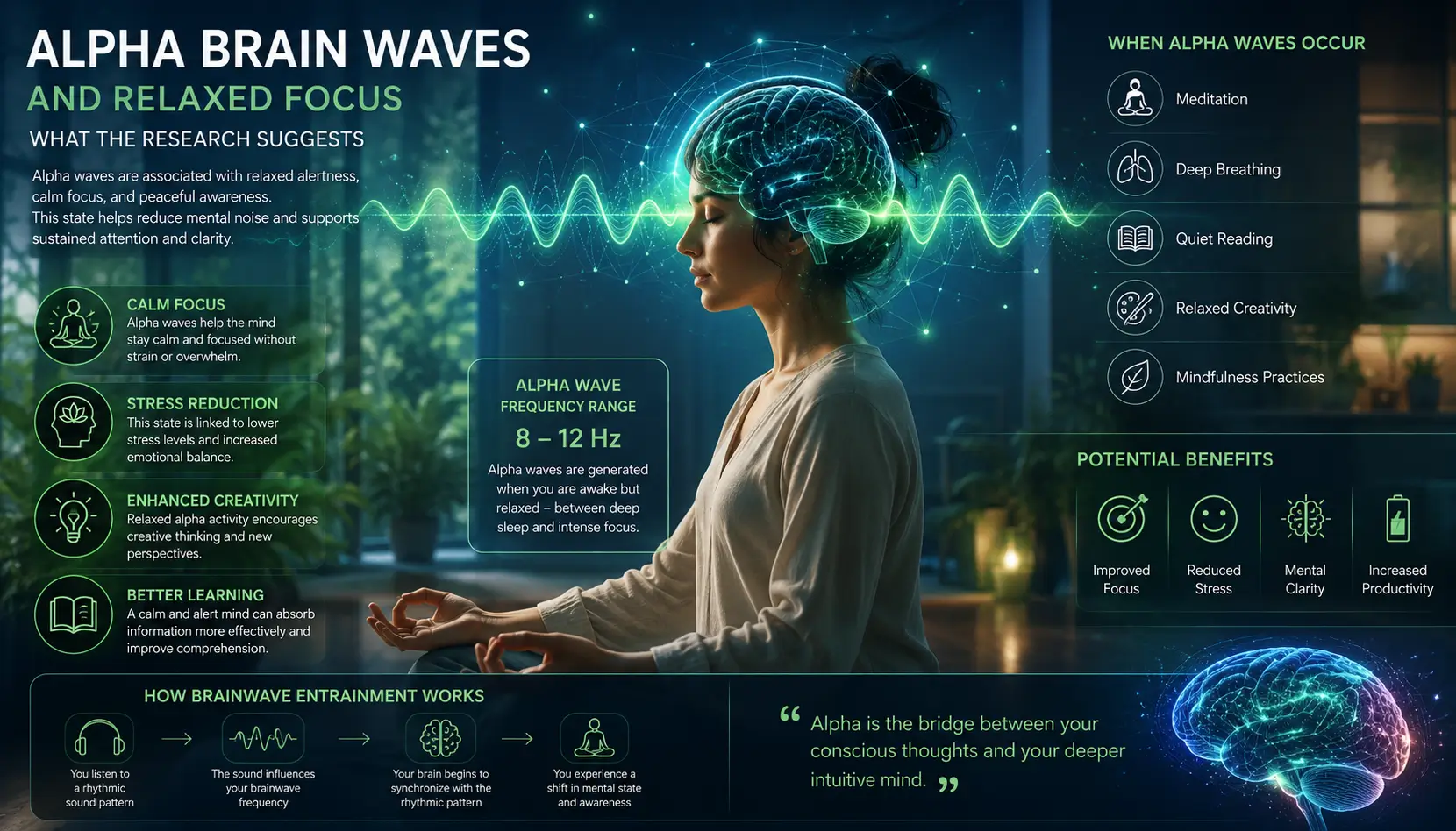
Different patterns of brain activity are associated with different mental states.
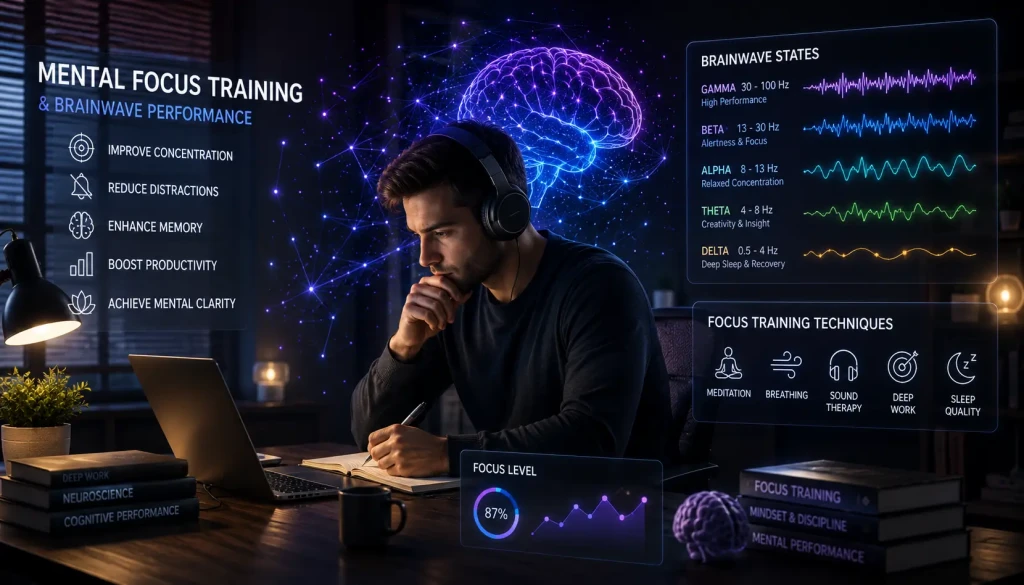
Researchers often describe these patterns using brainwave frequency ranges.
- Delta waves are commonly associated with deep sleep.
- Theta waves are often linked to creativity and relaxation.
- Alpha waves are associated with calm focus.
- Beta waves are connected to active thinking and problem-solving.
- Gamma waves are linked to learning and information processing.
These brain states are not fixed categories. Instead, the brain constantly shifts between them depending on the situation.
Related article: Types of Brain Waves.
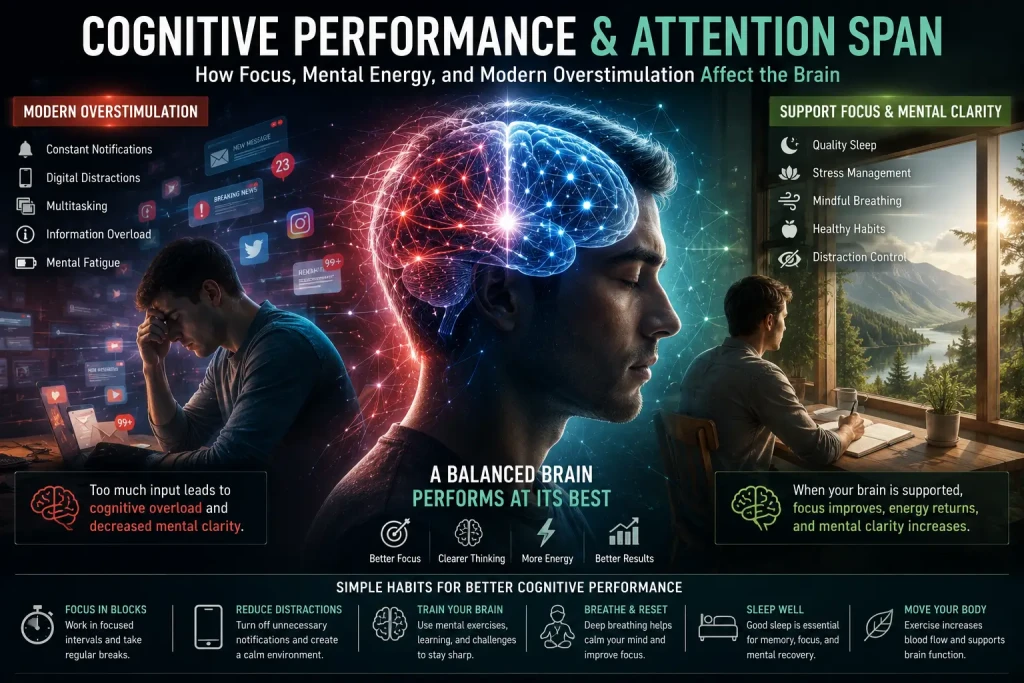
🎯 Attention Is a Limited Resource
Many people assume focus is simply a matter of discipline.
In reality, attention functions more like a limited resource.
Every decision, interruption, and distraction consumes cognitive resources.
As mental fatigue increases, maintaining concentration becomes more difficult.
This is one reason modern digital environments can feel exhausting.
Constant switching between tasks forces the brain to repeatedly reallocate attention.
Related article: Cognitive Performance and Attention Span.
😴 Sleep and Mental Energy
Sleep plays a critical role in restoring mental performance.
During sleep, the brain supports processes related to memory consolidation, recovery, and cognitive maintenance.
Poor sleep quality often leads to reduced focus, slower thinking, and increased mental fatigue.
For this reason, improving sleep habits may have a larger impact on productivity than many people realize.
Related article: Sleep Waves Explained.
📚 Mental Fatigue and Information Overload
The modern brain processes an enormous amount of information every day.
Emails, messages, news, social media, and work responsibilities all compete for attention.
When cognitive demands exceed available mental resources, mental fatigue begins to accumulate.
Common signs include:
- difficulty concentrating,
- forgetfulness,
- slower decision-making,
- reduced motivation,
- and increased distractibility.
Mental fatigue is not always a sign of laziness. Often it reflects an overloaded cognitive system.
🌿 Recovery Is Part of Performance
Many productivity discussions focus exclusively on working harder.
However, recovery is equally important.
The brain performs best when periods of effort are balanced with periods of restoration.
Recovery may include:
- quality sleep,
- exercise,
- time outdoors,
- mindfulness practices,
- or simply taking breaks from demanding cognitive tasks.
Without recovery, mental performance tends to decline over time.
Related article: Mental Resilience and Cognitive Recovery.
🎧 Can Audio Influence Mental States?
Researchers continue exploring how different audio environments may influence attention, relaxation, and cognitive performance.
Some individuals use ambient soundscapes, instrumental music, binaural beats, or other structured listening experiences while working or studying.
The purpose is often not to create dramatic changes but to support a more consistent focus environment.
Related article: Benefits of Binaural Beats.
⚠️ Common Myths About Mental Energy
❌ “Mental Energy Is Purely Motivation”
Motivation matters, but sleep, recovery, attention, stress, and cognitive load also influence performance.
❌ “More Work Always Means More Results”
Extended periods of effort without recovery often reduce effectiveness rather than improve it.
❌ “Productive People Never Feel Mentally Tired”
Everyone experiences mental fatigue. The difference is often how recovery and attention are managed.
🧘 Building Sustainable Mental Energy
Maintaining mental energy is usually less about finding shortcuts and more about creating sustainable habits.
Helpful strategies may include:
- protecting sleep quality,
- reducing unnecessary distractions,
- taking structured breaks,
- maintaining physical activity,
- and creating focused work environments.
Small improvements in these areas often produce larger long-term benefits than short-term productivity hacks.
🎧 Focus Routines and Neuroacoustic Listening
Many people create personal focus rituals before studying, working, or engaging in creative tasks.
These routines may involve breathing exercises, journaling, movement, meditation, or structured audio experiences.
Some individuals also explore neuroacoustic audio programs designed around focus, attention, and mental clarity as part of broader cognitive performance routines.
Individual experiences vary, and no single tool replaces consistent habits and recovery.
🧠 Final Thoughts
Mental energy is influenced by far more than motivation alone.
Attention, sleep, recovery, stress management, and brain activity all contribute to how effectively the mind performs.
Understanding these relationships can help people create healthier routines that support concentration, productivity, and long-term cognitive well-being.
Rather than chasing constant stimulation, sustainable mental performance often comes from balancing effort with recovery and protecting the brain’s limited attentional resources.
Related Articles
Related Posts
Stay Informed With the Latest & Most Important News
Previous Post
Next Post