
Now Reading: Theta Brain Waves Explained: What Neuroscience Says About Relaxation, Learning, and Creativity
-
01
Theta Brain Waves Explained: What Neuroscience Says About Relaxation, Learning, and Creativity
Theta Brain Waves Explained: What Neuroscience Says About Relaxation, Learning, and Creativity
Not every important brain state happens when we are fully alert.
Some of the most fascinating activity inside the brain occurs during quieter moments — when attention softens, external distractions fade, and the mind becomes more internally focused.
One brainwave pattern frequently discussed in neuroscience and cognitive research is theta activity.
Theta brain waves have long attracted attention because of their association with relaxation, memory processing, creativity, and certain transitional states of consciousness.
Although theta waves are often discussed in popular brainwave content, their role inside the brain is more nuanced than many simplified explanations suggest.
⚡ What Are Theta Brain Waves?
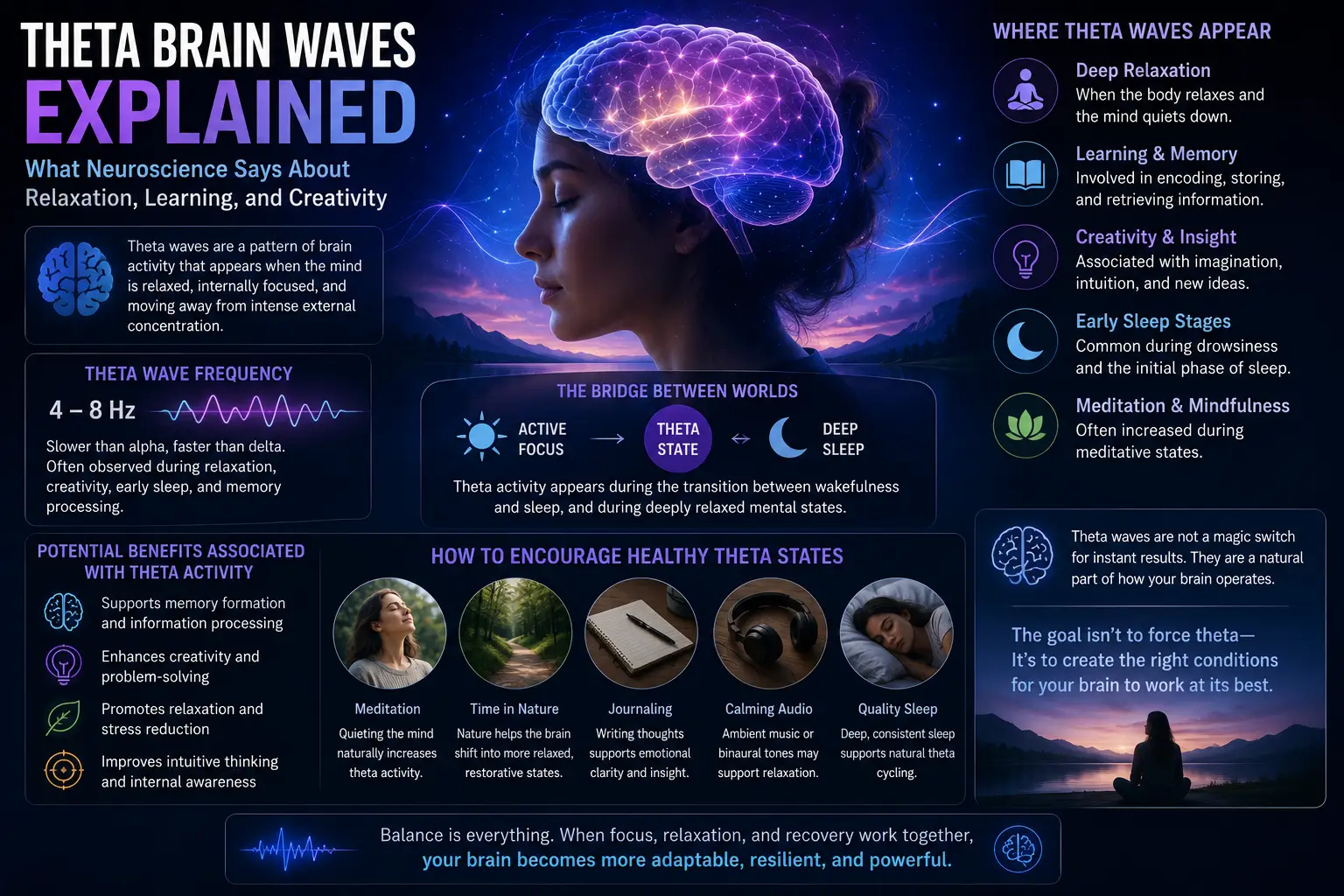
Theta waves are a category of brainwave activity typically observed at slower frequencies than alpha waves but faster than deep-sleep delta activity.
Researchers have observed theta patterns during various states including:
- deep relaxation,
- daydreaming,
- meditation,
- early stages of sleep,
- and certain memory-related processes.
The brain does not operate using only one type of brainwave at a time.
Instead, multiple patterns continuously interact depending on what a person is doing, thinking, or experiencing.

🌙 The Brain’s Transition Zone
Theta activity often becomes more noticeable during moments when consciousness begins shifting away from active external awareness.
This may happen while falling asleep, relaxing deeply, or entering states of reduced sensory engagement.
For this reason, theta waves are frequently associated with transitional mental states.
They exist between the fully alert demands of daily life and the deeper stages of sleep.
Related article: Hypnagogic States and the Brain.
📚 Theta Waves and Learning
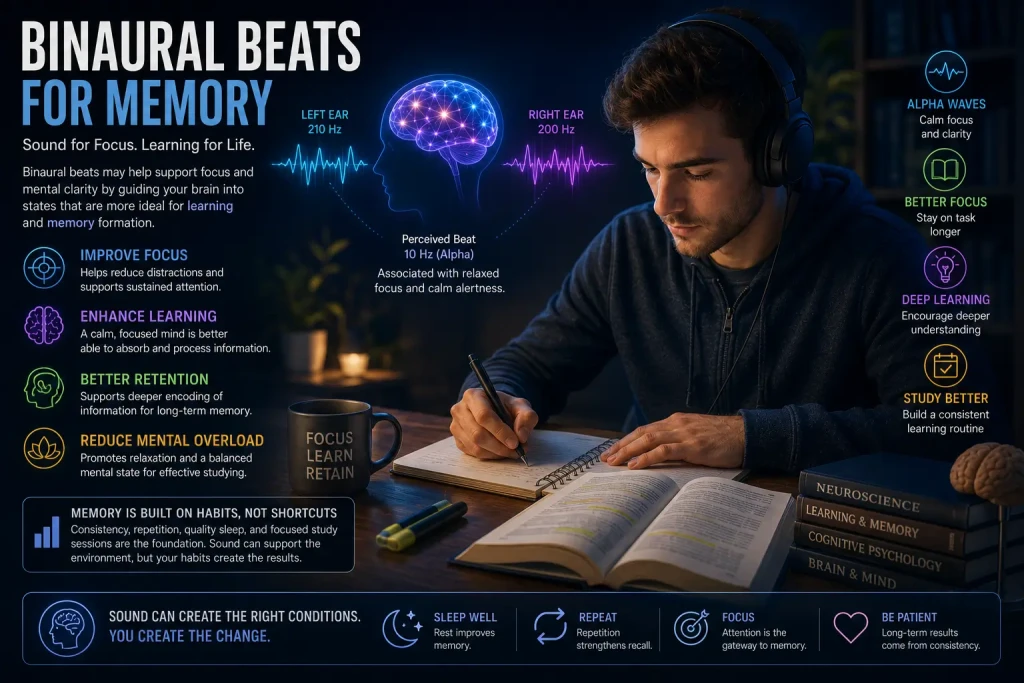
One reason scientists continue studying theta activity is its relationship with learning and memory.
The brain constantly processes, organizes, and stores information.
Researchers have observed theta patterns during tasks involving memory formation and information retrieval.
This does not mean theta waves automatically improve learning.
However, they appear to be involved in several processes connected to how information is handled inside the brain.
Related article: Memory Palace Techniques.
🎨 Why Creativity Is Often Linked To Theta Activity
Creative thinking does not always emerge from intense concentration.
Many people report their best ideas appearing during walks, showers, quiet reflection, or moments of relaxation.
Scientists continue exploring why certain mental states may encourage novel associations between ideas.
Theta activity is often discussed within these conversations because it frequently appears during less structured forms of thinking.
This may help explain why relaxed states sometimes feel surprisingly productive.
🧩 Relaxation Is Not The Same As Doing Nothing
Modern culture often treats rest as the absence of productivity.
The brain, however, remains highly active even during periods of relaxation.
Memory processing, emotional integration, creative association, and internal reflection may all continue when external demands decrease.
This is one reason recovery is increasingly recognized as an important part of cognitive performance rather than its opposite.
Related article: Non-Restorative Sleep.
📱 Constant Stimulation Makes Relaxation Harder
Many people spend their entire day moving between notifications, messages, videos, meetings, and endless information streams.
The brain rarely experiences extended periods without external input.
As a result, genuinely relaxed mental states may feel less common than they once were.
This does not mean technology is harmful.
It simply highlights how modern environments continuously compete for attention.
Related article: Sensory Overload and the Brain.
🎯 Theta Activity and Cognitive Recovery
Focus and productivity receive most of the attention in modern performance discussions.
Recovery often receives far less.
Yet cognitive systems depend heavily on opportunities to rest, reset, and process information.
Theta activity is frequently discussed in relation to these quieter aspects of brain function.
While high-performance thinking is important, sustainable mental performance also depends on recovery.
Related article: Cognitive Performance and Attention Span.
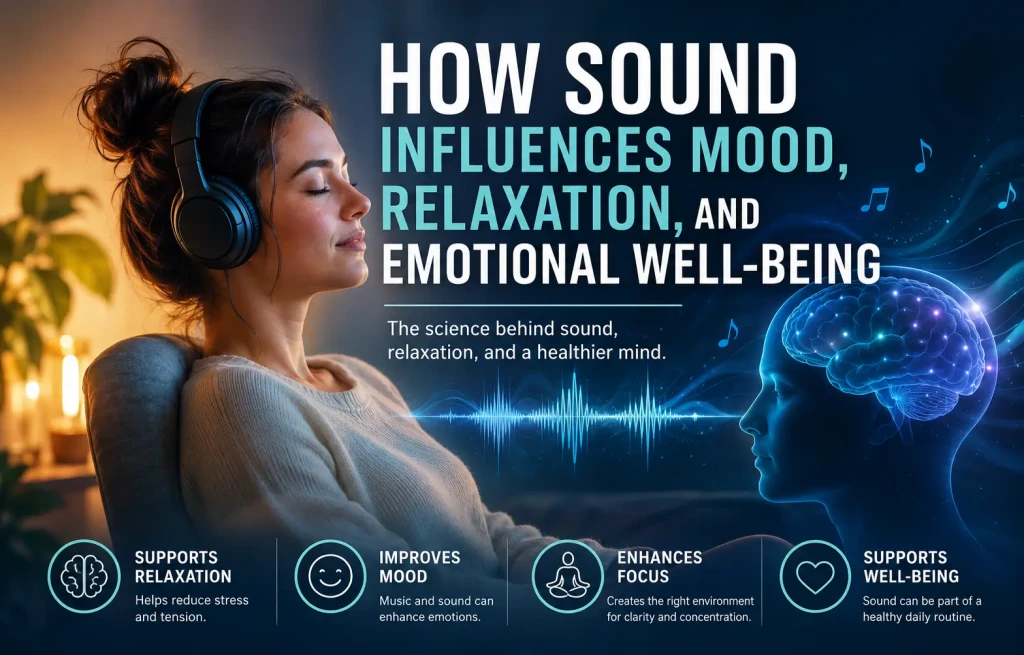
🎧 Audio and Relaxed Mental States
The brain continuously responds to sound environments.
Some individuals prefer silence while relaxing.
Others use ambient sound, meditation music, or structured audio experiences.
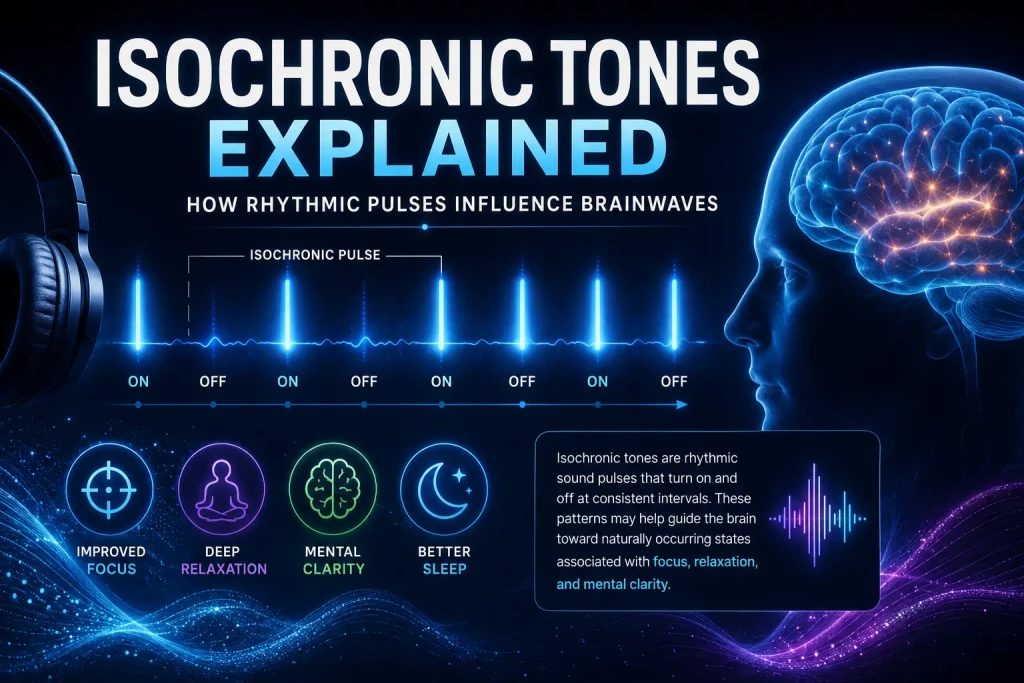
Because theta activity is often associated with relaxed states, it frequently appears in discussions surrounding meditation and cognitive recovery.
Some people also explore audio environments designed around relaxation, focus, and mental clarity as part of broader wellness routines.
⚠️ Common Misunderstandings About Theta Waves
❌ “Theta Waves Automatically Create Creativity”
Creativity involves many cognitive systems working together. Brainwaves represent only one part of a much larger process.
❌ “More Theta Is Always Better”
The brain functions through balance between multiple neural systems rather than maximizing a single brainwave pattern.
❌ “Theta Activity Means You Are Sleeping”
Theta waves can appear during wakefulness, relaxation, learning, meditation, and transitional states between wakefulness and sleep.
🌿 The Value Of Quiet Mental States
Many discussions about performance focus entirely on doing more, learning faster, and staying productive longer.
Theta activity reminds us that the brain also benefits from quieter modes of operation.
Reflection, creativity, recovery, and memory processing all contribute to cognitive health.
Sometimes progress happens not when the brain is working harder, but when it is given space to work differently.
🧠 Final Thoughts
Theta brain waves remain one of the most intriguing subjects in modern neuroscience.
Researchers continue studying their relationship with learning, memory, relaxation, creativity, and consciousness.
Although many questions remain unanswered, theta activity provides valuable insight into how the brain operates beyond everyday focused attention.
Understanding these quieter mental states may help people appreciate that cognitive performance depends not only on focus, but also on recovery, reflection, and balance.
Related Articles
Related Posts
Stay Informed With the Latest & Most Important News
Previous Post
Next Post