
Now Reading: Gamma Brain Waves: What They Are and Why They Matter for Focus
-
01
Gamma Brain Waves: What They Are and Why They Matter for Focus
Gamma Brain Waves: What They Are and Why They Matter for Focus
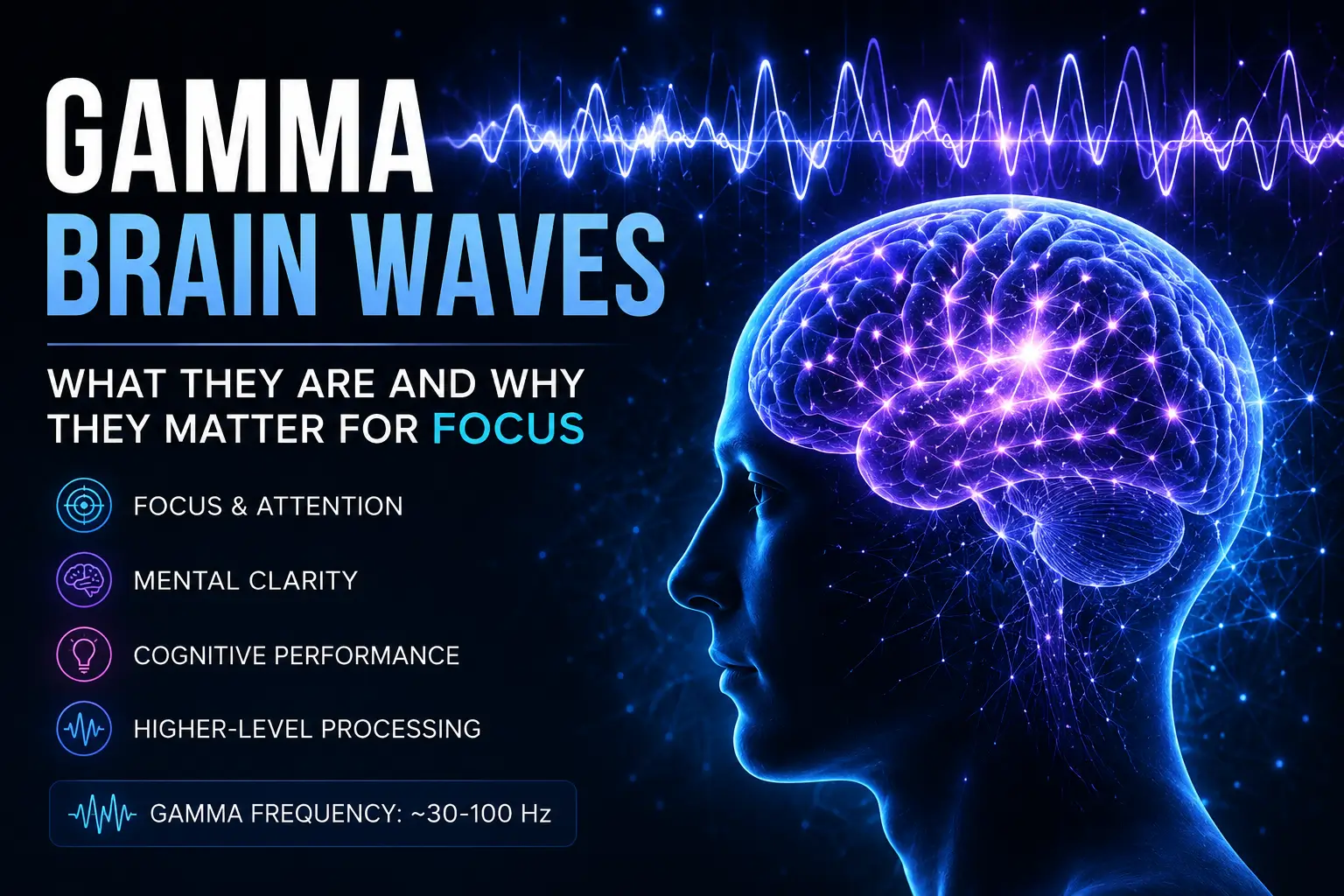
The human brain is constantly active.
Even during sleep, different electrical patterns continue moving across networks of neurons.
These patterns are commonly referred to as brain waves, and researchers categorize them into several frequency ranges associated with different mental states.
One of the most discussed categories is gamma brain waves.
Gamma activity is often linked to:
- focused attention,
- information processing,
- cognitive performance,
- and heightened mental engagement.
In recent years, interest in gamma waves has expanded far beyond neuroscience labs.
Today, people frequently search for gamma-related topics while exploring:
- focus improvement,
- meditation,
- mental clarity,
- and brainwave audio environments.
⚡ What Are Gamma Brain Waves?
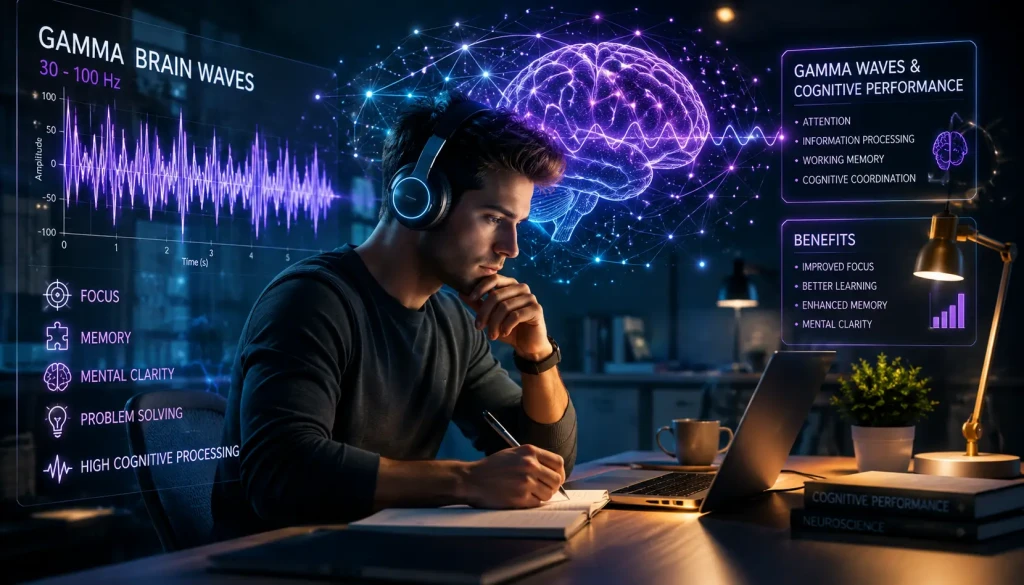
Gamma brain waves are among the fastest commonly discussed brainwave frequencies.
They are typically associated with periods of active mental processing and concentrated attention.
Researchers studying EEG activity often observe gamma patterns during tasks involving:
- learning,
- problem-solving,
- memory integration,
- and intense concentration.
Unlike slower brainwave states commonly associated with deep relaxation or sleep, gamma activity is generally discussed in relation to highly engaged mental states.
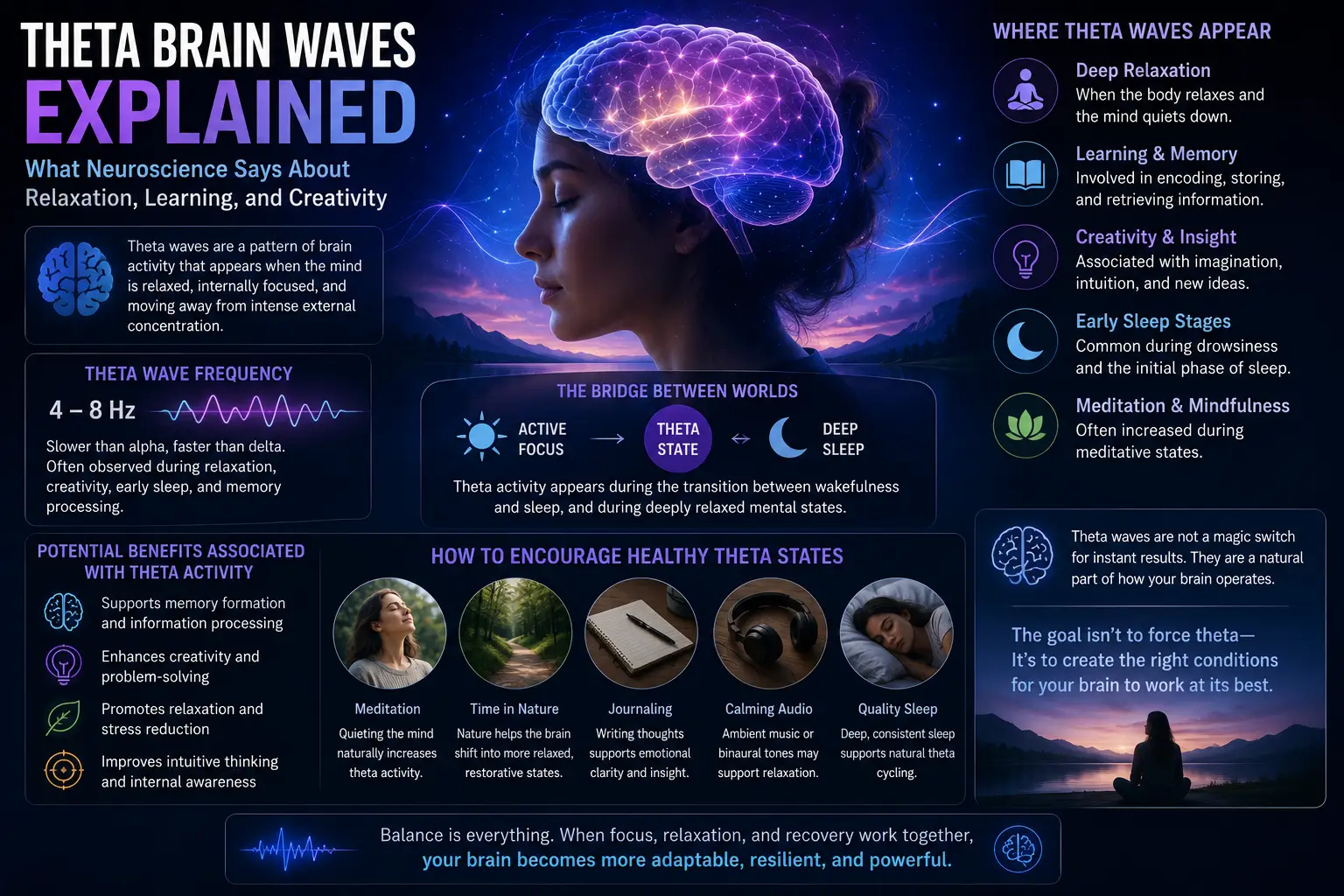
Related article: Types of Brain Waves.
🧠 Why Gamma Waves Attract So Much Attention
Modern life places constant demands on attention.
People increasingly search for ways to:
- stay mentally sharp,
- reduce distraction,
- improve concentration,
- and maintain cognitive energy.
This is one reason gamma-related discussions have become more popular online.
Many individuals are curious about how different brainwave states may relate to:
- mental performance,
- deep work,
- focus routines,
- and learning efficiency.
📚 Gamma Activity and Cognitive Processing
Researchers often associate gamma activity with the brain’s ability to integrate information across multiple regions.
In simplified terms, gamma patterns are sometimes discussed as part of how the brain coordinates complex mental activity.
This does not mean gamma waves automatically create intelligence or instant cognitive enhancement.
However, gamma activity remains an important area of neuroscience research because of its connection to attention and information processing.
🎯 Focus, Attention, and Mental Engagement
Some people describe highly focused states as feeling mentally “locked in.”
During these periods:
- distractions fade,
- attention narrows,
- and cognitive effort becomes more efficient.
Discussions about gamma brain waves frequently appear alongside conversations about:
- flow states,
- deep focus,
- productivity,
- and mental endurance.
Related article: Flow State Brainwaves.
🧘 Meditation and Gamma Brain Waves
Some meditation research has explored links between experienced meditators and increased gamma activity during certain practices.
This has contributed to growing public interest in gamma-related mental states.
However, it is important to avoid exaggerated claims.
Meditation itself involves many factors beyond brainwave discussions alone, including:
- attention training,
- stress reduction,
- breathing regulation,
- and emotional awareness.
🎧 Gamma Audio and Brainwave Entrainment Discussions
Some people explore audio environments associated with gamma frequencies.
These discussions often involve:
- binaural beats,
- rhythmic audio stimulation,
- or focus-oriented sound environments.
Related article: The Science of Binaural Beats.
Others explore neuroacoustic audio tools designed around focus, relaxation, and cognitive performance routines.
Still, sound experiences affect individuals differently, and no single audio approach works identically for everyone.
⚠️ The Problem With “Super Brain” Claims
Online discussions about gamma waves sometimes become exaggerated.
❌ “Gamma Waves Unlock Hidden Brain Powers”
There is no evidence that simply listening to a frequency instantly transforms cognitive ability.
❌ “One Frequency Fixes Everything”
Mental performance depends on many factors, including:
- sleep quality,
- stress levels,
- focus habits,
- physical health,
- and environment.
❌ “Higher Frequency Always Means Better”
Different brainwave states serve different purposes.
The brain naturally shifts between multiple states throughout the day.
🌙 Mental Recovery Still Matters
Many people focus heavily on productivity while ignoring recovery.
But concentration quality is strongly connected to:
- sleep,
- stress management,
- mental recovery,
- and emotional balance.
Without proper recovery, sustained focus becomes much harder.
Related article: Modern Brain Overstimulation.
🧠 Final Thoughts
Gamma brain waves continue attracting attention because they are often associated with focused mental activity and cognitive engagement.
While internet discussions sometimes exaggerate their effects, gamma-related research remains an important area within neuroscience and attention studies.
For most people, the real goal is not chasing “superhuman brain states.”
It is creating healthier environments for sustained attention, mental clarity, and balanced cognitive performance.
Related Articles
Related Posts
Stay Informed With the Latest & Most Important News
Previous Post
Next Post