
Now Reading: ADHD and Binaural Beats: Can Sound Help With Focus and Mental Overload?
-
01
ADHD and Binaural Beats: Can Sound Help With Focus and Mental Overload?
ADHD and Binaural Beats: Can Sound Help With Focus and Mental Overload?
Many people with ADHD describe the same frustrating experience:
The brain does not always feel “slow.”
It feels too active.
Too many thoughts.
Too many distractions.
Too many mental tabs open at the same time.
Even simple tasks can feel difficult to begin when attention constantly shifts toward new stimulation.
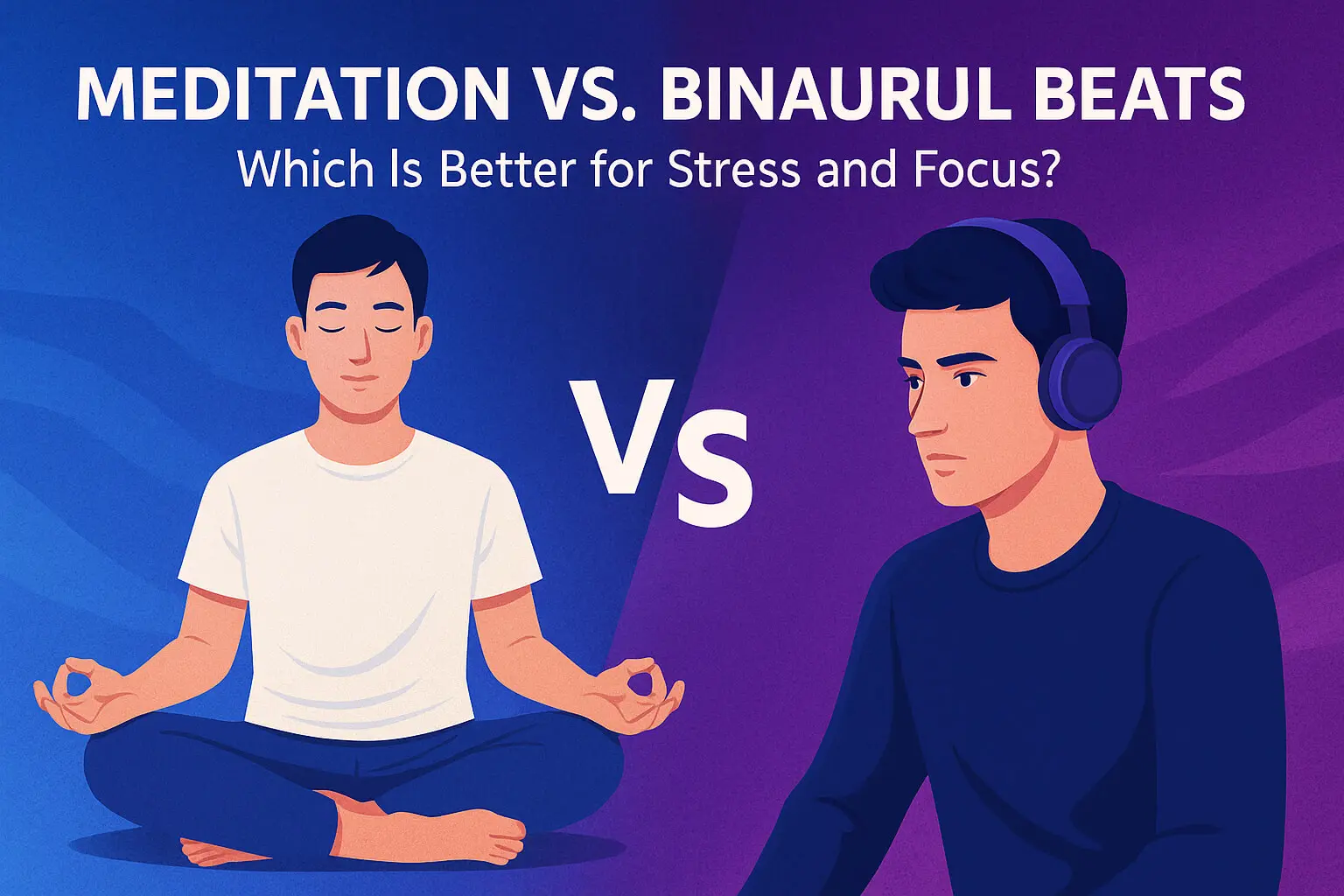
This is one reason some individuals explore tools like binaural beats, ambient focus audio, and structured sound environments as part of their concentration routines.
But can binaural beats actually help ADHD?
The honest answer is more nuanced than many exaggerated internet claims suggest.
🎧 What Are Binaural Beats?
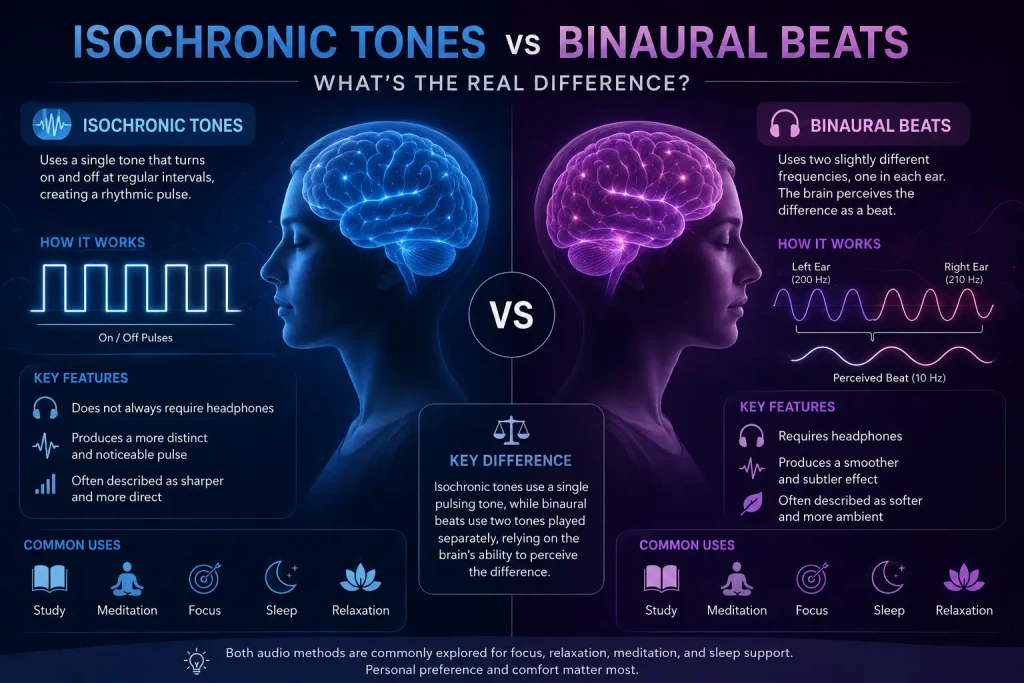
Binaural beats are an auditory illusion created when two slightly different frequencies are played separately into each ear.
For example:
- the left ear hears 200 Hz,
- the right ear hears 210 Hz.
The brain processes the difference between them as a rhythmic pulse.
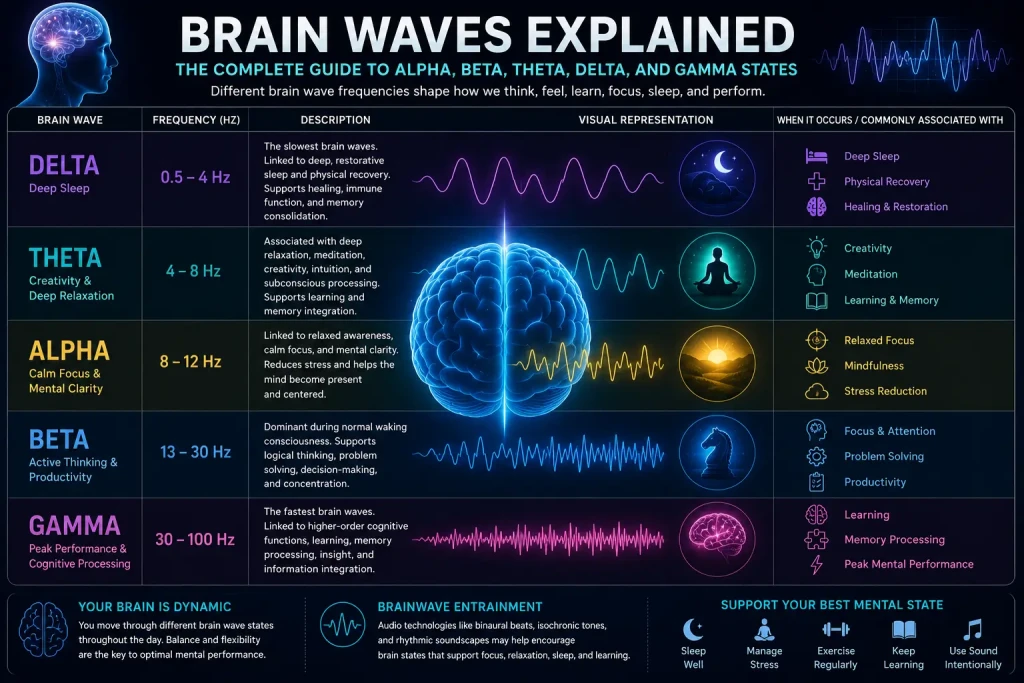
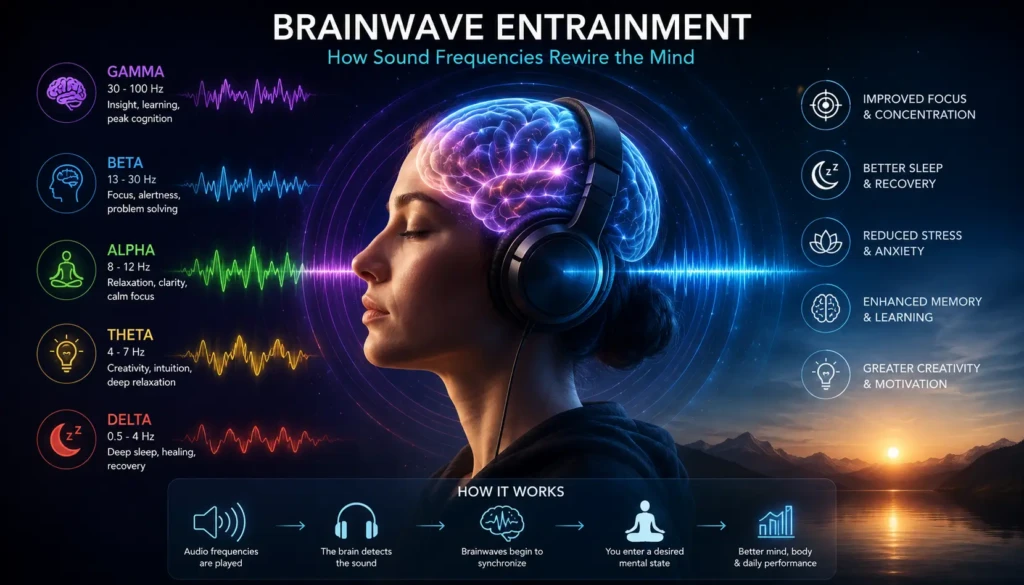
Different frequency ranges are often associated with different mental states such as relaxation, alertness, focus, or meditation.
This concept is commonly linked with brainwave entrainment, where rhythmic sound patterns may influence how the brain responds to auditory stimulation.
For a full explanation, read our guide to brainwave entrainment and mental states.
⚡ Why ADHD Brains Often Struggle With Focus
ADHD is complex.
It is not simply “being distracted.”
Many people with ADHD experience:
- difficulty regulating attention,
- mental restlessness,
- impulsivity,
- task-switching problems,
- overstimulation,
- or difficulty maintaining consistent focus.
Ironically, many ADHD individuals can focus intensely on stimulating activities while struggling with tasks that feel repetitive, slow, or mentally under-engaging.
This is why some people look for environmental tools that may help create a steadier mental state before work or studying.
🧠 Can Binaural Beats Help ADHD?
Some people report that binaural beats help them:
- reduce mental noise,
- transition into work more easily,
- stay calmer while studying,
- feel less mentally scattered,
- or maintain concentration for longer periods.
However, it is important to stay realistic.
Binaural beats are not a cure for ADHD.
Research in this area is still limited, and results vary significantly between individuals.
Some listeners notice meaningful improvements in focus routines.
Others notice little difference.
The strongest benefits may come from using audio as part of a larger focus environment rather than expecting the sound alone to “fix” attention problems.
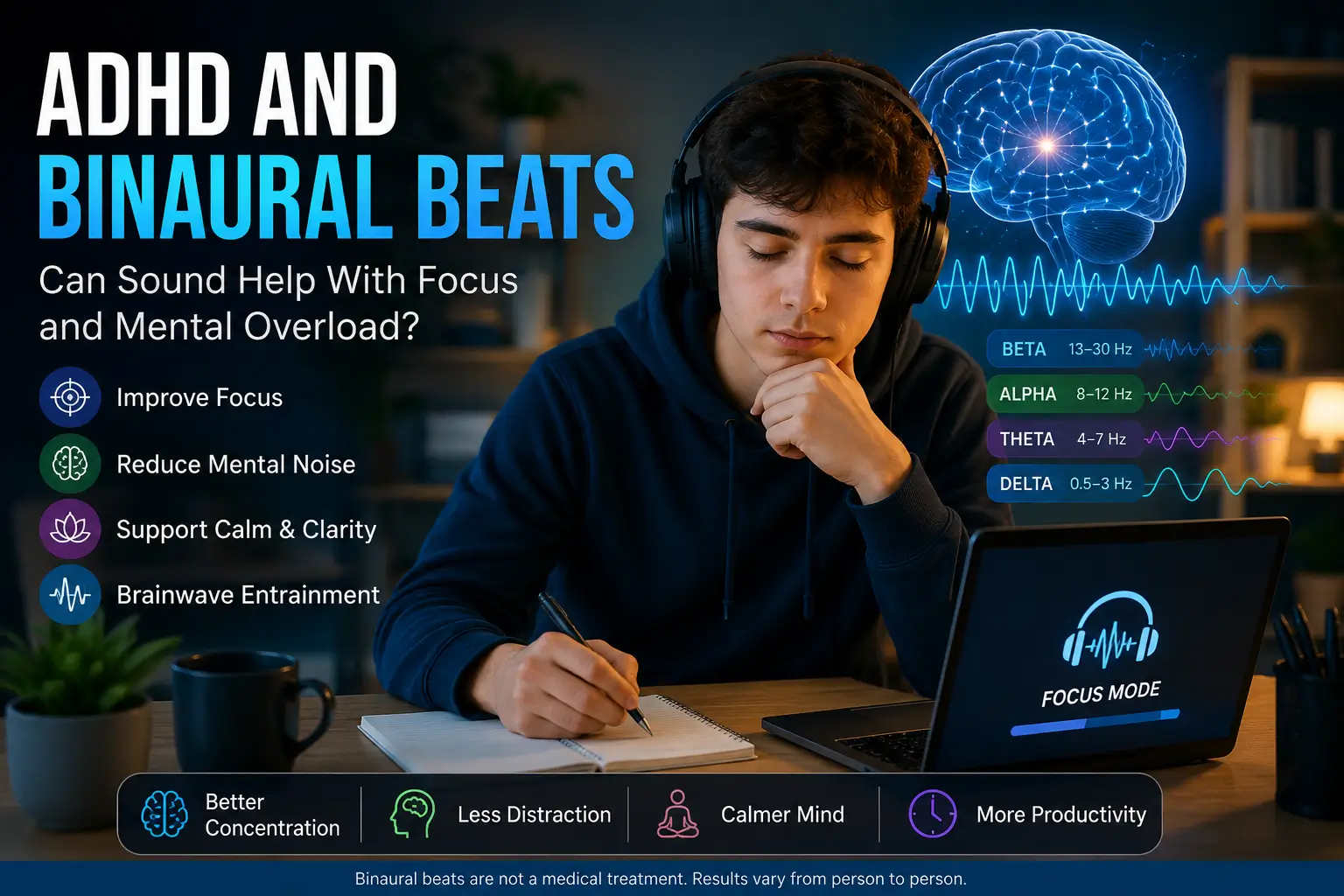
🌊 Which Brainwave States Are Usually Associated With Focus?
Different binaural beat tracks are often designed around different frequency ranges.
🔵 Beta Waves
Beta activity is commonly associated with active thinking, concentration, and alertness.
Some focus-oriented binaural tracks use beta-range stimulation during studying or work sessions.
Related guide: Beta Waves and Motivation.
🟢 Alpha Waves
Alpha waves are often linked with calm focus and reduced mental tension.
Some individuals with ADHD prefer alpha-style audio because overstimulation itself can make concentration harder.
Related article: Alpha Brain Waves and Calm Focus.
🟣 Theta Waves
Theta-focused audio is more commonly associated with deep relaxation, meditation, creativity, and mental decompression.
These tracks may feel calming for some listeners but too sleepy for active studying.
Related guide: Theta Waves and Sleep.
📚 What Research Actually Says
Research into binaural beats and attention is still developing.
Some small studies suggest rhythmic audio stimulation may influence relaxation, mood, or aspects of attention in certain situations.
However, the evidence is not strong enough to claim that binaural beats are a medically proven ADHD treatment.
This distinction matters.
There is a difference between:
- using sound as a supportive focus environment,
- and claiming it medically treats neurological conditions.
Responsible use means keeping expectations realistic.
🎧 Why Some ADHD Listeners Still Find Audio Helpful
Even if the science is still evolving, structured audio may still help some individuals indirectly.
For example, binaural beats may:
- reduce environmental distraction,
- mask background noise,
- create a consistent study atmosphere,
- support transition into work mode,
- or act as a mental cue for concentration.
Many people with ADHD benefit from routines and environmental structure.
Audio can become part of that structure.
📵 Building a Better Focus Environment
Binaural beats usually work best when combined with healthier attention habits.
Helpful strategies may include:
- reducing notifications,
- using time-blocked work sessions,
- creating quieter environments,
- using headphones,
- taking movement breaks,
- improving sleep consistency,
- and reducing multitasking.
Audio should support focus habits — not replace them.
🎵 Neuroacoustic Audio and Focus Routines
Some individuals also experiment with structured neuroacoustic focus audio environments designed to support concentration, relaxation, and mental recovery routines.
These systems are usually used as part of a broader productivity or wellness practice rather than as standalone medical solutions.
The most important factor is consistency.
A calm, repeatable environment often matters more than chasing “perfect frequencies.”
🚫 Common Mistakes People Make
Expecting Instant Results
Some people expect binaural beats to create dramatic changes immediately.
In reality, effects are often subtle and highly individual.
Using Audio While Constantly Multitasking
If you are switching between social media, messages, videos, and work every few seconds, the audio may not help much.
Focus still requires intentional attention management.
Listening at Excessively Loud Volumes
Brainwave audio should be comfortable, not overwhelming.
Louder does not mean better.
🧩 A Simple ADHD Focus Routine
Some people use a routine like this:
- choose one task only,
- put the phone away,
- use headphones,
- play a focus-oriented audio track,
- work for 20–30 minutes,
- take a short movement break,
- repeat.
The structure itself may become just as important as the audio.
🧠 Final Thoughts
Binaural beats are not a miracle ADHD solution.
But some people do find them useful as part of a calmer and more structured focus environment.
The biggest benefit may not come from the frequencies alone.
It may come from creating a repeatable mental routine that reduces distraction and helps the brain transition into concentration more intentionally.
Used realistically, sound-based focus tools may support studying, deep work, relaxation, and mental organization for some listeners.
The key is balance:
healthy routines, realistic expectations, and an environment that makes attention easier to maintain.
Related Articles
Related Posts
Stay Informed With the Latest & Most Important News
Previous Post
Next Post