
Now Reading: Theta Waves for Sleep: Why Calmer Brain States May Support Deep Rest
-
01
Theta Waves for Sleep: Why Calmer Brain States May Support Deep Rest
Theta Waves for Sleep: Why Calmer Brain States May Support Deep Rest
Falling asleep is not always easy.
Many people feel physically tired while their minds continue racing with thoughts, stress, notifications, and mental overstimulation.
Modern routines rarely allow the brain to fully slow down.
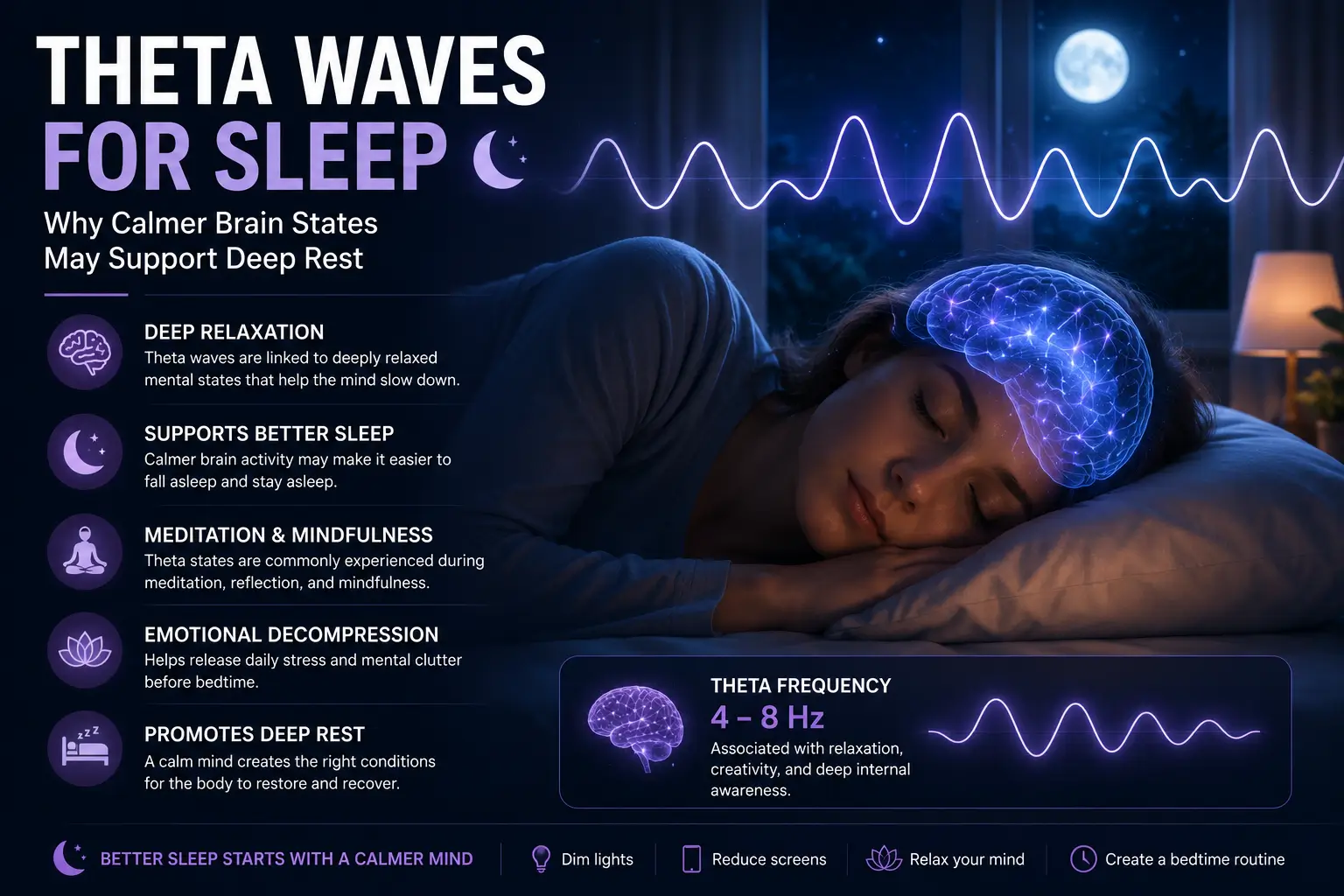
This is one reason discussions about theta waves for sleep have become increasingly popular.
Theta-related conversations are often associated with:
- relaxation,
- calmer mental states,
- meditation,
- emotional decompression,
- and nighttime recovery.
While online discussions sometimes exaggerate brainwave concepts, many people are simply searching for healthier ways to mentally unwind before sleep.
🌙 What Are Theta Waves?
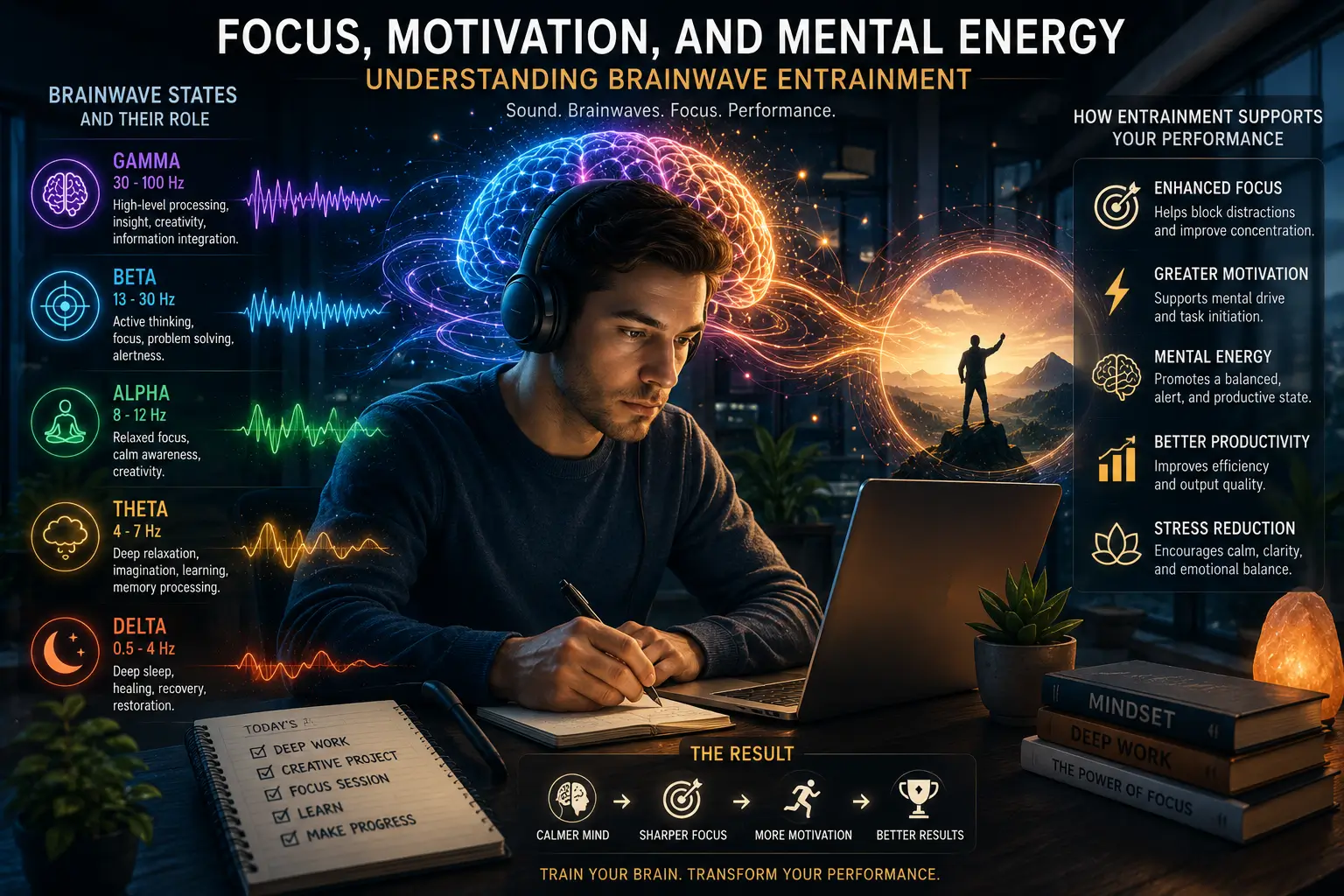
Theta waves are commonly discussed as part of the brain’s natural electrical activity.
They are often associated with slower and more internally focused mental states.
Theta-related discussions frequently appear in conversations about:
- deep relaxation,
- meditation,
- mindfulness,
- dream-like mental states,
- and emotional reflection.
Related article: Types of Brain Waves.
📱 Why Sleep Feels Harder in Modern Life
Many people spend their entire day surrounded by stimulation.
Phones, multitasking, constant information exposure, and emotional stress can leave the brain feeling mentally overloaded long after the day ends.
Related article: Modern Brain Overstimulation.
Even when the body feels tired, the mind may still feel highly active.
This is why calming nighttime routines have become more important than ever.
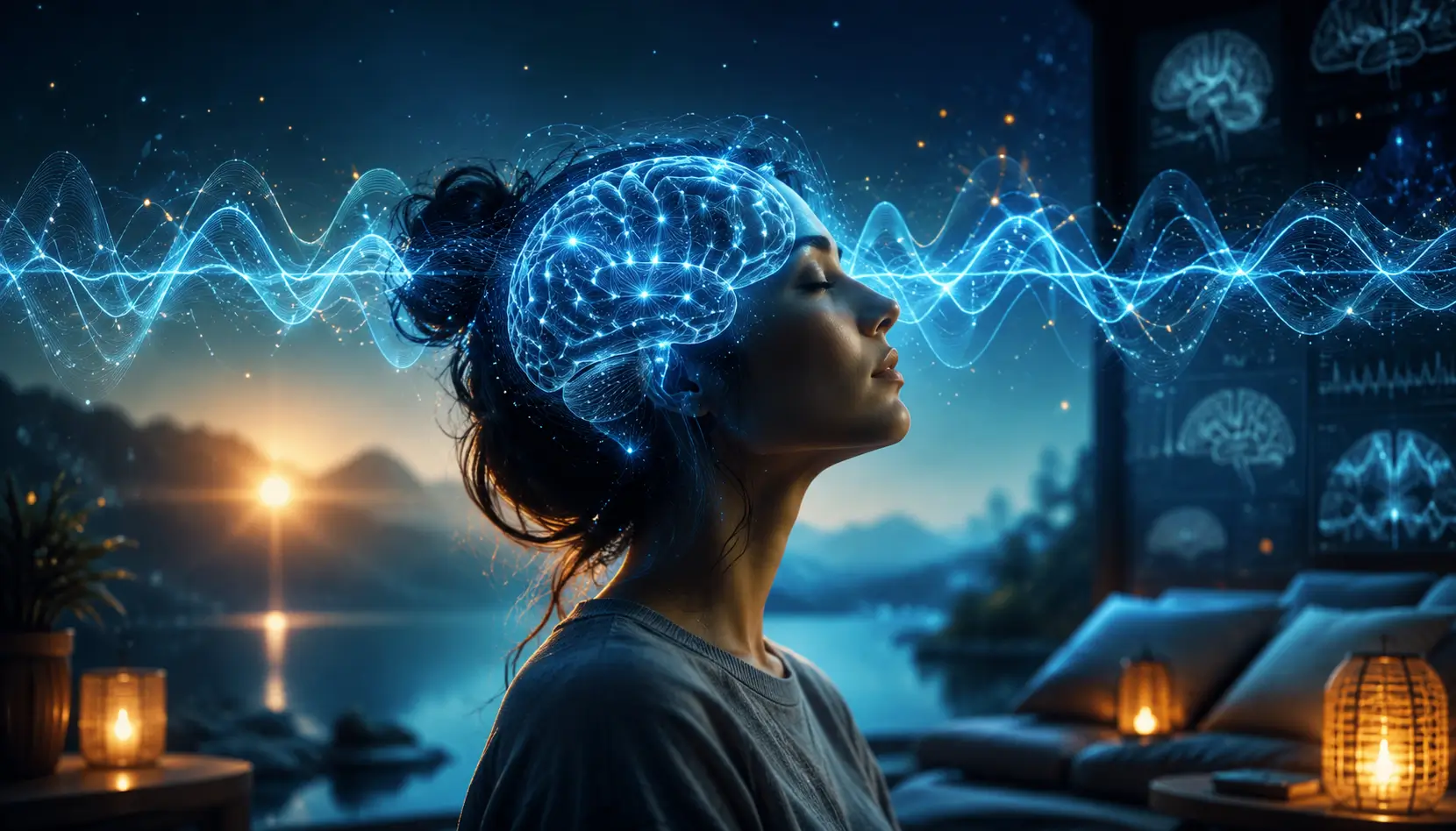
🧘 Why Theta Discussions Are Linked to Relaxation
Many people describe theta-oriented mental states as slower, quieter, and less mentally reactive.
This is one reason theta-related conversations are often connected to:
- meditation before sleep,
- breathing exercises,
- mindfulness practices,
- and emotional decompression routines.
The goal is usually not instant transformation.
Instead, people often want environments that feel calmer and mentally softer before bedtime.
😴 Sleep Quality and Mental Recovery
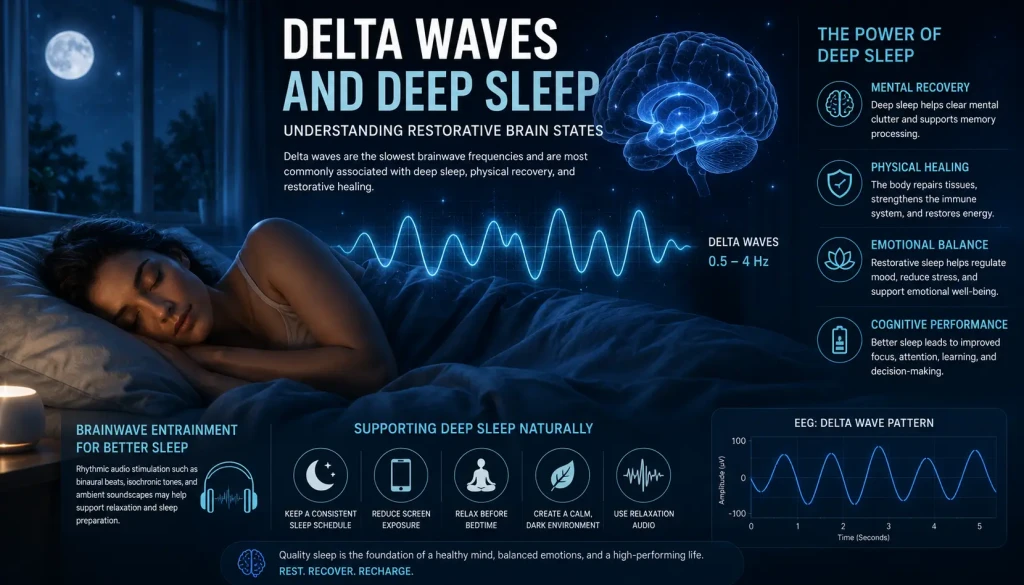
Deep rest is about more than simply “falling asleep.”
Healthy recovery is strongly connected to:
- stress reduction,
- emotional balance,
- mental recovery,
- and nervous system regulation.
Without proper recovery, attention and emotional stability often become more difficult during the day.
Related article: Delta Waves for Sleep.
🎧 Theta Audio and Sleep Environments
Some individuals explore audio environments associated with theta frequencies before sleep.
These discussions may involve:
- binaural beats,
- ambient soundscapes,
- guided meditation audio,
- or neuroacoustic listening environments.
Related article: The Science of Binaural Beats.
Others explore neuroacoustic audio experiences designed around relaxation, emotional decompression, and nighttime routines.
Still, different people respond differently to different sound environments.
🌌 Creating Better Nighttime Routines
Audio alone cannot fix unhealthy sleep habits.
However, calmer nighttime routines may sometimes support mental recovery.
Many people find it helpful to reduce stimulation before sleep by:
- lowering screen exposure,
- reducing notifications,
- keeping lighting softer,
- and creating quieter environments.
Small environmental changes often matter more than chasing “perfect frequencies.”
⚠️ Common Misunderstandings About Theta Waves
❌ “Theta Frequencies Instantly Cure Sleep Problems”
Sleep quality depends on many factors, including stress, routines, physical health, and overall lifestyle.
❌ “One Brainwave State Is Always Better”
The brain naturally moves through multiple states throughout the day and night.
❌ “Relaxation Means Doing Nothing”
Mental recovery is an important part of long-term cognitive and emotional health.
🌿 Rest Matters More Than Constant Productivity
Modern culture often glorifies nonstop productivity.
But without recovery, focus and emotional resilience eventually decline.
Many people searching for theta sleep discussions are not trying to become “superhuman.”
They are simply searching for calmer ways to mentally slow down.
🧠 Final Thoughts
Theta waves for sleep continue attracting attention because many people are looking for healthier ways to relax in an overstimulating world.
While online discussions can sometimes exaggerate brainwave concepts, calmer mental environments may still play an important role in emotional recovery and nighttime relaxation.
Sometimes the most valuable part of a sleep routine is not chasing optimization — but finally giving the mind permission to slow down.
Related Articles
Stay Informed With the Latest & Most Important News
Previous Post
Next Post