
Now Reading: Breathwork and the Nervous System: How Breathing Influences Stress, Focus, and Mental Clarity
-
01
Breathwork and the Nervous System: How Breathing Influences Stress, Focus, and Mental Clarity
Breathwork and the Nervous System: How Breathing Influences Stress, Focus, and Mental Clarity
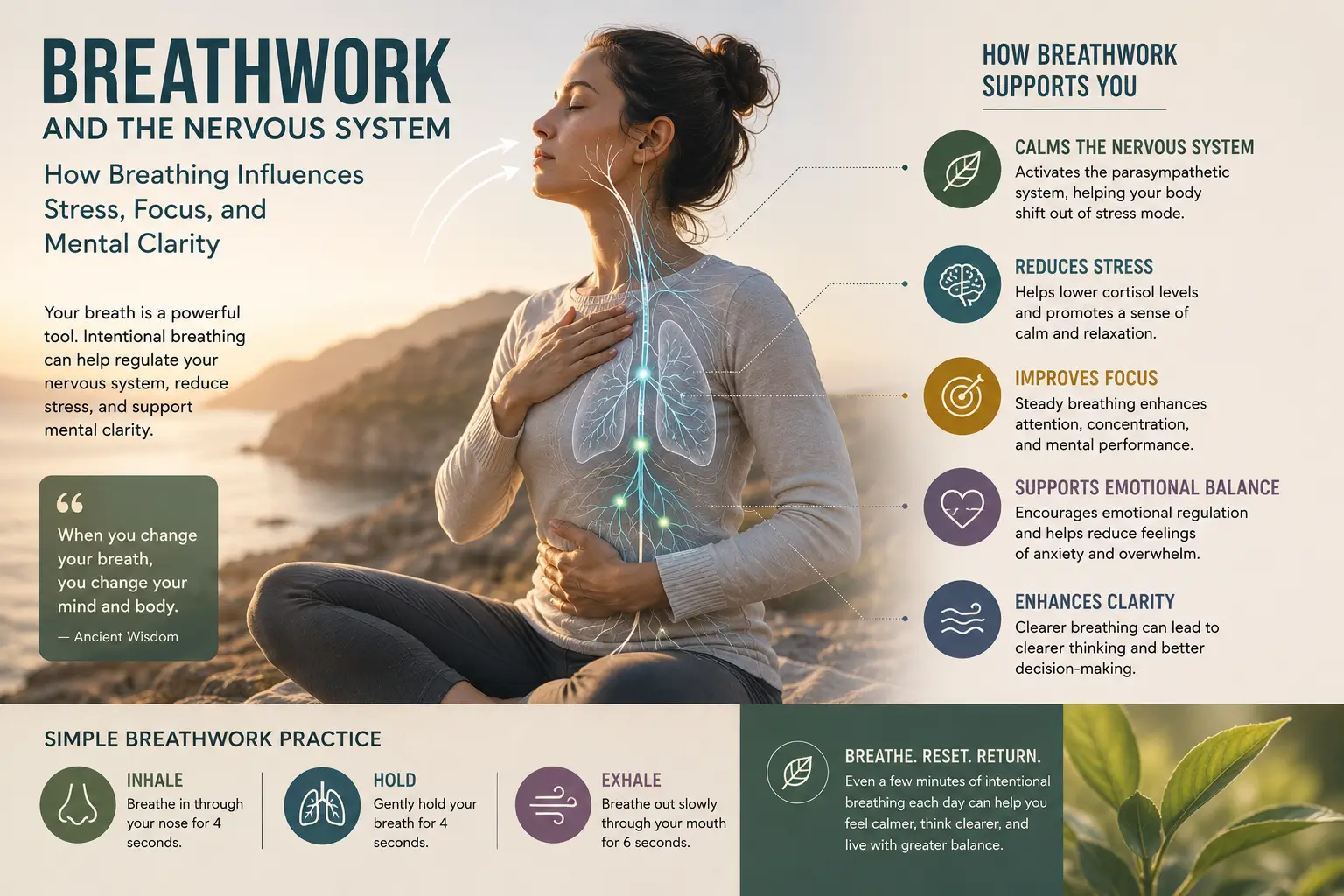
Most people breathe automatically without thinking about it.
However, breathing patterns may influence far more than oxygen intake alone.
Modern research increasingly explores how breathing affects:
- stress regulation,
- attention,
- mental clarity,
- emotional balance,
- and nervous system activity.
This is one reason conversations around breathwork have become increasingly popular in recent years.
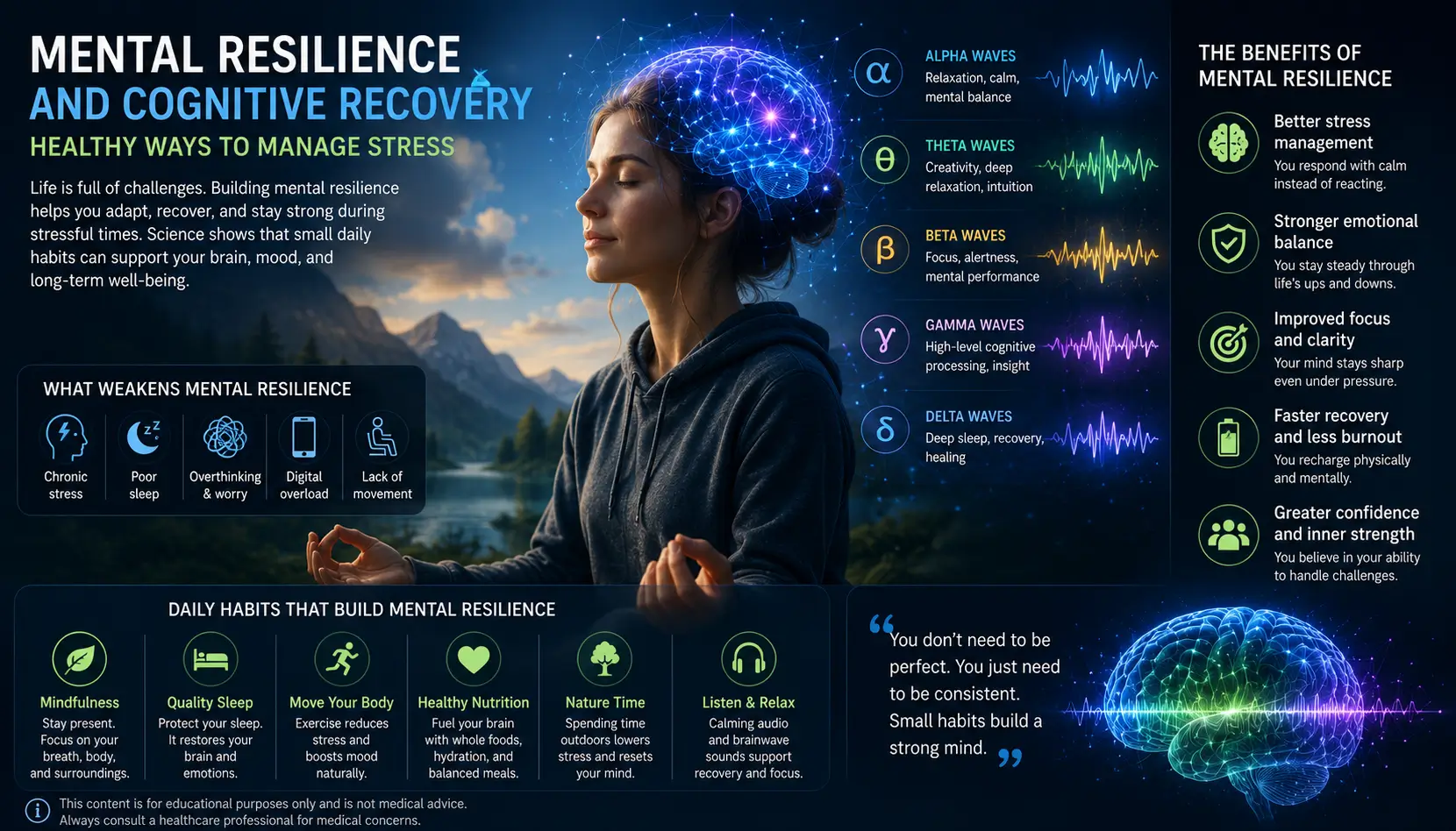
Many individuals are now exploring breathing routines not only for relaxation, but also for cognitive recovery and mental performance support.
🧠 What Is Breathwork?
Breathwork generally refers to intentional breathing practices designed to influence physical and mental states.
Different breathing patterns may affect:
- heart rate,
- stress responses,
- attention patterns,
- and emotional regulation.
Some techniques involve slower breathing rhythms.
Others involve deeper breathing, controlled pacing, or structured breathing cycles.
While internet discussions sometimes exaggerate the effects of breathwork, neuroscience and physiology continue studying how breathing interacts with the nervous system.
⚡ The Nervous System Constantly Responds to Stress
The human nervous system continuously reacts to internal and external environments.
Stress, overstimulation, lack of sleep, and constant digital input may all influence nervous system activity.
When people remain under prolonged stress, the body may spend more time in heightened alert states.
This can sometimes contribute to:
- mental fatigue,
- difficulty concentrating,
- physical tension,
- and emotional exhaustion.
Modern lifestyles often expose the brain and nervous system to far more stimulation than previous generations experienced.
Related article: Modern Brain Overstimulation.
🫁 Breathing and Nervous System Regulation
Breathing is closely connected to the autonomic nervous system.
This system helps regulate many automatic body functions, including:
- heart rate,
- stress responses,
- muscle tension,
- and recovery states.
Slow and controlled breathing patterns may sometimes support calmer physiological states.
This is one reason breathing exercises are commonly discussed in relation to:
- stress management,
- mindfulness,
- mental clarity,
- and emotional balance.
Different individuals may respond differently to different breathing techniques and routines.
🎯 Attention, Focus, and Mental Clarity
Breathing patterns may also influence attention regulation.
When people feel mentally overwhelmed, attention often becomes fragmented.
Calmer breathing routines may sometimes help reduce excessive mental noise and improve awareness of the present moment.
This does not mean breathing instantly transforms cognitive performance.
However, small recovery habits may help support healthier focus patterns over time.
Related article: Brain Waves for Focus.
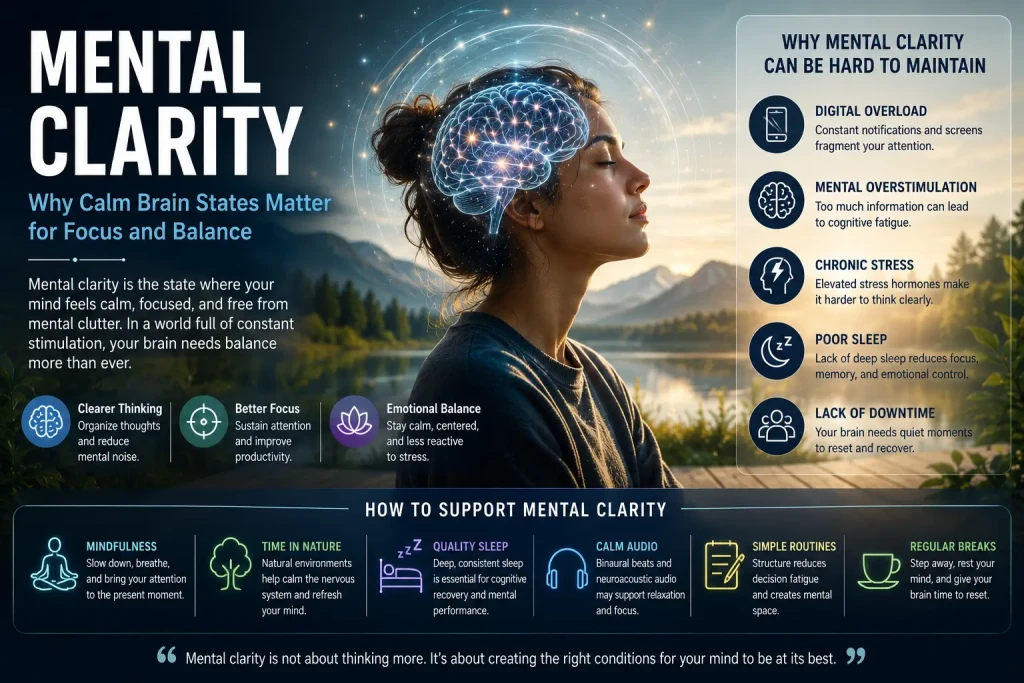
📱 Why Modern Life Makes Recovery More Important
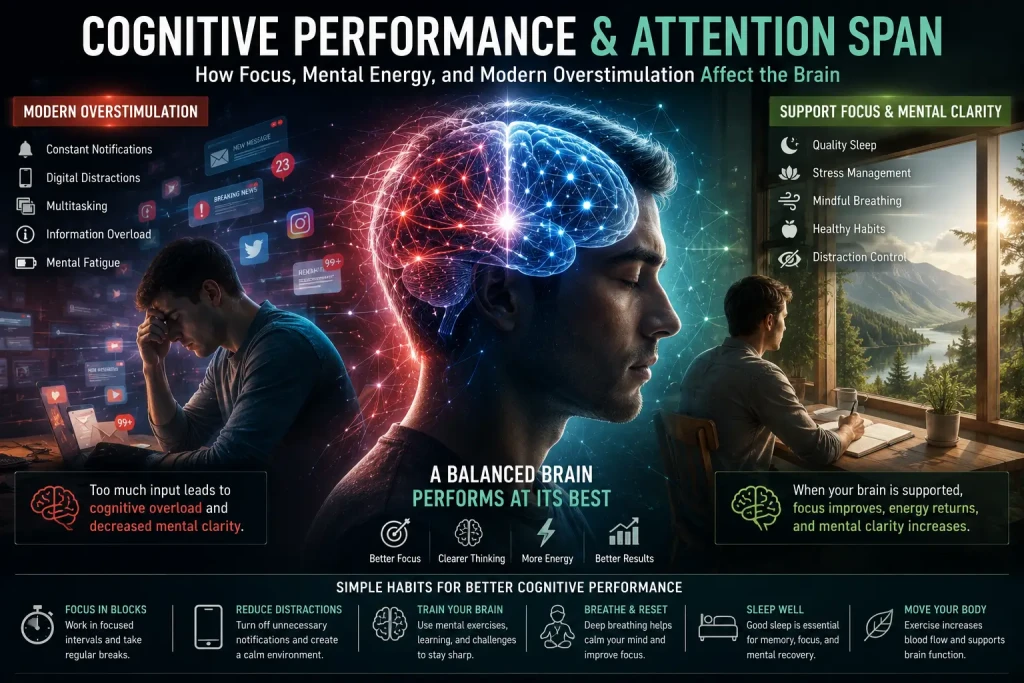
Modern digital environments constantly compete for human attention.
Notifications, multitasking, endless scrolling, and nonstop stimulation may increase cognitive fatigue over time.
Many people now spend very little time in mentally calm states.
This is one reason interest in:
- mindfulness,
- breathwork,
- meditation,
- and nervous system recovery
has grown significantly.
People are increasingly searching for ways to reduce overstimulation and create healthier cognitive environments.
😴 Sleep and Recovery Also Matter
Breathing is only one part of nervous system regulation.
The brain also depends heavily on:
- sleep quality,
- stress management,
- physical recovery,
- and environmental balance.
Without recovery, mental fatigue and attention difficulties may become more noticeable.
Related article: Delta Waves for Sleep.
🧘 Breathwork, Mindfulness, and Cognitive Wellness
Many individuals combine breathing routines with mindfulness or relaxation practices.
These environments may involve:
- calmer surroundings,
- reduced sensory overload,
- meditation routines,
- ambient soundscapes,
- or structured audio environments.
Related article: Brainwave Entrainment.
Some individuals also explore audio environments designed around relaxation and mental clarity as part of broader cognitive wellness routines.
⚠️ Common Misunderstandings About Breathwork
❌ “Breathwork Instantly Fixes Stress”
Stress regulation is influenced by many factors including sleep, lifestyle, recovery, and environment.
❌ “One Breathing Technique Works for Everyone”
Different individuals often respond differently to different breathing styles and routines.
❌ “Mental Fatigue Comes Only From Thinking Too Much”
Modern overstimulation, digital environments, stress, and recovery quality may all influence mental fatigue.
🌿 Small Recovery Habits May Matter Over Time
People often search for dramatic solutions to stress and mental exhaustion.
However, small repeated habits may sometimes influence mental balance more than extreme short-term changes.
Examples may include:
- improving sleep routines,
- reducing overstimulation,
- taking breaks from screens,
- creating calmer environments,
- and practicing intentional breathing habits.
Over time, these habits may support healthier nervous system regulation and cognitive recovery.
🧠 Final Thoughts
Breathing is deeply connected to how humans experience stress, focus, and mental balance.
Modern neuroscience continues exploring how breathing patterns interact with attention systems, emotional regulation, and nervous system activity.
While breathwork is not a magical solution, many people are becoming increasingly interested in how calmer environments, recovery habits, and intentional breathing may support healthier cognitive balance over time.
In many cases, improving mental clarity may begin not with pushing the brain harder — but with helping the nervous system recover more effectively.
Related Articles
Related Posts
Stay Informed With the Latest & Most Important News
Previous Post
Next Post