
Now Reading: Brain Waves for Focus: How Mental States May Influence Attention and Creativity
-
01
Brain Waves for Focus: How Mental States May Influence Attention and Creativity
Brain Waves for Focus: How Mental States May Influence Attention and Creativity
Focus is not simply about “trying harder.”
Some days the mind feels calm, clear, and highly productive.
Other days attention feels scattered, overstimulated, and mentally exhausted.
This is one reason discussions about brain waves for focus continue growing online.
Many people are searching for healthier ways to improve:
- attention quality,
- mental clarity,
- creative thinking,
- and cognitive balance.
In modern environments filled with nonstop stimulation, maintaining stable focus has become increasingly difficult.
🧠 What Are Brain Waves?
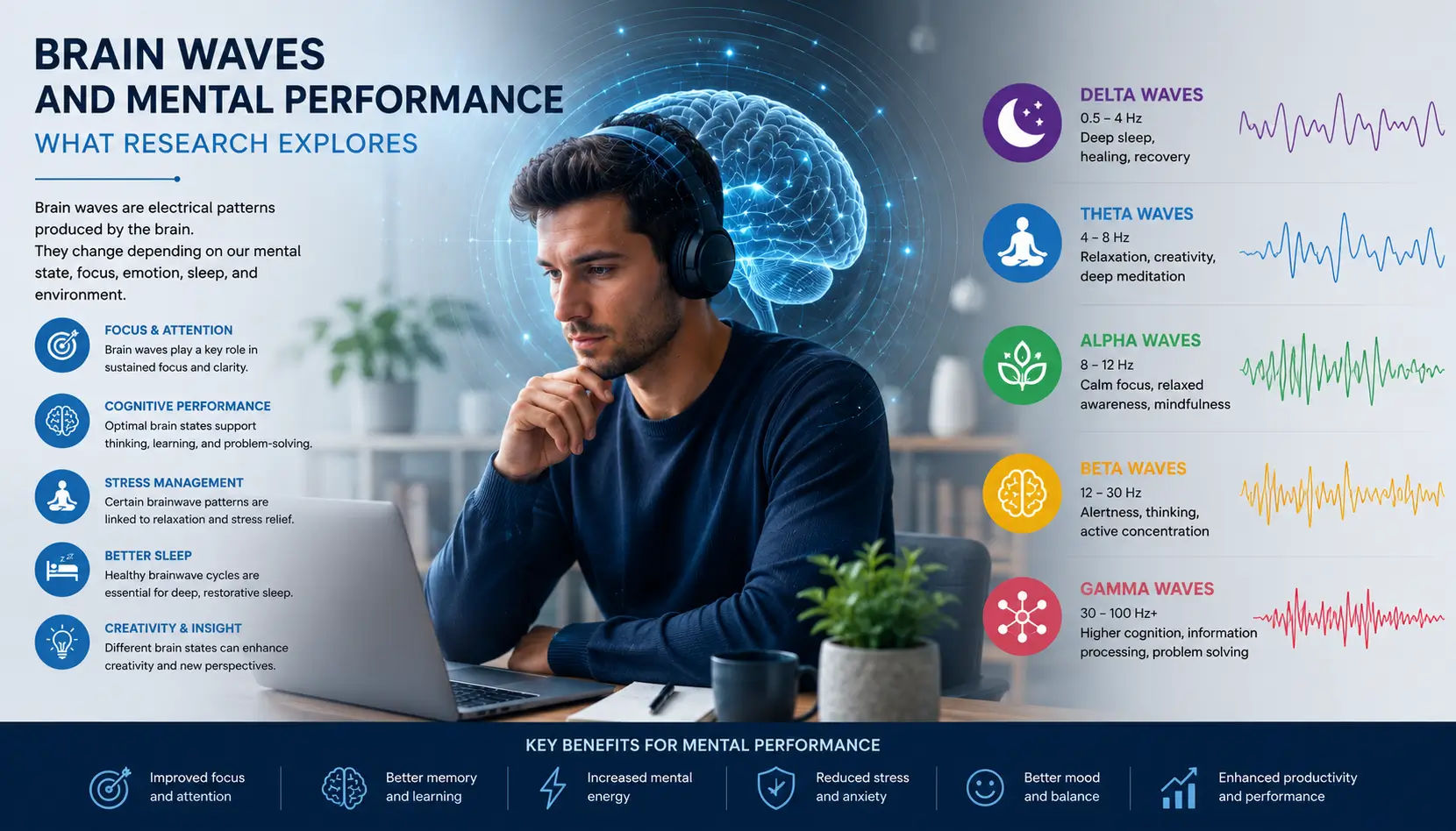
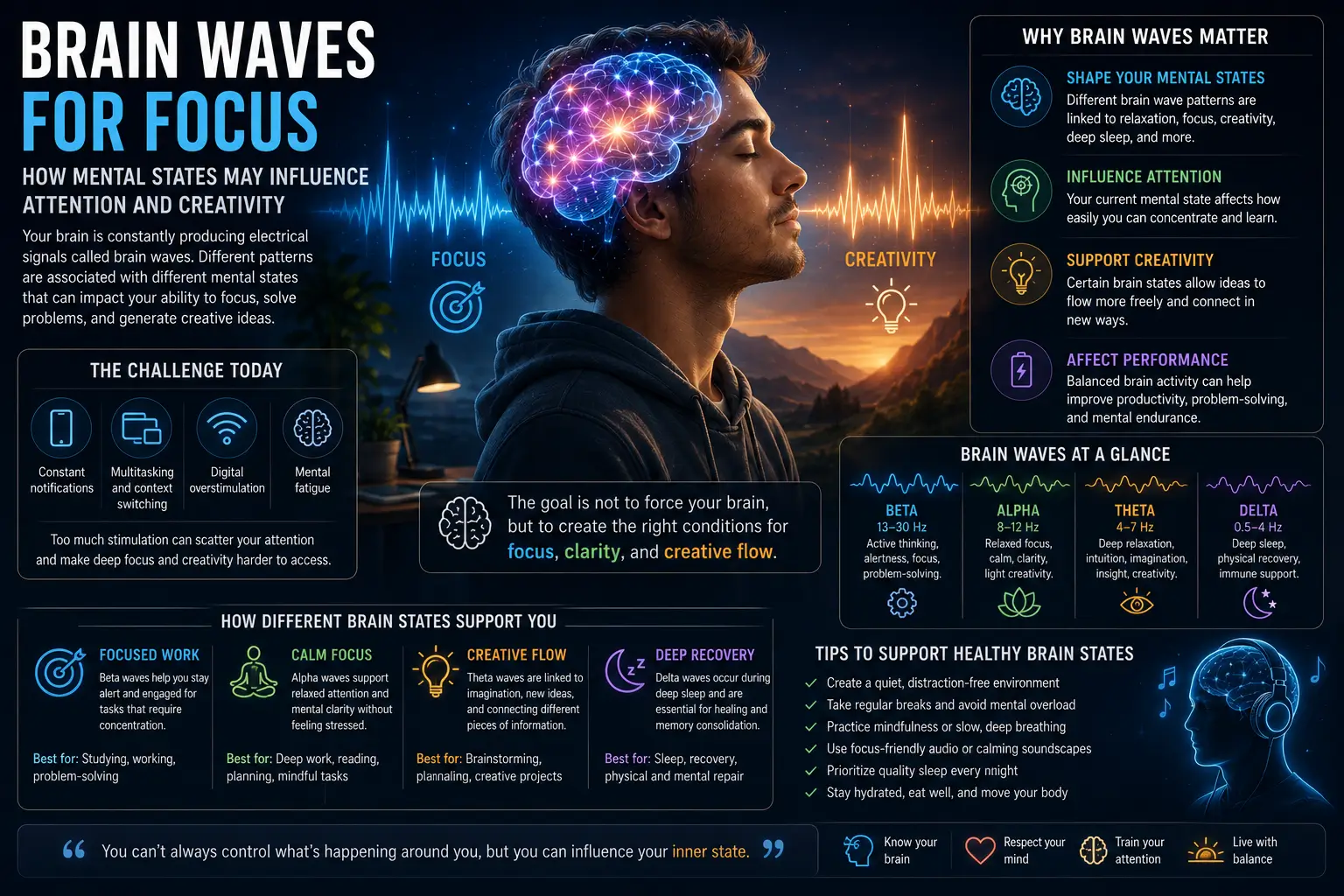
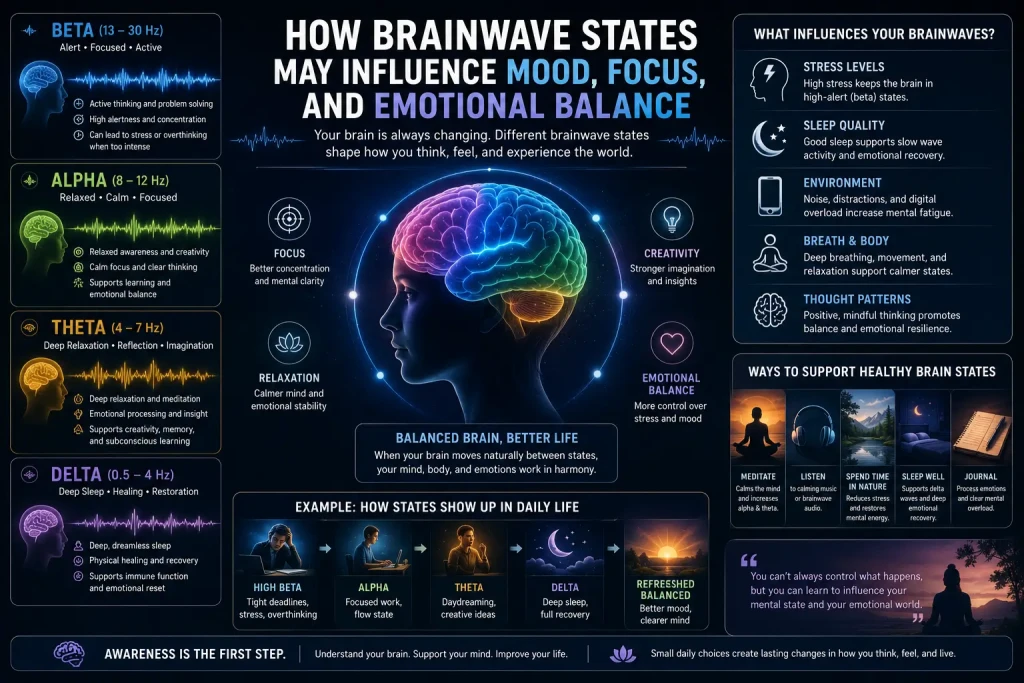
Brain waves are commonly discussed as patterns of electrical activity in the brain.
Different brainwave discussions are often associated with different mental states.
For example:
- some discussions involve relaxation,
- others involve active concentration,
- while others are connected to sleep and recovery.
Related article: Types of Brain Waves.
🎯 Why Focus Feels Harder Today
Modern life constantly competes for attention.
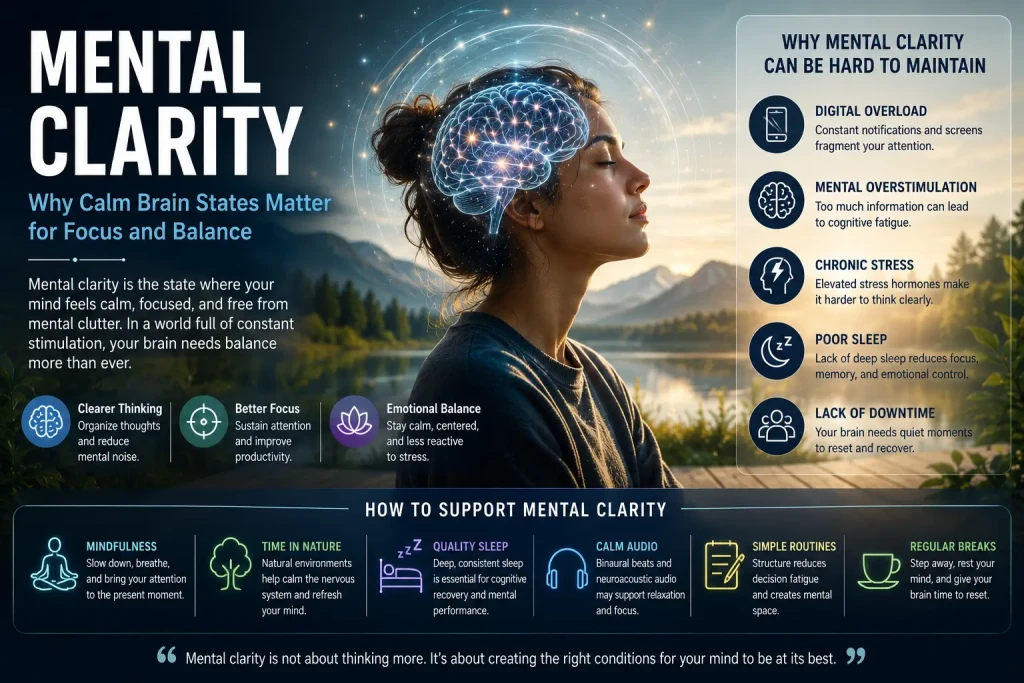
Notifications, multitasking, background noise, endless scrolling, and emotional stress can fragment concentration throughout the day.
Related article: Modern Brain Overstimulation.
As a result, many people feel mentally busy even when they are technically resting.
The issue is often not lack of stimulation — but too much of it.
⚡ Brain States and Attention
Different brainwave discussions are commonly linked to different styles of attention and awareness.
🧘 Alpha-Related Discussions
Alpha-related conversations are often associated with calm focus, mental clarity, and relaxed concentration.
Related article: Alpha Brain Waves.
🎯 Beta-Related Discussions
Beta-related discussions are commonly connected to active thinking, alertness, and problem-solving.
Related article: Beta Brain Waves.
🧠 Gamma-Related Discussions
Gamma-related conversations often involve cognitive engagement, attention, and mental processing.
Related article: Gamma Brain Waves.
🎨 Creativity and Relaxed Attention
Interestingly, creativity is not always linked to intense concentration.
Some creative states feel calmer, more open, and less mentally rigid.
Many people report that ideas flow more naturally when the mind feels less overstimulated.
This is one reason discussions about focus and creativity are often connected to:
- mindfulness,
- mental clarity,
- calmer attention,
- and emotional balance.
📱 Overstimulation vs Healthy Focus
There is an important difference between:
- healthy concentration,
- and constant overstimulation.
Some highly stimulated environments may actually reduce attention quality over time.
Instead of improving focus, nonstop stimulation can contribute to:
- mental fatigue,
- stress,
- attention fragmentation,
- and cognitive exhaustion.
Healthy focus often depends on balance rather than constant intensity.
😴 Why Recovery Matters for Attention
Many people chase productivity while ignoring mental recovery.
But sustained attention depends heavily on:
- sleep quality,
- stress management,
- emotional regulation,
- and nervous system recovery.
Without proper recovery, concentration quality often declines even during simple tasks.
Related article: Delta Waves for Sleep.
🎧 Audio Environments and Focus
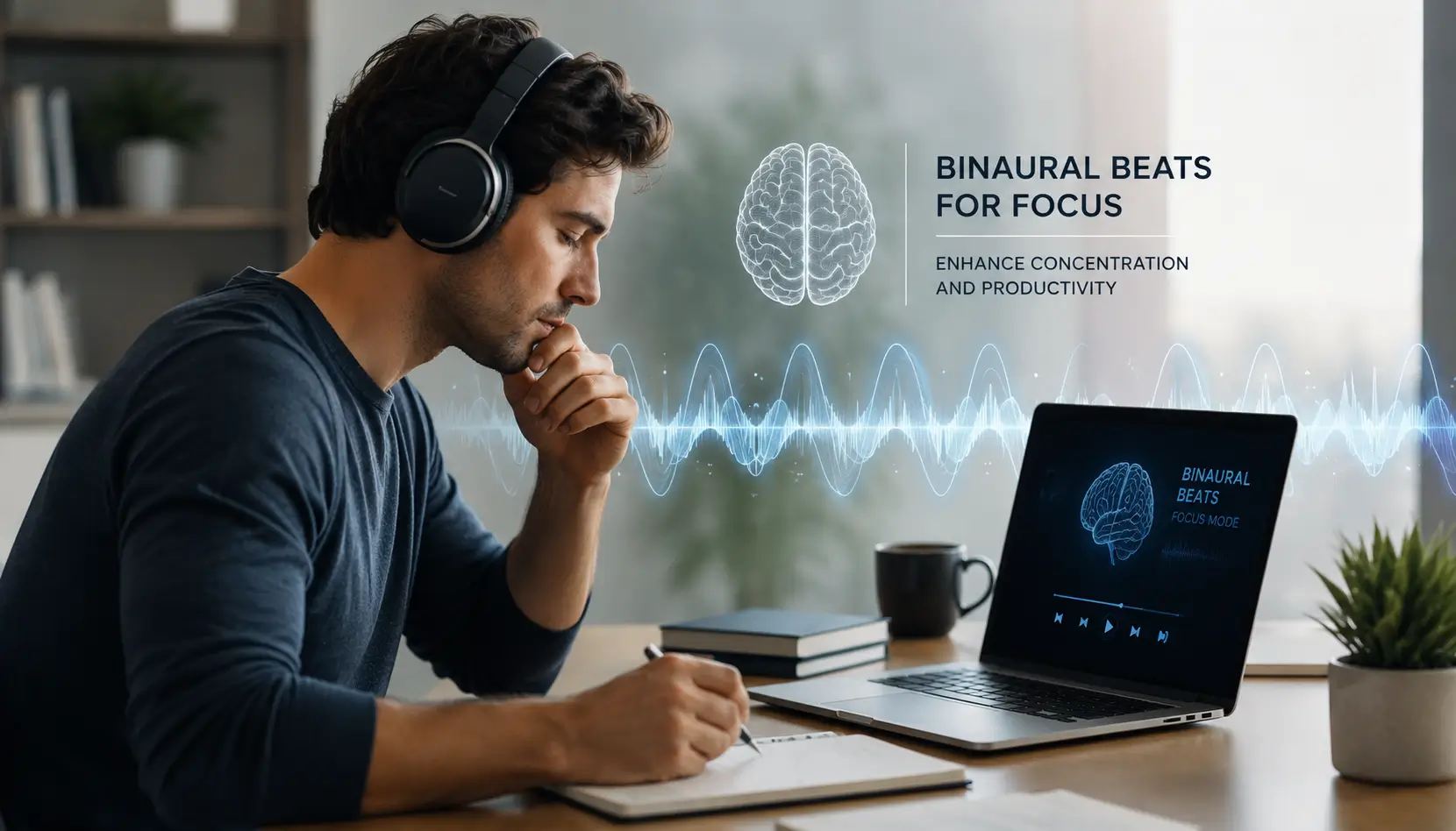
Some individuals explore audio environments while trying to support concentration and mental clarity.
These discussions may involve:
- binaural beats,
- focus-oriented soundscapes,
- ambient audio,
- or neuroacoustic listening environments.
Related article: Brainwave Entrainment.
Others explore neuroacoustic audio experiences designed around calm focus, productivity routines, and cognitive balance.
Still, different individuals respond differently to different listening environments.
⚠️ Common Misunderstandings About Brain Waves and Focus
❌ “More Mental Activity Means Better Focus”
Excess stimulation may sometimes reduce clarity instead of improving it.
❌ “Creativity Requires Chaos”
Many creative states actually emerge from calmer and more balanced forms of attention.
❌ “One Frequency Solves Everything”
Mental performance depends on many factors beyond brainwave discussions alone.
🌿 Calm Attention Is Often More Sustainable
Modern productivity culture often glorifies nonstop stimulation.
But sustainable focus usually feels stable rather than overwhelming.
In many cases, the goal is not forcing the brain to work harder — but reducing enough mental noise for attention to function naturally again.
🧠 Final Thoughts
Brain waves for focus continue attracting attention because many people are searching for healthier ways to maintain concentration in overstimulating environments.
While online discussions sometimes exaggerate brainwave concepts, calmer mental environments and balanced routines may still support healthier attention and creativity.
Sometimes improving focus begins not with adding more stimulation — but with finally creating enough space for the brain to recover.
Related Articles
Related Posts
Stay Informed With the Latest & Most Important News
Previous Post
Next Post