
Now Reading: Pink Noise for Sleep: Why Some People Prefer Softer Sound Environments at Night
-
01
Pink Noise for Sleep: Why Some People Prefer Softer Sound Environments at Night
Pink Noise for Sleep: Why Some People Prefer Softer Sound Environments at Night
Modern environments are rarely quiet.
Even at night, people are surrounded by:
- traffic noise,
- notifications,
- digital stimulation,
- background electronics,
- and constant mental activity.
As sleep quality becomes increasingly important, many people search for calming sound environments that may help create more relaxing nighttime routines.
One sound category that continues to gain attention is pink noise.
Supporters often describe pink noise as softer and more balanced than traditional white noise.
Some listeners use it during sleep, relaxation sessions, meditation, or quiet evening routines.
🎧 What Is Pink Noise?
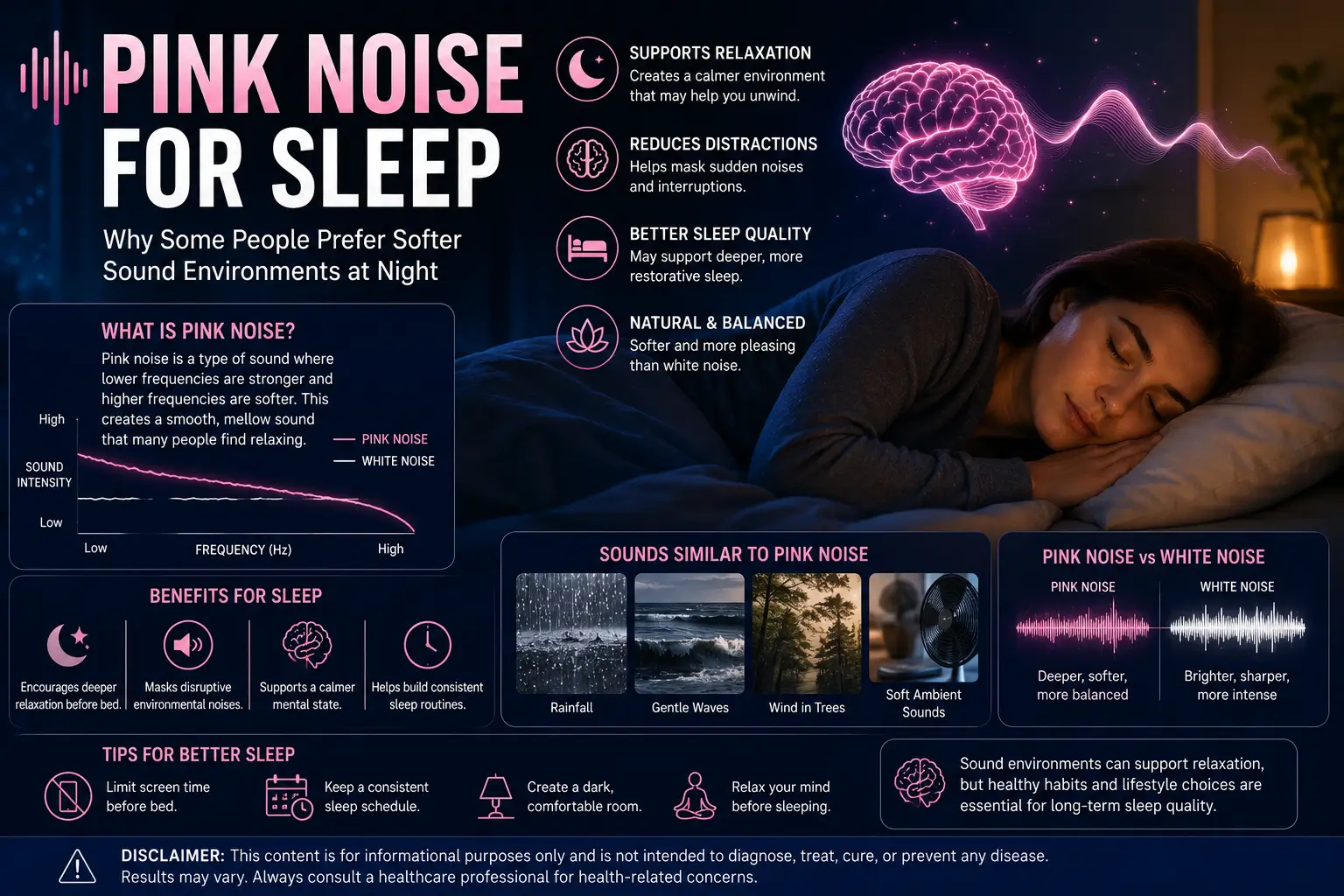
Pink noise is a type of sound profile where lower frequencies are slightly more prominent and higher frequencies are softer compared to white noise.
This creates a smoother and less harsh listening experience for many people.
Examples of natural sound environments sometimes compared to pink noise include:
- steady rainfall,
- wind through trees,
- gentle ocean waves,
- or soft ambient environmental sound.
Because of its softer profile, many people find pink noise more comfortable during longer listening sessions.

🌙 Why People Use Pink Noise for Sleep
Some individuals use pink noise to create more consistent nighttime sound environments.
The goal is often not to “force sleep instantly.”
Instead, listeners may simply want:
- fewer sudden distractions,
- less environmental interruption,
- or a calmer atmosphere before sleep.
For some people, softer background audio can help reduce awareness of unpredictable sounds that interrupt relaxation.
🧠 Sound Environments and Mental Relaxation
The brain constantly reacts to environmental stimulation.
Sudden noises, inconsistent sound patterns, or overstimulating environments can make relaxation more difficult.
Some people feel calmer when listening to more stable sound environments during quiet routines.
This does not necessarily mean the sound itself “creates perfect sleep.”
However, environmental consistency may feel more comfortable for certain listeners.
📱 Overstimulation and Modern Sleep Problems
Many people remain mentally overstimulated long after the day ends.
Constant scrolling, bright screens, work stress, and nonstop information exposure can make it difficult for the nervous system to slow down naturally.
Related article: Modern Brain Overstimulation.
In this context, calming nighttime routines often become more important than searching for “perfect sleep hacks.”
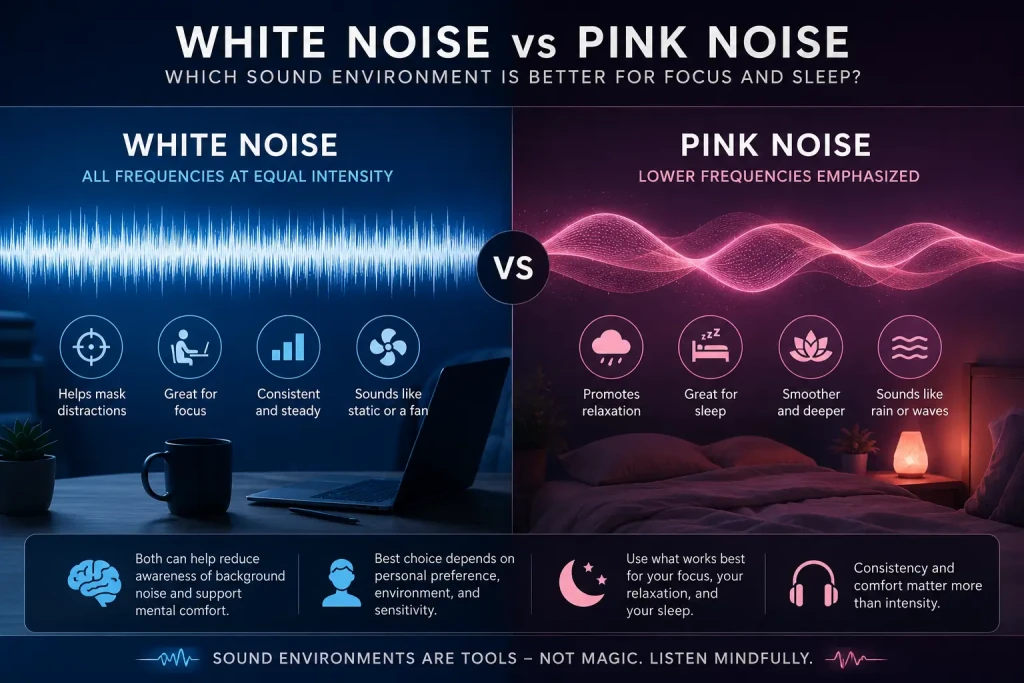
🎵 Pink Noise vs White Noise
Pink noise and white noise are often discussed together, but they sound different to many listeners.
⚪ White Noise
White noise contains a stronger balance of higher frequencies and may sound sharper or brighter.
🌸 Pink Noise
Pink noise reduces some of the higher-frequency intensity, creating a softer and more natural sound profile.
Related article: White Noise vs Pink Noise.
😴 Sleep Quality Depends on More Than Audio
While relaxing sound environments may help some people feel calmer, healthy sleep habits still matter most.
Sleep quality is influenced by many factors including:
- stress levels,
- sleep consistency,
- screen exposure,
- physical health,
- recovery habits,
- and mental overstimulation.
No single sound frequency or audio track can replace healthy recovery routines.
🌿 Building Better Nighttime Routines
Many people underestimate how strongly environment affects rest.
Helpful nighttime habits may include:
- reducing bright screen exposure,
- keeping consistent sleep schedules,
- lowering nighttime stimulation,
- using softer lighting,
- and creating quieter evening environments.
For some individuals, relaxing sound environments simply become one part of that broader routine.
🎧 Neuroacoustic Audio and Sleep Environments
Some listeners also explore neuroacoustic audio environments designed around calm focus, relaxation, and nighttime recovery routines.
These tools are generally best viewed as supportive environmental experiences rather than guaranteed sleep solutions.
🚫 Common Misunderstandings
❌ “Pink Noise Instantly Fixes Sleep Problems”
Sleep quality depends on many physical and environmental factors beyond audio alone.
❌ “One Sound Works for Everyone”
People respond differently to sound environments and relaxation techniques.
❌ “Louder Audio Means Better Sleep”
Gentler and more balanced sound environments are often more comfortable for long listening periods.
🧠 Final Thoughts
Pink noise has become popular because many people prefer softer and more balanced nighttime sound environments compared to harsher background audio.
While sound alone cannot solve every sleep challenge, calmer environmental conditions may help some individuals create more relaxing nighttime routines.
In many cases, better sleep comes less from “perfect frequencies” and more from reducing overstimulation, protecting recovery time, and building healthier evening habits over time.
Related Articles
Related Posts
Stay Informed With the Latest & Most Important News
Previous Post
Next Post