
Now Reading: Brown Noise for Focus: Why Some People Prefer Deeper Background Sound for Concentration
-
01
Brown Noise for Focus: Why Some People Prefer Deeper Background Sound for Concentration
Brown Noise for Focus: Why Some People Prefer Deeper Background Sound for Concentration
Modern attention is constantly under pressure.
People switch rapidly between:
- notifications,
- social media,
- videos,
- emails,
- messages,
- and nonstop digital stimulation.
As distraction becomes more common, many individuals search for calmer sound environments that may help them focus more effectively.
One sound category that has gained significant attention online is brown noise.
Supporters often describe brown noise as deeper, softer, and more immersive than white noise.
Some people use it during:
- study sessions,
- focused work,
- reading,
- creative projects,
- or quiet concentration routines.
🎧 What Is Brown Noise?
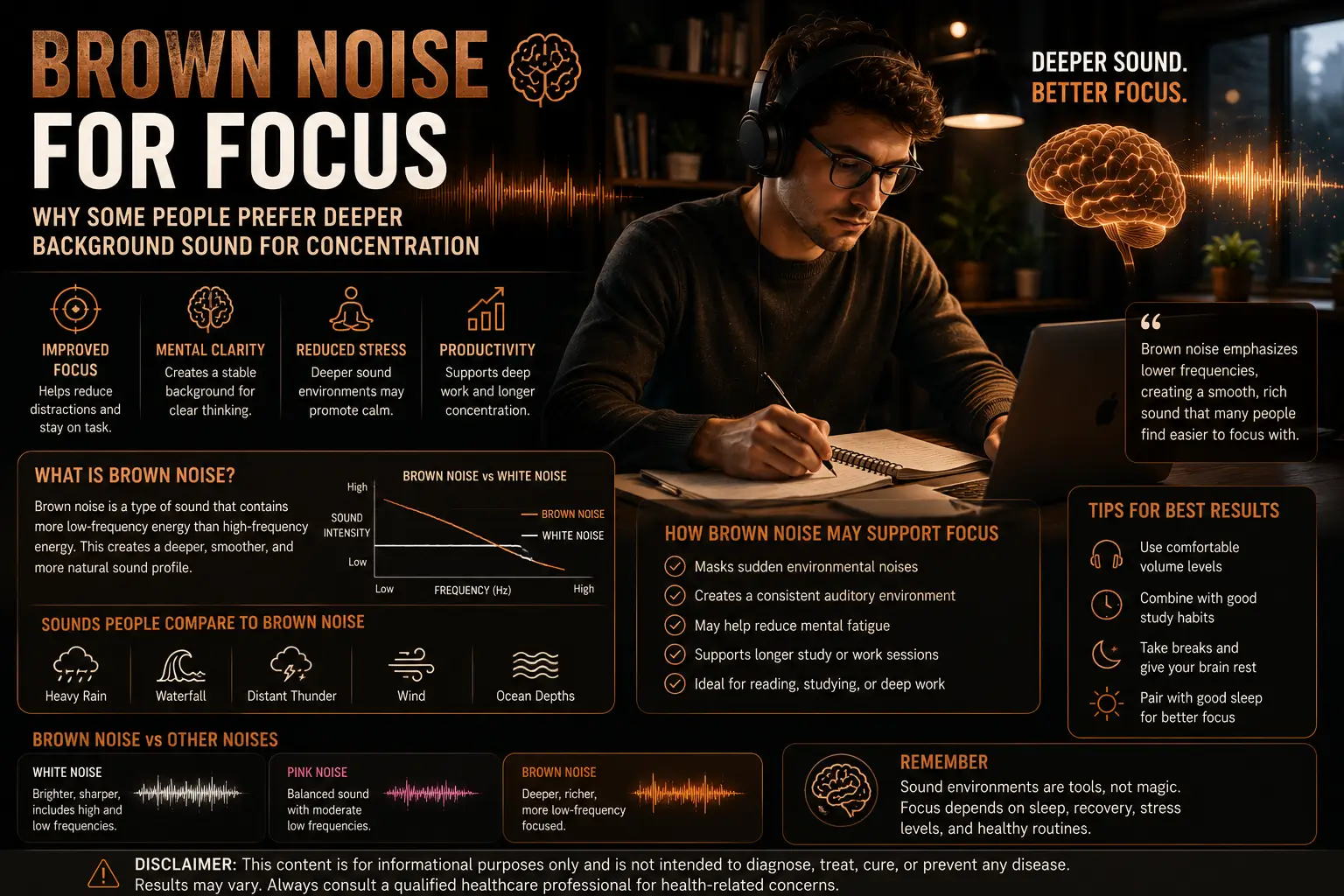
Brown noise is a type of sound profile that emphasizes deeper and lower-frequency tones.
Compared to white noise, brown noise usually sounds:
- deeper,
- smoother,
- less sharp,
- and more atmospheric.
Many people compare brown noise to:
- distant thunder,
- strong rainfall,
- deep waterfalls,
- or low ambient environmental sound.
Because of its softer high-frequency profile, some listeners find it less mentally fatiguing during long listening sessions.

🧠 Why People Use Brown Noise for Focus
People often use brown noise to create more stable background sound environments.
The goal is usually not to “instantly become hyper-focused.”
Instead, some listeners simply want:
- fewer distracting sounds,
- less mental fragmentation,
- or a calmer atmosphere for concentration.
For some individuals, deeper and more consistent audio environments may feel easier to ignore mentally compared to sudden environmental noise.
📱 Digital Overstimulation and Attention Fatigue
Modern environments constantly compete for attention.
Many people rarely experience true mental quiet.
This nonstop stimulation can contribute to:
- mental fatigue,
- reduced concentration,
- attention fragmentation,
- and difficulty maintaining focus.
Related article: Modern Brain Overstimulation.
🎵 Brown Noise vs White Noise
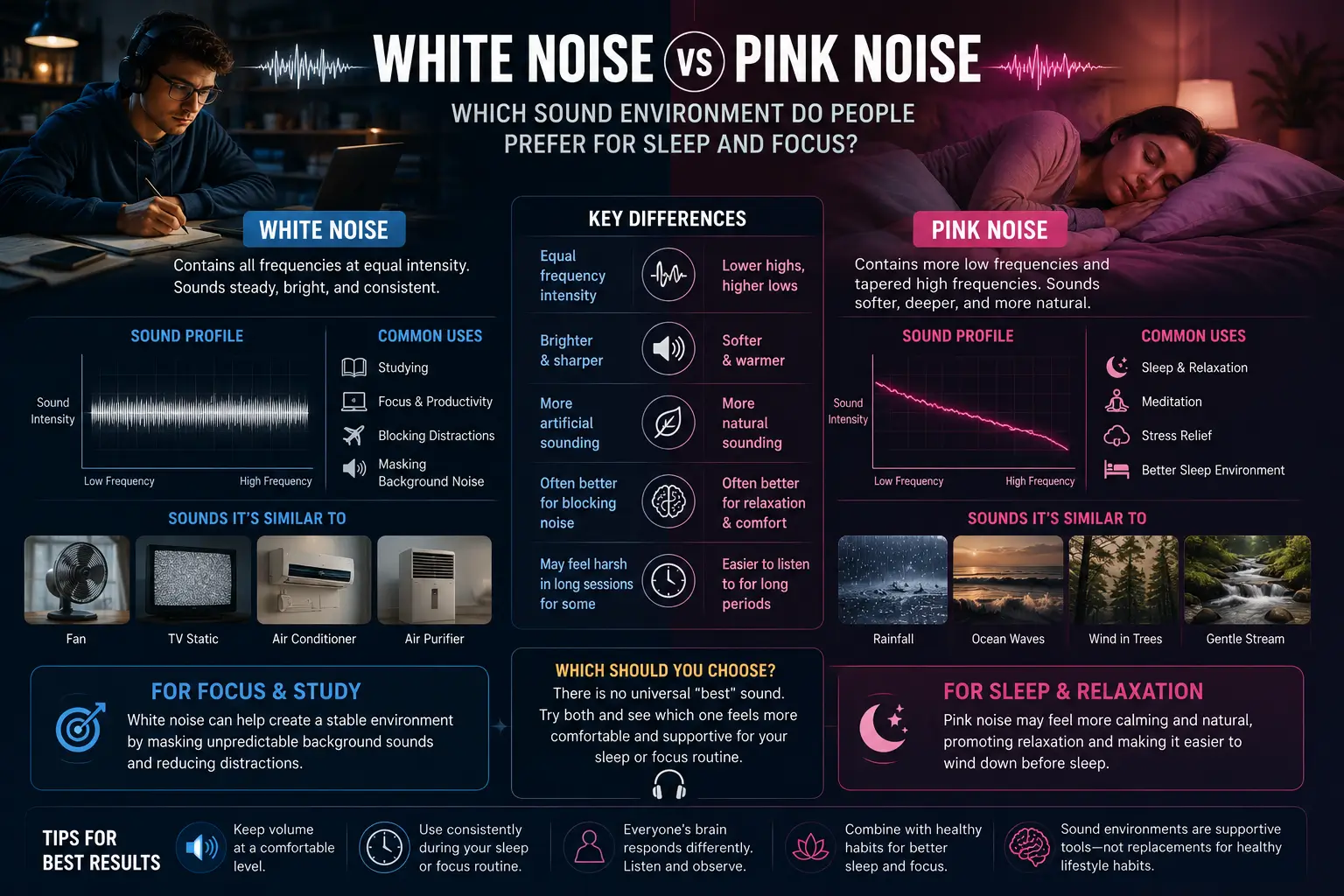
Brown noise and white noise are often discussed together, but they sound noticeably different to many listeners.
⚪ White Noise
White noise contains stronger higher-frequency energy and may sound brighter or sharper.
🟤 Brown Noise
Brown noise emphasizes deeper low-frequency sound and often feels softer or heavier.
Some people find brown noise more relaxing during extended work or study sessions.
Related article: White Noise vs Pink Noise.
📚 Focus Depends on More Than Audio
Concentration is influenced by many factors beyond sound alone.
Focus quality is strongly affected by:
- sleep,
- stress levels,
- mental recovery,
- motivation,
- environment,
- and healthy attention habits.
No sound environment can completely replace those foundations.
😴 Mental Recovery and Concentration
Many focus problems are closely connected to mental exhaustion.
People often search for productivity tools when the larger issue may actually be:
- poor sleep,
- constant overstimulation,
- stress overload,
- or insufficient recovery time.
Related article: Delta Waves for Sleep.
🎧 Brown Noise and Study Environments
Many students and remote workers use brown noise during:
- reading sessions,
- writing,
- deep work routines,
- or long concentration periods.
Some people feel that stable sound environments help reduce awareness of distracting background activity.
Others may prefer silence or different types of audio entirely.
🎵 Neuroacoustic Audio and Focus Routines
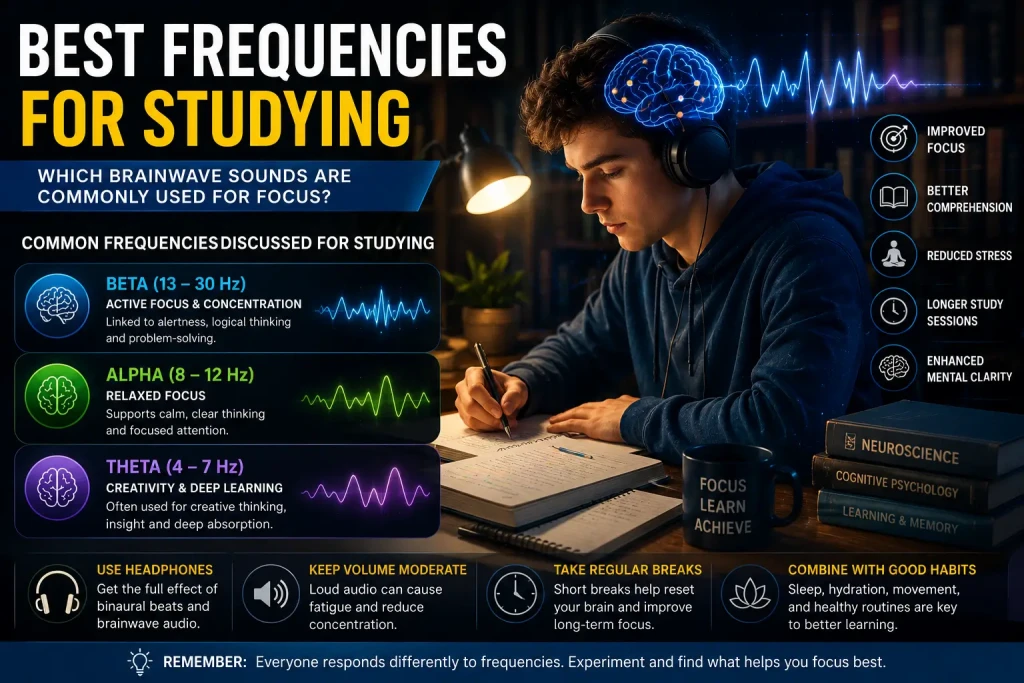
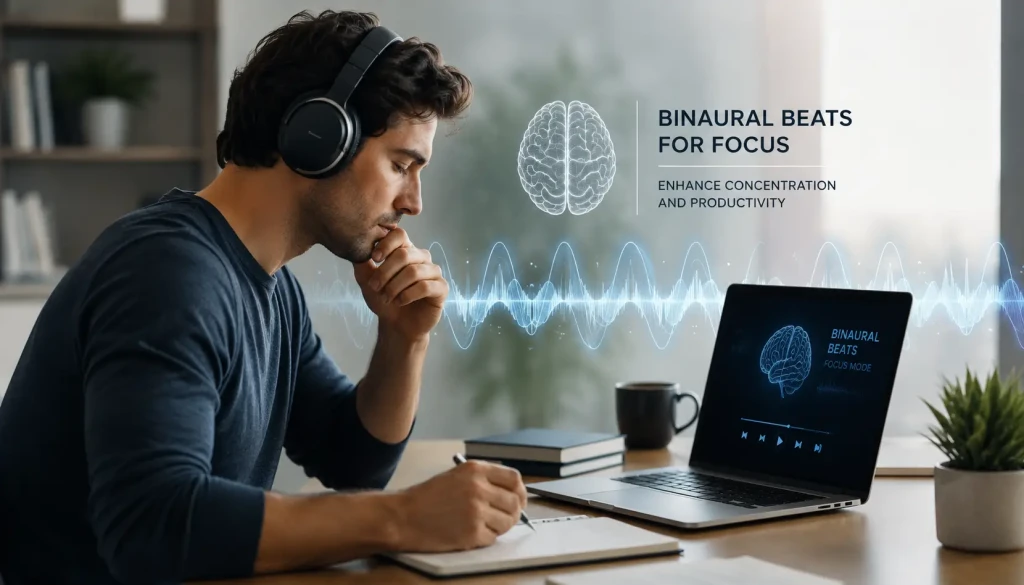
Some individuals also explore neuroacoustic audio environments designed around focus, relaxation, and calmer attention routines.
These tools are generally most useful when combined with healthy habits, sleep recovery, and reduced overstimulation.
🚫 Common Misunderstandings
❌ “Brown Noise Instantly Creates Perfect Focus”
Attention and concentration depend on many environmental and personal factors.
❌ “One Sound Works for Everyone”
People respond differently to sound environments and focus techniques.
❌ “Louder Audio Means Better Results”
Gentler and more balanced sound environments are often easier to tolerate during long listening sessions.
🧠 Final Thoughts
Brown noise has become popular because many people prefer deeper and more stable background sound environments while studying or working.
While audio alone cannot guarantee concentration, calmer sound conditions may help some individuals reduce distraction and create more intentional focus routines.
In many cases, sustainable focus comes less from “perfect productivity hacks” and more from reducing overstimulation, improving recovery habits, and protecting attention over time.
Related Articles
Related Posts

Stay Informed With the Latest & Most Important News
Previous Post
Next Post