
Now Reading: Best Binaural Beats for Studying: A Practical Guide for Better Focus
-
01
Best Binaural Beats for Studying: A Practical Guide for Better Focus
Best Binaural Beats for Studying: A Practical Guide for Better Focus

Studying is not just about willpower.
Even when you want to focus, your brain may still fight against distractions, stress, tiredness, phone notifications, and mental noise.
That is why many students and lifelong learners explore binaural beats for studying. The idea is simple: use structured sound to create a calmer, more focused environment for reading, memorizing, writing, or preparing for exams.
Binaural beats are not a shortcut to instant intelligence. But for some listeners, they may help make study sessions feel more consistent and less mentally chaotic.
Affiliate disclosure: This article may include affiliate links. If you choose to buy through them, Megs Brain may earn a commission at no extra cost to you.
🎧 What Are Binaural Beats?
Binaural beats happen when each ear hears a slightly different tone.
For example, one ear may hear 200 Hz while the other hears 210 Hz. The brain may perceive the difference as a 10 Hz rhythmic beat.
Because each ear needs a different signal, binaural beats usually work best with headphones.
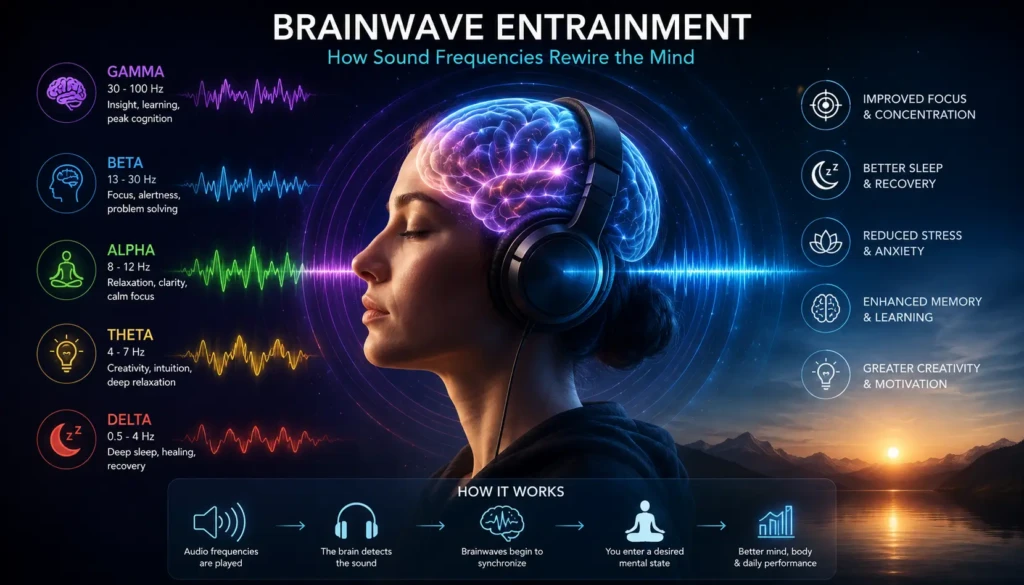
This effect is often discussed under brainwave entrainment, where rhythmic sound patterns may influence mental-state activity for some people.
Related guide:
Brainwave Entrainment Explained
🧠 Why Students Use Binaural Beats
Most study problems are not caused by lack of intelligence.
They often come from overstimulation, poor sleep, stress, multitasking, and a weak study environment.
Binaural beats may help some students by:
- Reducing background distraction
- Creating a repeatable study cue
- Supporting calmer concentration
- Making deep work sessions feel easier to start
- Helping the brain stay with one task longer
The audio is not the whole solution. It works best when paired with focused study habits.
⚡ Best Binaural Beat Frequencies for Studying
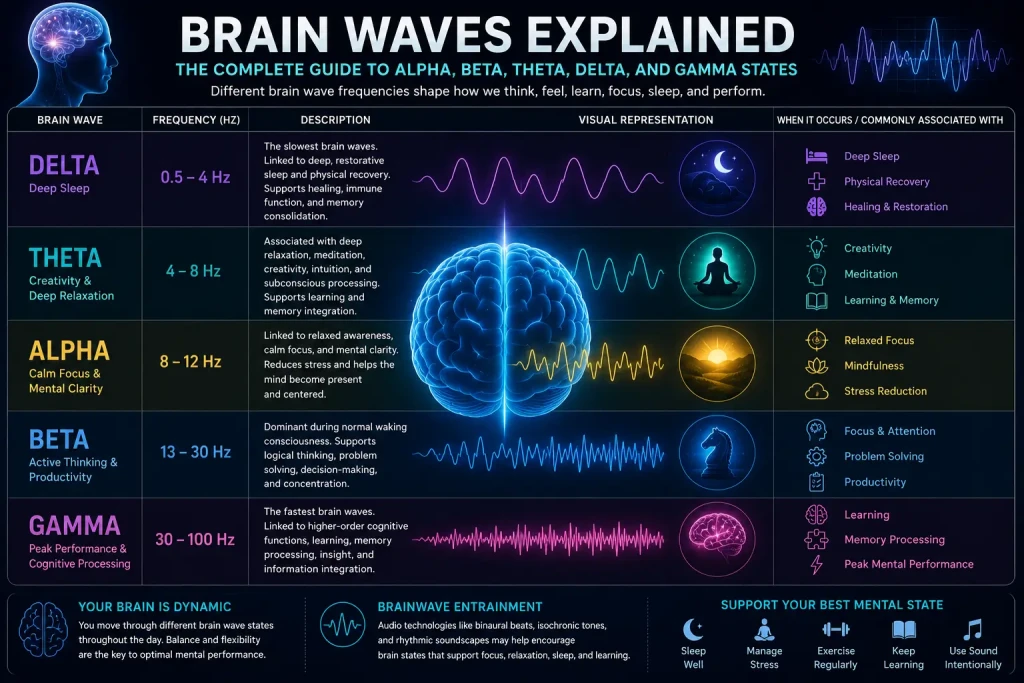
Different frequency ranges are commonly linked with different mental states.
Alpha Waves for Calm Study
Alpha-style binaural beats may be helpful when your mind feels tense, scattered, or overstimulated.
They are often used for:
- Reading
- Reviewing notes
- Creative thinking
- Light memorization
- Relaxing before a study session
Related article:
Alpha Brain Waves and Relaxed Focus
Beta Waves for Active Learning
Beta activity is commonly associated with alert thinking and active concentration.
Beta-style audio may be useful for:
- Exam preparation
- Problem solving
- Writing assignments
- Math or technical subjects
- Focused note-taking
If the sound feels too intense, lower the volume or switch to a calmer track.
Gamma Waves for Deep Mental Work
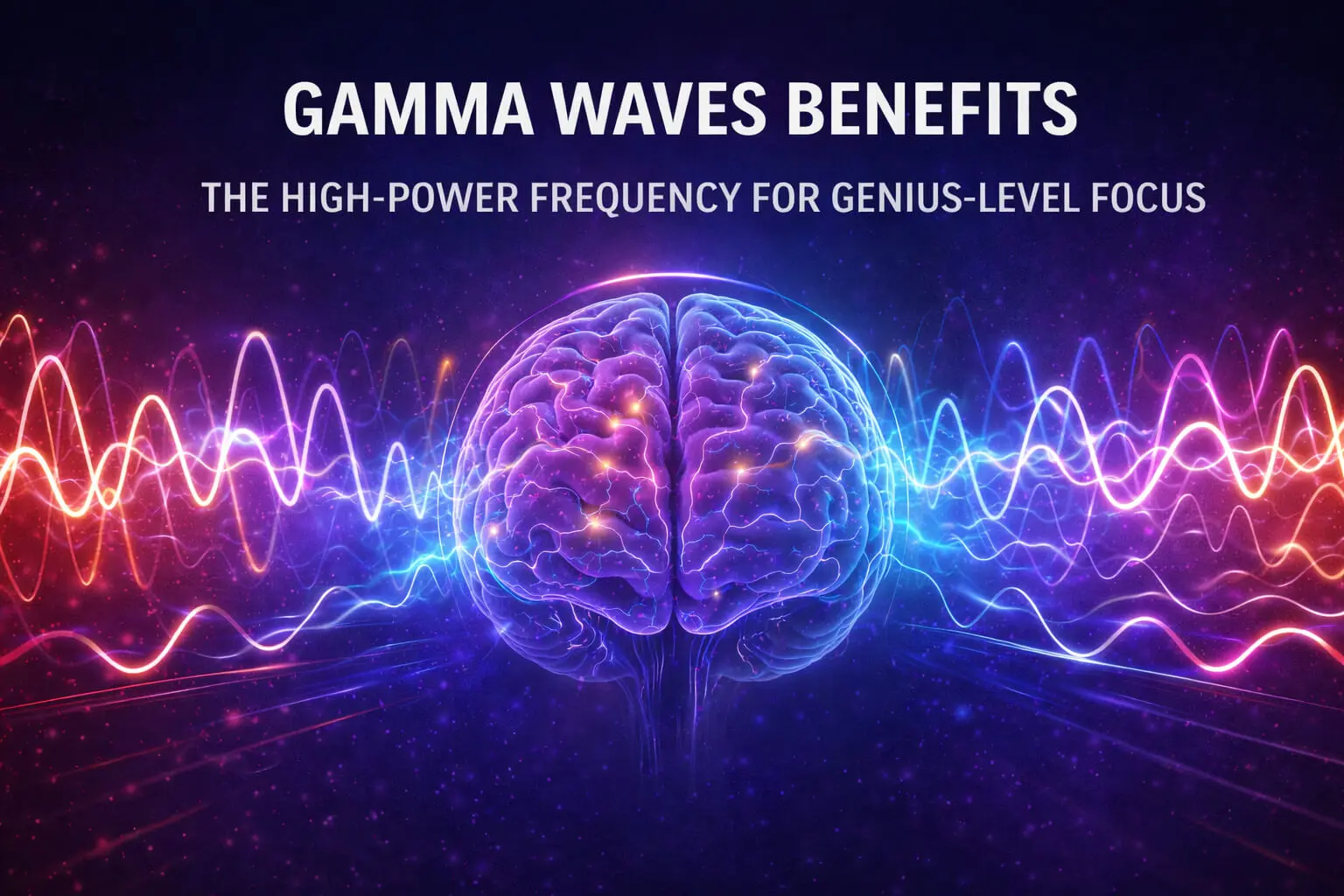
Gamma activity is often discussed in relation to attention, information processing, and cognitive integration.
Some learners use gamma-oriented audio for demanding study blocks that require strong mental engagement.
Related article:
Gamma Brain Waves and Cognitive Performance
📚 How to Use Binaural Beats While Studying
The best way to use binaural beats is to connect them with a clear study routine.
- Choose one subject or task.
- Use headphones.
- Keep the volume comfortable.
- Turn off notifications.
- Study for 25–45 minutes.
- Take a short break before starting again.
This works because the sound becomes a mental cue. Over time, your brain may begin associating that audio environment with focused work.
🎯 Best Study Tasks for Binaural Beats
Binaural beats may be especially useful for tasks that require sustained attention.
- Reading textbooks
- Writing essays
- Learning new concepts
- Reviewing flashcards
- Practicing math problems
- Coding or technical learning
- Preparing for exams
For highly creative or discussion-based work, softer ambient music may sometimes feel better than strong frequency-based audio.
🎵 Binaural Beats vs Regular Study Music
Regular study music can also help concentration, especially if it is calm, repetitive, and free from distracting lyrics.
Binaural beats are different because they are built around a perceived frequency difference between the ears.
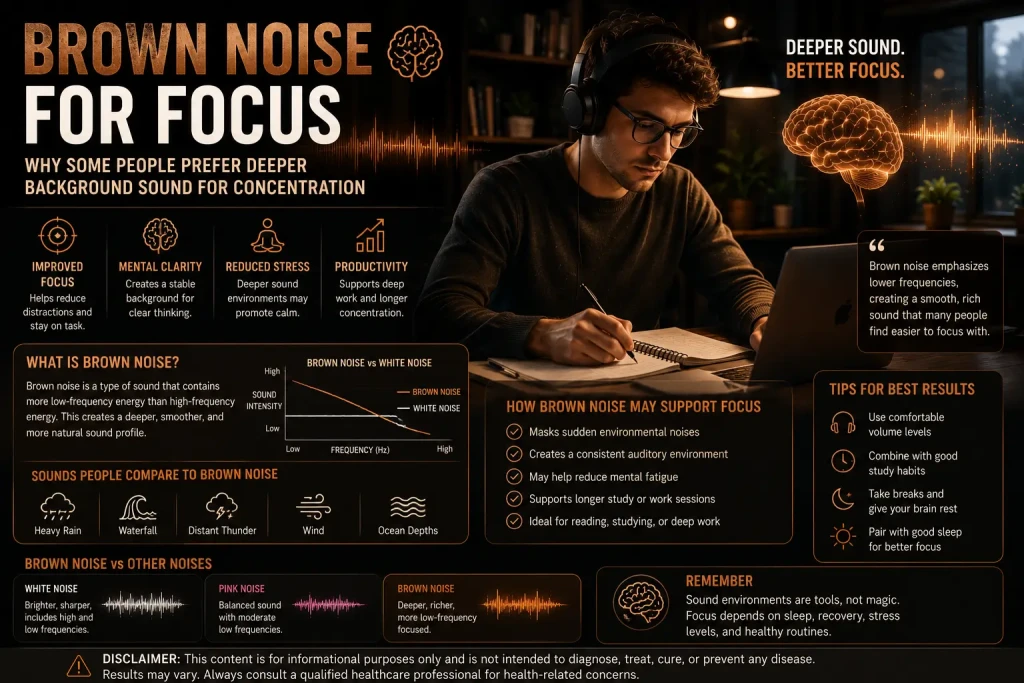
Some students prefer binaural beats because they feel more structured. Others prefer rain sounds, brown noise, ambient music, or simple instrumental tracks.
The best choice is the one that helps you study without pulling your attention away from the material.
Related comparison:
Binaural vs Isochronic Focus
🚀 Where Genius Wave Fits Into Study Audio
Some people prefer basic binaural beat tracks. Others want a more layered sound experience that combines atmosphere, rhythm, and brainwave-inspired audio design.
One example is The Genius Wave audio program, which uses structured sound environments inspired by focus, mental clarity, and cognitive performance routines.
This type of audio may be useful if you want a polished listening experience instead of raw tone-based tracks during study or deep work sessions.
🔬 What Does Research Say?
Research on binaural beats is still developing.
Some studies suggest possible effects on attention, mood, anxiety, or cognitive performance, while other results are mixed.
That means binaural beats should be treated as a support tool, not a guaranteed academic performance hack.
Useful research starting points:
https://www.frontiersin.org/articles/10.3389/fnhum.2019.00425/full
https://www.ncbi.nlm.nih.gov/pmc/articles/PMC4428073/
https://pubmed.ncbi.nlm.nih.gov/11191043/
⚠️ Safe Listening Tips
Study audio should feel comfortable and supportive.
- Do not use very high volume.
- Take breaks during long sessions.
- Stop if the sound feels irritating or stressful.
- Avoid focus tracks while driving.
- Speak with a medical professional if you have seizure history or serious neurological concerns.
Related guide:
Are Binaural Beats Safe?
📌 Final Thoughts
The best binaural beats for studying are the ones that help you stay calm, focused, and consistent.
Alpha-style audio may support relaxed learning. Beta-style tracks may help active concentration. Gamma-oriented audio may be useful for more demanding mental work.
Still, the strongest study results come from combining good audio with better habits: clear goals, fewer distractions, enough sleep, and regular breaks.
If you want a more immersive focus-based audio routine, The Genius Wave audio program may be worth exploring as part of your study environment.
🔗 Related Articles
Related Posts
Stay Informed With the Latest & Most Important News
Previous Post
Next Post