
Now Reading: Best Frequencies for Studying: Which Brainwave Sounds Are Commonly Used for Focus?
-
01
Best Frequencies for Studying: Which Brainwave Sounds Are Commonly Used for Focus?
Best Frequencies for Studying: Which Brainwave Sounds Are Commonly Used for Focus?
Staying focused has become increasingly difficult in modern environments.
People constantly switch between:
- notifications,
- social media,
- videos,
- messages,
- and endless digital distractions.
As attention becomes more fragmented, many students and professionals search for ways to create calmer and more focused study environments.
One topic that frequently appears in these discussions is brainwave audio and study-related sound frequencies.
Some people use binaural beats, ambient soundscapes, or focus-oriented audio environments while reading, writing, or studying.
But which frequencies are most commonly discussed for concentration and focus?
And how realistic are the claims surrounding them?
🎧 Why People Use Audio While Studying
For many people, background audio can help reduce external distraction.
Some listeners report that calmer sound environments help them:
- maintain attention,
- avoid overstimulation,
- stay mentally engaged longer,
- or create more structured study routines.
Audio preferences vary widely between individuals.
Some people prefer silence, while others focus better with rhythmic or ambient sound environments.

🧠 Brainwave Audio and Focus Discussions
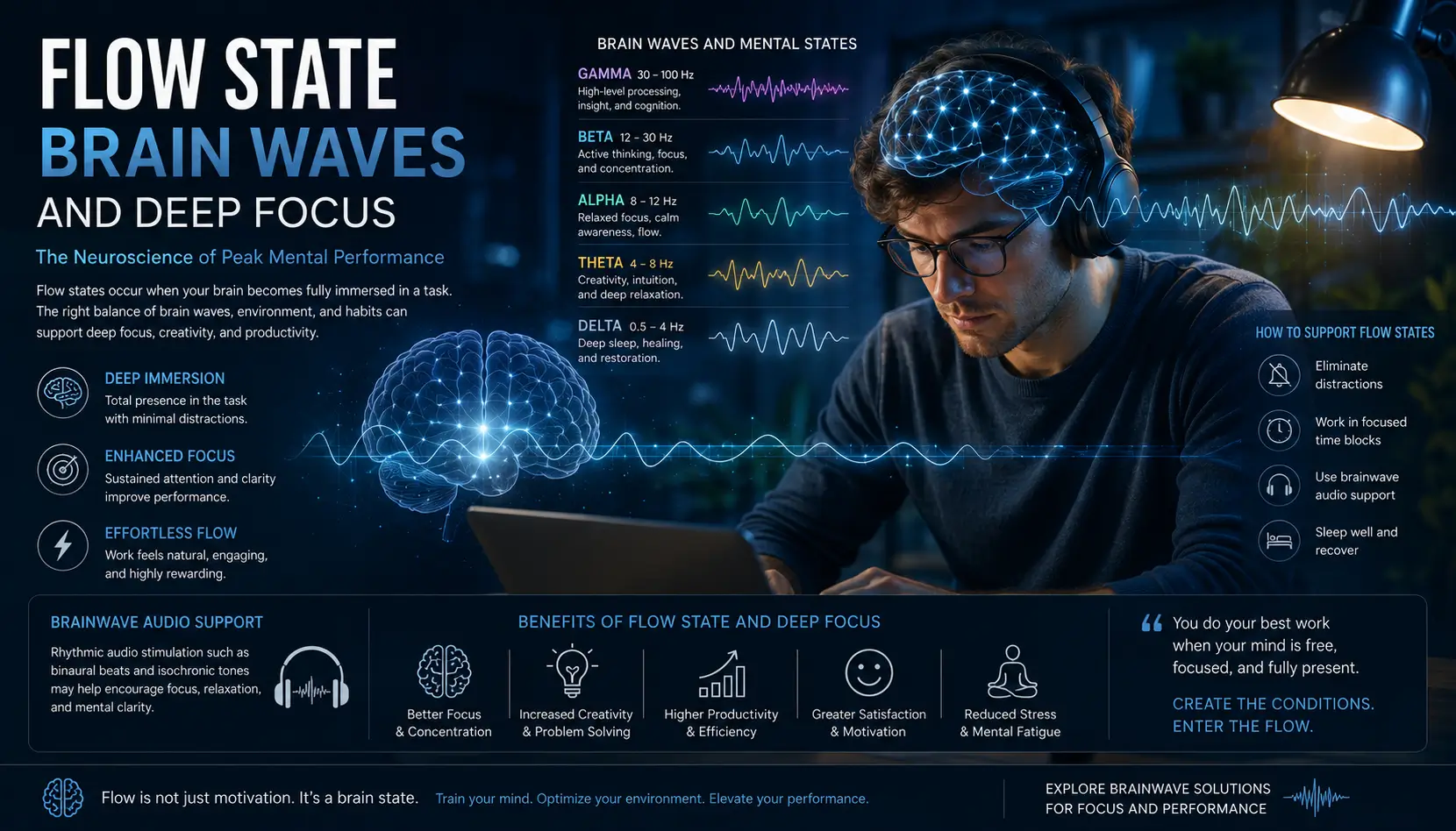
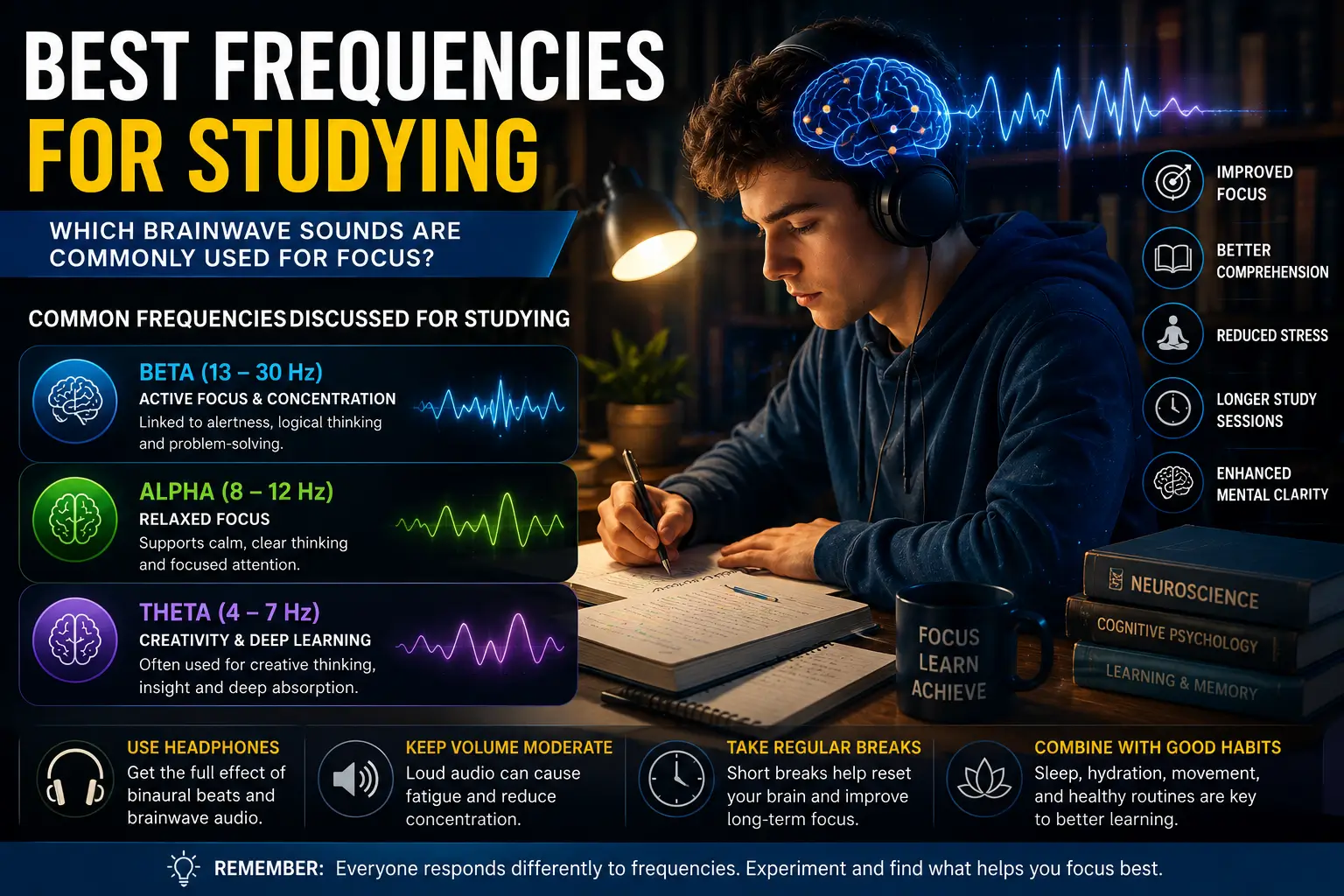
Brainwave audio discussions often involve several commonly referenced brainwave ranges.
🔵 Beta Frequencies
Beta activity is frequently associated with alertness, concentration, and active thinking.
Some focus-oriented audio tracks are designed around faster and more stimulating environments linked to concentration discussions.
🟢 Alpha Frequencies
Alpha brainwave discussions are commonly connected to calmer focus and relaxed attention.
Many listeners prefer softer audio environments that feel less mentally aggressive during longer study sessions.
Related article: Alpha Brainwaves and Relaxed Focus.
🟣 Theta Frequencies
Theta ranges are more often discussed in relation to meditation, creativity, and deep relaxation.
Some people use theta-oriented audio during brainstorming or creative work rather than highly analytical studying.
📚 Common Frequencies Discussed for Studying
Online discussions about focus audio often mention ranges such as:
- Alpha frequencies around relaxed concentration,
- Beta-oriented stimulation for active focus,
- ambient brown noise environments,
- or binaural beats designed for concentration routines.
However, there is no universally “perfect” studying frequency that works for everyone.
Focus depends on many variables including:
- mental fatigue,
- stress levels,
- sleep quality,
- motivation,
- environment,
- and personal learning style.
📱 Overstimulation Makes Focus Harder
Modern digital environments place constant pressure on attention.
Many people rarely experience true mental quiet.
This nonstop stimulation can make studying feel mentally exhausting even before learning begins.
Related article: Modern Brain Overstimulation.
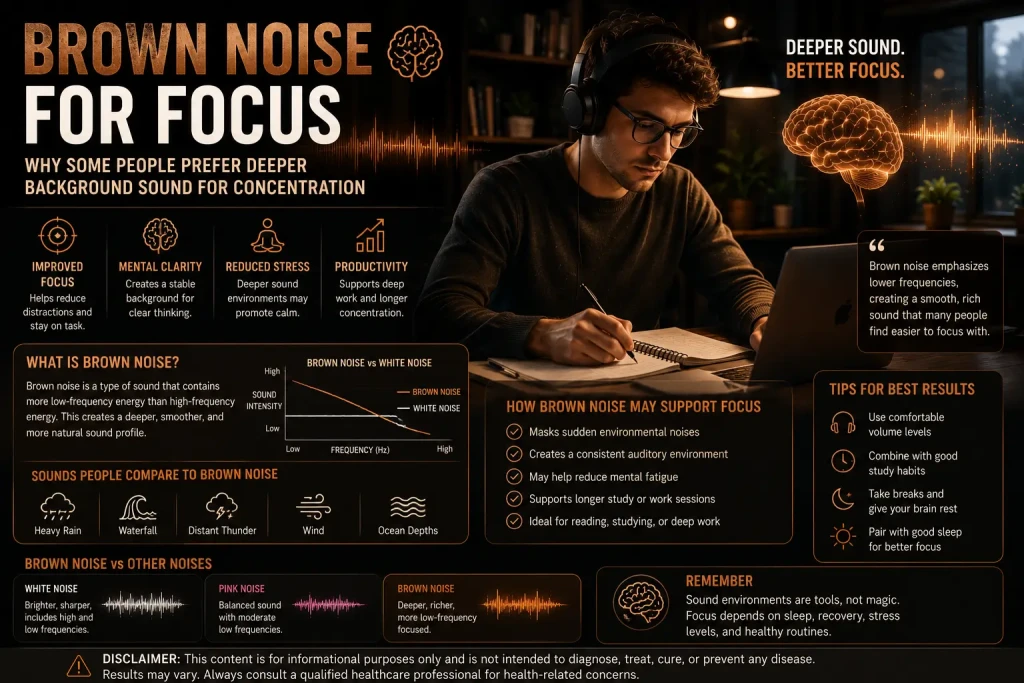
🎵 Brown Noise, White Noise, and Study Audio
Not all focus audio revolves around binaural beats.
Many students also explore:
- brown noise,
- white noise,
- pink noise,
- rain sounds,
- or ambient environmental audio.
These sound environments may help reduce sudden distractions and create more consistent listening conditions for concentration.
Related article: Brown Noise for Focus.
⚠️ Unrealistic Claims About Study Frequencies
Online content sometimes exaggerates what sound frequencies can realistically do.
You may encounter claims about:
- instant intelligence,
- perfect memory,
- or guaranteed academic success from specific frequencies.
These claims are not scientifically established.
Audio environments may support focus routines for some individuals, but they are not magical shortcuts.
😴 Sleep and Focus Are Deeply Connected
Concentration becomes much harder when the brain is mentally exhausted.
Sleep quality strongly affects:
- attention,
- memory processing,
- motivation,
- and cognitive performance.
Many people search for “better focus” when the larger issue is actually mental fatigue and overstimulation.
Related article: Delta Waves for Sleep.
🎧 Focus Audio as Part of Study Routines
Some people also explore neuroacoustic audio environments designed around calmer focus and attention-supportive listening experiences.
These tools are generally most useful when combined with:
- healthy study habits,
- reduced distractions,
- sleep recovery,
- and consistent learning routines.
🚫 Common Misunderstandings
❌ “One Frequency Creates Perfect Focus”
Attention and concentration depend on many factors beyond audio alone.
❌ “More Intense Audio Always Works Better”
Many people actually focus better with calmer and less aggressive sound environments.
❌ “Everyone Responds the Same Way”
People experience sound environments differently depending on personal preferences and mental state.
🧠 Final Thoughts
Study-related sound frequencies continue to attract attention because modern focus is increasingly difficult to maintain.
While there is no universal “perfect studying frequency,” some people enjoy using calmer sound environments to reduce distraction and create more intentional study routines.
In many cases, sustainable focus depends less on finding magical audio frequencies and more on improving sleep, reducing overstimulation, and building healthier attention habits over time.
Related Articles
Related Posts

Stay Informed With the Latest & Most Important News
Previous Post
Next Post