
Now Reading: Digital Detox for Brain Focus: Reclaiming Attention in an Always-Connected World
-
01
Digital Detox for Brain Focus: Reclaiming Attention in an Always-Connected World
Digital Detox for Brain Focus: Reclaiming Attention in an Always-Connected World
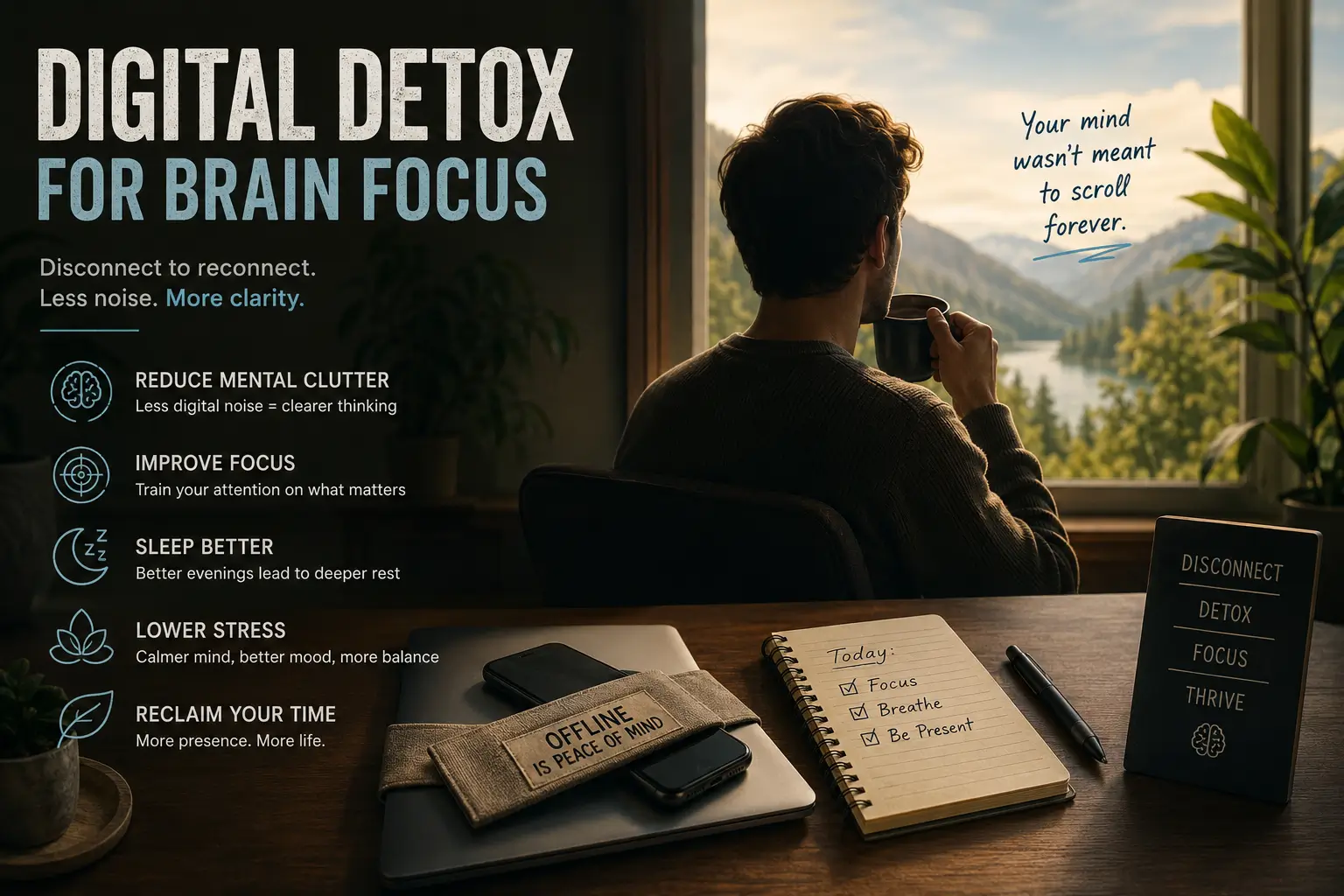
Modern attention is under constant pressure.
Phones vibrate.
Notifications appear every few minutes.
Social feeds refresh endlessly.
Videos autoplay before the brain has time to pause.
Even moments of silence are often filled with stimulation.
As a result, many people feel mentally exhausted while still struggling to focus deeply on anything for long.
This is one reason the idea of a digital detox has become increasingly popular.
Not because technology is inherently bad.
But because constant overstimulation can gradually affect attention, mental clarity, sleep quality, and cognitive recovery.
A digital detox is not about abandoning modern life.
It is about creating healthier boundaries between the brain and endless stimulation.
📱 What Is a Digital Detox?
A digital detox refers to intentionally reducing exposure to digital stimulation for a period of time.
This may include limiting:
- social media,
- notifications,
- short-form video content,
- constant messaging,
- background media,
- or unnecessary screen time.
The goal is not perfection.
The goal is to give the brain more opportunities for recovery, sustained attention, and mental quiet.
⚡ Why Constant Stimulation Drains Focus
The human brain evolved in environments very different from today’s digital landscape.
Modern technology delivers near-constant novelty:
- new messages,
- new videos,
- new headlines,
- new alerts,
- new distractions.
Attention becomes fragmented.
The brain repeatedly switches context instead of staying engaged with one task.
Over time, this can make deep concentration feel more difficult.
Many people notice symptoms such as:
- mental fatigue,
- reduced attention span,
- difficulty reading for long periods,
- constant urge to check devices,
- or feeling restless during quiet moments.
🧠 Dopamine, Novelty, and Attention
Digital platforms are designed to maximize engagement.
Novelty plays a major role in this process.
The brain naturally responds to new information and unpredictable rewards.
This does not mean technology “damages” the brain in a simplistic way.
However, constant novelty can encourage compulsive checking habits and fragmented attention patterns.
Many people eventually reach a point where slower activities begin to feel unusually difficult.
For example:
- reading books,
- deep studying,
- creative work,
- reflection,
- or extended focus sessions.
📵 Signs You May Need a Digital Reset
Some common signs include:
- checking your phone automatically without thinking,
- difficulty focusing on one task for more than a few minutes,
- feeling mentally “noisy,”
- poor concentration during work or study,
- constant multitasking,
- difficulty relaxing without screens,
- or struggling to sleep after late-night scrolling.
These experiences have become extremely common in highly connected environments.
🌙 Digital Overload and Sleep
Many people underestimate how strongly digital habits affect sleep quality.
Late-night stimulation keeps the brain mentally active even after the body feels tired.
Bright screens, emotional content, constant scrolling, and information overload may make it harder to mentally “power down.”
This matters because sleep is deeply connected to:
- attention,
- memory,
- mood regulation,
- and cognitive recovery.
Related guide: Sleep Waves Explained.
🎯 Why Deep Focus Feels Harder Today
Deep focus requires uninterrupted attention.
But many digital environments train the brain toward rapid switching instead.
Short bursts of stimulation can slowly reduce tolerance for slower, more demanding mental work.
This is one reason some people feel uncomfortable during silence or boredom.
The brain becomes accustomed to constant input.
Recovering focus often means rebuilding tolerance for stillness and sustained attention.
🌿 What a Healthy Digital Detox Looks Like
A digital detox does not need to be extreme.
Small changes can already make a noticeable difference.
Examples include:
- turning off non-essential notifications,
- creating phone-free work sessions,
- avoiding screens before sleep,
- using single-task focus blocks,
- taking walks without devices,
- or scheduling periods of intentional offline time.
The goal is not punishment.
The goal is reducing cognitive overload.
🎧 Creating Better Mental Environments
Some people also use structured audio environments to reduce distraction during focus sessions.
This may include:
- ambient sound,
- focus music,
- binaural beats,
- or calming background audio.
For some individuals, consistent sound environments help create psychological separation from digital noise and multitasking habits.
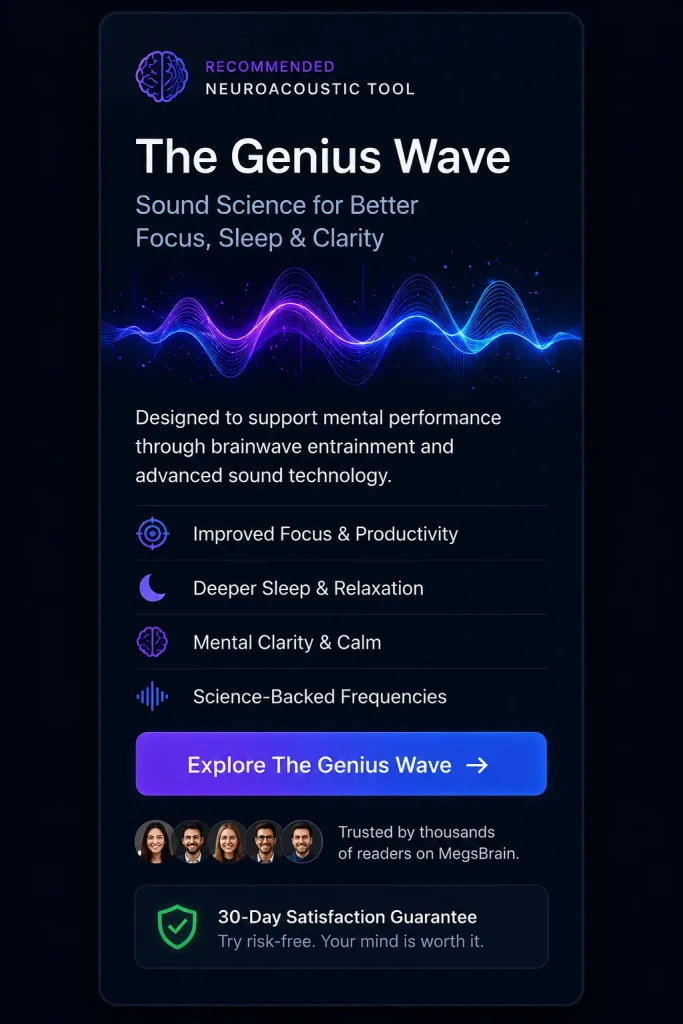
Some listeners also explore neuroacoustic audio environments designed to support concentration and mental recovery routines.
These tools are generally most useful when combined with healthier attention habits rather than used as shortcuts.
📚 Rebuilding Attention Takes Time
Many people expect instant results after reducing screen time.
But attention habits often develop over years.
Rebuilding focus usually requires consistency.
At first, slower activities may feel uncomfortable.
That is normal.
The brain gradually adapts to different patterns of stimulation.
Over time, many people notice improvements such as:
- better concentration,
- improved reading stamina,
- reduced mental clutter,
- more patience,
- or calmer thinking.
🚫 Common Mistakes During a Digital Detox
Trying to Quit Everything at Once
Extreme restrictions are often difficult to maintain.
Gradual improvements are usually more sustainable.
Replacing One Form of Overstimulation With Another
Switching endlessly between different apps or content types may not solve the underlying attention problem.
Ignoring Sleep and Recovery
Focus is strongly connected to sleep quality, stress levels, and recovery habits.
A digital detox works best as part of a broader mental wellness approach.
🧠 Final Thoughts
Digital overload has become a normal part of modern life.
But constant stimulation can gradually fragment attention and reduce mental recovery time.
A digital detox is not about rejecting technology.
It is about creating healthier relationships with attention, focus, and mental space.
Sometimes the brain does not need more stimulation.
Sometimes it needs fewer interruptions.
And in a world designed to constantly pull attention outward, protecting mental clarity may become one of the most valuable cognitive habits of all.
Related Articles
Related Posts

Stay Informed With the Latest & Most Important News
Previous Post
Next Post