
Now Reading: Brainwave Entrainment Explained: How Sound May Influence Focus and Relaxation
-
01
Brainwave Entrainment Explained: How Sound May Influence Focus and Relaxation
Brainwave Entrainment Explained: How Sound May Influence Focus and Relaxation
The human brain constantly produces rhythmic electrical activity.
These patterns — commonly known as brainwaves — change depending on:
- attention,
- stress,
- sleep,
- emotional state,
- and cognitive activity.
Brainwave entrainment is the idea that rhythmic sensory stimulation may help encourage certain mental states through repeated sound patterns.
Over the years, entrainment-based audio has become increasingly popular among people interested in:
- focus,
- meditation,
- relaxation,
- mindfulness,
- sleep,
- and cognitive performance.
But what exactly is brainwave entrainment — and how much of the internet hype is scientifically realistic?
The answer is more nuanced than many dramatic online claims suggest.
🌊 What Is Brainwave Entrainment?
Brainwave entrainment refers to the use of rhythmic sensory stimulation intended to encourage synchronization between external stimuli and internal neural activity.
This stimulation may involve:
- sound,
- light pulses,
- rhythmic tones,
- or repetitive audio patterns.
The concept is based on the idea that the brain naturally responds to rhythm and repetition.
In audio-based entrainment, listeners often use:
- binaural beats,
- isochronic tones,
- ambient rhythmic soundscapes,
- or meditation-focused audio environments.
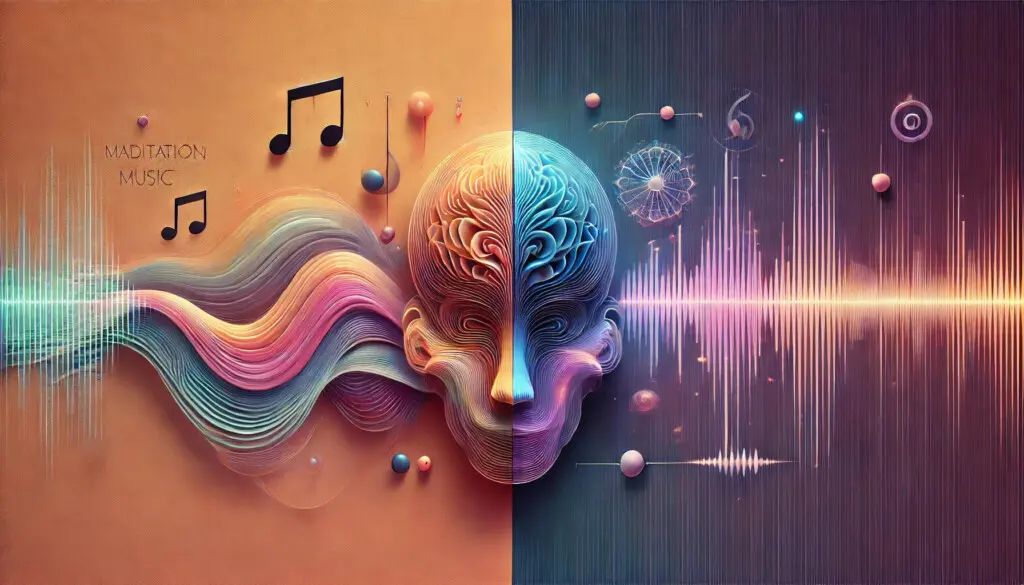
🎧 Common Types of Brainwave Entrainment
Several different approaches are commonly discussed online.
🔹 Binaural Beats
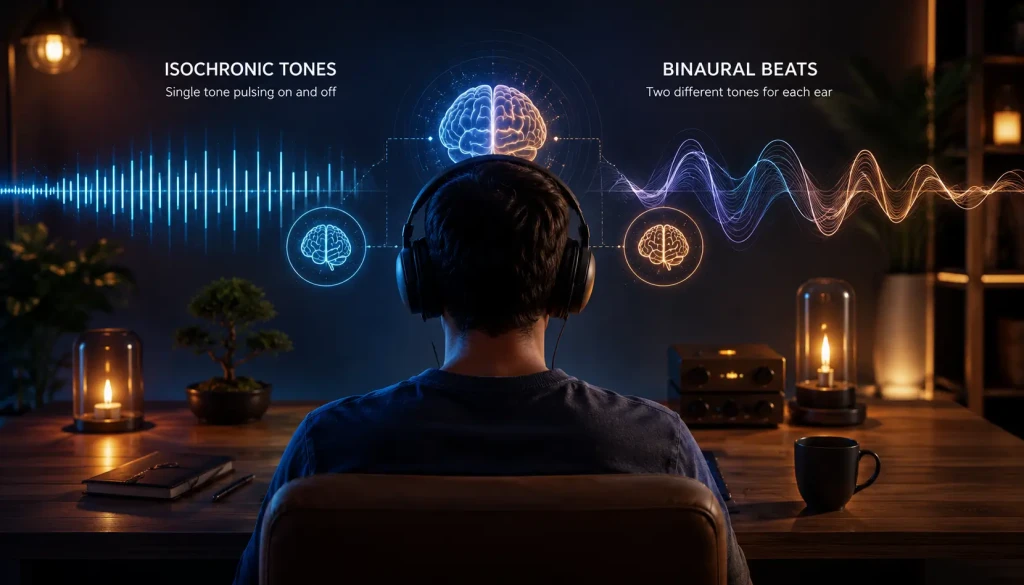
Binaural beats are created when slightly different frequencies are played separately into each ear.
The brain perceives the difference between them as a rhythmic internal pulse.
Headphones are generally required for binaural beats to function properly.
You can also explore our detailed comparison of binaural beats and isochronic tones to better understand how these systems differ.
🔹 Isochronic Tones
Isochronic tones use evenly spaced rhythmic sound pulses.
Unlike binaural beats:
- they do not require headphones,
- and the pulses are directly embedded into the audio itself.
Some listeners describe isochronic stimulation as:
- sharper,
- more intense,
- or more stimulating than binaural audio.
🔹 Ambient Neuroacoustic Audio
Modern sound environments sometimes combine:
- rhythmic stimulation,
- ambient music,
- atmospheric sound design,
- and calming frequencies
to create immersive listening experiences focused on:
- relaxation,
- mindfulness,
- or concentration.
Some listeners explore neuroacoustic brainwave audio systems designed to support calmer focus and stress-reduction routines.
🔬 What Science Actually Says
Research involving brainwave entrainment remains ongoing.
Some studies suggest rhythmic auditory stimulation may influence:
- relaxation,
- mood,
- attention,
- and meditative states under certain conditions.
However, many online claims surrounding entrainment become exaggerated.
There is currently no strong scientific evidence proving that brainwave audio:
- instantly increases intelligence,
- unlocks hidden mental powers,
- or dramatically rewires the brain.
Further reading:
https://www.frontiersin.org/articles/10.3389/fnhum.2019.00425/full
https://www.ncbi.nlm.nih.gov/pmc/articles/PMC10198548/
The most balanced perspective is viewing entrainment audio as:
- a focus-supportive environment,
- a relaxation tool,
- or a mindfulness aid.
☁️ Why Rhythmic Audio Feels Powerful
The nervous system naturally responds to:
- rhythm,
- repetition,
- atmosphere,
- and sensory pacing.
This is one reason:
- music can affect emotion,
- meditation audio can feel immersive,
- and calming sound environments may support relaxation.
For many people, entrainment audio simply creates:
- mental structure,
- sensory consistency,
- and reduced distraction.
In overstimulating digital environments, this alone may feel psychologically valuable.
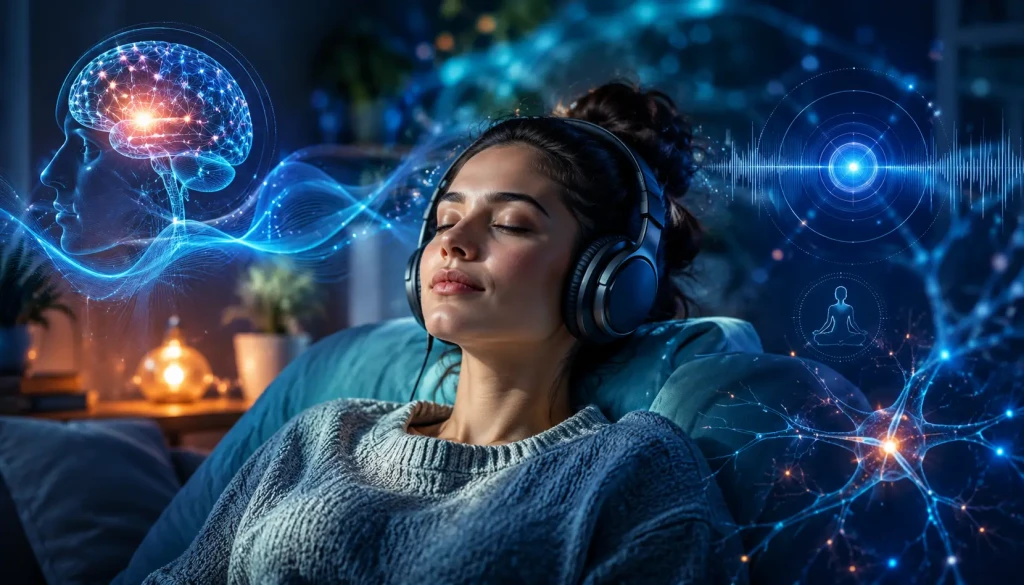
🧘 Brainwave Entrainment and Meditation
Meditation communities often discuss entrainment because rhythmic audio may help support:
- calm attention,
- reduced mental noise,
- and inward focus.
Some listeners combine:
- meditation,
- mindfulness,
- breathwork,
- and ambient audio routines
to create more immersive relaxation practices.
You may also find our article on meditation vs binaural beats helpful for understanding the differences between internally guided mindfulness and externally guided sound environments.
🌙 Brainwave States Commonly Discussed
Different brainwave ranges are often associated with different mental states:
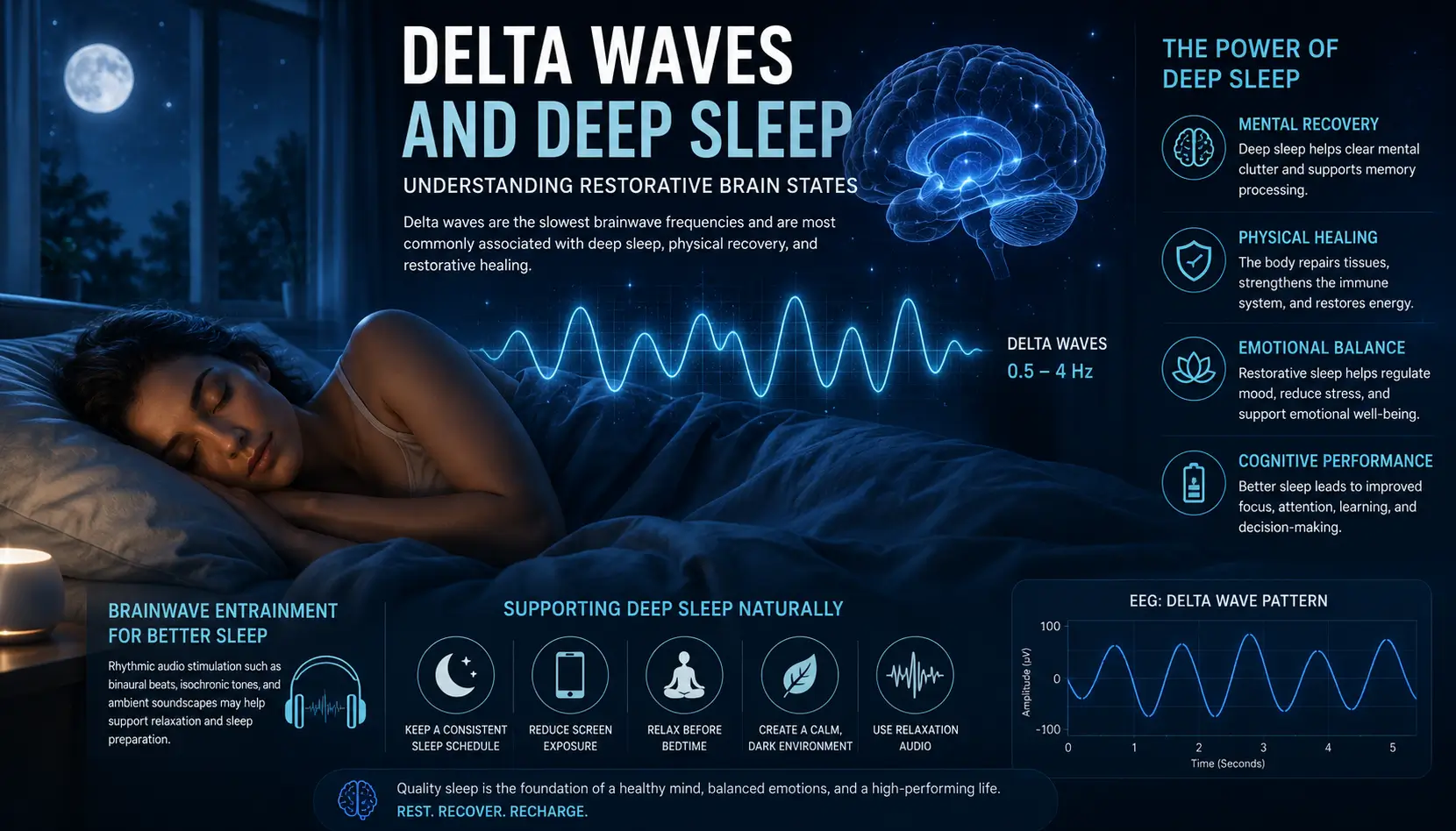
- Delta → deep sleep
- Theta → imagination and deep relaxation
- Alpha → calm focus
- Beta → active thinking
- Gamma → high-level cognitive processing
Healthy cognition depends on flexible transitions between these states rather than remaining locked in one frequency pattern.
You can explore our related guides on:
to better understand how different brainwave patterns are commonly discussed in neuroscience and mindfulness research.
⚠️ Common Myths About Brainwave Entrainment
Myth:
“Brainwave entrainment instantly transforms the brain.”
Reality:
Current research does not support dramatic transformation claims.
Myth:
“One frequency works perfectly for everyone.”
Reality:
Responses to sound environments vary significantly between individuals.
Myth:
“Brainwave audio replaces healthy lifestyle habits.”
Reality:
Focus, sleep, emotional balance, and mental clarity depend on many broader biological and behavioral factors.
🧩 Why Brainwave Audio Continues Growing in Popularity
Modern life is increasingly filled with:
- stress,
- distraction,
- fragmented attention,
- and constant stimulation.
This has increased interest in tools that may help support:
- calmer focus,
- relaxation,
- mindfulness,
- and emotional decompression.
For many individuals, brainwave audio is less about “hacking the brain” and more about creating healthier mental environments.
Final Thoughts
Brainwave entrainment remains one of the most fascinating intersections between:
- neuroscience,
- sound design,
- mindfulness,
- and cognitive performance.
Research suggests rhythmic stimulation may influence relaxation and attention under certain conditions.
At the same time, exaggerated internet claims should be approached carefully.
The healthiest perspective is understanding brainwave entrainment as a supportive audio environment rather than a magical shortcut to transformation.
Related Articles
Related Posts
Stay Informed With the Latest & Most Important News
Previous Post
Next Post