
Now Reading: Brain Health and Cognitive Function: How Nutrition Supports Focus, Memory, and Mental Performance
-
01
Brain Health and Cognitive Function: How Nutrition Supports Focus, Memory, and Mental Performance
Brain Health and Cognitive Function: How Nutrition Supports Focus, Memory, and Mental Performance
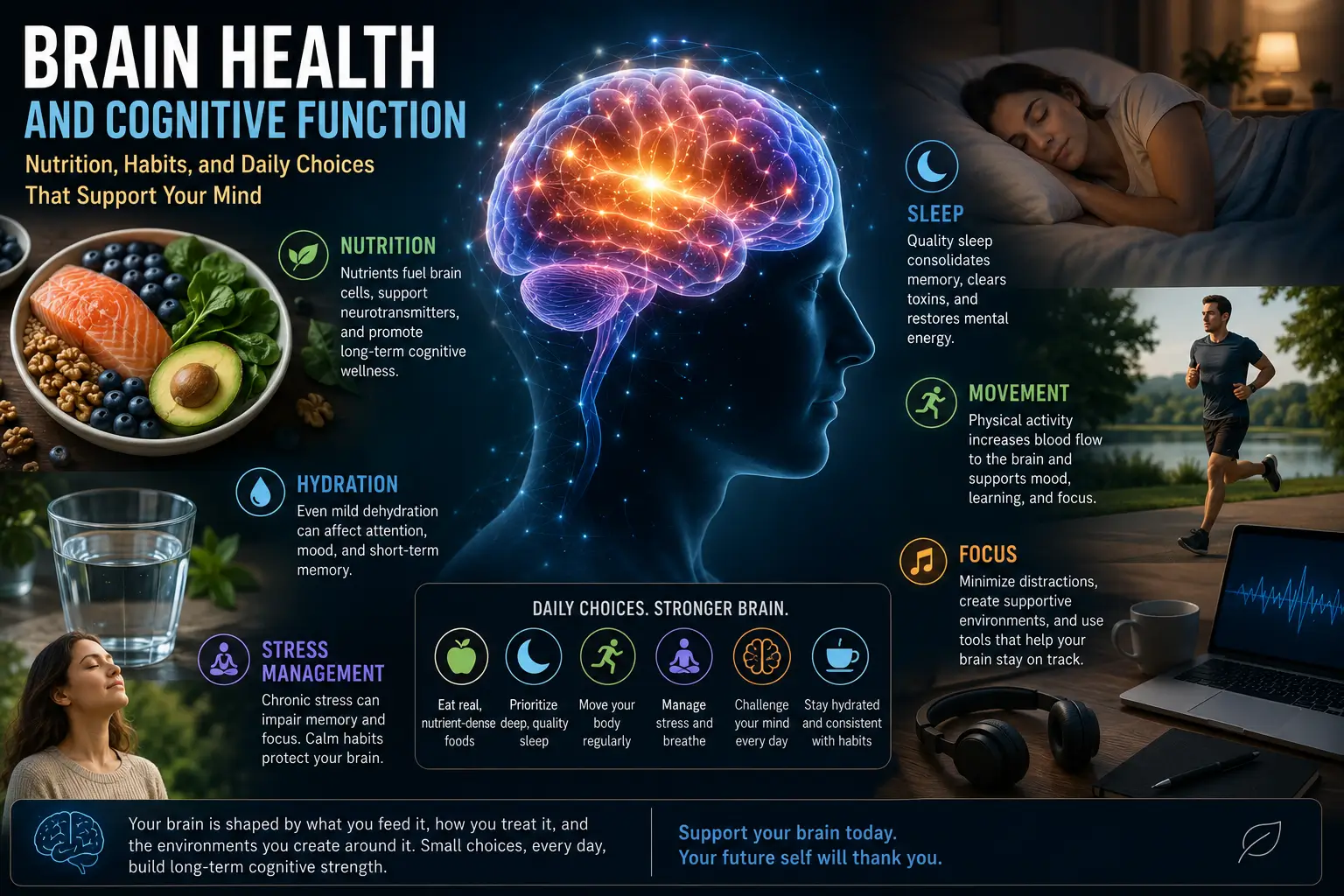
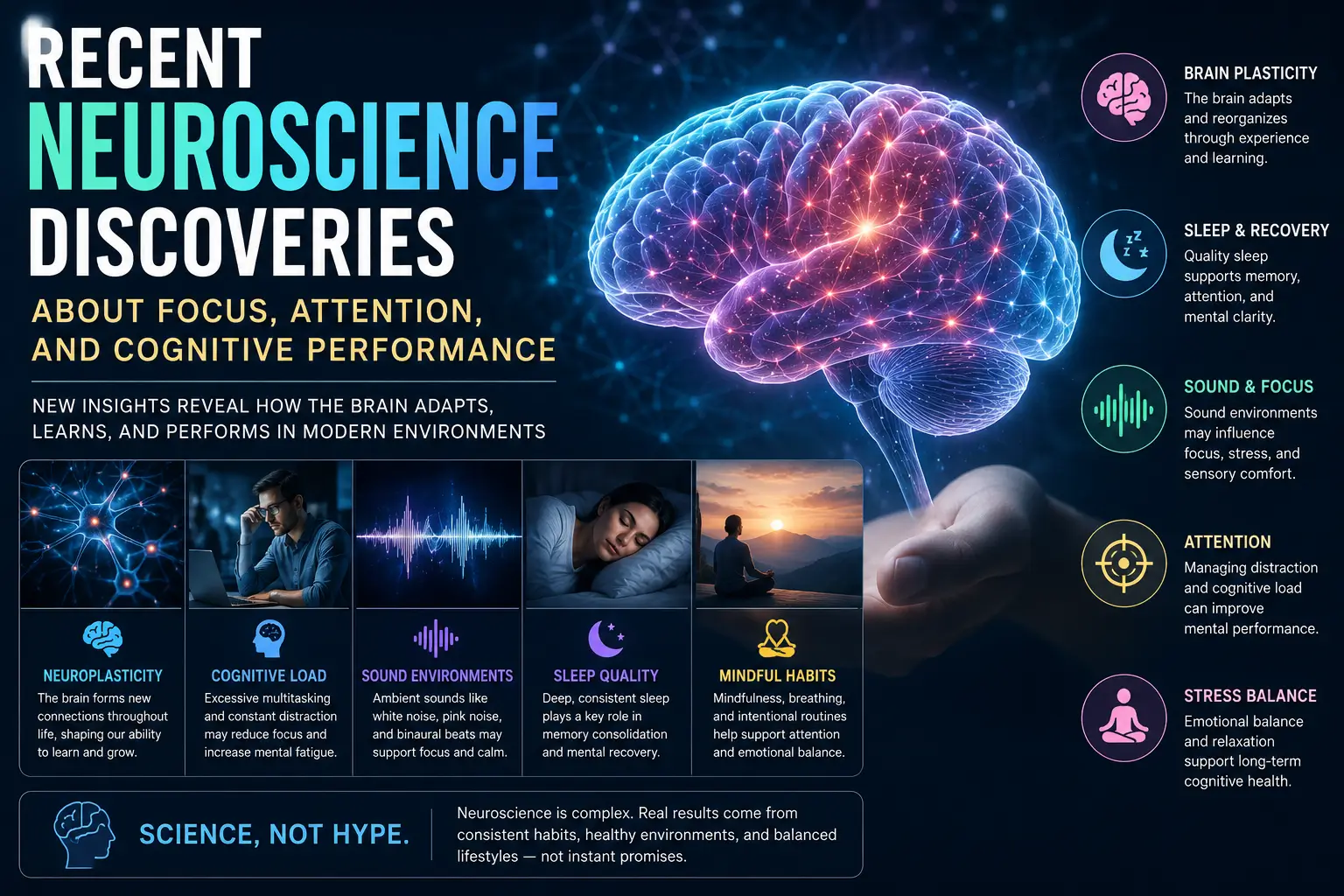
Brain health is not built from one habit.
It is shaped slowly by sleep, nutrition, stress, movement, attention, recovery, and the environments people live in every day.
That may sound simple, but it changes the way we should think about cognitive performance.
Focus is not only about discipline.
Memory is not only about intelligence.
Mental clarity is not only about motivation.
The brain works best when the body gives it enough support to operate efficiently.
🥑 Why Nutrition Matters for the Brain
The brain is an energy-demanding organ.
Even when people are sitting still, thinking, planning, learning, and regulating emotion require constant biological resources.
Nutrition does not create instant genius.
But the foods people eat can influence the conditions that support:
- energy stability,
- attention,
- memory formation,
- emotional balance,
- and long-term cognitive wellness.
This is why brain health conversations often include food quality, blood sugar balance, hydration, sleep, and inflammation.
📚 Cognitive Function Is Bigger Than Memory
Many people think cognitive function simply means memory.
Memory is important, but it is only one part of the picture.
Cognitive function may involve:
- focus,
- learning,
- planning,
- mental flexibility,
- decision-making,
- and information processing.
When these systems work well together, daily mental tasks feel easier.
When they are strained by poor recovery, stress, or constant overstimulation, even simple thinking can feel heavier than usual.
Related article: Cognitive Performance and Attention Span.
🫐 Foods Often Discussed for Brain Health
No single food can “upgrade” the brain overnight.
Still, some foods are commonly discussed in nutrition research because they contain nutrients associated with overall brain and body health.
These often include:
- fatty fish rich in omega-3 fatty acids,
- berries containing antioxidant compounds,
- leafy greens,
- nuts and seeds,
- eggs,
- olive oil,
- and whole-food sources of protein.
The bigger pattern matters more than one trendy ingredient.
A consistent diet built around nutrient-dense foods usually supports the brain better than short-term “brain food” hacks.
⚡ Mental Energy and Blood Sugar Stability
Many people notice that focus changes throughout the day.
Sometimes the reason is not motivation but energy stability.
Large swings in energy may make concentration harder, especially during mentally demanding tasks.
Balanced meals that include protein, healthy fats, fiber, and slow-digesting carbohydrates may help some people maintain steadier energy.
This is not about perfection.
It is about giving the brain a more stable environment to work from.
😴 Sleep Is Still One of the Strongest Brain Health Tools
Nutrition matters, but sleep remains one of the most powerful foundations for cognitive function.
During sleep, the brain supports:
- memory consolidation,
- emotional regulation,
- attention recovery,
- and mental restoration.
Poor sleep can make even a good diet feel less effective because the brain is still operating without enough recovery.
Related article: Sleep Waves Explained.
🎯 Brain Health and Executive Function
Executive function helps people manage focus, planning, organization, and self-control.
These systems depend on more than willpower.
They are affected by recovery, stress, attention habits, and overall physical health.
A person may have strong goals but still struggle mentally if the brain is overloaded or under-recovered.
Related article: Executive Function and Attention Regulation.
📱 Why Modern Life Makes Brain Health More Important
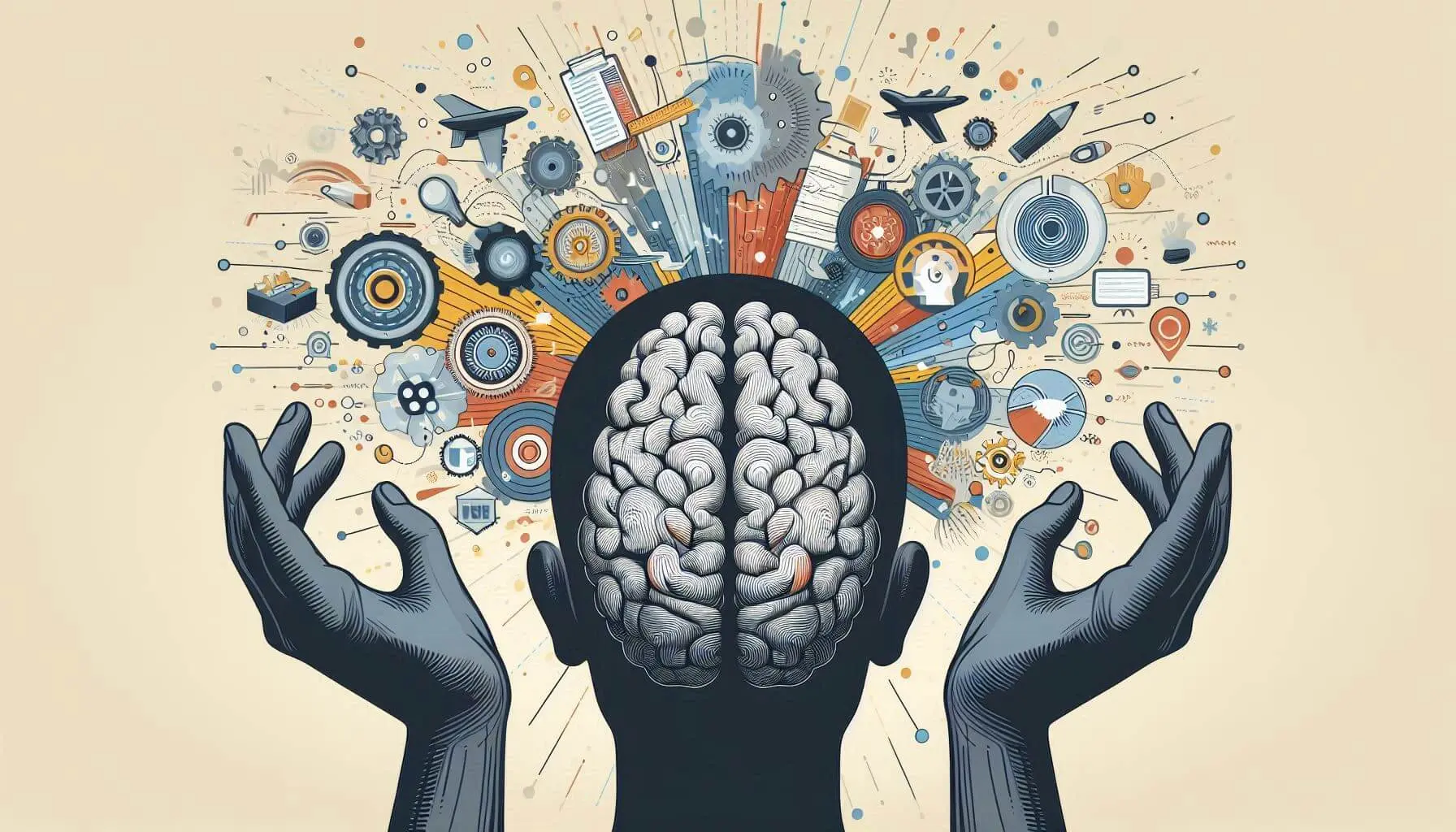
The modern brain deals with constant input.
Phones, notifications, information overload, multitasking, and digital noise keep attention systems active for long periods.
Even when people are not doing difficult work, the brain may still be processing stimulation.
That is why brain health should not only be viewed through food.
It also includes:
- reducing unnecessary overload,
- protecting sleep,
- creating calmer environments,
- and giving attention systems time to recover.
Related article: Sensory Overload and the Brain.
🎧 Sound, Focus, and Cognitive Environments
Food supports the biological side of brain health.
Environment supports the attention side.
Some people focus best in silence.
Others prefer gentle background sound, structured audio, or calming listening environments while working or recovering.
The key idea is not that one method works for everyone.
The key idea is that cognitive performance often improves when the brain is given fewer unnecessary distractions.
Some individuals also explore audio environments designed around focus and mental clarity as part of broader brain health routines.
🌿 Brain Health Is Usually Built Through Patterns
People often search for one perfect supplement, one perfect food, or one perfect routine.
But the brain usually responds better to patterns than isolated fixes.
Useful patterns may include:
- consistent sleep,
- nutrient-dense meals,
- regular movement,
- reduced digital overload,
- stress recovery habits,
- and focused learning routines.
Related article: Neuroplasticity and Brain Rewiring.
⚠️ Common Misunderstandings About Brain Nutrition
❌ “One Food Can Transform Your Brain”
No single food creates perfect memory, focus, or cognitive performance by itself.
❌ “Supplements Replace Basic Habits”
Sleep, diet quality, stress regulation, and daily routines remain central to long-term brain health.
❌ “Brain Health Is Only About Avoiding Decline”
Brain health also supports everyday focus, learning, decision-making, and mental energy.
🧠 Final Thoughts
Brain health and cognitive function are shaped by many connected factors.
Nutrition plays an important role, but it works best alongside sleep, stress regulation, movement, recovery, and healthier attention environments.
For most people, mental performance improves not from chasing one miracle solution, but from building daily conditions that support the brain more consistently.
A healthier brain is usually not created in one dramatic moment.
It is built quietly through repeated choices that make focus, memory, and mental clarity easier to sustain over time.
Related Articles
Related Posts

Stay Informed With the Latest & Most Important News
Previous Post
Next Post