
Now Reading: Binaural Beats for Anxiety Relief: Why Some People Use Relaxing Audio for Calm
-
01
Binaural Beats for Anxiety Relief: Why Some People Use Relaxing Audio for Calm
Binaural Beats for Anxiety Relief: Why Some People Use Relaxing Audio for Calm
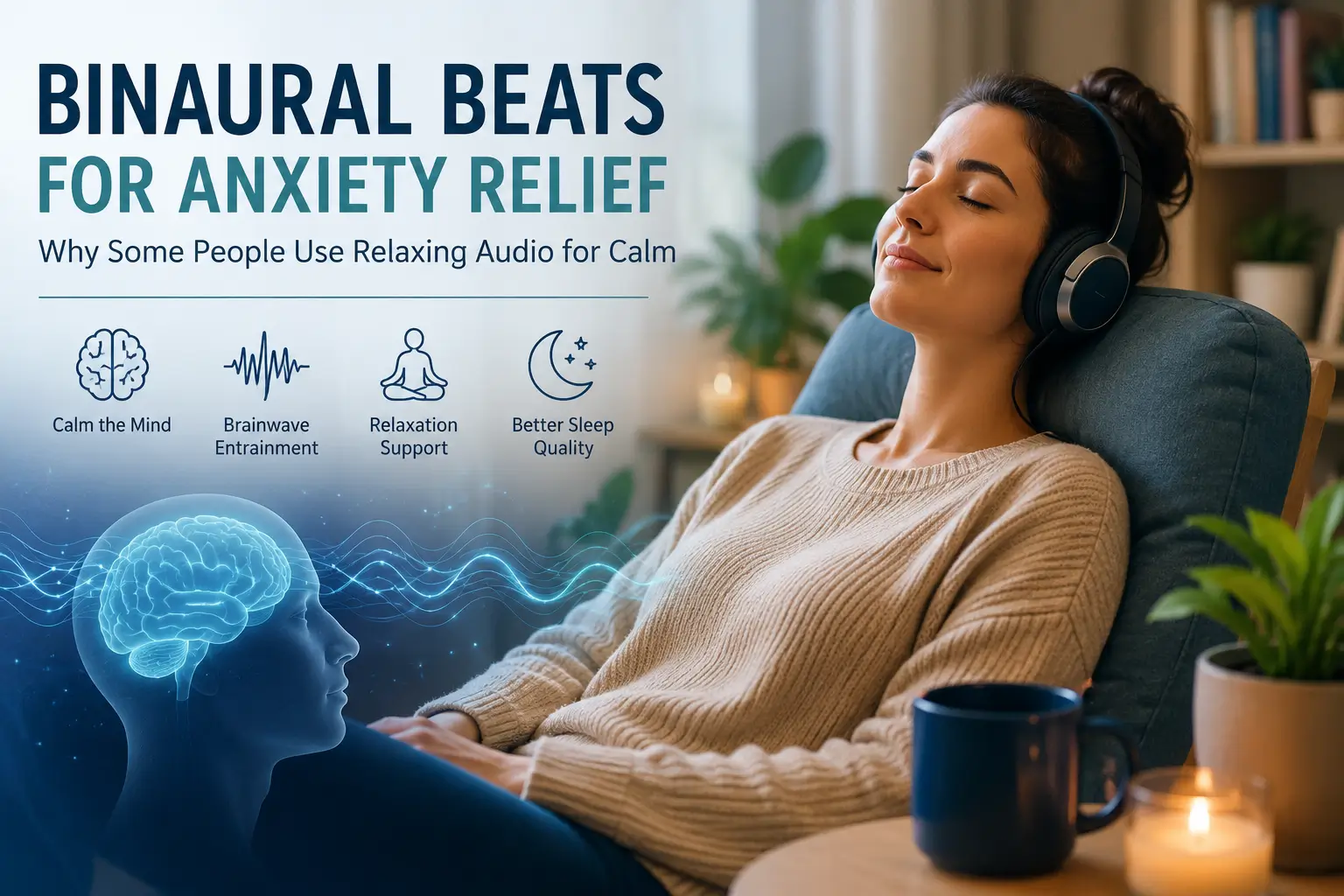
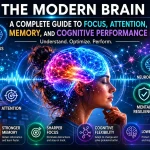
Modern life places the brain under constant pressure.
Notifications never stop.
Attention becomes fragmented.
Many people feel mentally overstimulated long before the day even ends.
As stress levels increase, more people search for tools that may help create calmer mental environments.
One approach that continues to attract attention is binaural beats.
Supporters often describe them as relaxing, immersive, or mentally calming.
Critics sometimes dismiss them completely.
The reality is usually more balanced than either extreme.
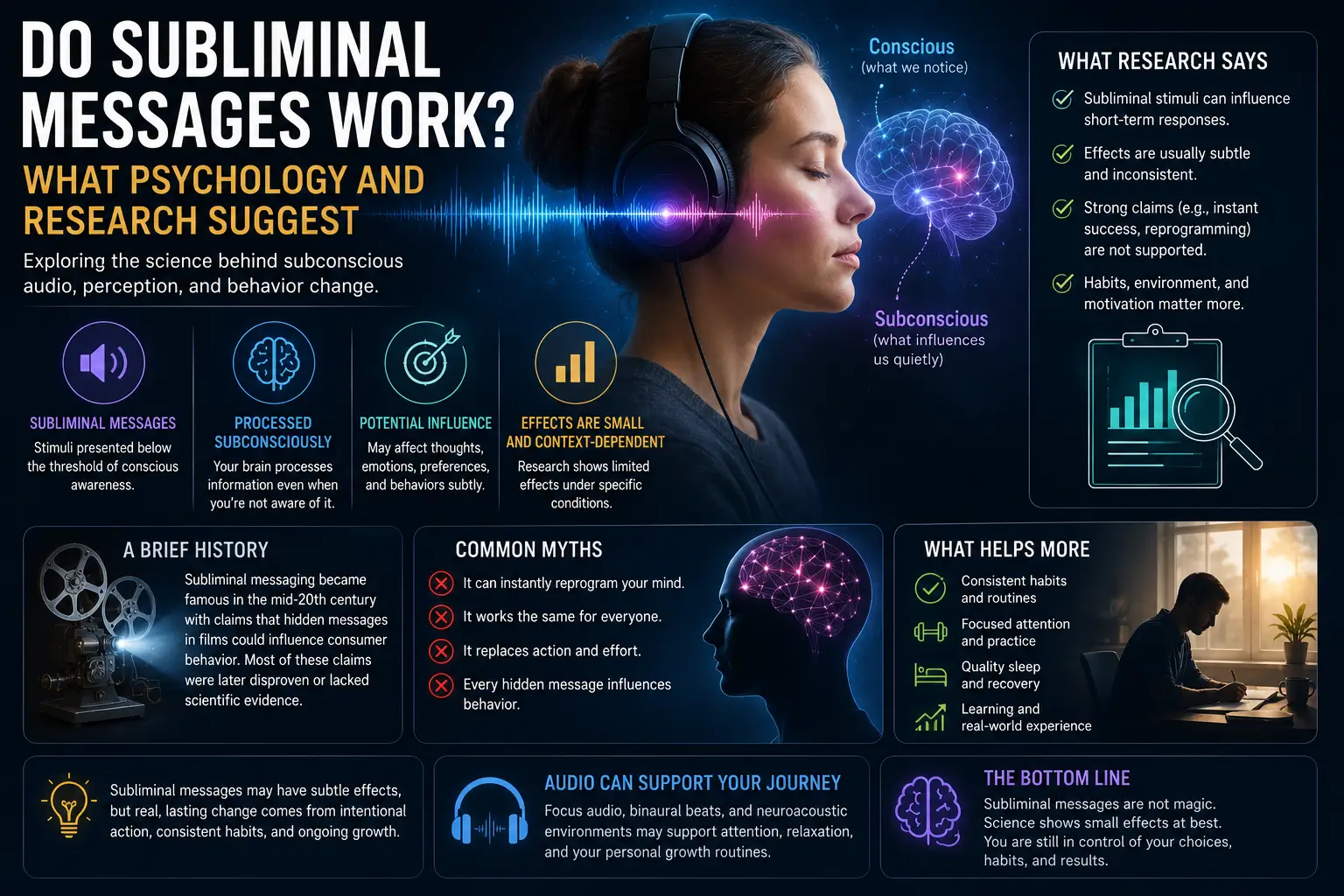
Binaural beats are not magical cures for anxiety.
However, some people use structured audio environments as part of broader relaxation and stress management routines.
🎧 What Are Binaural Beats?
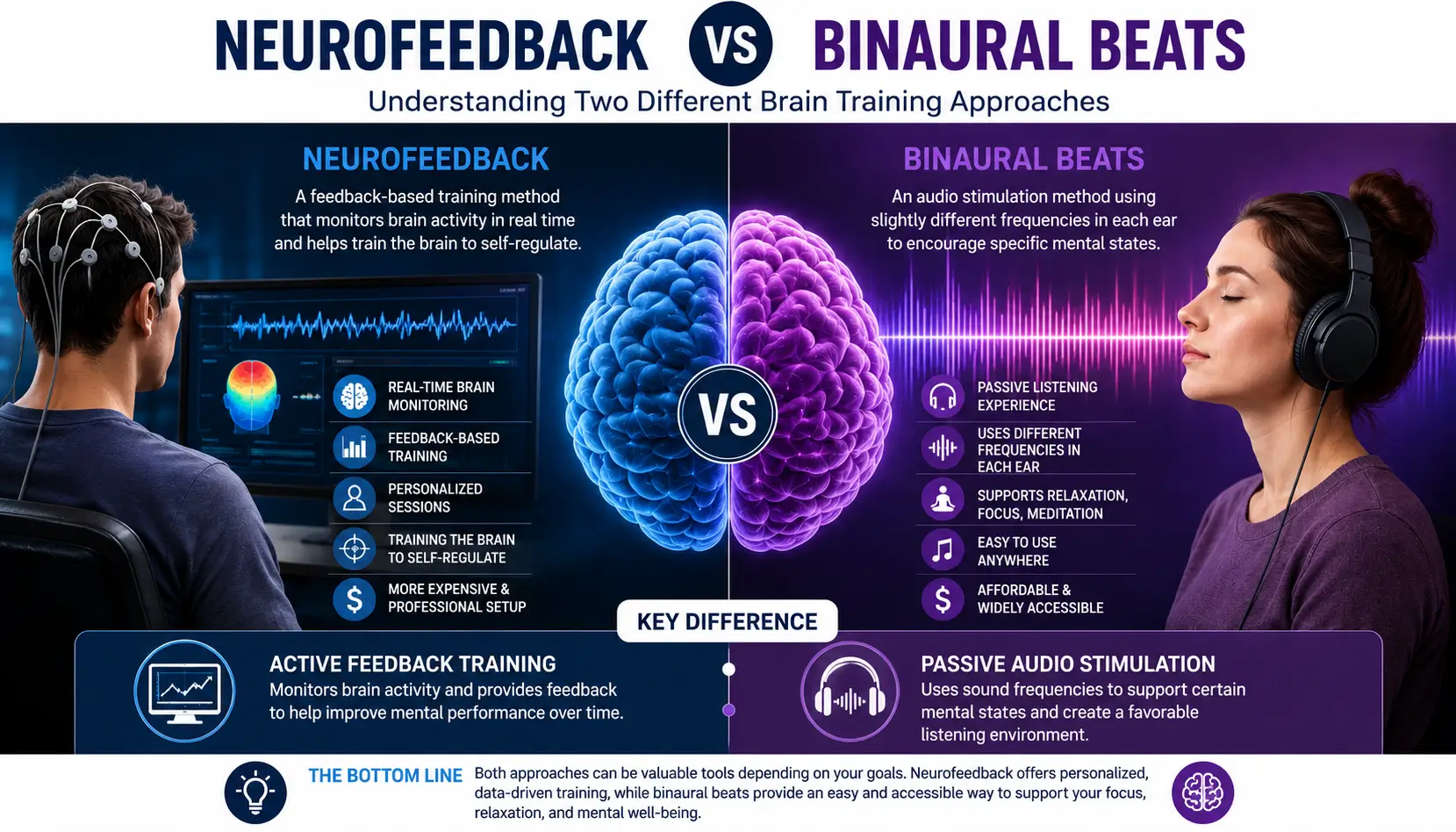
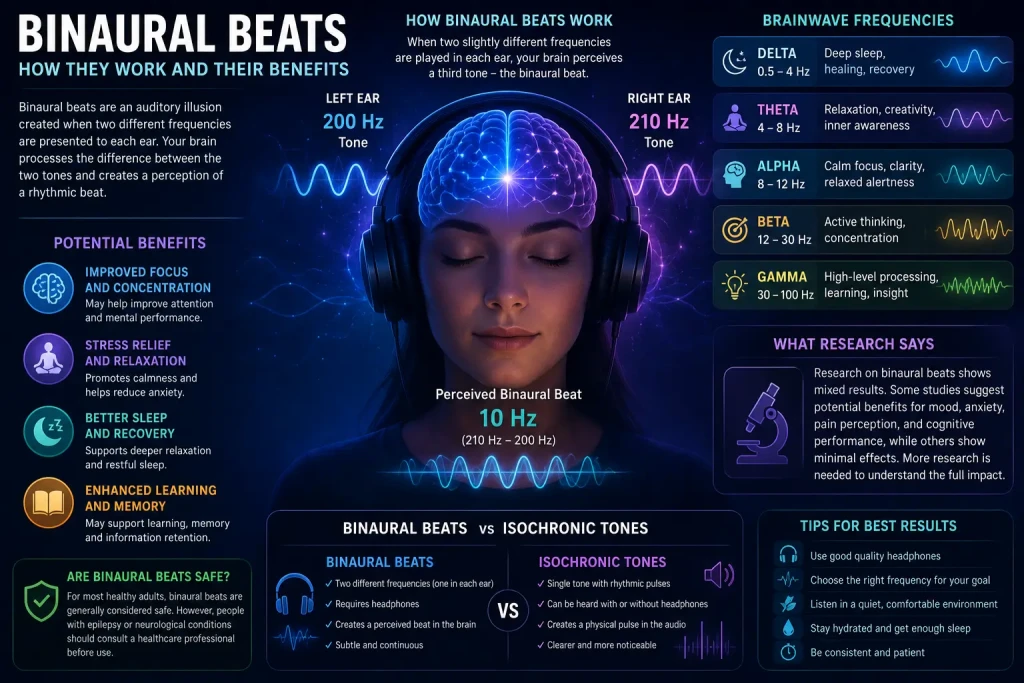
Binaural beats are an auditory phenomenon created when two slightly different sound frequencies are played separately into each ear.
For example:
- the left ear hears 200 Hz,
- the right ear hears 208 Hz.
The brain processes the difference between those frequencies as a rhythmic pulse.
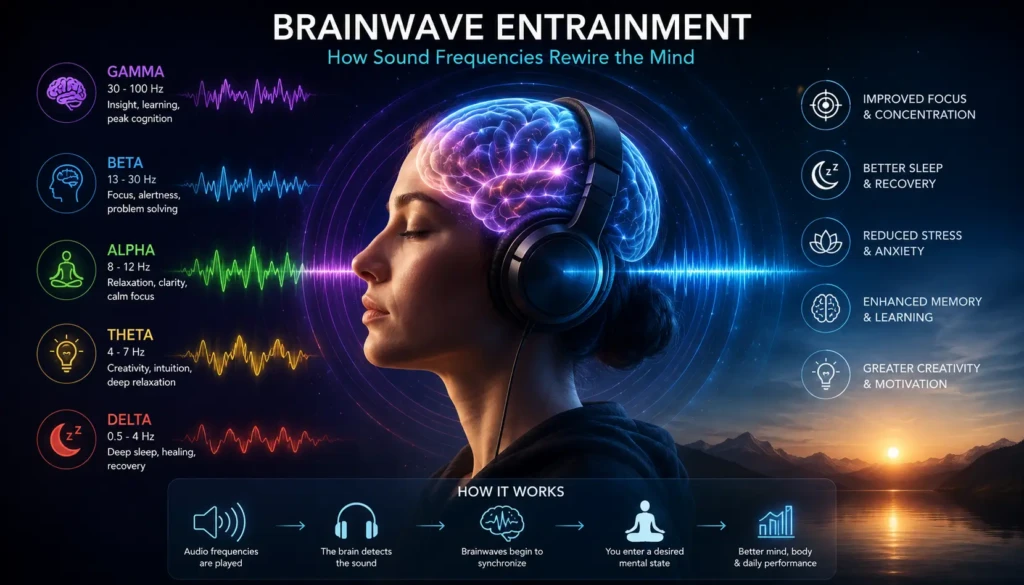
This effect is often discussed within the broader topic of brainwave entrainment.
Related article: Brainwave Entrainment Explained.
🧠 Why People Use Binaural Beats for Relaxation
Many listeners use binaural beats during:
- meditation,
- deep breathing exercises,
- study sessions,
- quiet evening routines,
- or before sleep.
The goal is usually not to “erase anxiety instantly.”
Instead, many people simply want:
- a calmer environment,
- less mental noise,
- reduced distraction,
- or a more relaxing atmosphere.
Some listeners report that structured sound environments help them slow down mentally and disconnect from constant stimulation.
⚡ Stress, Overstimulation, and Mental Fatigue
Modern environments constantly compete for attention.
People often move rapidly between:
- social media,
- messages,
- emails,
- videos,
- notifications,
- and multitasking.
Over time, this can create mental fatigue and cognitive overload.
When the nervous system remains overstimulated for long periods, relaxation may become more difficult.
Related article: Modern Brain Overstimulation.
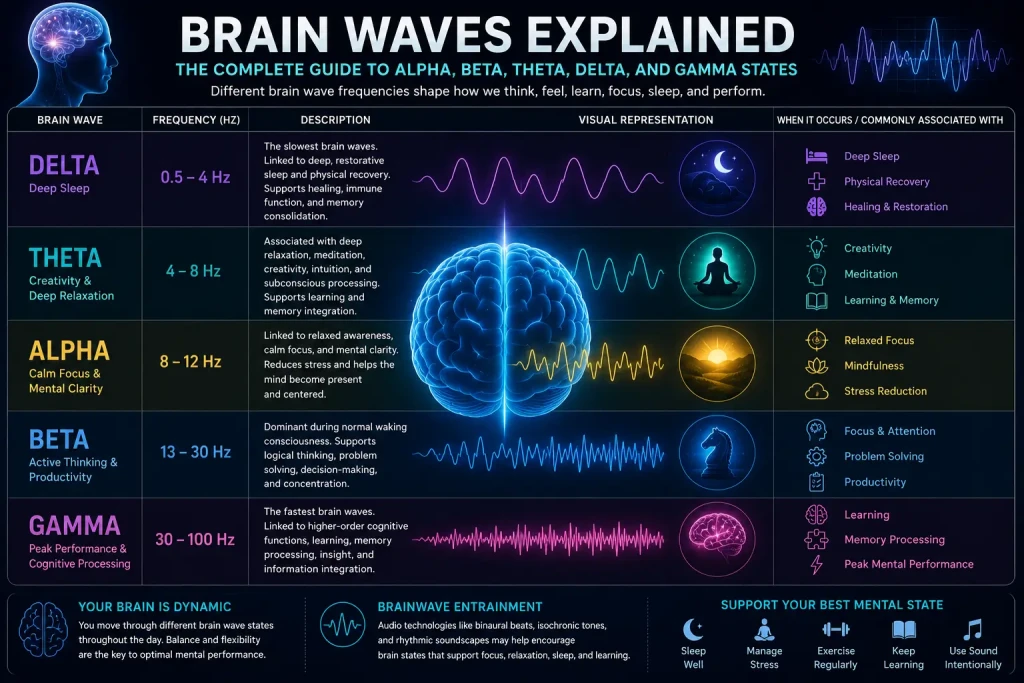
🌊 Brainwave States and Relaxation
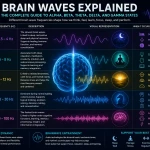
Different brainwave ranges are commonly associated with different mental states.
🟢 Alpha Waves
Often linked with relaxed attention and calmer mental states.
Related article: Alpha Brain Waves and Calm Focus.
🟣 Theta Waves
Frequently discussed in relation to meditation, creativity, and deep relaxation.
Related article: Theta Waves and Creativity.
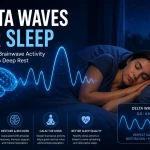
🔵 Delta Waves
Associated with deep sleep and restorative rest.
Related article: Delta Waves and Deep Sleep.
Some binaural beat tracks are designed around these frequency ranges in an attempt to create different listening experiences.
😌 Why Calm Audio Can Feel Helpful
Relaxation is not always about “changing the brain instantly.”
Sometimes it is simply about reducing sensory overload.
Calmer sound environments may help some people:
- slow racing thoughts,
- focus on breathing,
- reduce external distraction,
- or create more intentional moments of rest.
For many listeners, the environment itself matters as much as the audio.
🛌 Sleep and Anxiety Are Deeply Connected
Poor sleep often increases stress and mental exhaustion.
At the same time, anxiety itself can interfere with sleep quality.
This creates a cycle where:
- stress affects sleep,
- and poor sleep increases mental fatigue.
Some individuals use relaxing audio environments as part of nighttime wind-down routines.
Related article: Sleep Waves Explained.
🎵 Relaxation Audio vs Unrealistic Claims
Online discussions about binaural beats often become exaggerated.
You may encounter claims about:
- instant healing,
- rewiring the brain overnight,
- or eliminating anxiety permanently.
Those claims are not scientifically established.
Binaural beats should not be viewed as miracle solutions.
However, structured audio environments may still be useful for some individuals who enjoy calming sound experiences during relaxation routines.
🧘 Healthy Stress Reduction Habits Still Matter Most
Audio alone cannot replace healthy lifestyle habits.
Long-term mental well-being is influenced by many factors including:
- sleep quality,
- stress management,
- physical activity,
- social support,
- recovery time,
- and healthy attention habits.
Relaxation tools work best as part of a broader wellness routine rather than standalone “quick fixes.”
🎧 Audio Environments and Focused Calm
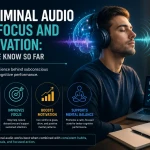
Some people also explore neuroacoustic audio environments designed to support relaxation, calm focus, and mental recovery routines.
These environments are generally most helpful when combined with realistic expectations and healthy daily habits.
🚫 Common Misunderstandings
❌ “Binaural Beats Cure Anxiety”
Binaural beats are not medically proven cures for anxiety disorders.
❌ “One Frequency Works for Everyone”
People respond differently to sound environments and relaxation techniques.
❌ “More Intense Audio Means Better Results”
Comfort and consistency are often more important than aggressive stimulation.
🧠 Final Thoughts
Binaural beats are not miracle cures.
But some people enjoy using relaxing audio environments to support calm routines, reduce distraction, and create quieter mental spaces in overstimulating environments.
In many cases, relaxation depends less on “unlocking hidden brain powers” and more on giving the nervous system opportunities to slow down and recover.
And in a world filled with constant noise and attention demands, even small moments of calm can feel increasingly valuable.
Related Articles
Related Posts
Stay Informed With the Latest & Most Important News
Previous Post
Next Post