
Now Reading: Delta Waves for Deep Sleep: How Low Frequencies Support Recovery
-
01
Delta Waves for Deep Sleep: How Low Frequencies Support Recovery
Delta Waves for Deep Sleep: How Low Frequencies Support Recovery
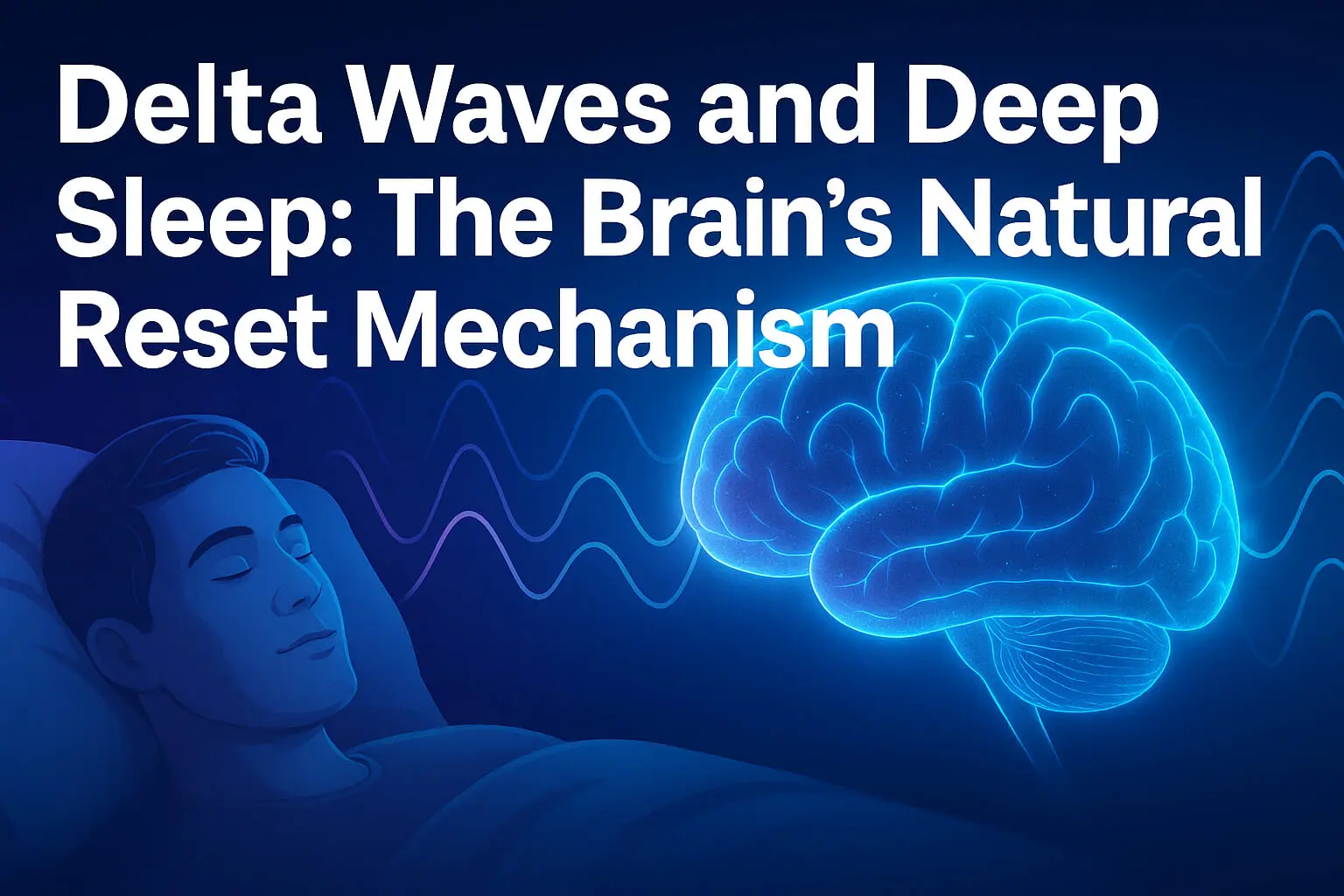
Deep sleep is one of the body’s most important biological recovery processes.
During this stage, the brain shifts into very slow electrical patterns known as:
Delta waves.
These low-frequency brainwaves are strongly associated with:
- physical restoration,
- nervous system recovery,
- hormonal regulation,
- and deep non-REM sleep.
Unlike lighter sleep stages linked to dreaming or transitional awareness, Delta-dominant sleep is often considered the most physically restorative phase of the night.
This is one reason Delta frequencies have become increasingly popular in:
- sleep audio,
- meditation systems,
- and brainwave entrainment programs.
🧠 What Are Delta Waves?
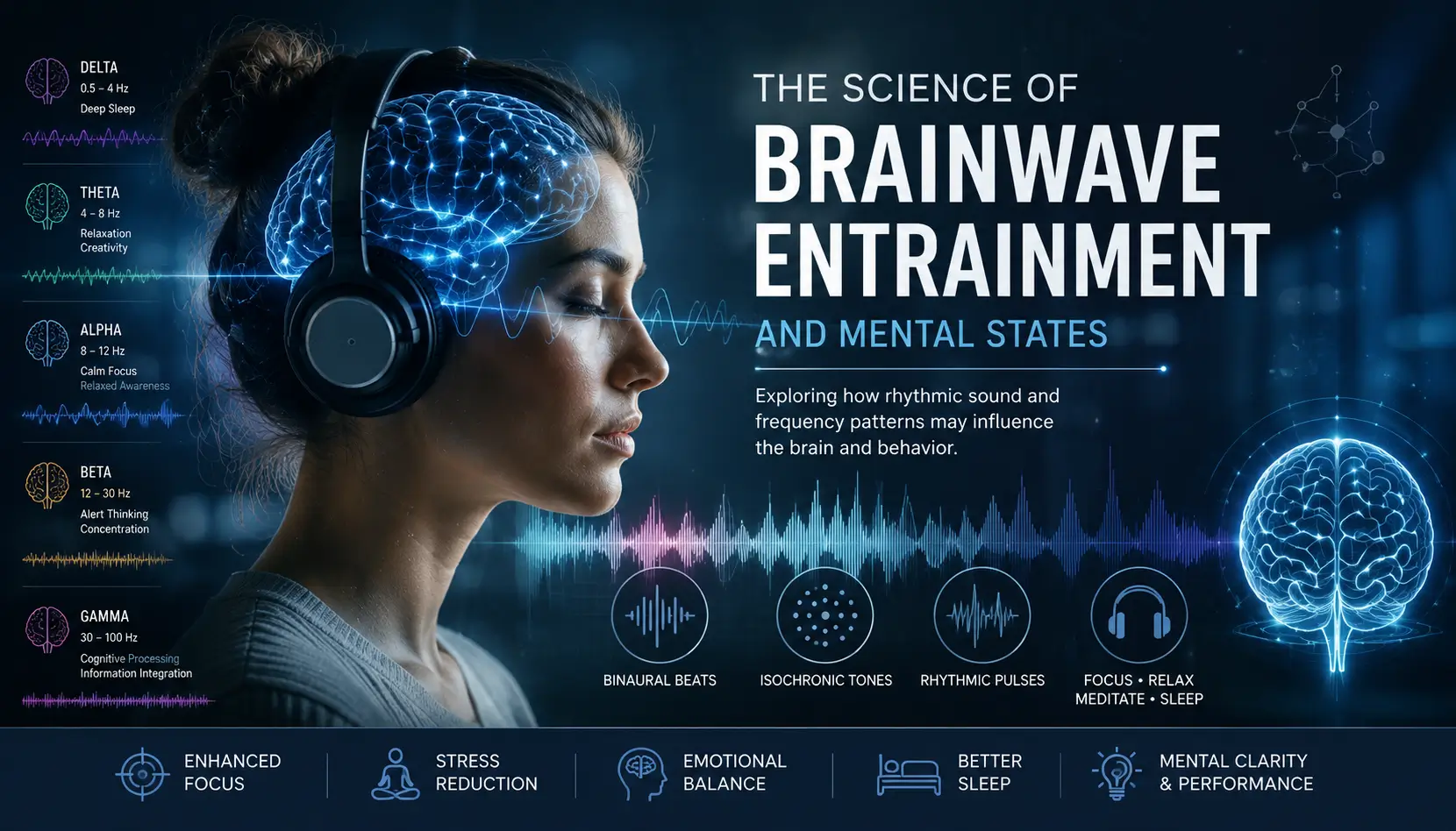
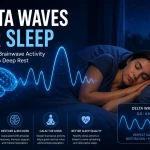
Delta waves are the slowest commonly measured brainwave frequencies, generally ranging between:
0.5–4 Hz.
Delta activity naturally increases during:
- deep sleep,
- unconscious restorative states,
- and certain forms of deep meditation.
During strong Delta dominance:
- conscious thinking decreases,
- sensory awareness becomes minimal,
- and the body prioritizes internal restoration processes.
This stage is sometimes referred to as:
slow-wave sleep.
😴 Why Deep Sleep Matters So Much
Deep sleep is not simply “extra rest.”
It plays a major role in:
- physical recovery,
- immune function,
- tissue repair,
- metabolic regulation,
- and nervous system maintenance.
Researchers believe deep sleep also contributes to:
- memory consolidation,
- emotional regulation,
- and cognitive recovery after prolonged mental activity.
Without sufficient deep sleep, many people experience:
- mental fatigue,
- reduced concentration,
- mood instability,
- and lower cognitive resilience.
🔬 Delta Waves & Nervous System Restoration
One of the most interesting aspects of Delta activity is its relationship with nervous system recovery.
During deep sleep:
- heart rate slows,
- stress hormone activity decreases,
- and the body shifts toward restorative regulation.
This is one reason many sleep specialists emphasize the importance of uninterrupted deep sleep cycles.
The nervous system does not recover efficiently when sleep remains fragmented or shallow.
Further reading:
🌊 Why Delta Frequencies Feel So Different
People often describe Delta-oriented audio as:
- heavy,
- deeply calming,
- dream-like,
- or mentally distant.
This is very different from:
- focus-oriented Beta stimulation,
- or cognitively active Gamma sessions.
Delta frequencies are generally associated with:
slowing down rather than activating the mind.
Some listeners even find extremely low frequencies emotionally unfamiliar at first because modern lifestyles rarely allow the nervous system to enter deeply relaxed states naturally.
🎧 Can Delta Audio Help With Sleep Preparation?
Some people use Delta-focused audio as part of:
- bedtime routines,
- meditation,
- or nervous system calming practices.
The goal is usually not to “force sleep instantly.”
Instead, many sleep-oriented sessions aim to:
- reduce mental overstimulation,
- encourage slower breathing,
- and support gradual relaxation before sleep.
Different people respond differently to low-frequency audio.
Some listeners report:
- easier sleep transition,
- calmer mental states,
- or deeper relaxation.
Others experience only subtle effects.
👉 Some users explore Genius Wave because the sessions use smoother layered transitions instead of harsh repetitive pulses commonly found in generic sleep tracks.
⚠️ Common Misunderstandings About Delta Frequencies
Myth:
“Delta waves instantly knock you unconscious.”
Reality:
Delta audio is usually intended to support relaxation, not force sleep mechanically.
Myth:
“Lower frequency always means stronger results.”
Reality:
Overly aggressive low-frequency stimulation may feel uncomfortable for some listeners.
Myth:
“Delta alone controls all sleep quality.”
Reality:
Healthy sleep involves dynamic interaction between multiple sleep stages and brainwave patterns.
🧩 Delta Waves vs Theta Waves
People often confuse Delta and Theta states.
However, they are associated with different sleep-related processes.
🌙 Delta
More strongly associated with:
- deep non-REM sleep,
- physical recovery,
- and slow-wave restoration.
🌊 Theta
More commonly linked to:
- dream-like imagery,
- transitional awareness,
- and lighter sleep phases.
Learn more in our guide on Which Waves Help You Sleep?.
🧘 Practical Tips for Delta Sleep Sessions
If you want to experiment with Delta-oriented audio:
- Use low volume levels
- Listen in dark environments
- Avoid stimulating content before bed
- Use consistent sleep schedules
- Avoid multitasking during sessions
- Give the nervous system time to settle gradually
The purpose is to support restorative conditions — not overstimulate the brain.
🔍 Why Modern Life Often Disrupts Deep Sleep
Many people today experience:
- overstimulation,
- excessive screen exposure,
- chronic stress,
- and irregular sleep patterns.
These factors may interfere with the brain’s ability to transition smoothly into deeper restorative states.
As a result, some individuals become interested in relaxation practices that encourage:
- mental slowing,
- nervous system regulation,
- and calmer nighttime routines.
Delta-oriented audio is often explored within this broader context.
Final Thoughts
Delta waves represent one of the brain’s slowest and most restorative states.
They are closely associated with:
- deep sleep,
- nervous system recovery,
- and physical restoration.
Although internet marketing often exaggerates frequency-based claims, the connection between deep sleep and low-frequency brain activity is well established within sleep science.
The most realistic perspective is simple:
Deep recovery happens when the brain is finally able to slow down enough for the body to restore itself properly.
Related Articles
- Which Waves Help You Sleep?
- Is 3.2 Hz Dangerous?
- Alpha Waves for Relaxation
- Ultimate Guide to Brainwave Entrainment
👉 Related read: Tap Into the Frequency of Success: Train Your Brain to Thrive for more insights on brainwave focus and mental clarity.
Stay Informed With the Latest & Most Important News
Previous Post
Next Post