
Now Reading: Audio Programs for Focus and Mental Clarity: How Structured Sound Supports Better Attention
-
01
Audio Programs for Focus and Mental Clarity: How Structured Sound Supports Better Attention
Audio Programs for Focus and Mental Clarity: How Structured Sound Supports Better Attention
Modern life constantly competes for attention.
Notifications, multitasking, information overload, and digital distractions make sustained focus increasingly difficult.
As a result, many people have started exploring structured audio programs designed to create more intentional listening environments.
These audio experiences are often used during work, study sessions, reading, meditation, or relaxation routines.
The goal is not to force the brain into a specific state.
Instead, the goal is often to create conditions that support concentration, mental clarity, and reduced distraction.
🧠 Why Sound Influences Attention
The brain continuously processes sound from the surrounding environment.
Certain sounds can feel distracting, while others may help create a sense of rhythm, calmness, or focus.
This relationship between sound and attention has led researchers to explore how different listening environments may influence cognitive performance.
For many people, the right audio environment helps reduce mental clutter and improves the ability to remain engaged with a task.
🎯 What Are Focus-Oriented Audio Programs?
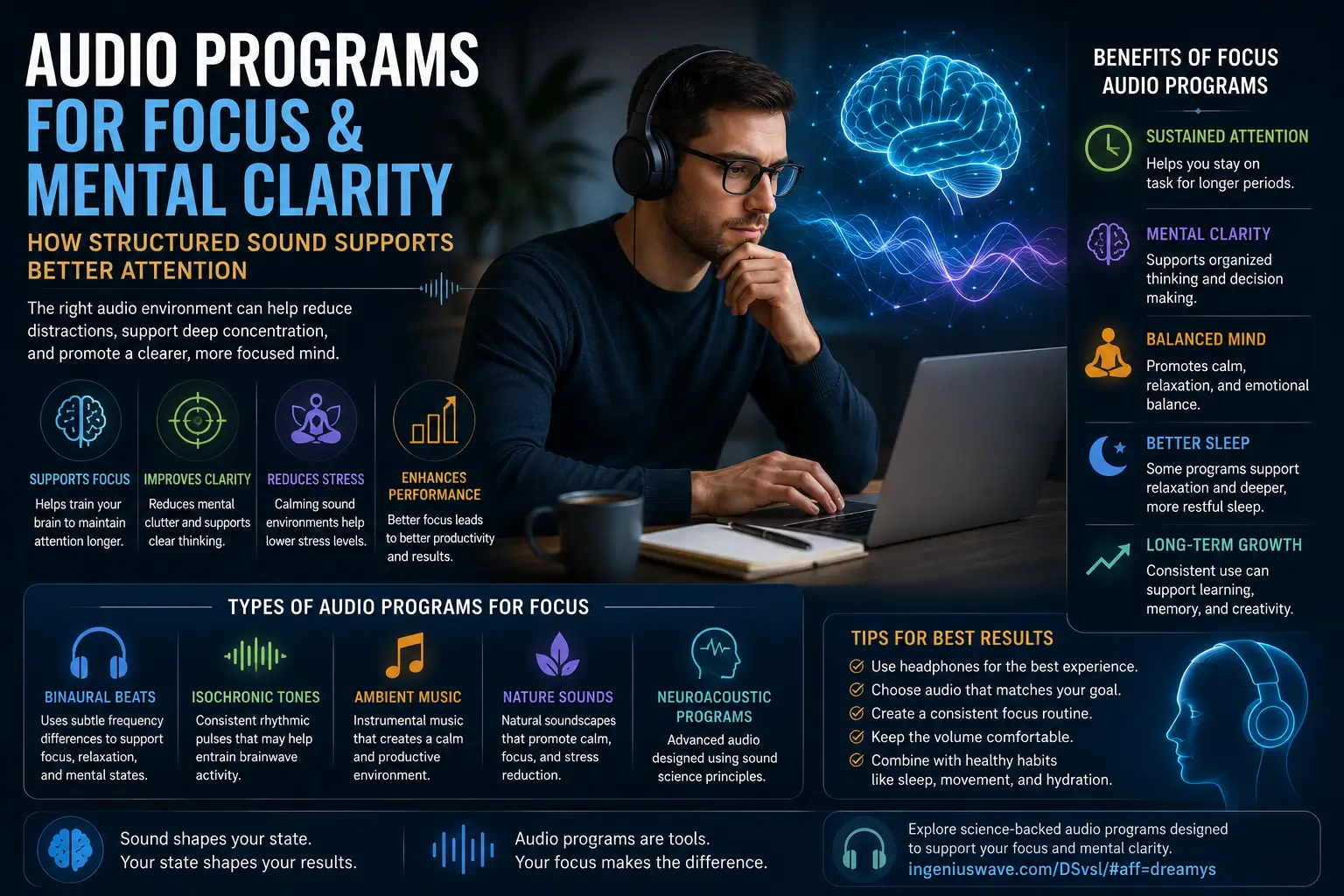
Focus-oriented audio programs are structured listening experiences designed to support concentration, mental organization, or relaxation.
These programs may include:
- ambient soundscapes,
- nature sounds,
- instrumental music,
- binaural beats,
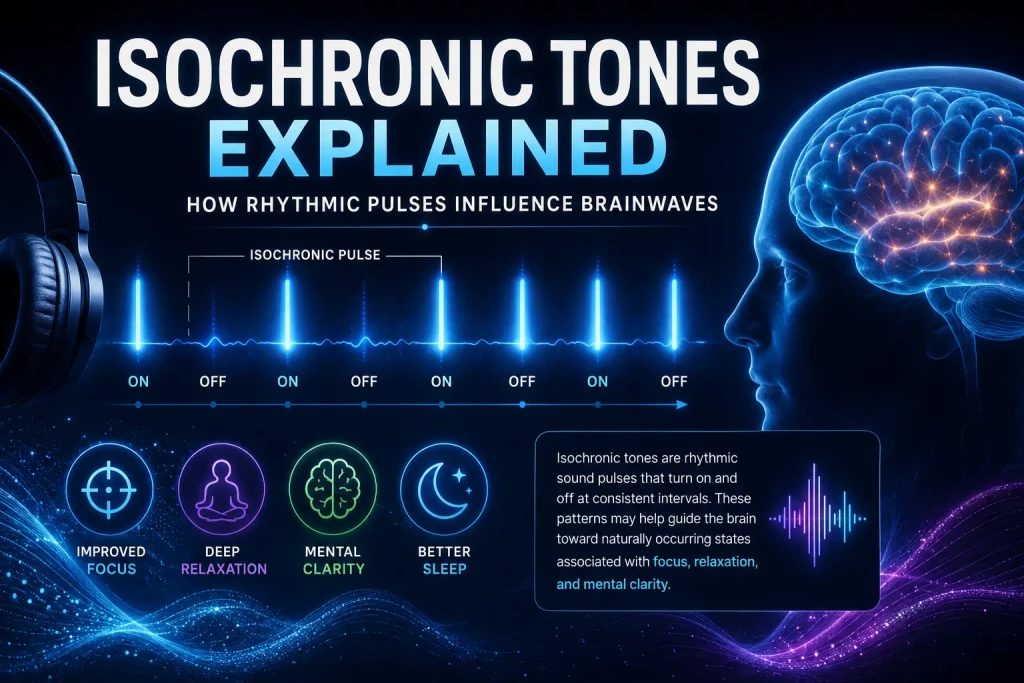
- isochronic tones,
- or layered neuroacoustic audio designs.
Different programs use different approaches depending on their intended purpose.
Some focus on productivity.
Others focus on relaxation, meditation, creativity, or sleep preparation.
⚡ Deep Work and Sustained Attention
One reason people explore focus audio is the challenge of maintaining attention for extended periods.
Deep work often requires long periods of uninterrupted concentration.
Unfortunately, modern environments frequently encourage task switching instead.
Some individuals find that structured audio creates a more consistent mental environment during demanding cognitive tasks.
Related article: Audio Environments for Deep Work and Focus.
📚 Audio Programs for Studying
Students often use audio programs while reading, reviewing material, or preparing for exams.
Many prefer non-lyrical audio because lyrics can sometimes compete for attention during language-based tasks.
Calmer audio environments may help reduce awareness of external distractions and support longer study sessions.
Related article: Best Binaural Beats for Studying.
🧘 Mental Clarity and Reduced Cognitive Noise
Mental clarity is not always about increasing mental speed.
In many situations, it involves reducing unnecessary mental noise.
When attention becomes fragmented, even simple tasks may feel mentally exhausting.
Many audio programs are designed around the idea of creating a calmer listening environment that supports more organized thinking.
This may be especially helpful during periods of information overload or prolonged mental fatigue.
🎵 Binaural Beats and Brainwave Audio
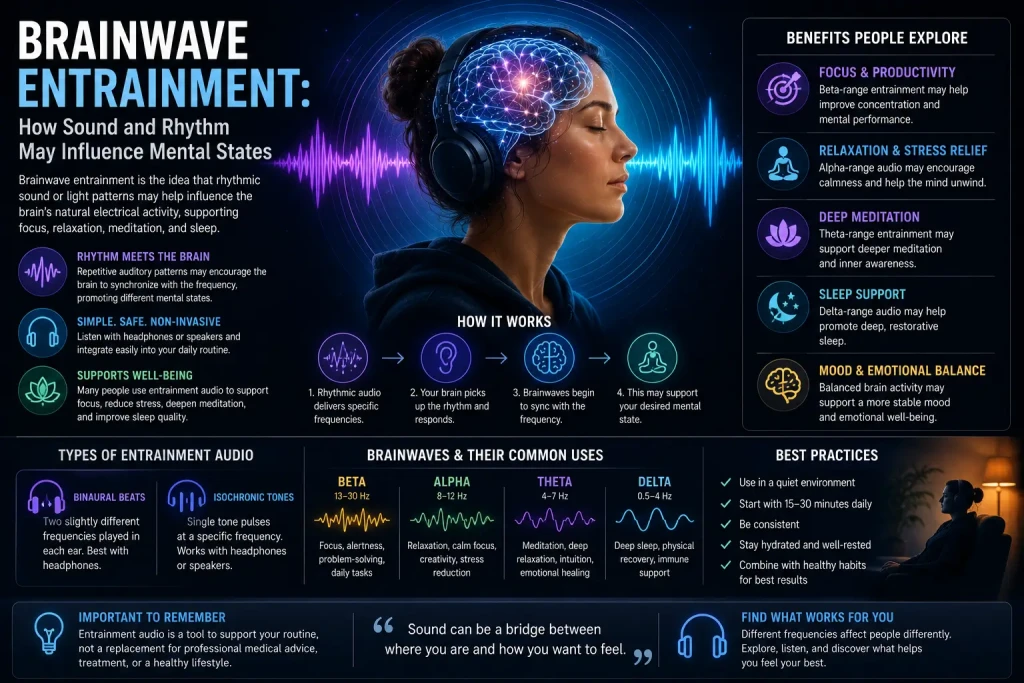
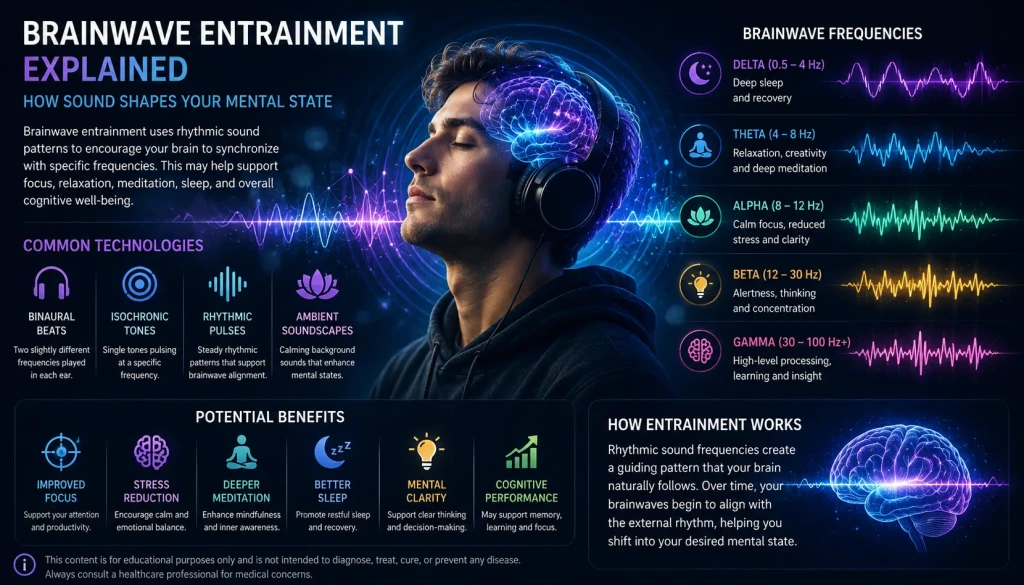
Some audio programs include binaural beats or other forms of brainwave-related audio stimulation.
Binaural beats are created when slightly different frequencies are delivered separately to each ear.
The brain perceives the difference between those frequencies as a rhythmic auditory effect.
Researchers continue studying how these listening experiences may influence attention, relaxation, and cognitive performance.
Related article: Benefits of Binaural Beats.
🌙 Recovery, Relaxation, and Cognitive Performance
Focus is not only about concentration.
Recovery also plays an important role.
When stress accumulates and mental fatigue increases, maintaining attention becomes more difficult.
This is one reason some audio programs focus on relaxation rather than productivity directly.
Improved recovery can support better cognitive performance over time.
Related article: Mental Resilience and Cognitive Recovery.
🧠 The Importance of Consistency
No audio program can replace sleep, healthy habits, learning strategies, or sustained effort.
However, some people find that consistent listening routines help create stronger work habits and better focus environments.
The audio itself may become part of a ritual that signals the brain it is time to concentrate.
Over time, these routines can contribute to improved consistency and productivity.
⚠️ Common Misconceptions About Focus Audio
❌ “Audio Instantly Makes You Smarter”
Audio programs do not automatically increase intelligence.
They are tools that may help support specific mental environments.
❌ “One Frequency Works for Everyone”
People respond differently to different sounds and listening experiences.
There is no universal audio solution that works identically for everyone.
❌ “More Stimulation Always Means Better Focus”
Excessive stimulation can sometimes become distracting rather than helpful.
Many people benefit from simpler listening environments.
🎧 Neuroacoustic Audio and Modern Listening Experiences
Recent developments in neuroacoustic design have expanded beyond traditional focus music.
Some programs combine ambient textures, rhythmic sound design, and carefully structured audio environments intended to support concentration and mental clarity.
Some individuals also explore neuroacoustic audio experiences designed around focus, mental organization, and deep work routines.
Experiences vary between individuals, and no audio method produces identical results for everyone.
🧠 Final Thoughts
Audio programs for focus and mental clarity continue attracting interest because they offer a simple way to shape the listening environment around work, study, creativity, and recovery.
While audio alone is not a substitute for healthy habits or effective learning strategies, structured listening experiences may help support attention, consistency, and mental organization.
For many people, the greatest benefit comes not from a specific sound itself, but from creating a more intentional environment for focused thinking.
Related Articles
Related Posts
Stay Informed With the Latest & Most Important News
Previous Post
Next Post