
Now Reading: Color Psychology and the Brain: How Visual Perception Influences Mood, Focus, and Attention
-
01
Color Psychology and the Brain: How Visual Perception Influences Mood, Focus, and Attention
Color Psychology and the Brain: How Visual Perception Influences Mood, Focus, and Attention
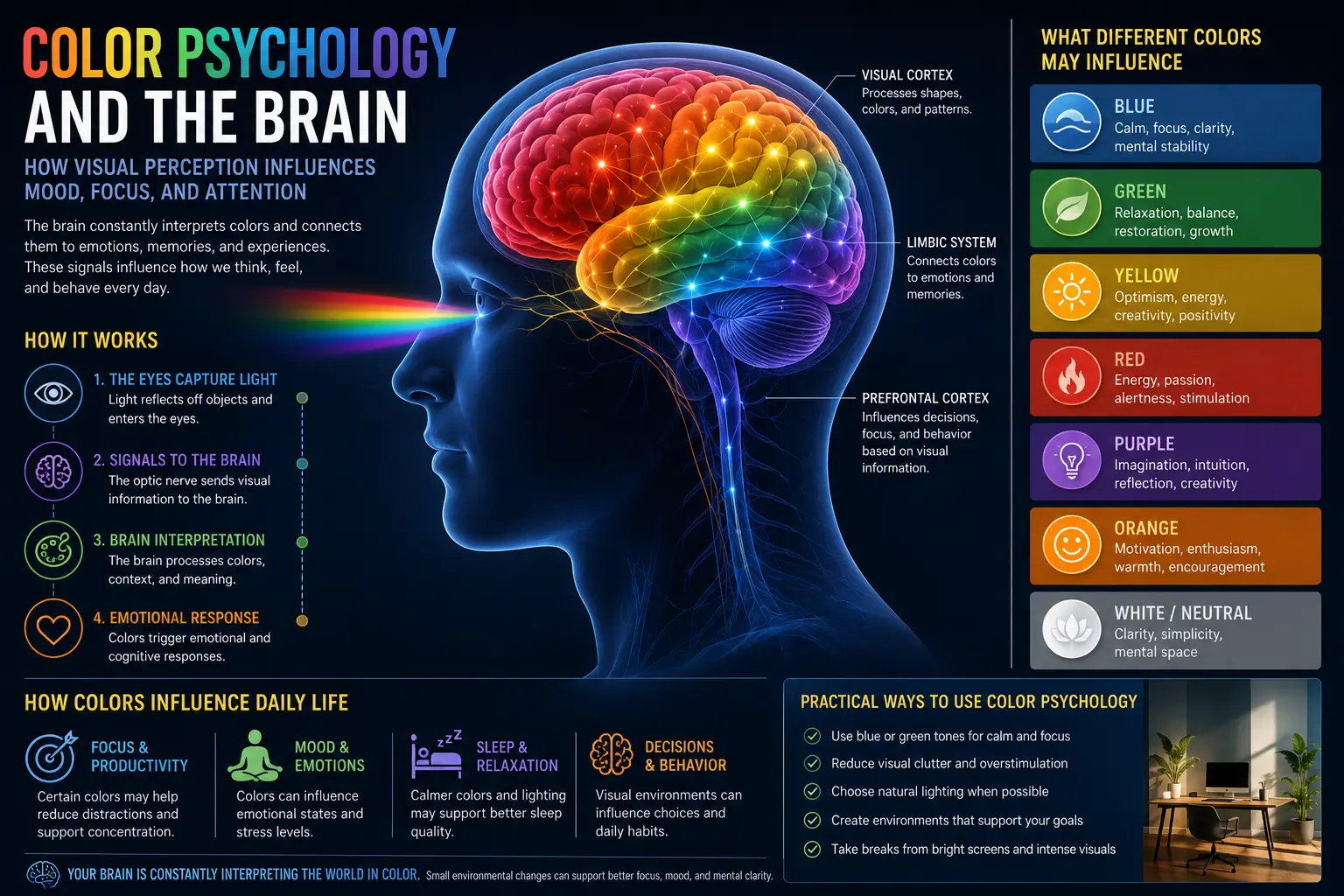
Colors affect people more than most realize.
From digital screens and social media interfaces to lighting, branding, workspaces, and natural environments, the brain constantly processes visual information throughout the day.
Color is not simply something people “see.”
The brain continuously interprets colors through emotional, cognitive, and psychological associations.
This is one reason certain environments may feel:
- calming,
- overstimulating,
- focused,
- emotionally heavy,
- or mentally refreshing.
Modern neuroscience and psychology continue exploring how visual perception influences:
- attention,
- mood,
- stress levels,
- focus patterns,
- and cognitive performance.
🧠 What Is Color Psychology?
Color psychology generally refers to how colors may influence emotional and mental responses.
The brain constantly connects visual information with memories, experiences, environments, and emotional associations.
This does not mean every person responds identically to every color.
However, certain visual patterns appear repeatedly across human environments.
For example:
- soft blue tones are often associated with calmness,
- bright red environments may increase stimulation,
- natural green spaces are commonly linked to relaxation,
- while excessive visual clutter may increase mental fatigue.
These responses are influenced by both biology and personal experience.

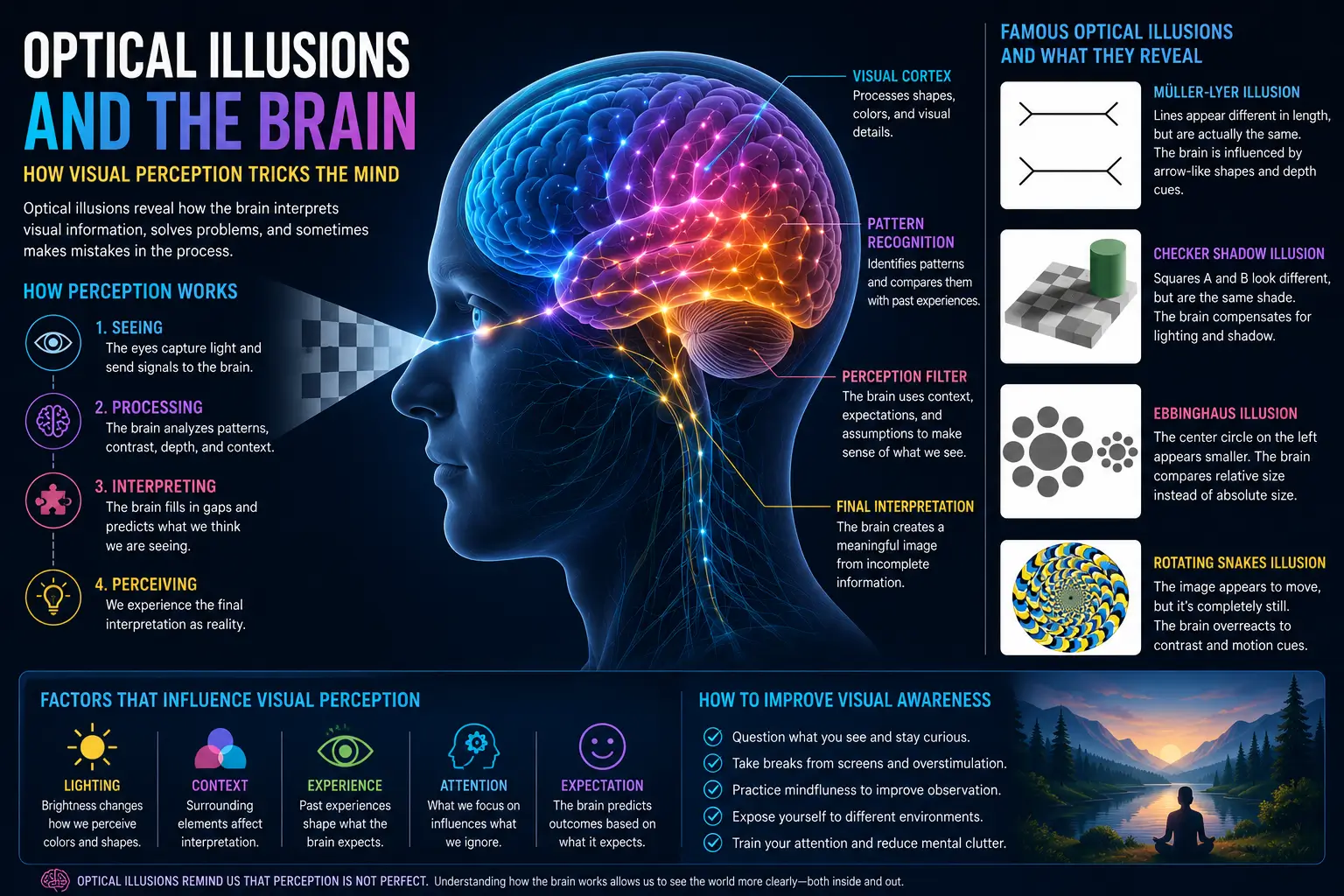
👁️ Visual Perception Happens Inside the Brain
People often assume the eyes simply “capture reality.”
In reality, the brain actively interprets visual information.
Color perception depends heavily on neural processing systems inside the brain.
The visual cortex helps organize:
- contrast,
- brightness,
- depth,
- movement,
- and color recognition.
The brain then combines this information with emotional and cognitive processing systems.
This is one reason visual environments can influence attention and emotional state so quickly.
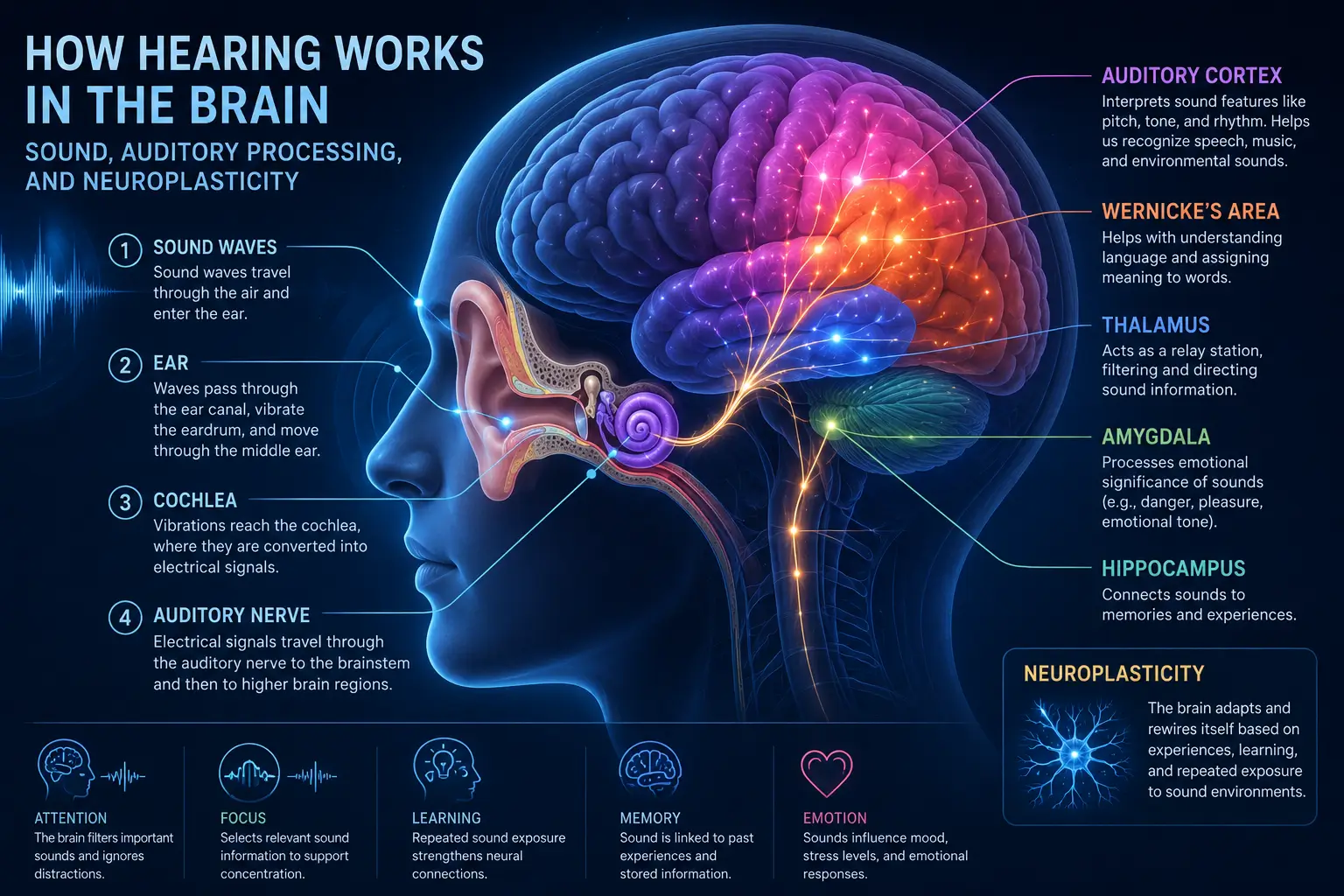
Related article: How Hearing Works in the Brain.
📱 Modern Digital Environments and Overstimulation
Modern environments expose the brain to constant visual stimulation.
Bright screens, rapid content switching, endless scrolling, flashing notifications, and information overload can place continuous demands on attention systems.
Many people no longer struggle with too little stimulation.
Instead, they struggle with too much of it.
Visual overload may contribute to:
- mental fatigue,
- attention fragmentation,
- difficulty concentrating,
- and cognitive exhaustion.
Related article: Modern Brain Overstimulation.
🎯 Colors, Focus, and Attention
Researchers continue studying how visual environments influence attention and productivity.
Certain environments may feel mentally easier to process than others.
For example:
- minimal visual clutter may support concentration,
- natural lighting may improve comfort,
- while overly aggressive visual stimulation may increase distraction.
This is one reason workspace design, app interfaces, and digital products often rely heavily on color strategy and visual balance.
Some individuals also intentionally create calmer visual environments to support focus and cognitive clarity.
Related article: Brain Waves for Focus.
😴 Mood, Stress, and Environmental Perception
The brain continuously evaluates environments for emotional signals.
Visual environments may subtly influence:
- stress perception,
- mental comfort,
- emotional tension,
- and relaxation patterns.
This helps explain why people often feel different in:
- natural outdoor environments,
- minimalist spaces,
- dark crowded rooms,
- or highly stimulating digital spaces.
The brain constantly processes environmental information even when people are not consciously paying attention to it.
🧠 Neuroplasticity and Visual Habits
The brain adapts to repeated environments over time.
This process is often discussed through neuroplasticity.
Repeated exposure to certain visual patterns and digital behaviors may gradually influence attention habits and cognitive routines.
For example:
- constant rapid stimulation may encourage shorter attention cycles,
- while calmer environments may support deeper concentration patterns.
Related article: Neuroplasticity and Brain Rewiring.
🎧 Sensory Environments and Cognitive Balance
Visual environments are only one part of cognitive processing.
The brain also responds continuously to:
- sound,
- attention demands,
- stress levels,
- sleep quality,
- and environmental stimulation.
Because of this, some people explore calmer sensory environments involving:
- ambient soundscapes,
- mindfulness routines,
- meditation environments,
- or focus-oriented audio experiences.
Related article: Brainwave Entrainment.
Others explore audio environments designed around focus and mental clarity as part of broader cognitive wellness routines.
⚠️ Common Misunderstandings About Color Psychology
❌ “One Color Affects Everyone the Same Way”
Personal experiences, culture, environment, and emotional associations all influence perception.
❌ “Color Alone Completely Changes Human Behavior”
Color may influence mood and perception, but human behavior depends on many different factors.
❌ “Visual Environments Don’t Affect Mental Performance”
Modern neuroscience increasingly suggests environments may influence stress, attention, and cognitive fatigue.
🌿 Small Environmental Changes May Matter
People often focus only on productivity techniques while ignoring environmental influence.
However, the brain constantly responds to sensory input.
Small adjustments may sometimes support healthier mental balance.
Examples may include:
- reducing visual clutter,
- improving lighting quality,
- taking breaks from overstimulation,
- spending time in natural environments,
- and creating calmer focus spaces.
Over time, these habits may help reduce unnecessary cognitive overload.
🧠 Final Thoughts
Color perception involves far more than simply seeing visual information.
The brain continuously interprets colors, environments, contrast, and visual patterns through emotional and cognitive systems.
As neuroscience continues exploring visual perception and attention, researchers are becoming increasingly interested in how modern environments influence mental clarity, stress levels, focus, and cognitive performance.
In many cases, healthier mental balance may begin not with extreme changes — but with more intentional environments that support the brain more effectively.
Related Articles
Stay Informed With the Latest & Most Important News
Previous Post
Next Post