
Now Reading: White Noise vs Pink Noise: Which Sound Environment Is Better for Focus and Sleep?
-
01
White Noise vs Pink Noise: Which Sound Environment Is Better for Focus and Sleep?
White Noise vs Pink Noise: Which Sound Environment Is Better for Focus and Sleep?
Sound environments have become increasingly popular for:
- concentration,
- sleep,
- relaxation,
- studying,
- and reducing distraction.
Among the most discussed options are:
- white noise,
- pink noise,
- ambient soundscapes,
- and calming audio environments.
But what exactly separates white noise from pink noise?
And why do some people prefer one over the other?
🌊 What Is White Noise?
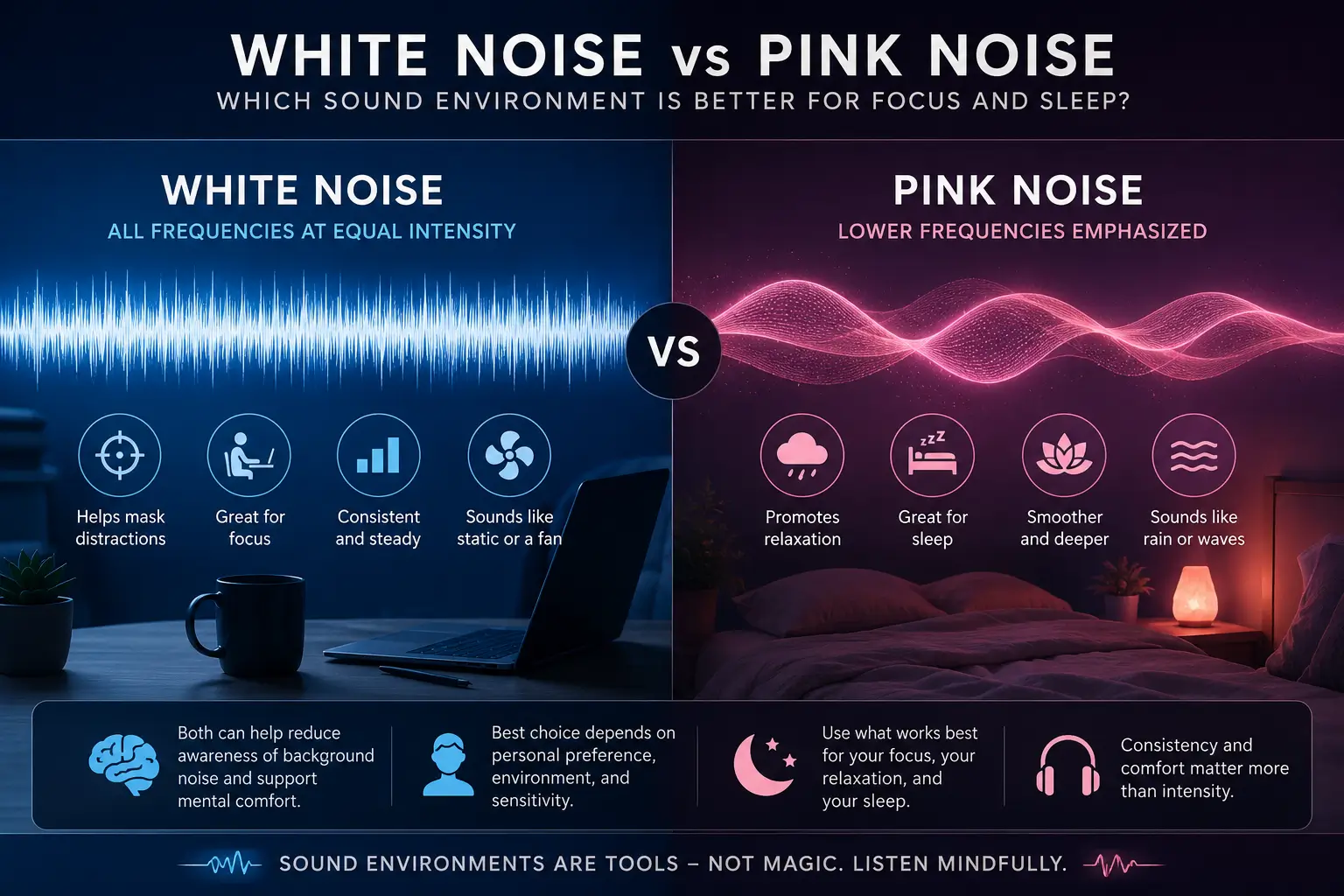
White noise contains all audible frequencies played at equal intensity.
This creates a consistent sound texture often compared to:
- static,
- television noise,
- air conditioning,
- or a steady fan.
Because all frequencies are equally present, white noise sounds:
- bright,
- constant,
- and evenly textured.
Many people use white noise to help reduce awareness of:
- background conversation,
- traffic,
- sudden interruptions,
- and environmental distraction.

☁️ What Is Pink Noise?
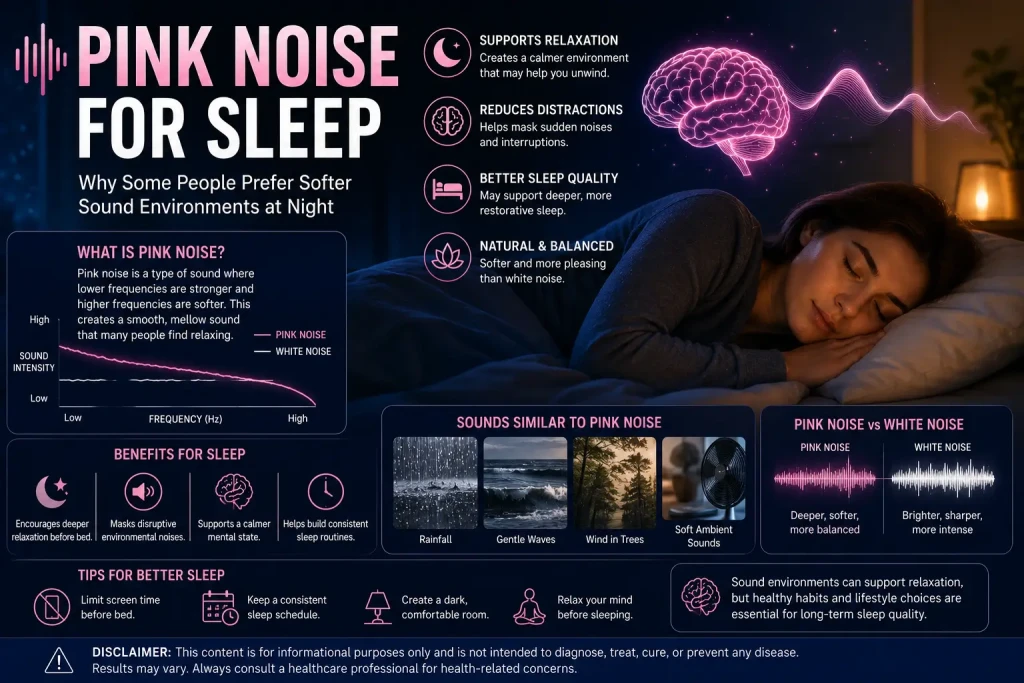
Pink noise also contains a wide range of frequencies, but lower frequencies are emphasized more gently.
This creates a softer and deeper sound profile compared to white noise.
Pink noise is commonly described as sounding similar to:
- rainfall,
- wind,
- ocean waves,
- or rustling leaves.
Many listeners find pink noise:
- smoother,
- calmer,
- and less harsh over long listening sessions.
🧠 Why Sound Environments Affect Attention
The brain continuously processes environmental sound.
Many people also explore how sound environments may influence focus and mood during work, relaxation, and sleep routines.
Unexpected noises may increase:
- distraction,
- mental interruption,
- sensory overload,
- and cognitive fatigue.
Consistent sound environments may help reduce awareness of:
- unpredictable background noise,
- sudden environmental changes,
- and fragmented attention.
This is one reason people often use sound environments while:
- studying,
- reading,
- working,
- meditating,
- or sleeping.
Some listeners prefer audio environments for deep work and concentration in noisy or distracting settings.
🔬 What Science Says About Noise and Sleep
Research involving sound environments suggests certain types of consistent audio may support:
- relaxation,
- sensory comfort,
- and reduced awareness of environmental noise.
Some studies involving pink noise have explored possible connections with:
- sleep stability,
- relaxation,
- and memory consolidation during sleep.
Further reading:
https://www.frontiersin.org/articles/10.3389/fnhum.2019.00425/full
https://www.ncbi.nlm.nih.gov/pmc/articles/PMC10198548/
However, exaggerated internet claims involving:
- instant brain optimization,
- guaranteed cognitive enhancement,
- or “sleep hacking”
should be approached carefully.
⚡ White Noise for Focus
Some people prefer white noise during work or study sessions because the consistent sound texture may help:
- mask distraction,
- reduce awareness of background activity,
- and create a more controlled sensory environment.
White noise is especially popular in:
- offices,
- shared apartments,
- coffee shops,
- and noisy environments.
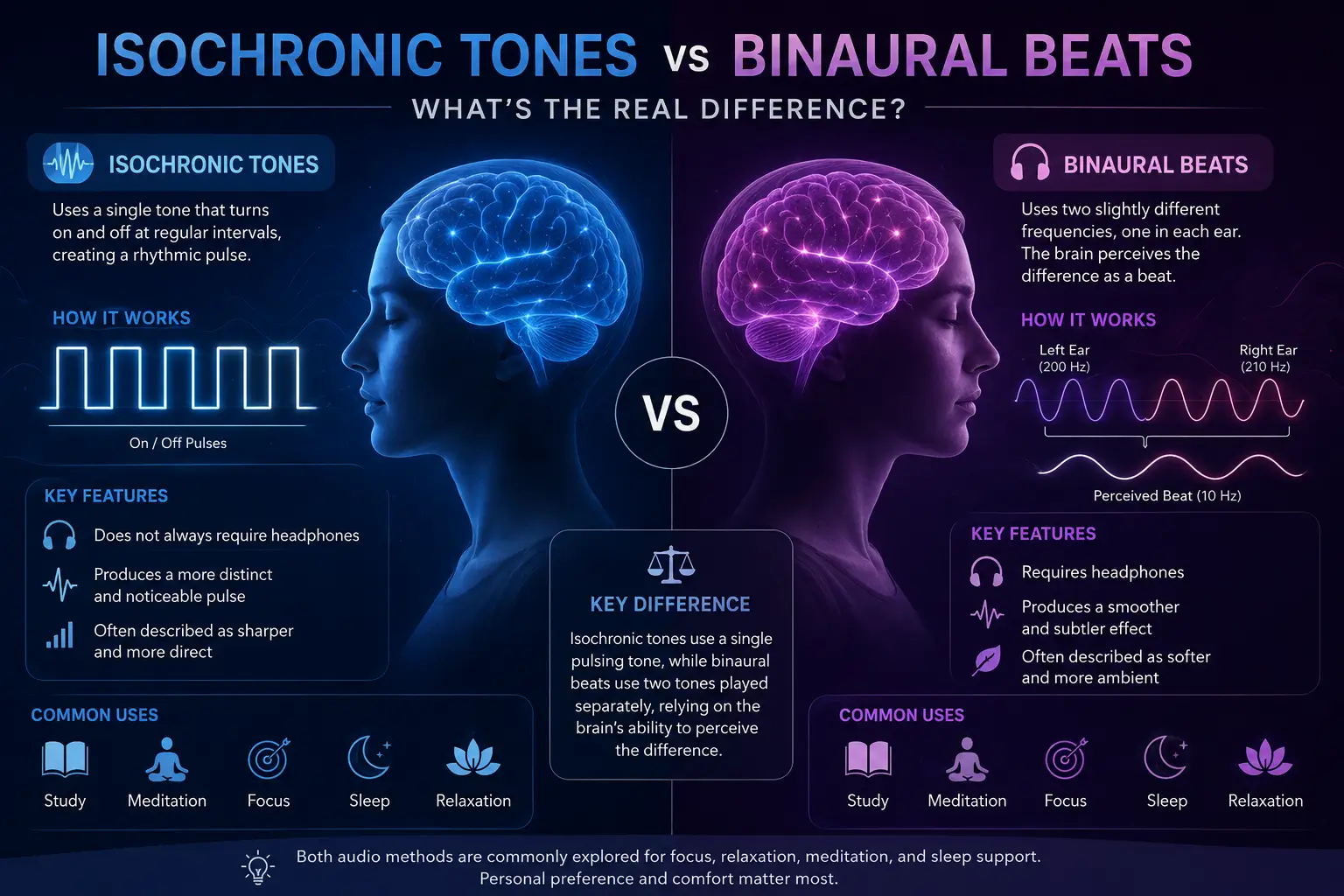
Others combine calming audio backgrounds with binaural beats for sleep support during nighttime routines.
🌙 Pink Noise for Relaxation and Sleep
Pink noise is often associated with:
- calming nighttime routines,
- relaxation,
- meditation,
- and sleep preparation.
Because the sound profile feels softer to many listeners, pink noise may feel:
- less mentally intense,
- warmer,
- and easier to listen to over longer periods.
Some people also combine calming sound environments with neuroacoustic relaxation audio systems designed to support focus and sensory calm.
🎵 Which One Is Better?
There is no universal answer.
Some individuals prefer:
white noise
for concentration and distraction masking.
Others prefer:
pink noise
for relaxation and sleep comfort.
Personal preference, sensory sensitivity, and listening environment all play important roles.
☁️ White Noise vs Pink Noise: Quick Comparison
White Noise
- Brighter sound profile
- Equal frequency intensity
- Common for focus environments
- Stronger distraction masking
Pink Noise
- Softer and deeper sound profile
- Lower frequencies emphasized
- Common for relaxation and sleep
- Often perceived as gentler
⚠️ Common Myths About Noise Audio
Myth:
“One sound type works perfectly for everyone.”
Reality:
People respond differently to sensory environments and sound textures.
Myth:
“Noise audio permanently changes brain function.”
Reality:
Current scientific evidence does not support extreme transformation claims.
Myth:
“More intense audio creates better focus.”
Reality:
Comfort and consistency are usually more important than intensity.
🌍 Why Sound Environments Keep Growing in Popularity
Modern environments expose people to:
- constant notification sounds,
- traffic,
- multitasking,
- conversation noise,
- and cognitive overload.
As a result, many individuals search for:
- calmer workspaces,
- better sleep environments,
- reduced distraction,
- and more controlled sensory experiences.
Sound environments may simply help some people feel:
- more relaxed,
- less overstimulated,
- and mentally organized.
Final Thoughts
White noise and pink noise are both widely used sound environments for:
- focus,
- relaxation,
- sleep,
- and sensory comfort.
While research into sound and cognition continues evolving, the healthiest perspective is viewing these audio environments as supportive tools rather than guaranteed performance enhancers.
The best option often depends on:
- personal preference,
- listening comfort,
- and the environment where the sound is being used.
Related Articles
Related Posts
Stay Informed With the Latest & Most Important News
Previous Post
Next Post